

Transport & Engineering Miscellany November 2026
In this post I’ll cover some items relating to the Transport Collection at Beamish, that don’t quite fit into the usual ‘Engineering’ focussed updates. This element of the museum is just as important, but receives less attention as the focus on operation and restoration/overhaul rather steals the limelight. There will be a single post for November’s Engineering Diary, so this post helps fill the gap and provide a little bit of content pending the November post appearing at the end of the week.
Manning Wardle 1532 Newcastle
It is hard to imagine, but this time next year Dunrobin should be complete and tucked up in the shed after operating at least part of the season at Beamish. As the core item of motive power for the NER Branch exhibit, it will fulfil a vital role and save us the not inconsiderable cost of hiring in locomotives to operate the branch, as has been the case ever since operations were restarted 16 years ago. Our own locomotive will enable a more consistent and predictable operation to be provided and we are making plans for how this will be shaped in order to both maximise the opportunity of operating Dunrobin, whilst conserving it through careful management of boiler cycles (when it moves from cold to hot to cold again). One thing that was always in the plan was the need for operational resilience, and so an additional locomotive, that fulfilled a similar criteria as Dunrobin, was sought. The criteria was something Victorian, that would fit well into the operational timescale depicted at Rowley, acknowledged the fact that we weren’t going to be operating a North Eastern Railway locomotive (as we couldn’t get one/build one within the budget) and which whilst inevitably industrial, would at least be plausible in terms of appearance – so a six wheeler ideally. No.1532 Newcastle, a 1901-built Manning Wardle, was the solution and fitted this criteria – also being of similar appearance to locomotives used on Light Railways and therefore had credible passenger-hauling credentials.
We purchased Newcastle strategically, and placed it into storage. It is virtually complete, had been well stored and would sit well alongside Dunrobin on the NER Branch. Ideally it would be off-set in terms of boiler cycle so that the two did not overlap overhaul intervals, and having two locomotives would ensure reliability of the operation and enable some limited scope for making appearances at other heritage venues.
With Dunrobin due to be completed in 2027, plans are now being developed for the restoration of Newcastle. It’s worth noting here that the serendipitous name applied to this locomotive was not our motivation for purchasing it but it does fit rather well with the setting at Beamish – though it is, of course, Newcastle-under-Lyme in Staffordshire from which it takes its name.
The first stage of the process has been research – and a considerable file has been built up about Newcastle, and the similar Manning Wardle locomotives that will provide information useful to the project. Contacts have been made with other researchers or restorers and a proposal written that would support the internal process for moving this forward as a project. A considerable commitment of internal resource will be made to the project, that should help manage costs, but external contractors will be needed, and external funding sought.
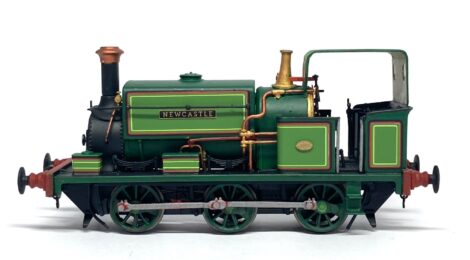
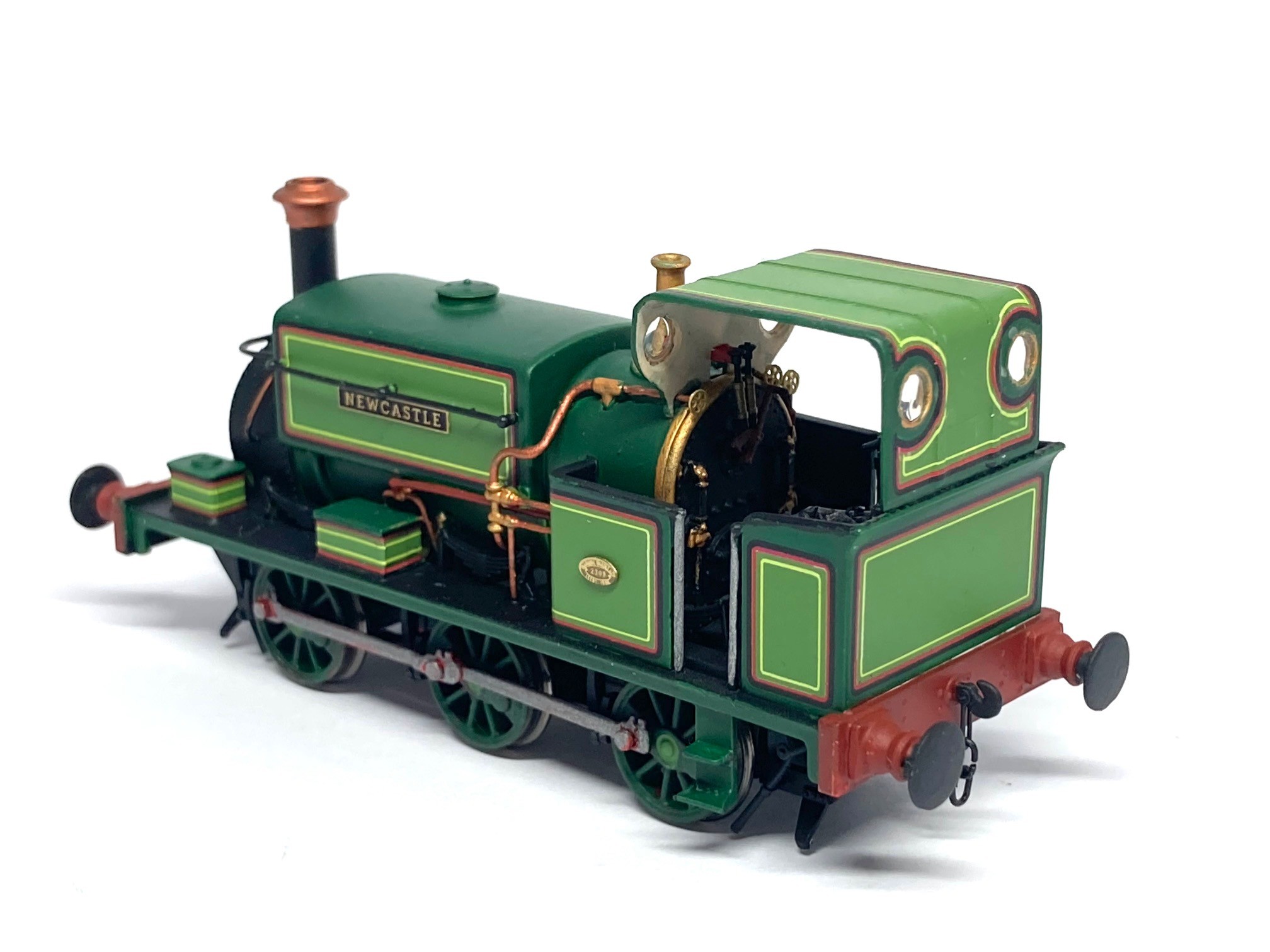
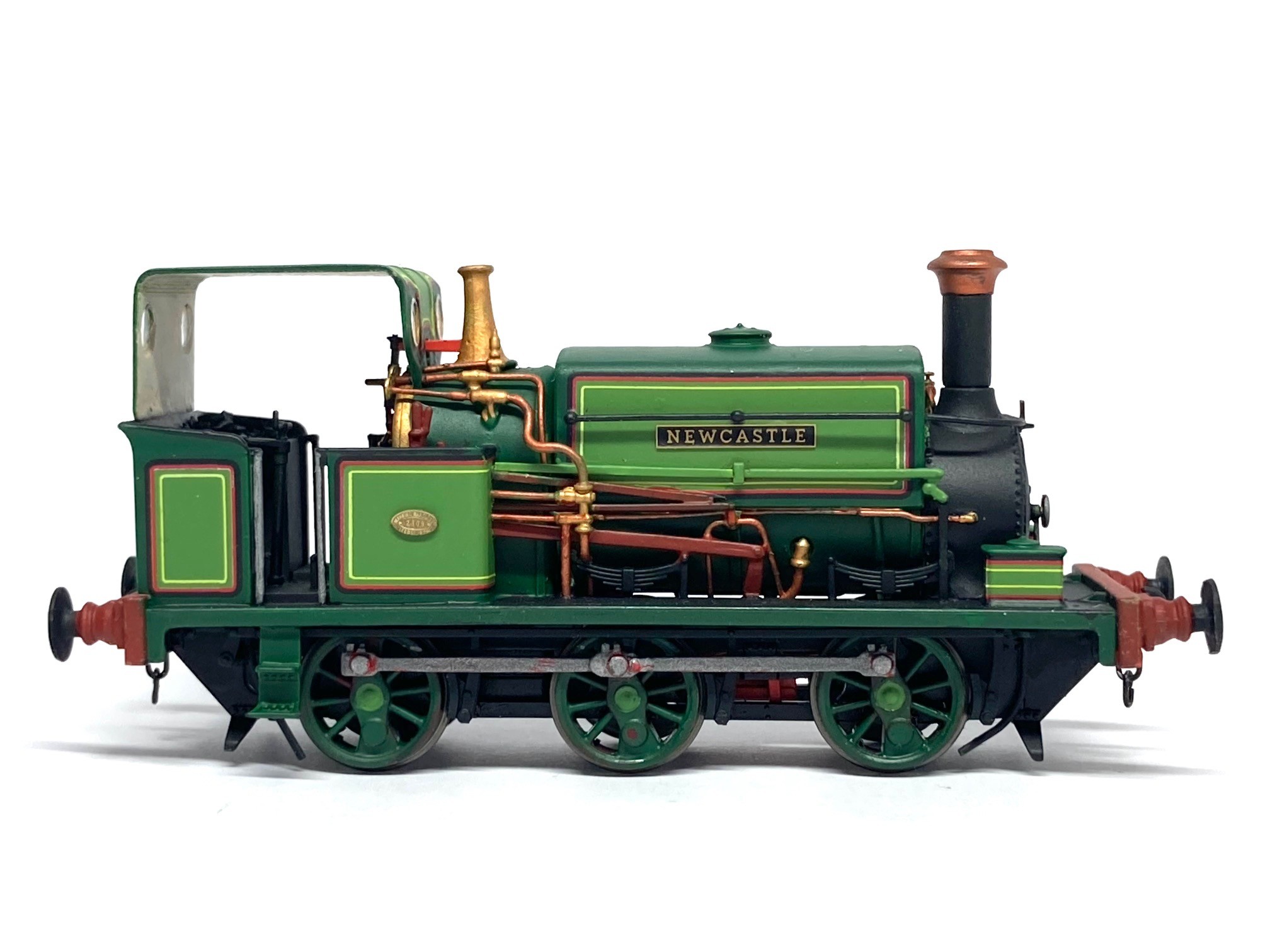
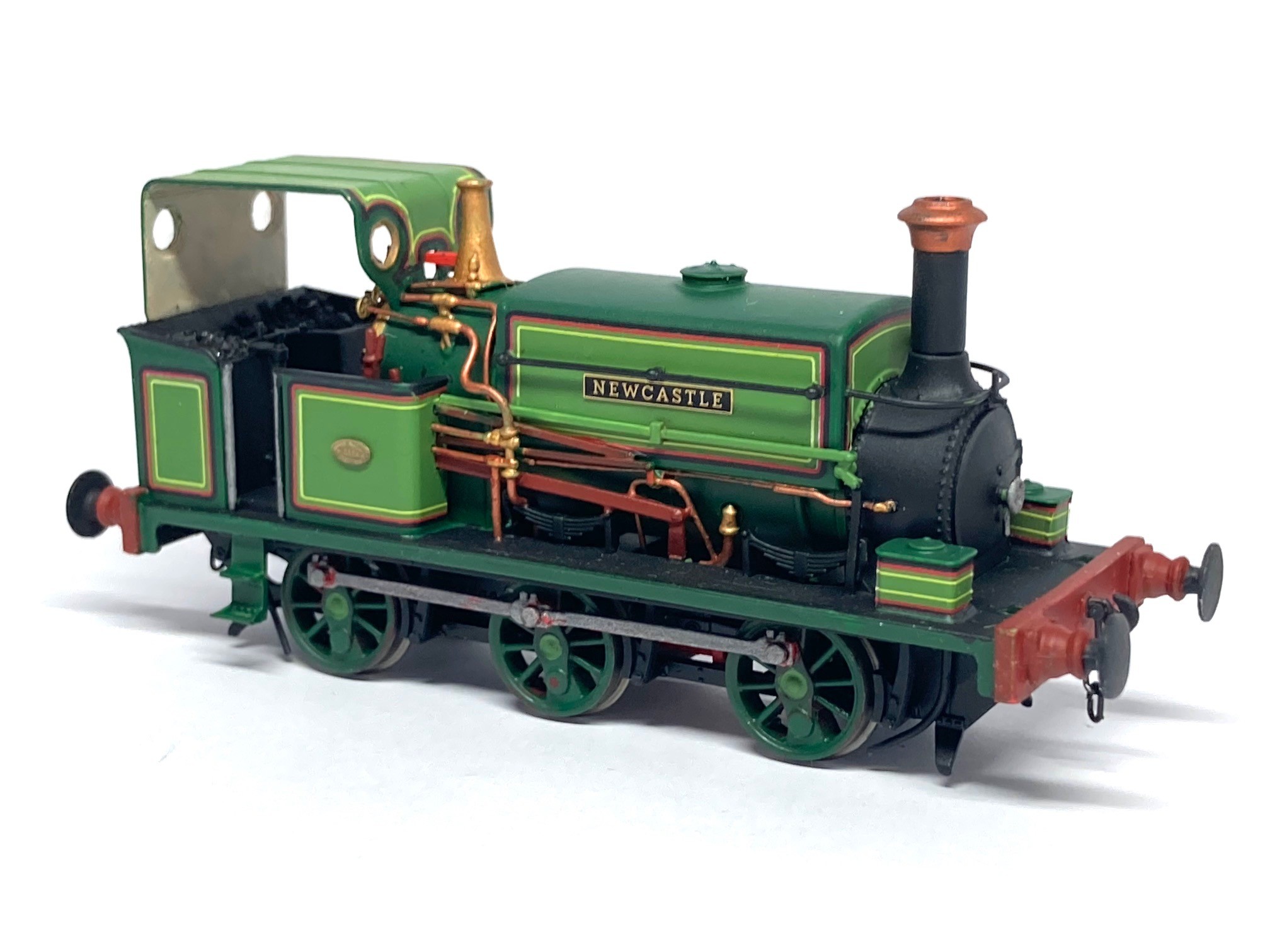
To help with all of this, and because it is hard to take a locomotive to a meeting to explain its appearance, purpose and the ambition of the project, I asked James Hilton if he could turn his talents to adapting the Rapido Ready to Run model of a Manning Wardle L Class into a likeness of Newcastle, as we intend to restore it. James has worked wonders, including creating the etched brass add-on kit for the wrap-over cab roof structure, a distinctive feature of the Manning Wardles albeit not a style carried by Newcastle (which has either had a weatherboard, wooden cab structure or a more substantial fully enclosed cab structure during its working life). Based on study of the Manning Wardle photographs taken by S. W. A Newton in his coverage of the contracts for the construction of the Great Central Railway, the Manning Wardle ‘works’ livery was determined, and James has applied this to the model, to great effect. For those interested in losing more hours than is healthy to a similar pursuit, the website for the Newton archive can be found here: https://imageleicestershire.org.uk/view-item?i=11959&WINID=1795445712481
These photos show the outcome of James’ work, on what is a very small model. The wrap-over cab type has been chosen for operational flexibility at Beamish (and is as much a shade from the sun as a means of staying dry!). Whether we can accommodate footplate rides, as we intend to do with Dunrobin, remains to be seen – there is scope for this, but it will be a challenge to fit in!
No start/completion dates have been set, but Newcastle now occupies quite a bit of my time as the project to bring its restoration to fruition begins to build momentum.
An important book for the museum library
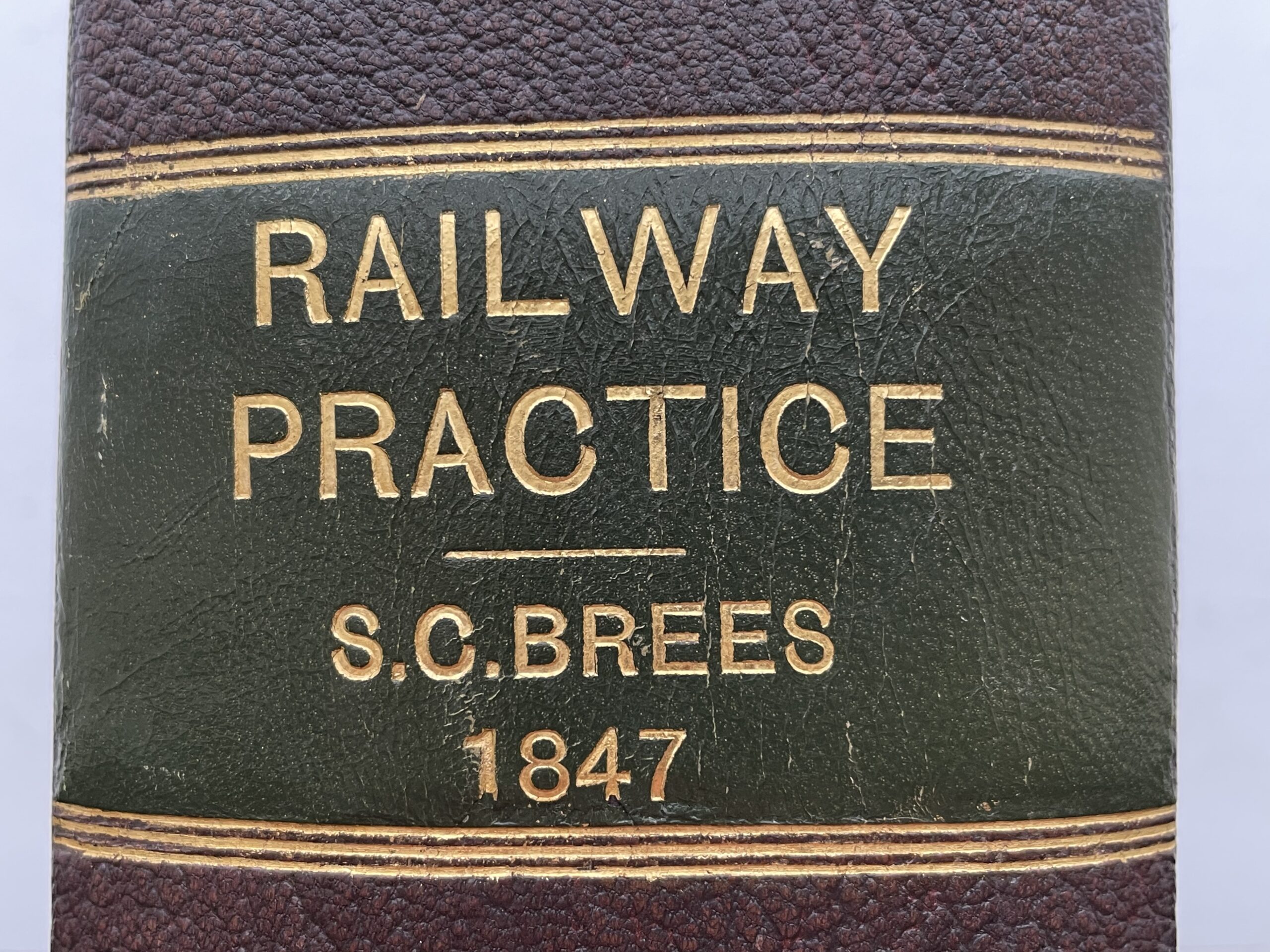
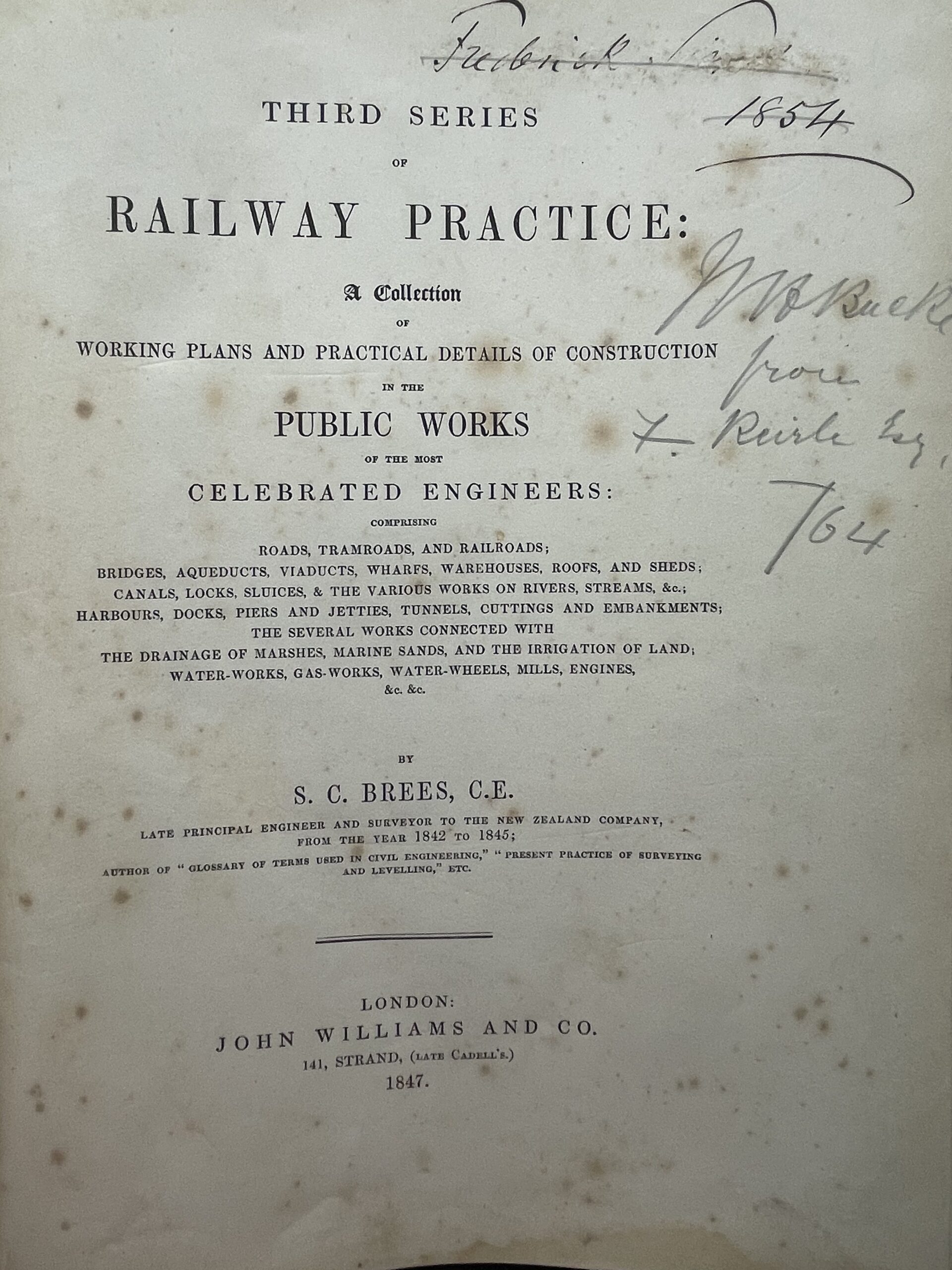
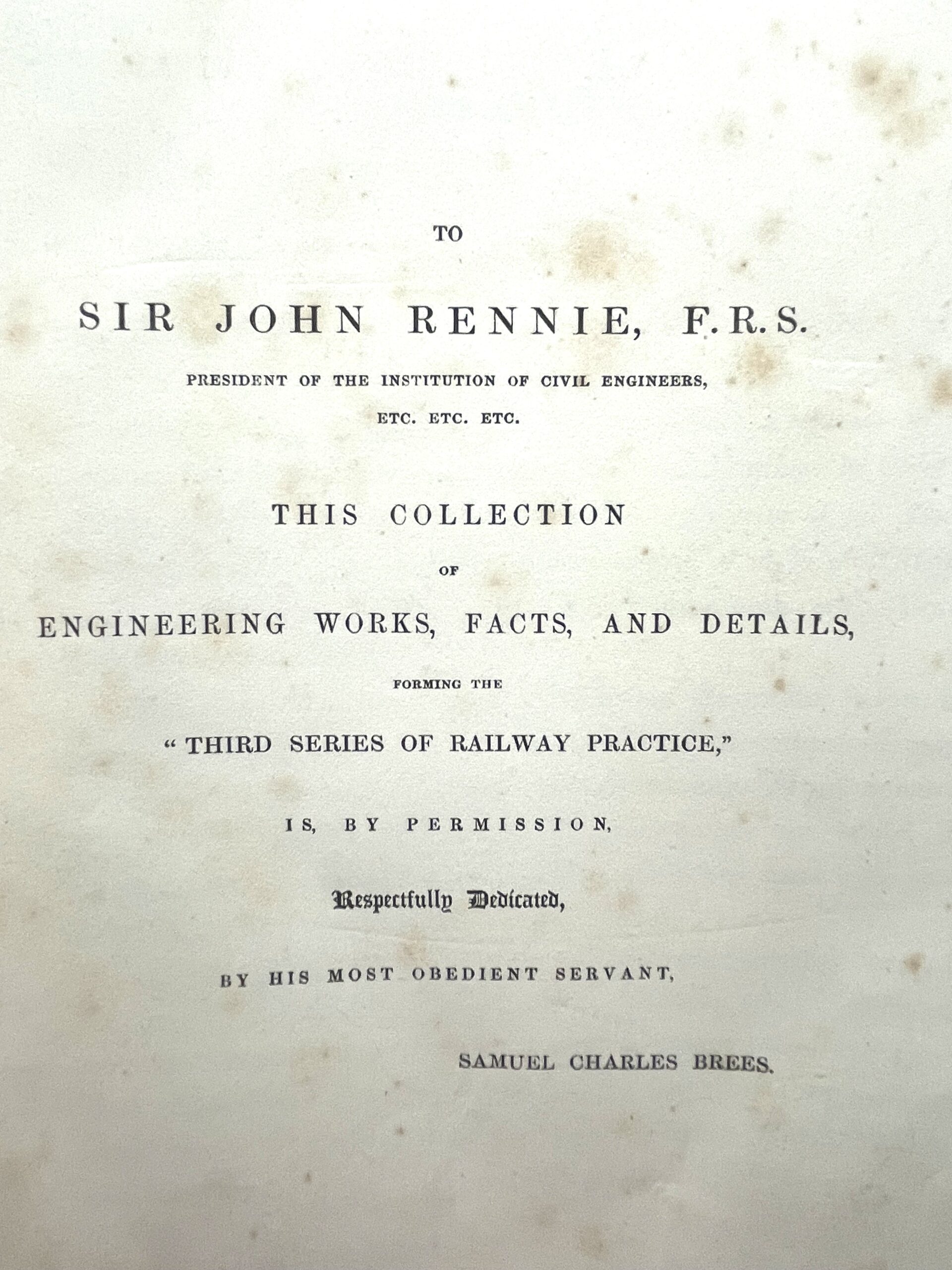
Below: On an altogether different tack, here is a recent purchase made for the library. Railway Practice by S. C. Brees, is a substantial tome, this being the third edition, dated 1847. It is largely created from a translation of authors Auguste Perdonnet and Camille Plonceau’s work ‘Portefeuille de l’Ingenieur des Chemins de Fer’ plus other contributions, and is a technical text covering the civil engineering, mechanical engineering and practical construction of railways of the period.
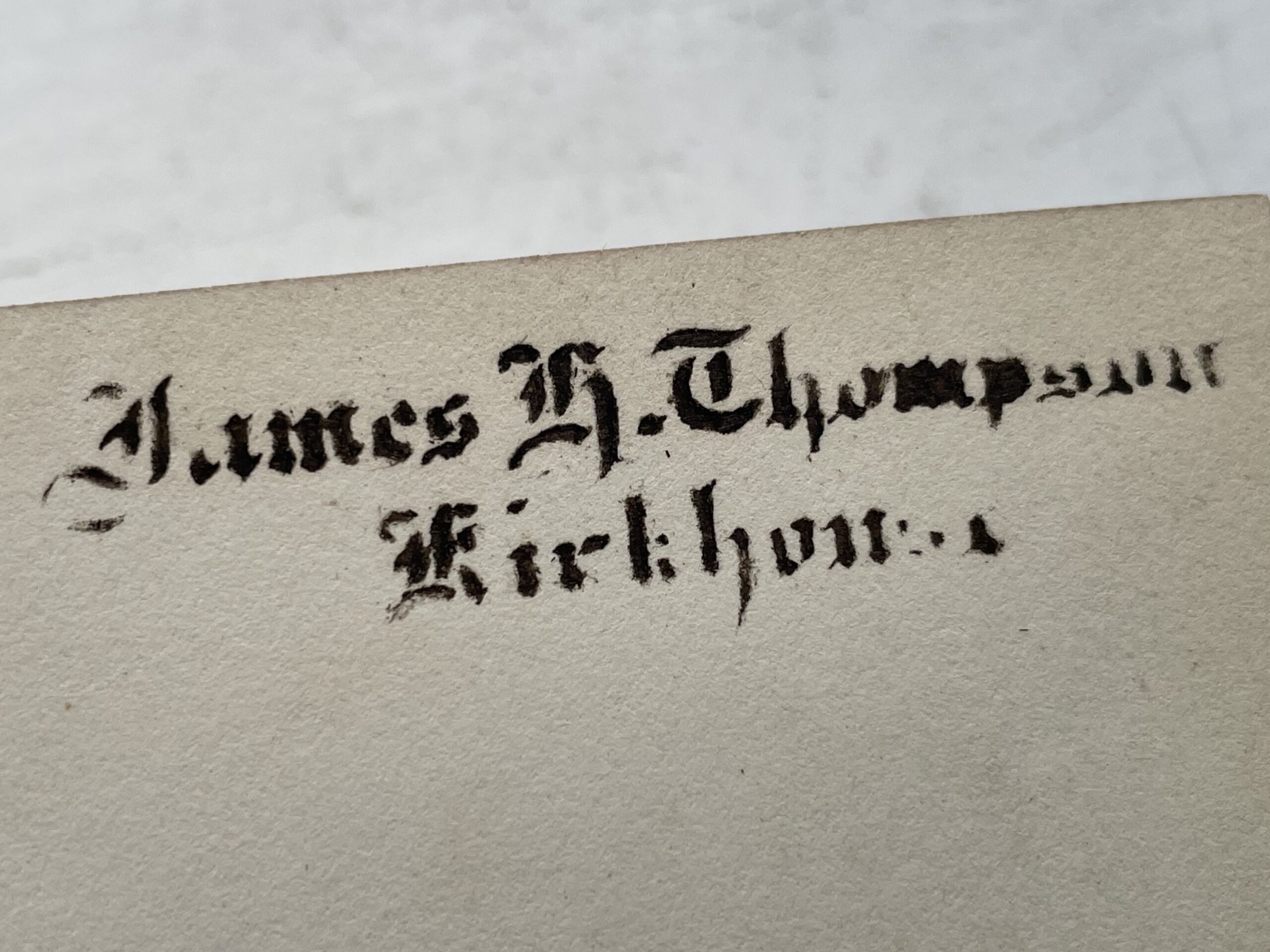
Below: What makes this actual volume of particular interest is the inscription on the preface page – identifying the book’s owner as James Thompson of Kirkhouse. Thompson was appointed agent to the Earl of Carlisle in 1819. He developed the Earl of Carlisle’s collieries and in turn the Waggonways and Railways that distributed their coal. This network developed into what became known as the Brampton Railway, and included a survey by George Stephenson of the line from Brampton to Hallbankgate via Kirkhouse in 1835-36. Thompson was convinced of the value of railways and the employment of steam locomotives upon them, but perhaps his best-known association with the technology is as the purchase of Stephenson’s Rocket from the Liverpool and Manchester Railway in 1837. This £300 investment ensured its survival beyond it’s 1841 withdrawal from use, enabling it to eventually be presented to the patent Museum in South Kensington in 1862. Thompson died in 1851, at the age of 56.
Readers may feel the association ‘Brampton’ is a familiar one. The Brampton ‘Dandy’ was a passenger service operated over a section of the Lord Carlisle’s railway. The service commenced in 1833, with three coaches (two open, as below, and one covered), these being named ‘Black Diamond, Mountaineer and Experiment. It has been suggested the passenger operation began as early as 1829. It became official in 1836, linking Brampton (Brampton staithe being the coal embarkation point by river, the Lord Carlisle’s railway being built to serve a number of collieries in the vicinity) with Milton Station on the newly opened Newcastle & Carlisle Railway – a distance of around 1 3/4 miles. The original route had been superseded in 1836 by a new line, to accommodate the N&CR line and the gradients enabled partial gravity working to be a feature of operation.
In July 1881, after forty-five years, the horse drawn service was replaced by a steam hauled service, using former London & North Western Railway coaches. The former Dandy coaches were then withdrawn, though one, named Kirkhouse, was used (sans original roof) as a directors inspection coach. The open coach provided the inspiration for the re-designed brake coach on the Waggonway here at Beamish, utilising a chaldron chassis with a new body that also included accommodation for passengers as well as the guard’s position at one end of the coach. You can revisit the relevant blog post here: https://beamishtransportonline.co.uk/2018/07/ti-news-11-2018/
Photographs by James Hilton and Paul Jarman


Recent Comments