

Transport & Engineering Diary March 2026
At last the long wet days of winter seem behind us, with some good weather and corresponding good progress on numerous projects outside, and the ability to paint in warmer temperatures in the Tram Depot achieved inside once again. A great deal has been taking place ahead of the Easter holidays, and it is always reassuring to see steam locomotives arriving and being readied for operation over the holiday fortnight.
The blog is moving…
Readers will be interested to see the new museum website ( www.beamishmuseum.org.uk ) which is particularly well-suited to viewing on mobile phones. The news section contains a number of recent blog posts in a new format, and the intention is, after March this year, to move across to this new platform for all transport news. I’ll maintain the existing site as an archive for 12 months or so, at least, but the latest news will shortly appear alongside other museum developments on the new platform and won’t be repeated on this site. The Communications Team have very kindly placed around 18 months of posts on the new site already, and I just need to learn how to make new posts on there to complete the transfer.
Rowley Station – Easter Motive Power
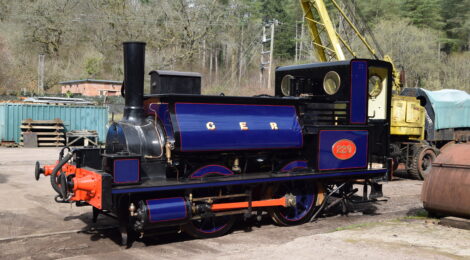
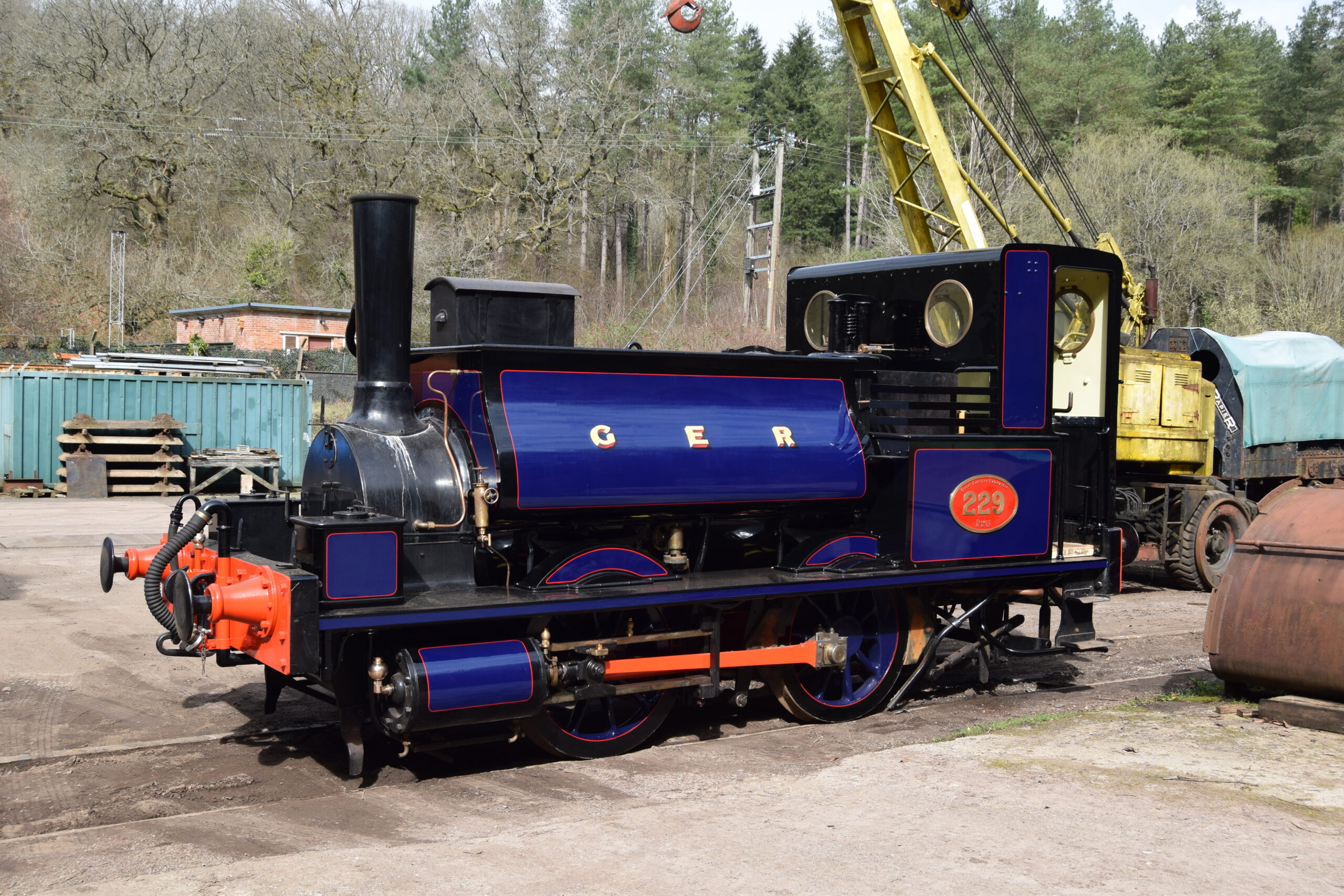
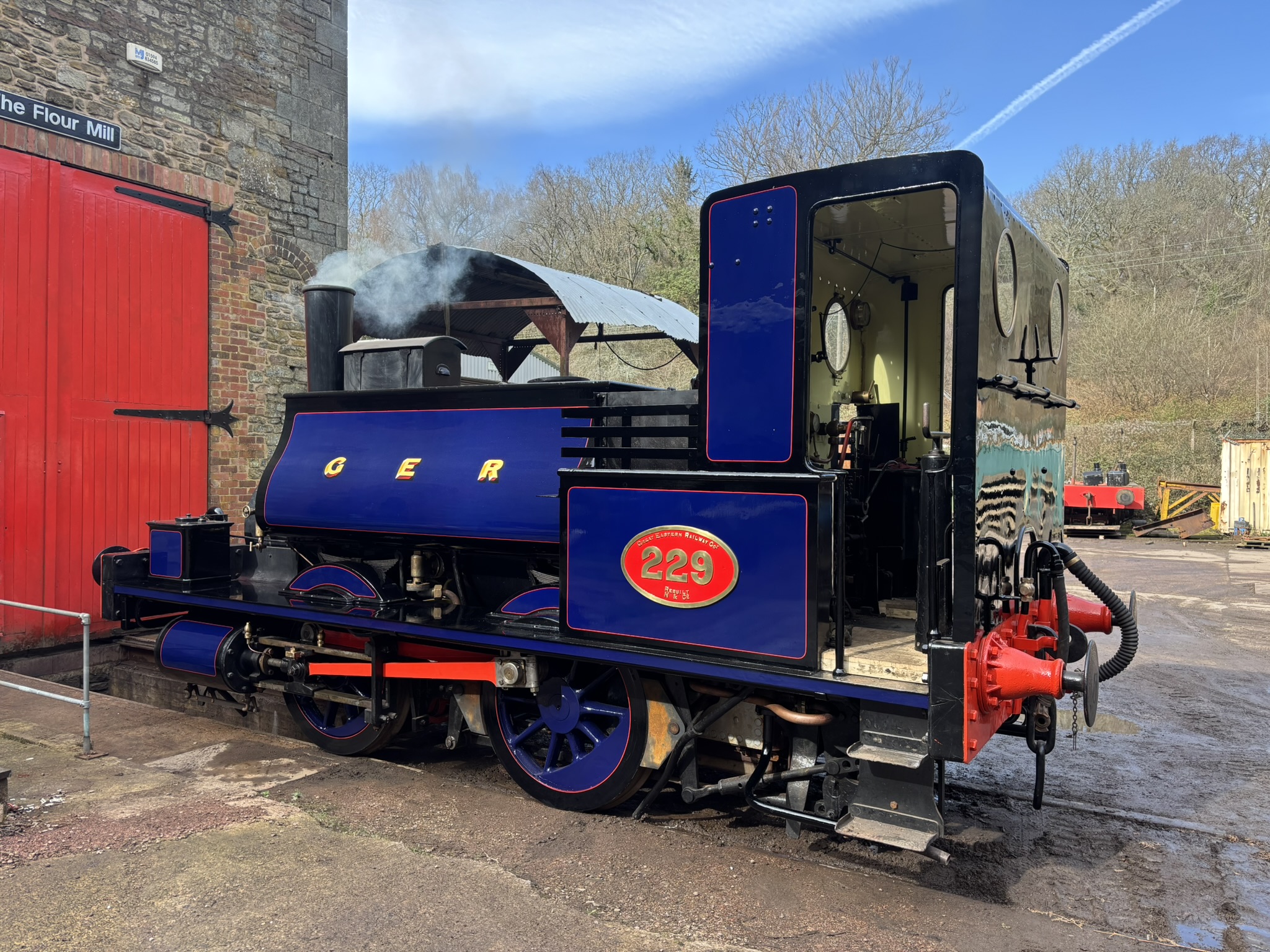
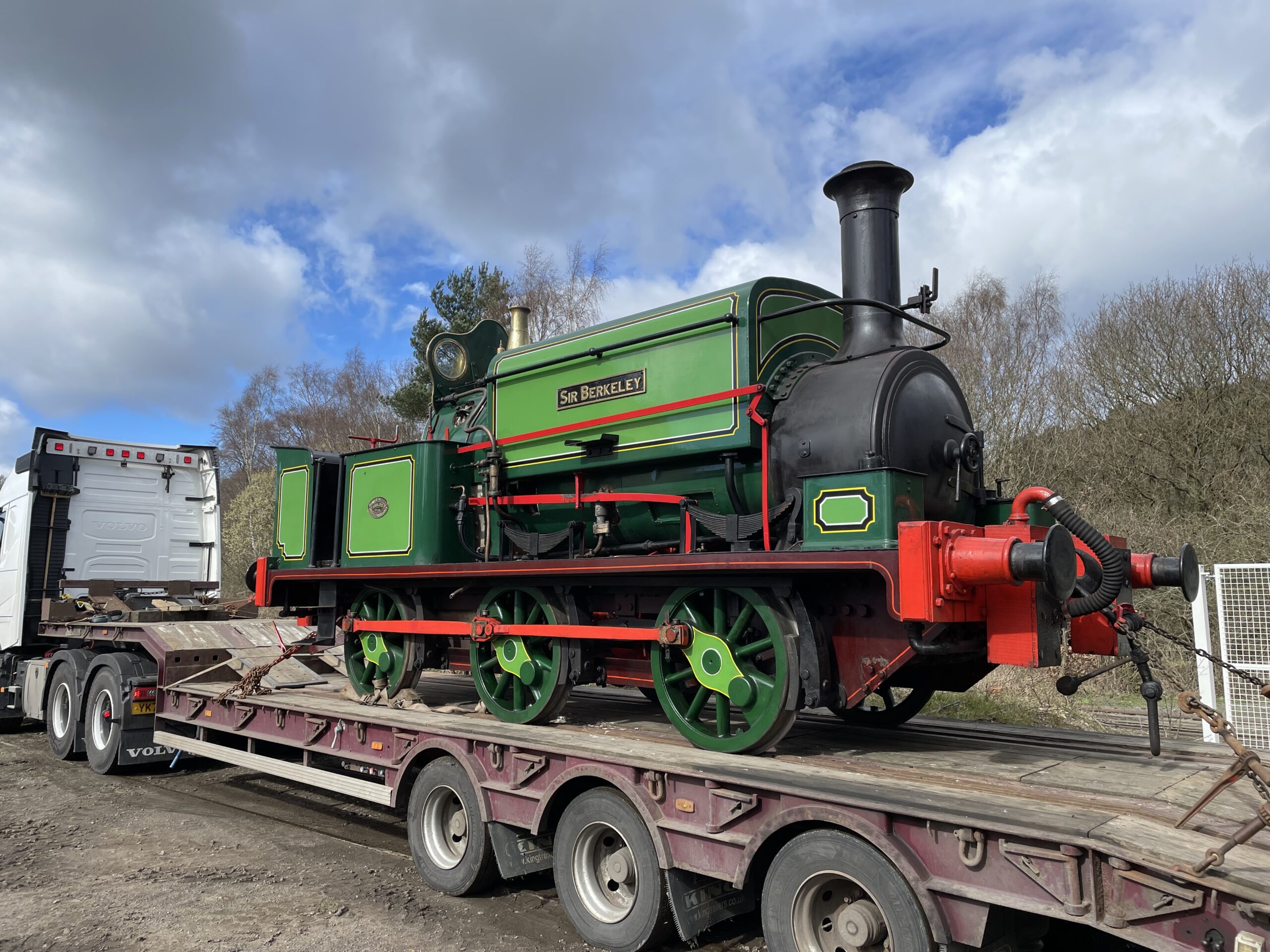
The NER Branch will be operating every day of the Easter holidays (subject to the usual caveats about breakdowns etc.). Motive power will one of either GER 229, which appears courtesy of Bill Parker and the Flour Mill workshop in the Forest of Dean or Sir Berkeley, courtesy of the Vintage Carriage Trust and Middleton Railway.
Below: GER 229 is newly restored and has been outshopped in the glorious Great Eastern Railway Ultramarine Blue livery.
Below: Sir Berkeley has visited Beamish on two previous occasions, looking very much at home in the Beamish setting.
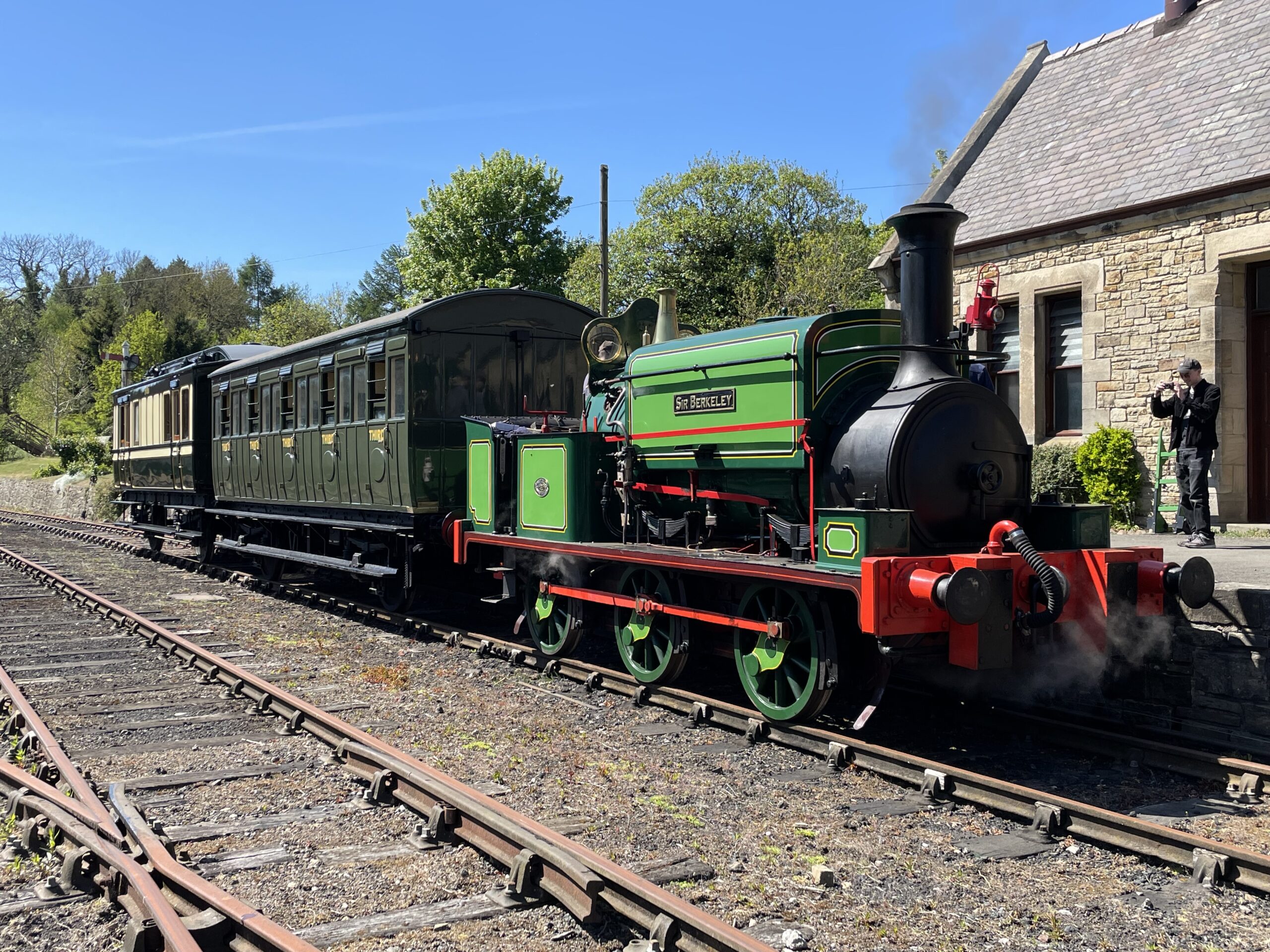
Below: Sir Berkeley arrived at Beamish on the 25/03/26 and was soon unloaded and shunted to the Regional Museum Store pending a Fitness To Run examination and test steaming the following week. GER 229 is due to arrive on Monday 30th, with test running of both locomotives due to take place later in the week. Passenger trains at Rowley will commence on Good Friday. I’ll separately put a steaming date list onto this site with which loco is planned to operate on which days of the holiday period.
Tramway
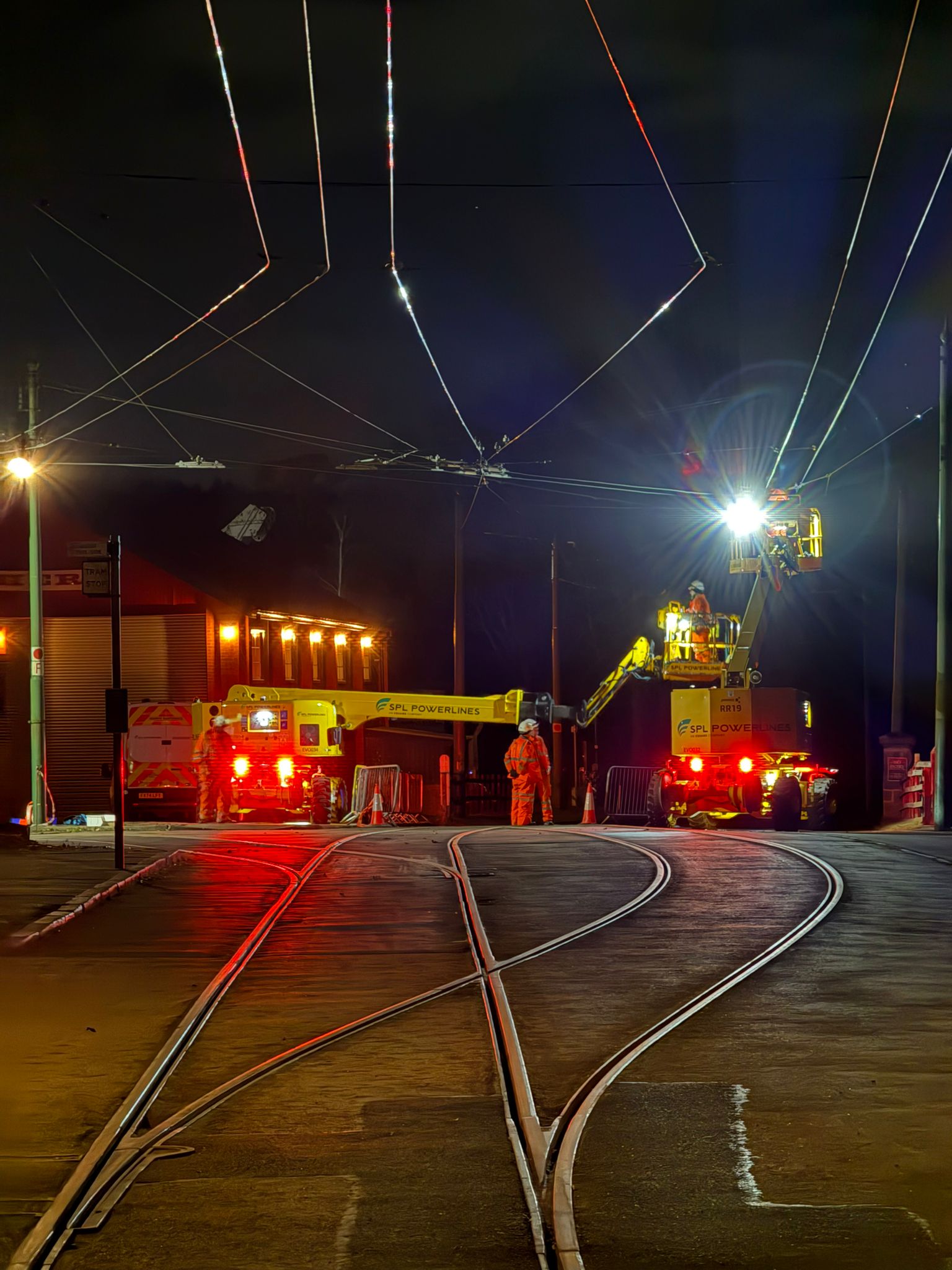
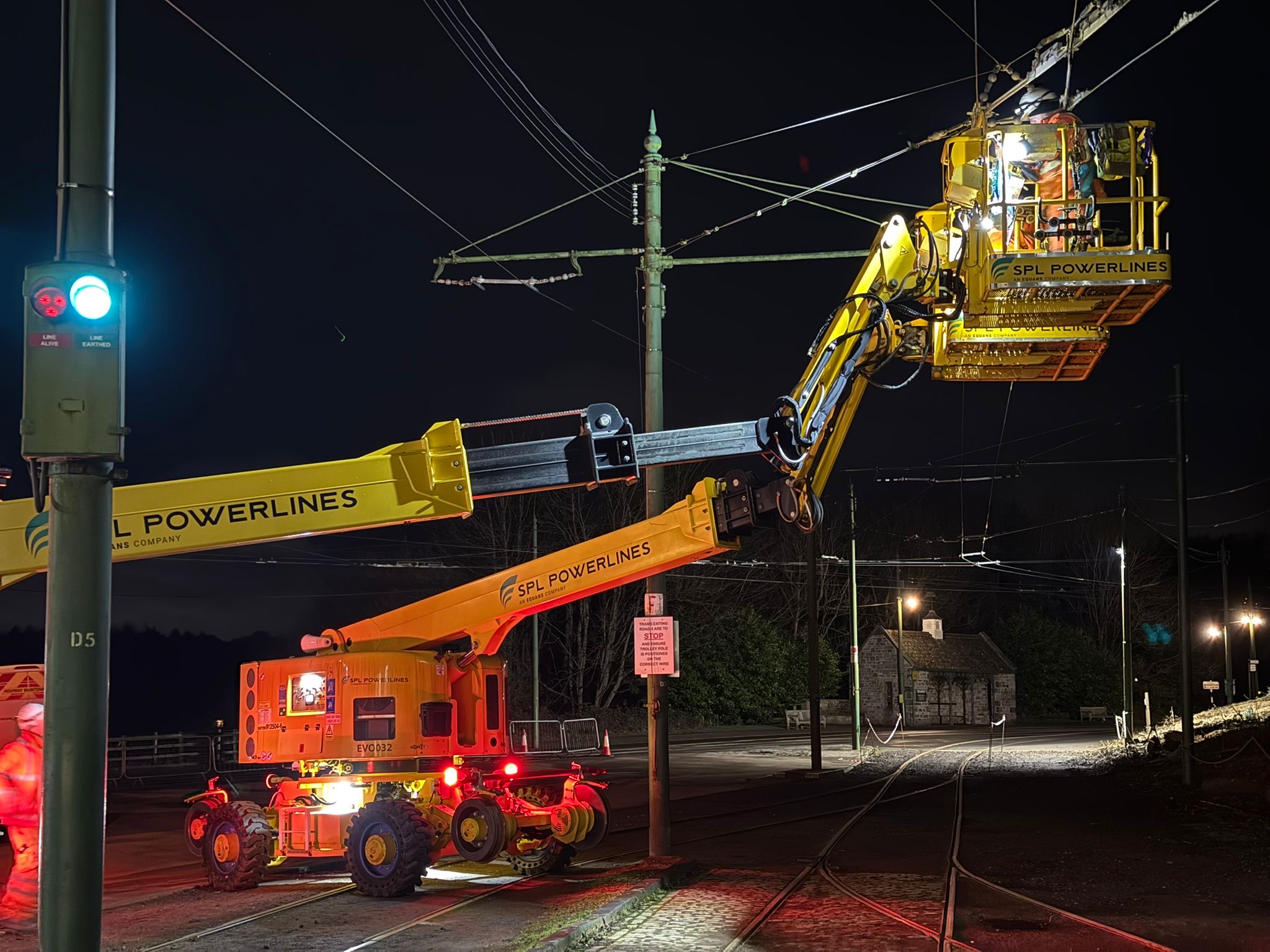
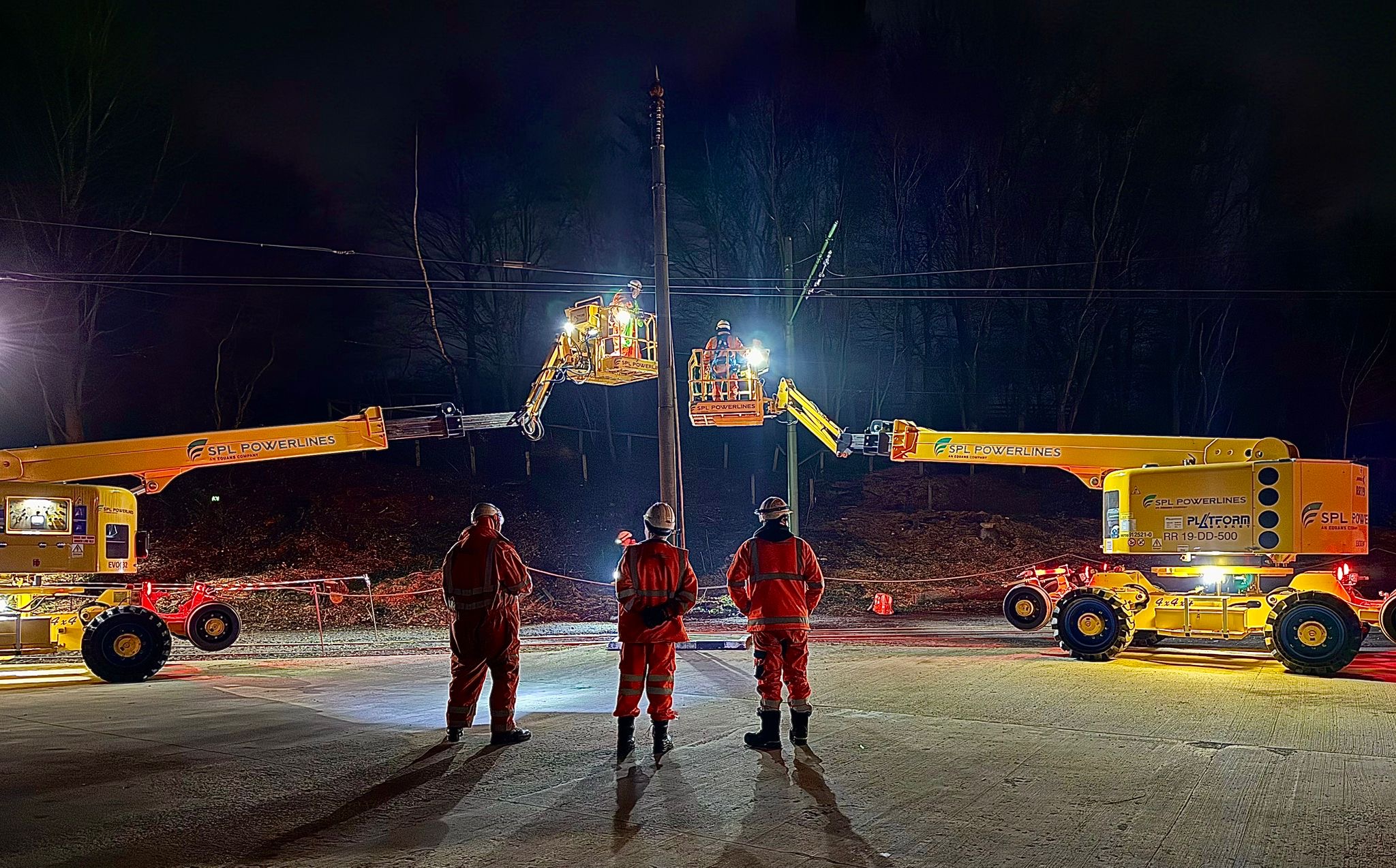
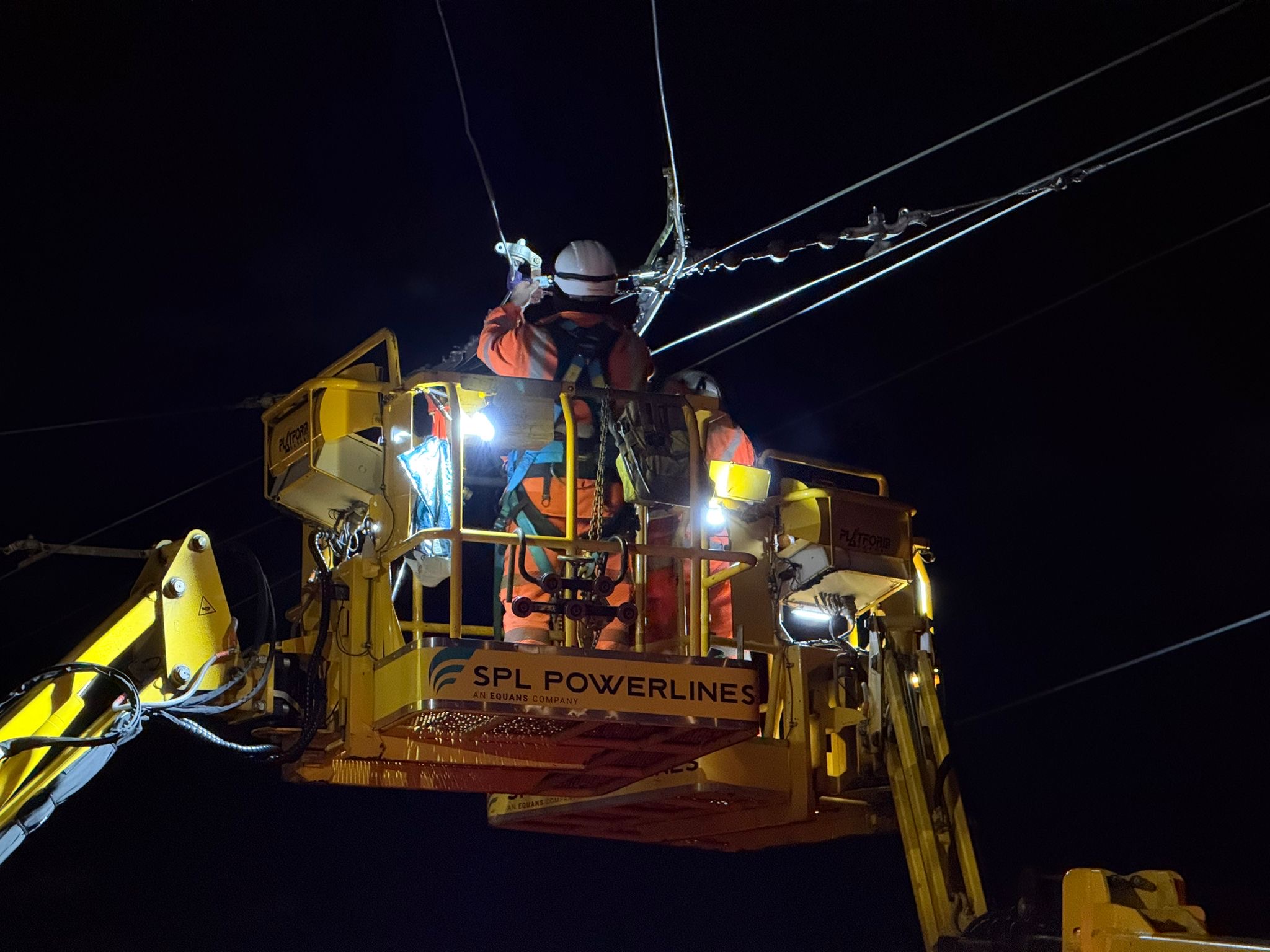
Below: A number of overnight working sessions by contractor SPL have been taking place this month, replacing life-expired span wires on the Tramway overhead line. Also tackled is a programme of replacement of section insulators and some insulators. David Moseley took the following views showing the cherry-picker ballet as the work is undertaken at night so as to minimise disruption to the museum operation.
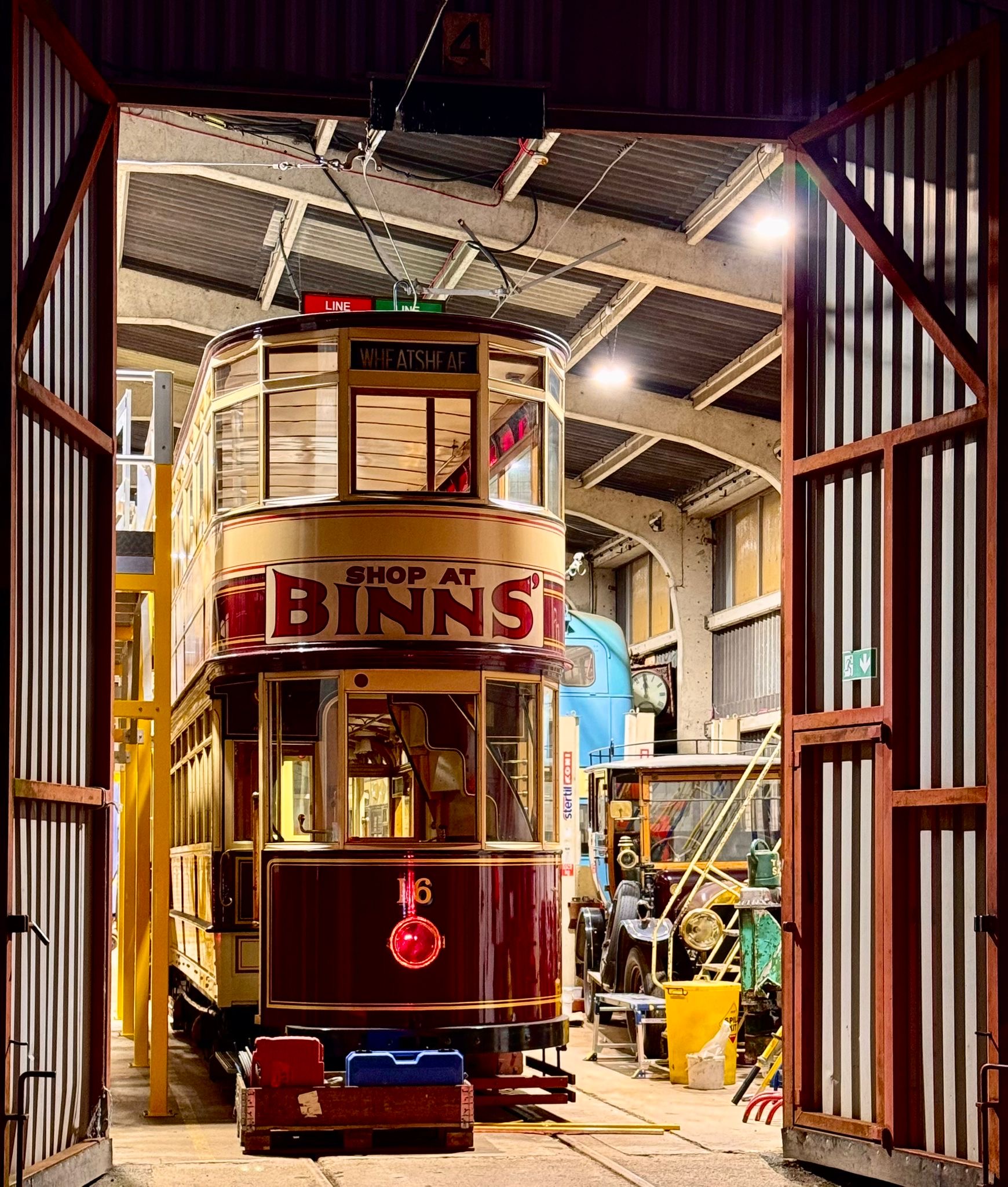
Below: Sunderland 16 peers out into the darkness whilst work is underway in the depot yard.
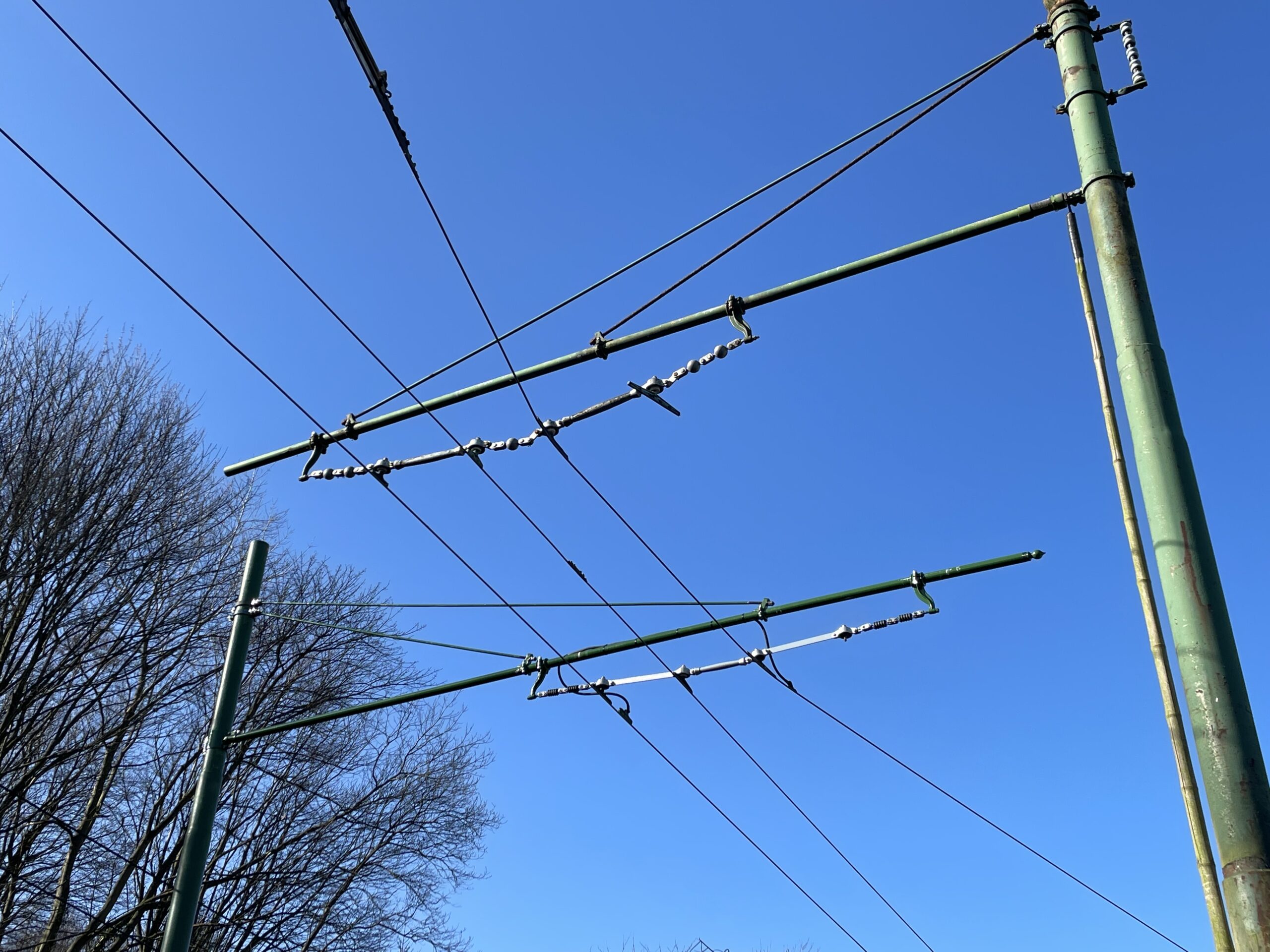
Below: The new traction pole and bracket arm (to the rear) are now bearing weight, which will allow the disconnection and removal of the pole nearest the camera, part of the work to create a turning area at Foulbridge, in front of the tram and bus depot.
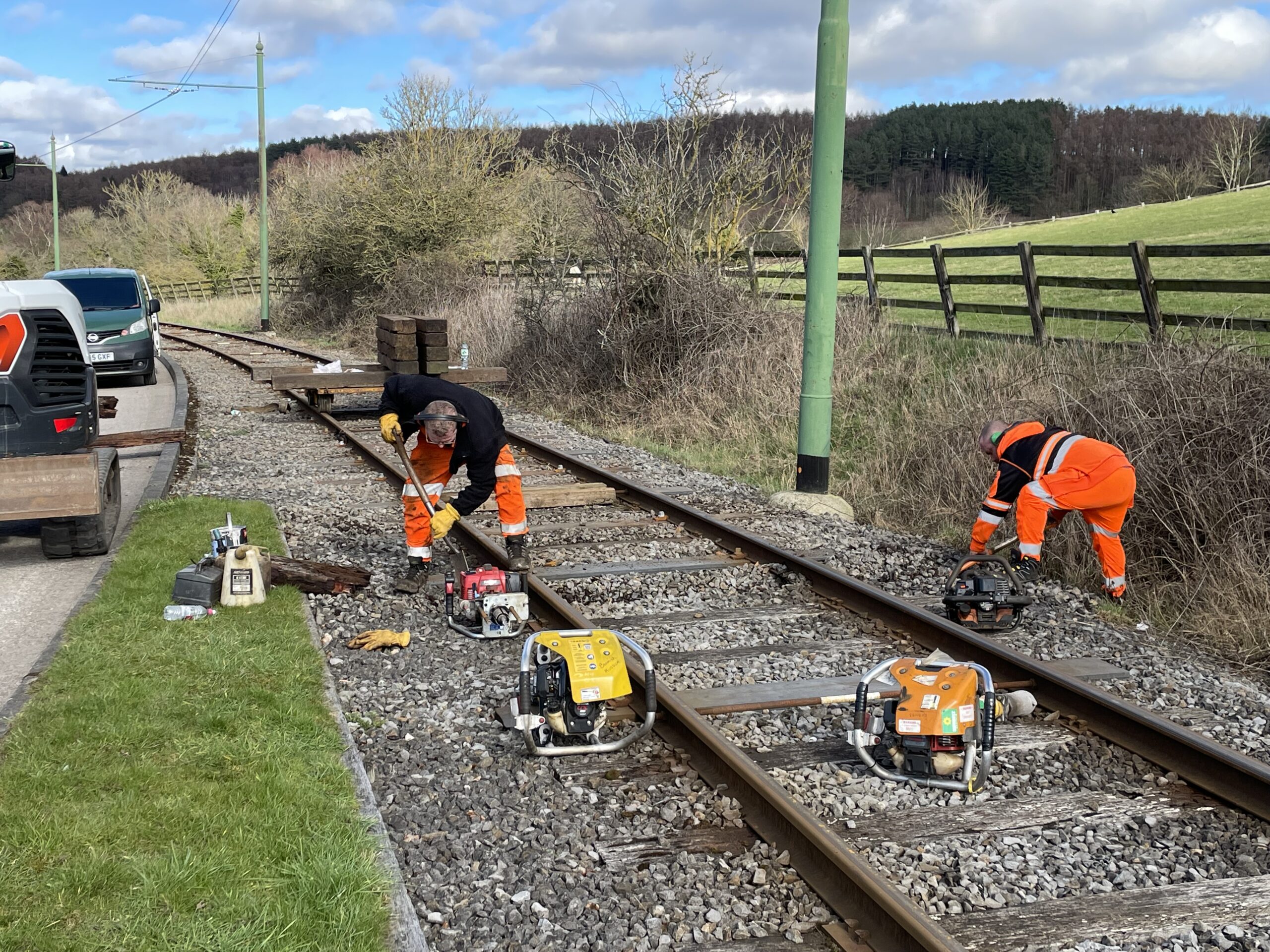
Below: The PW team is also engaged on renewal work, changing sleepers near to the Pockerley Tram Stop.
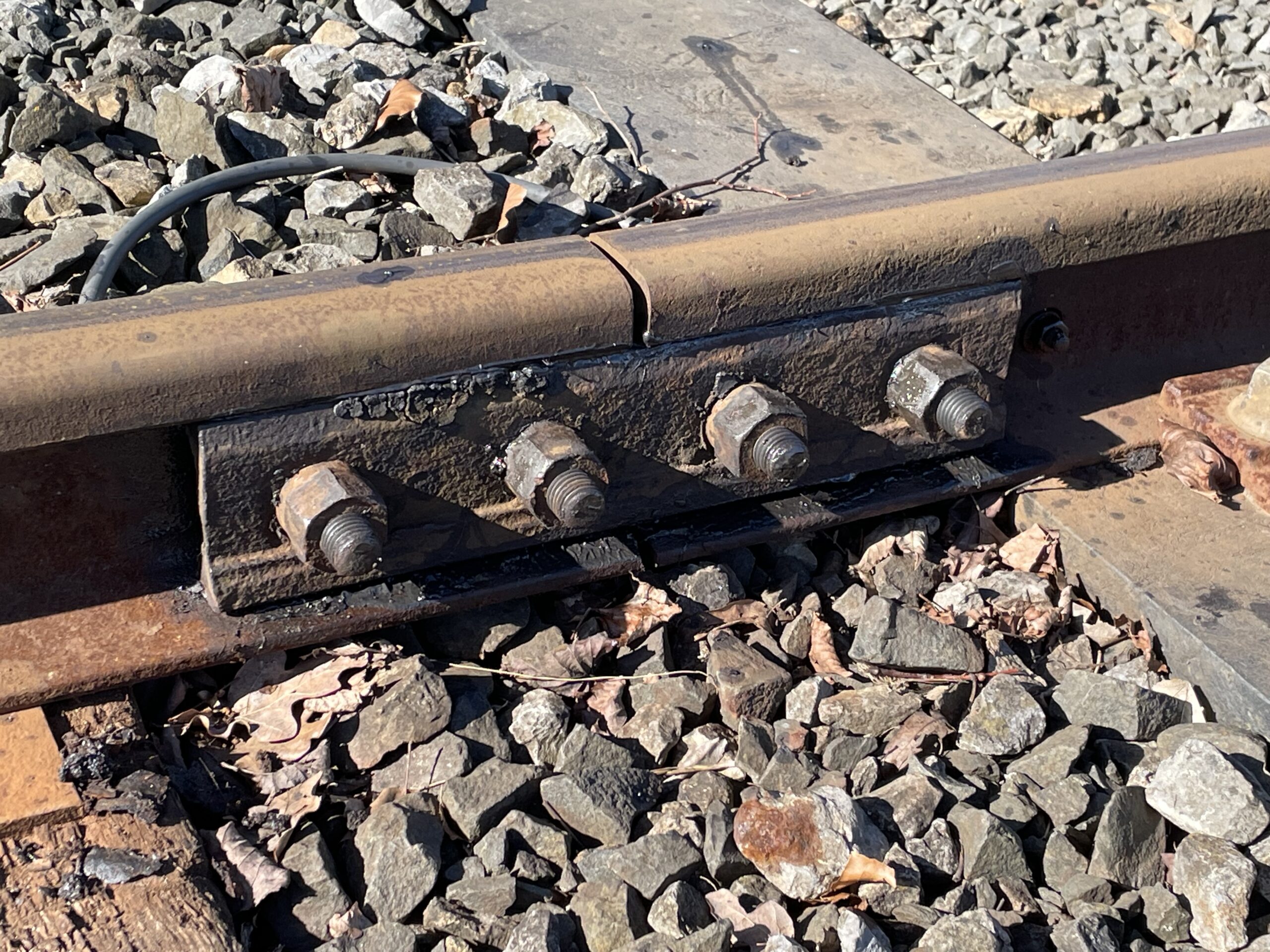
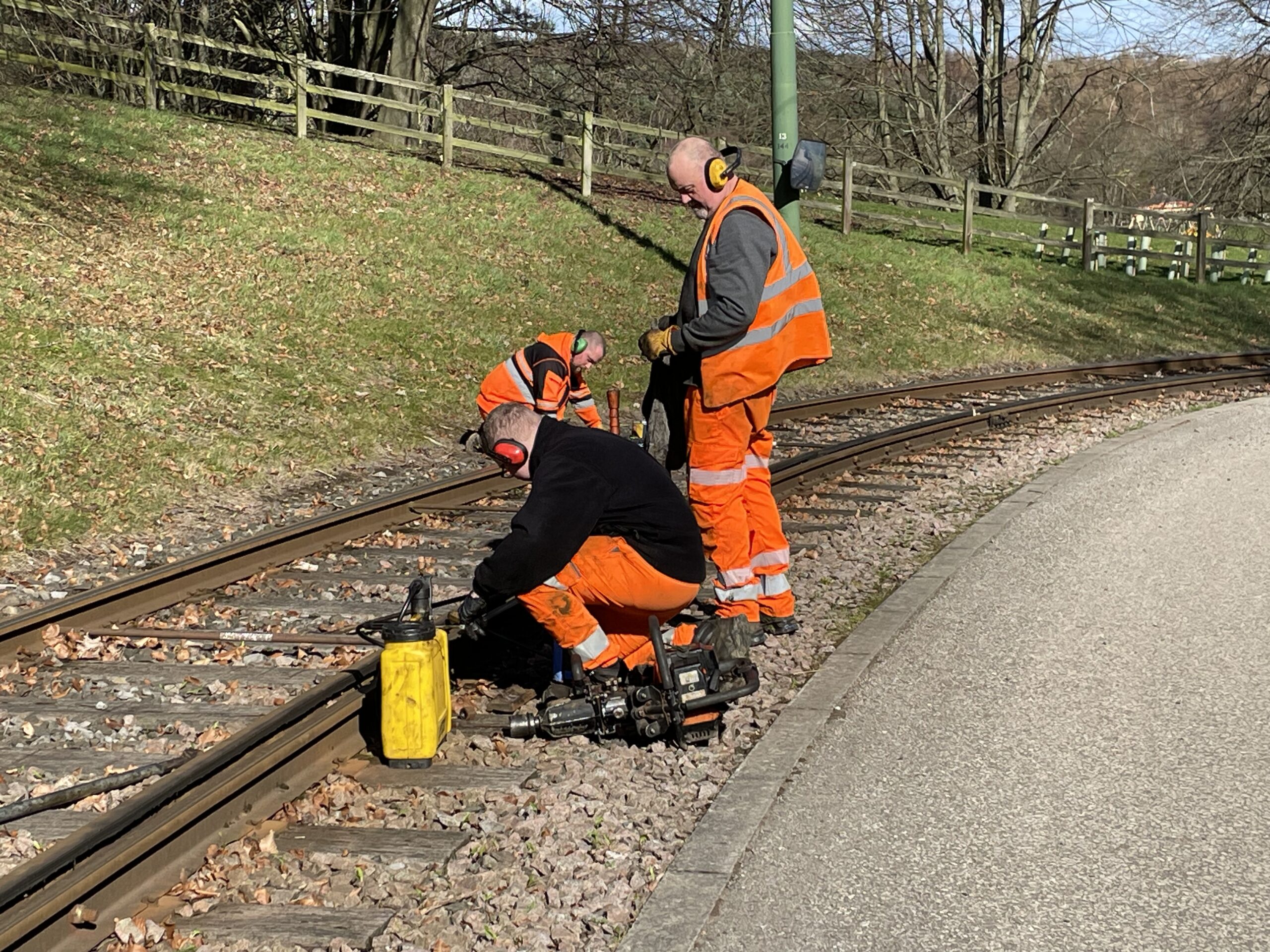
Below: The team has also been out removing, inspecting, greasing and re-fitting fishplates on the Tramway. This is important work as the rails, as they expand and contract, rely on a degree of movement where they are joined to adjacent rails using paired plates, called fishplates. It is also an opportunity to inspect the rail ends and the fishbolt holes, for any cracking or damage caused by the movement of wheels across the rail head.
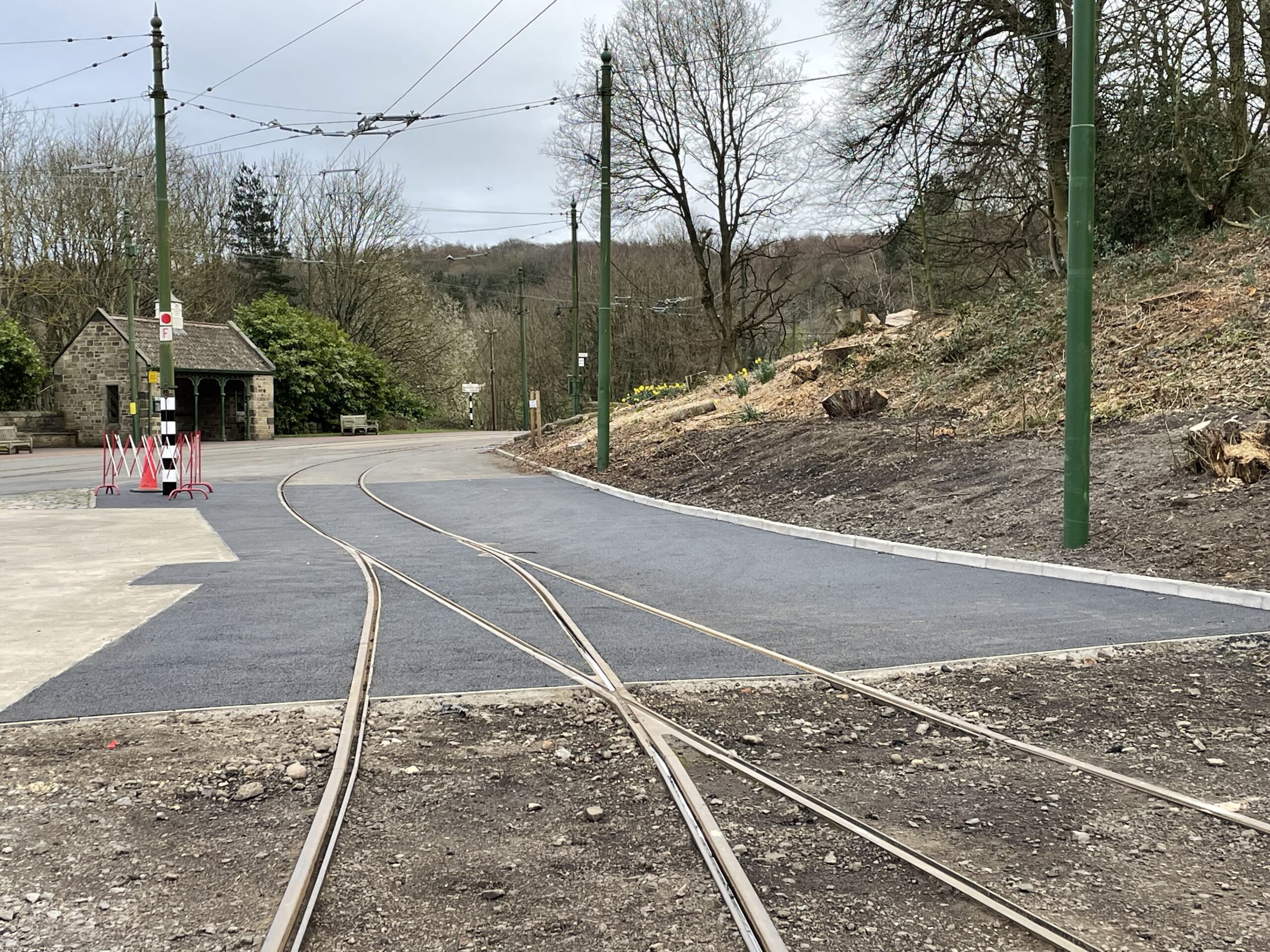
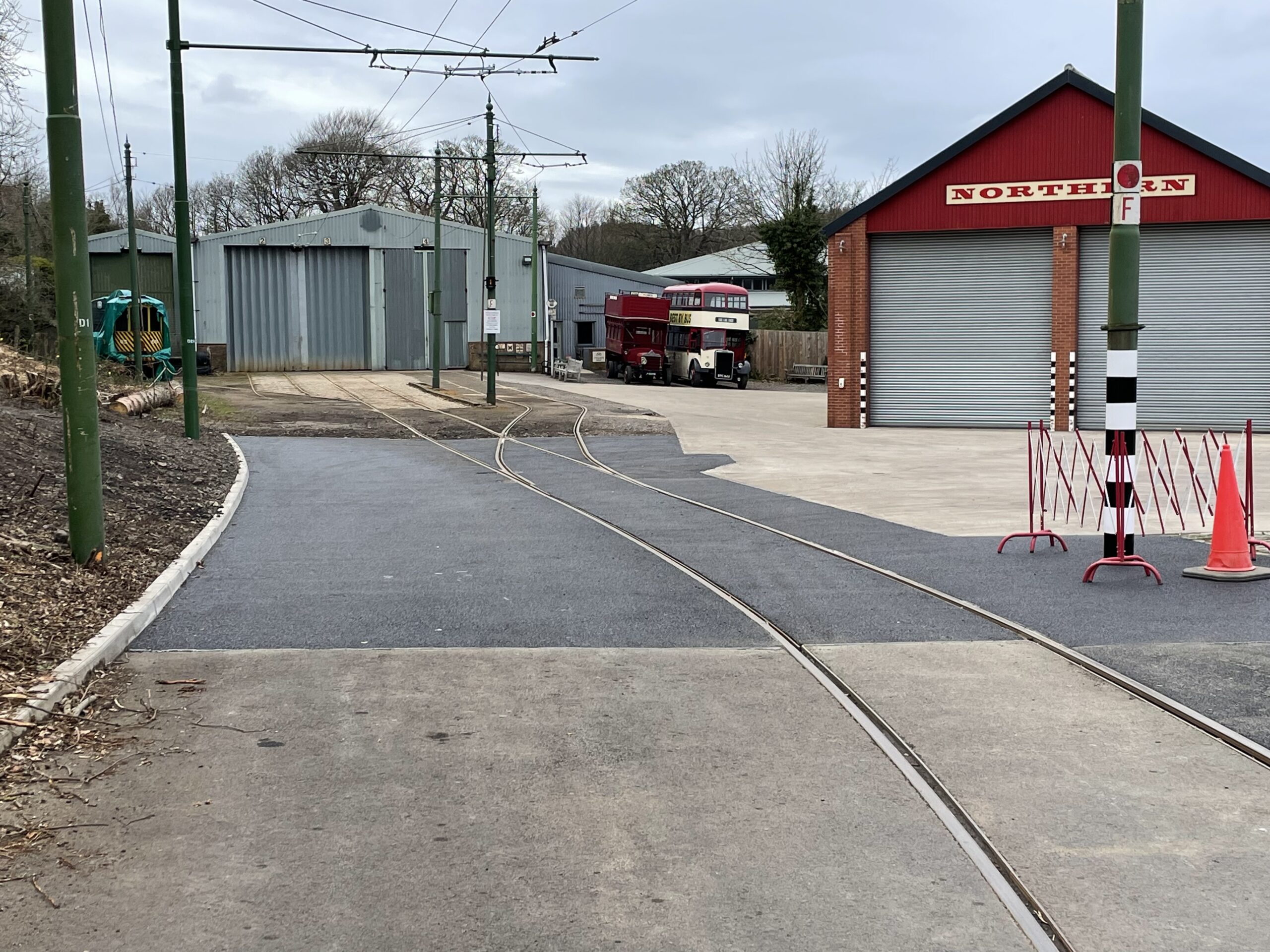
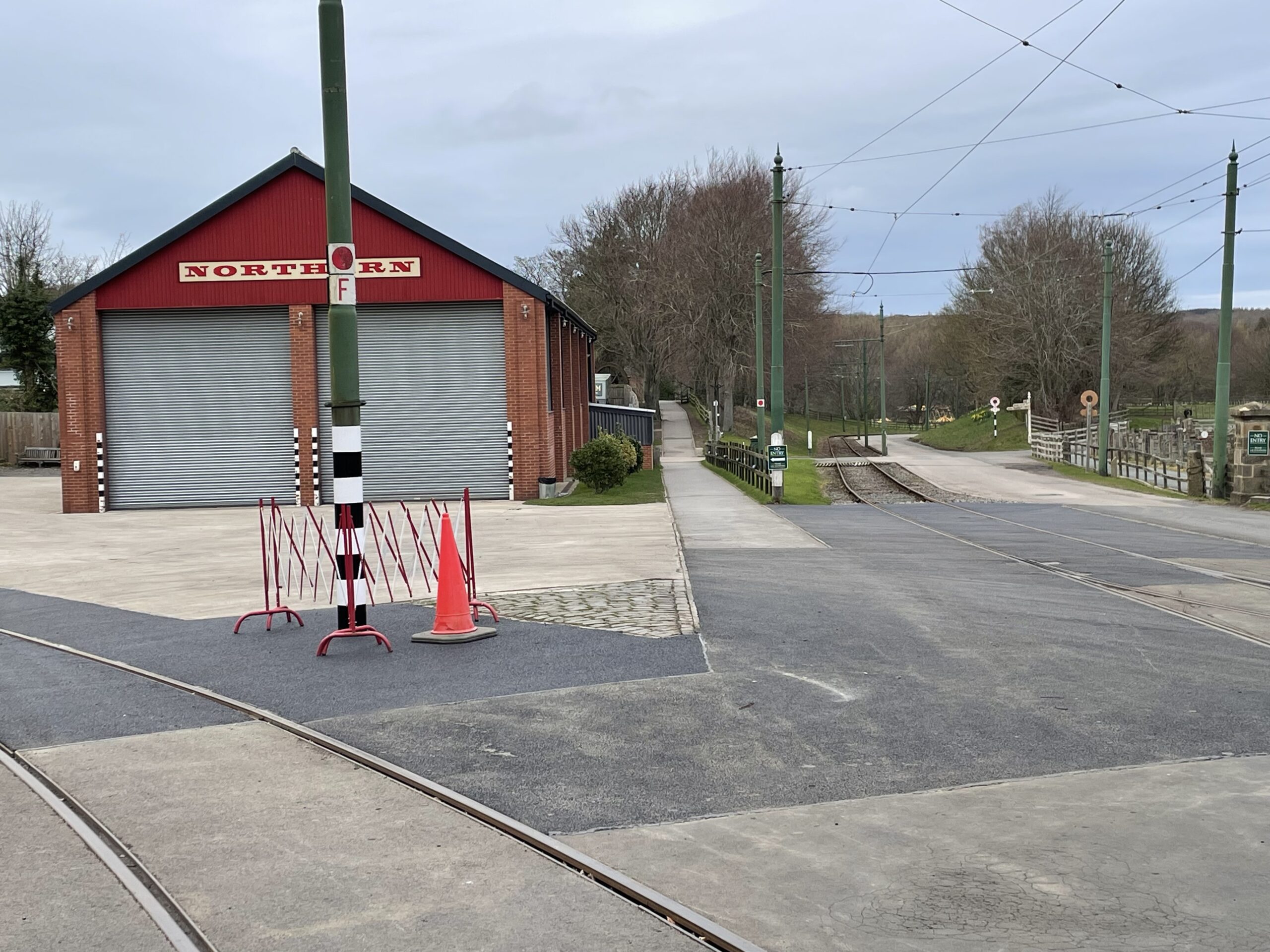
Work has been undertaken to fill the section of tramway adjacent to the Foulbridge tram stop, and surface the corresponding area of depot yard. This will enable us to create a designated turning area for vehicles that need access to the Colliery and enable them to go ‘right way round’ on what will effectively be a roundabout. They will also avoid crossing onto the pavement adjacent to the tram stop as well.
Below: The completed work, prior to marking out of a clear swept path for buses making the turn for the Colliery (and return). We are starting to look at renewal of the tramway track outside the depot, as well as some other safety measures to make the area better suited to what is as busy-a bus operation as Tramway one. The small matter of funding this remains to be addressed, however.
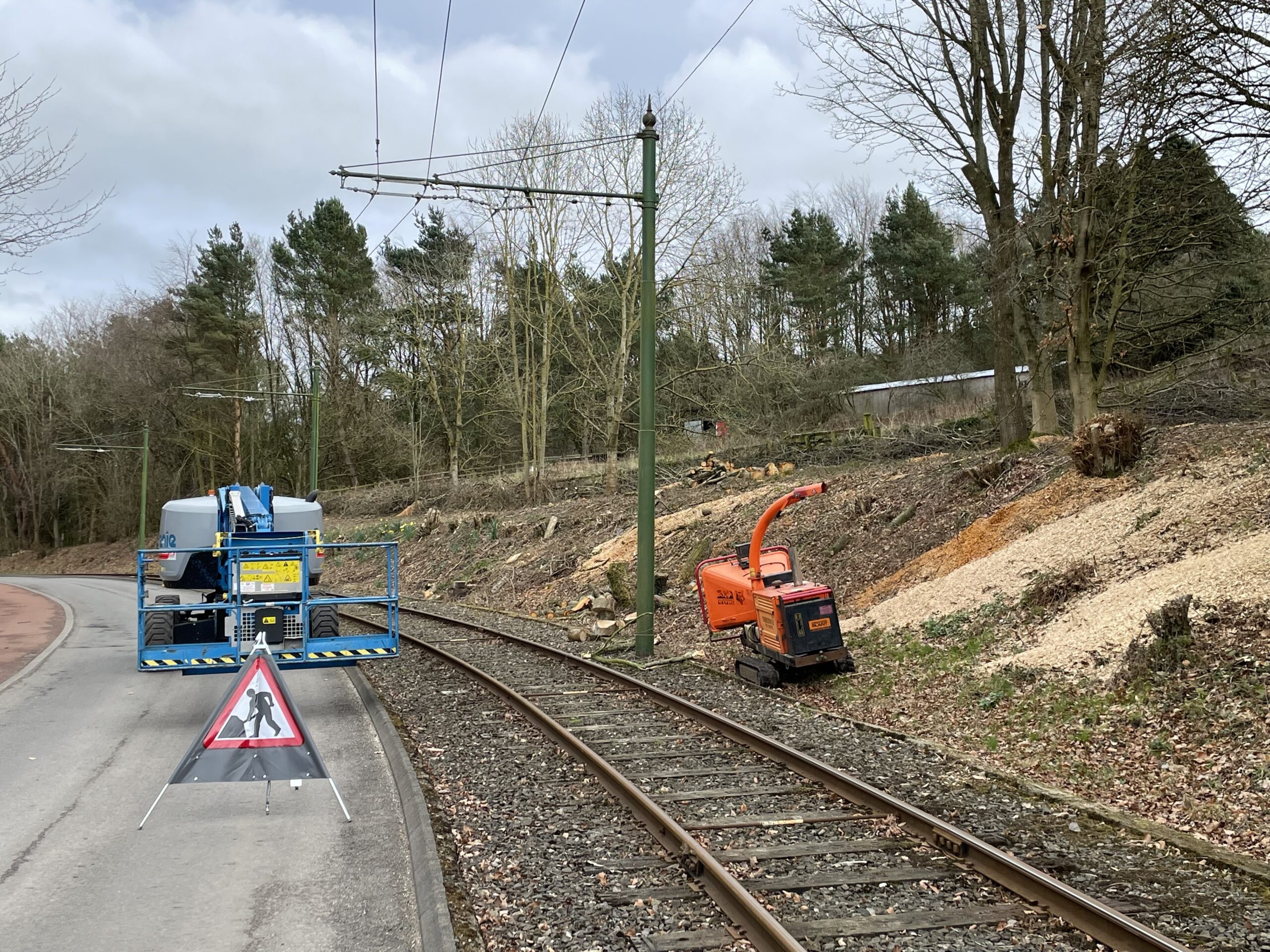
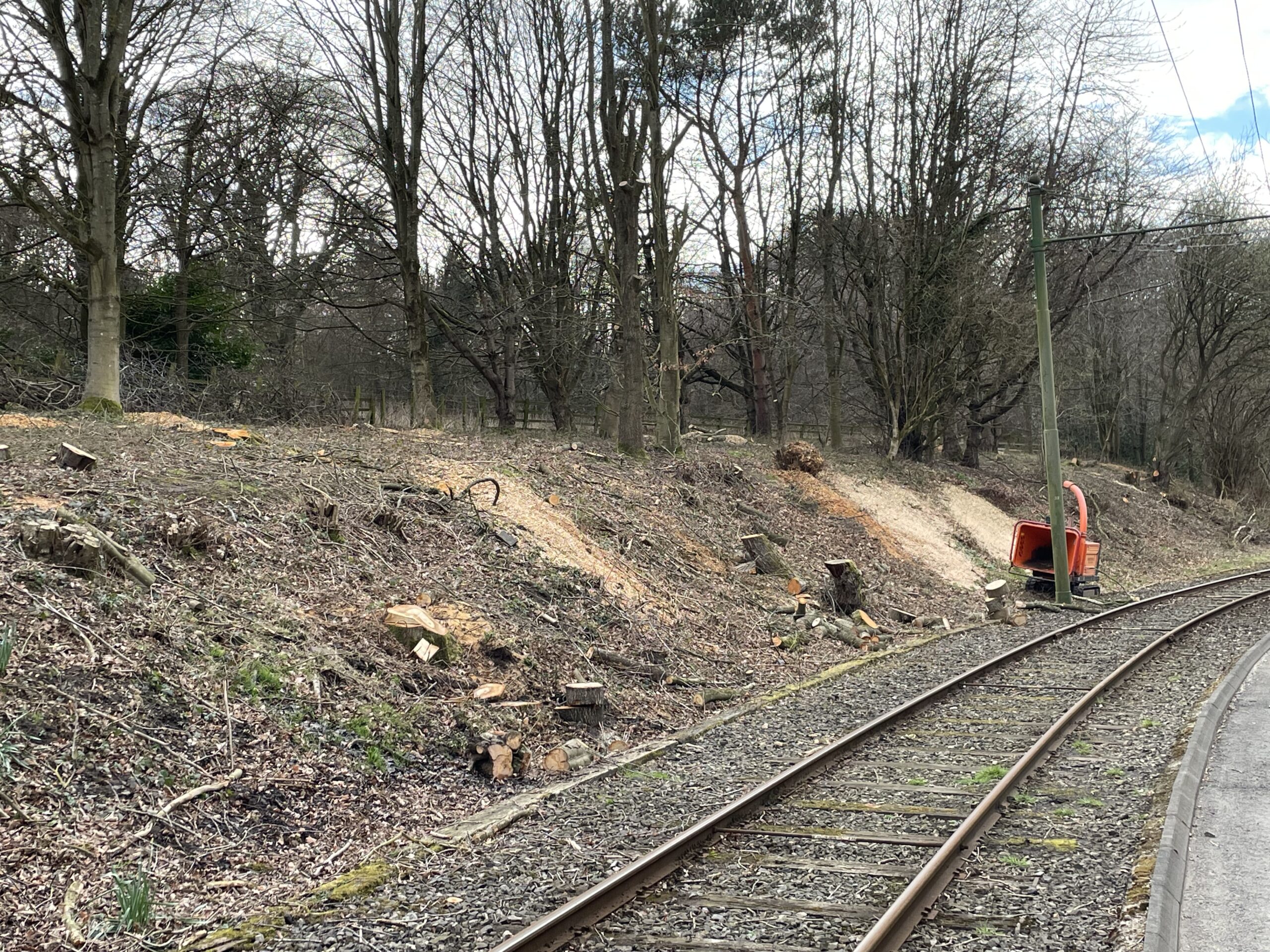
Below: Along the route of the Tramway, between Foulrbridge and the Entrance, extensive clearance of the trees that have begun to encroach onto the permanent way, road and path is being undertaken. This is transforming the views in this area, which are now much lighter and less restricted.
Wheelchair Accessible Vehicle J2007
Below: The roof panels that were removed to allow repairs to the frame structure have been painted and re-fitted.

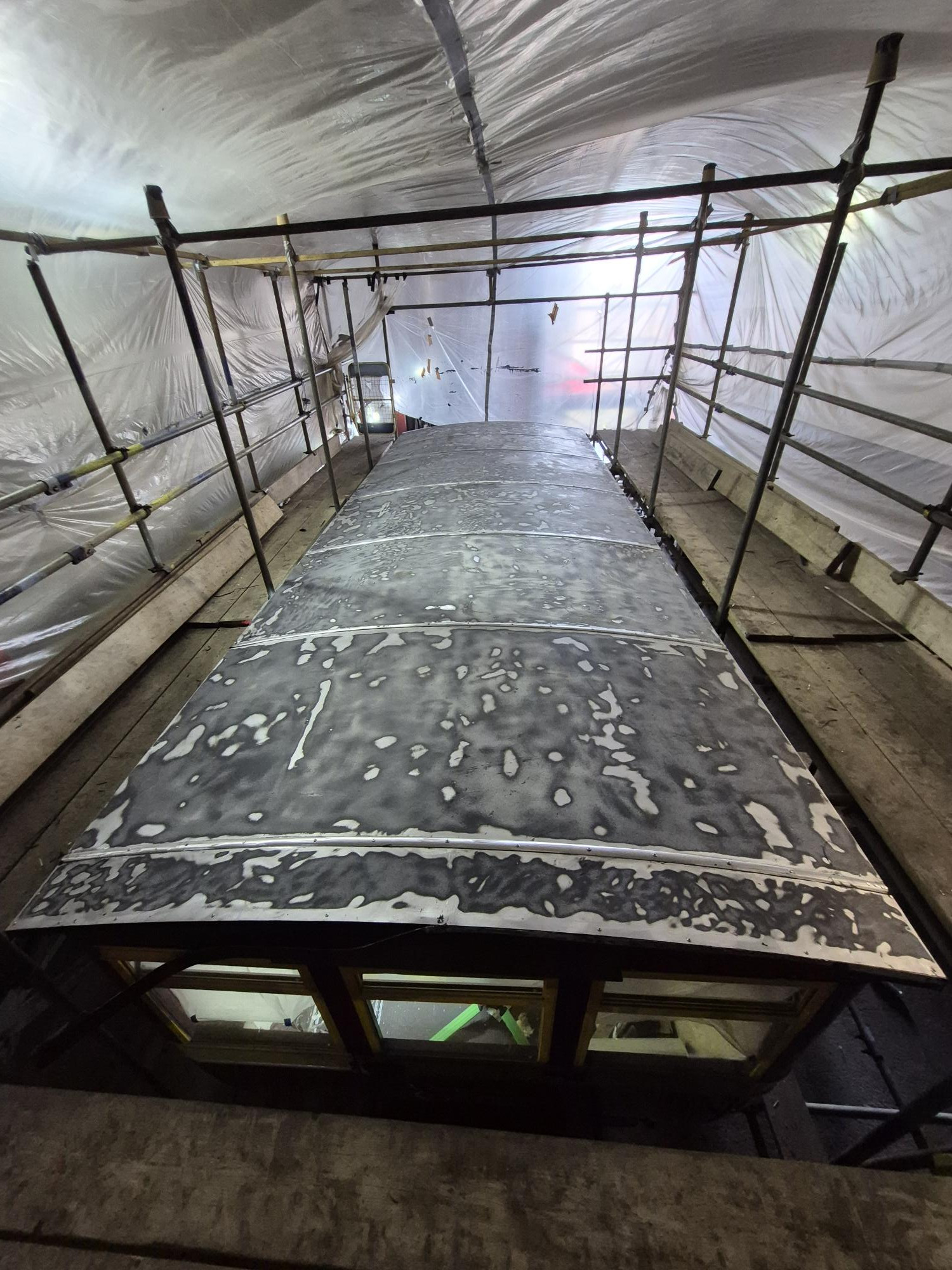
Below: Re-fitting and sealing the original roof sheets to the repaired superstructure.
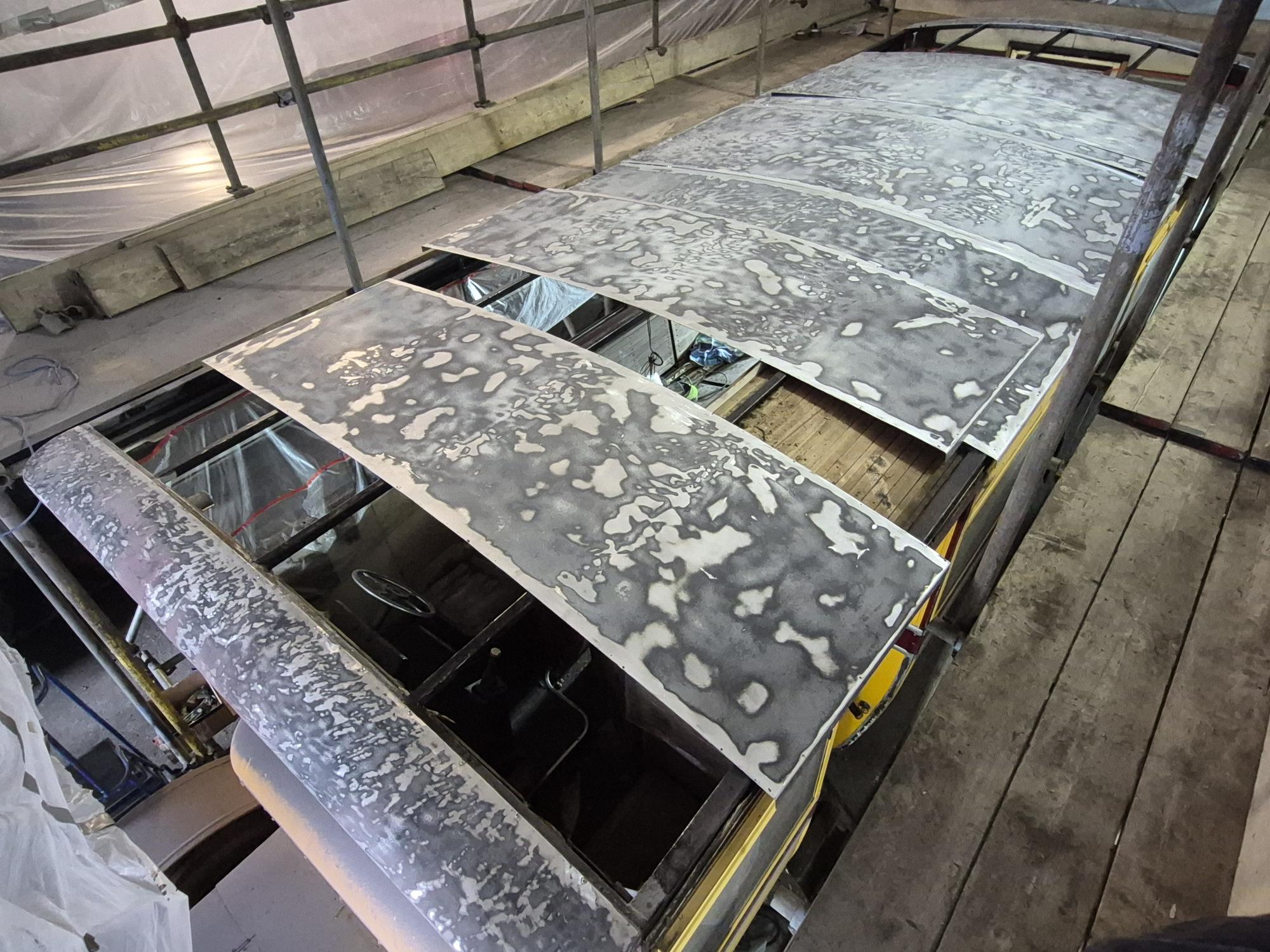
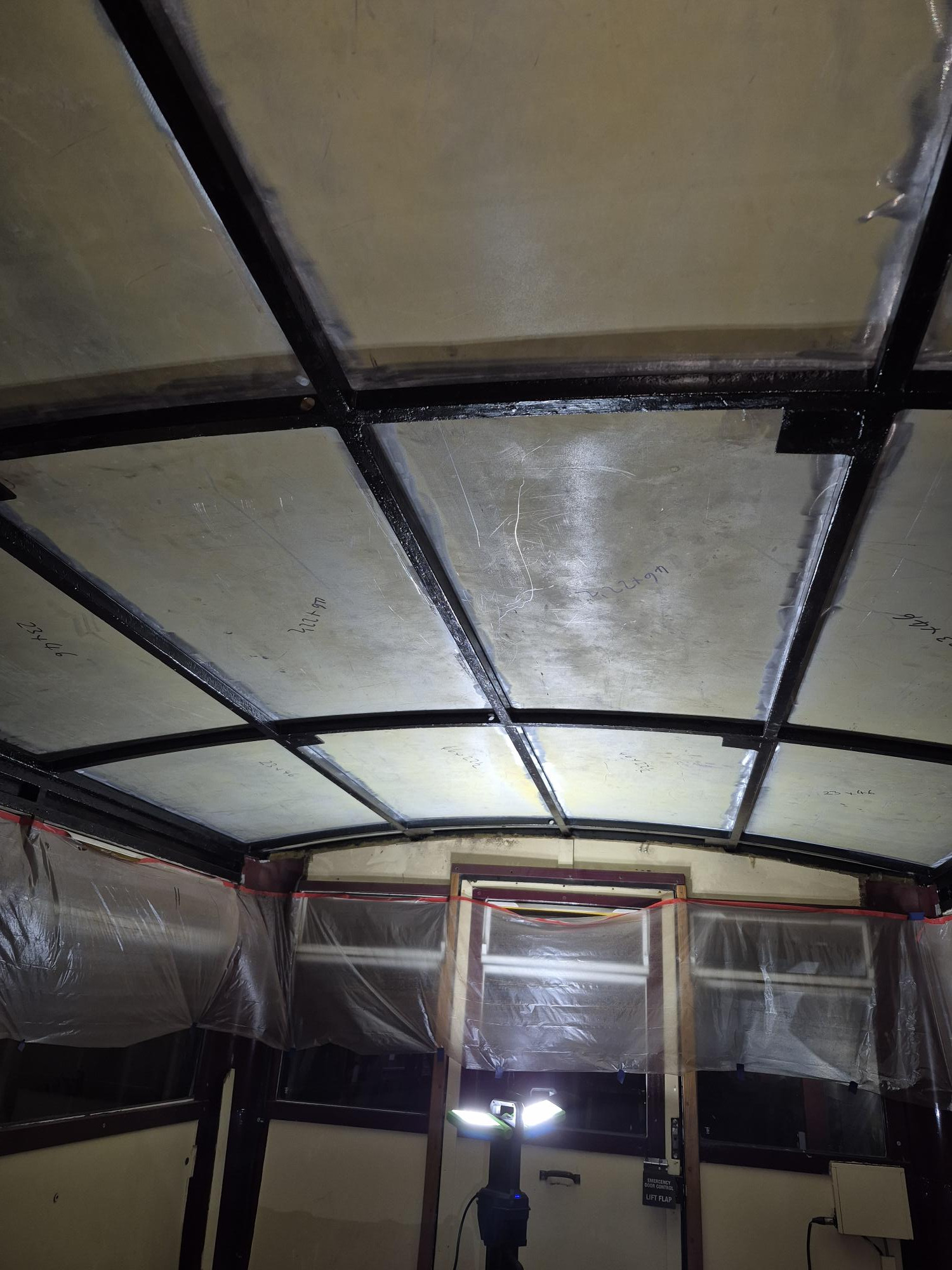
Below: Internally, the ceilings will be panelled in wood once again – and insulated to assist with soundproofing.
Below: Once the roof was complete, it was sealed and painted – looking its best after many years.

Below: Work on the gutters is underway. New steps have been manufactured and various other jobs are being carried out to buy the bus five years or so more useful service. We are mindful of it’s limited longevity, however, and thoughts to a replacement are a high priority.
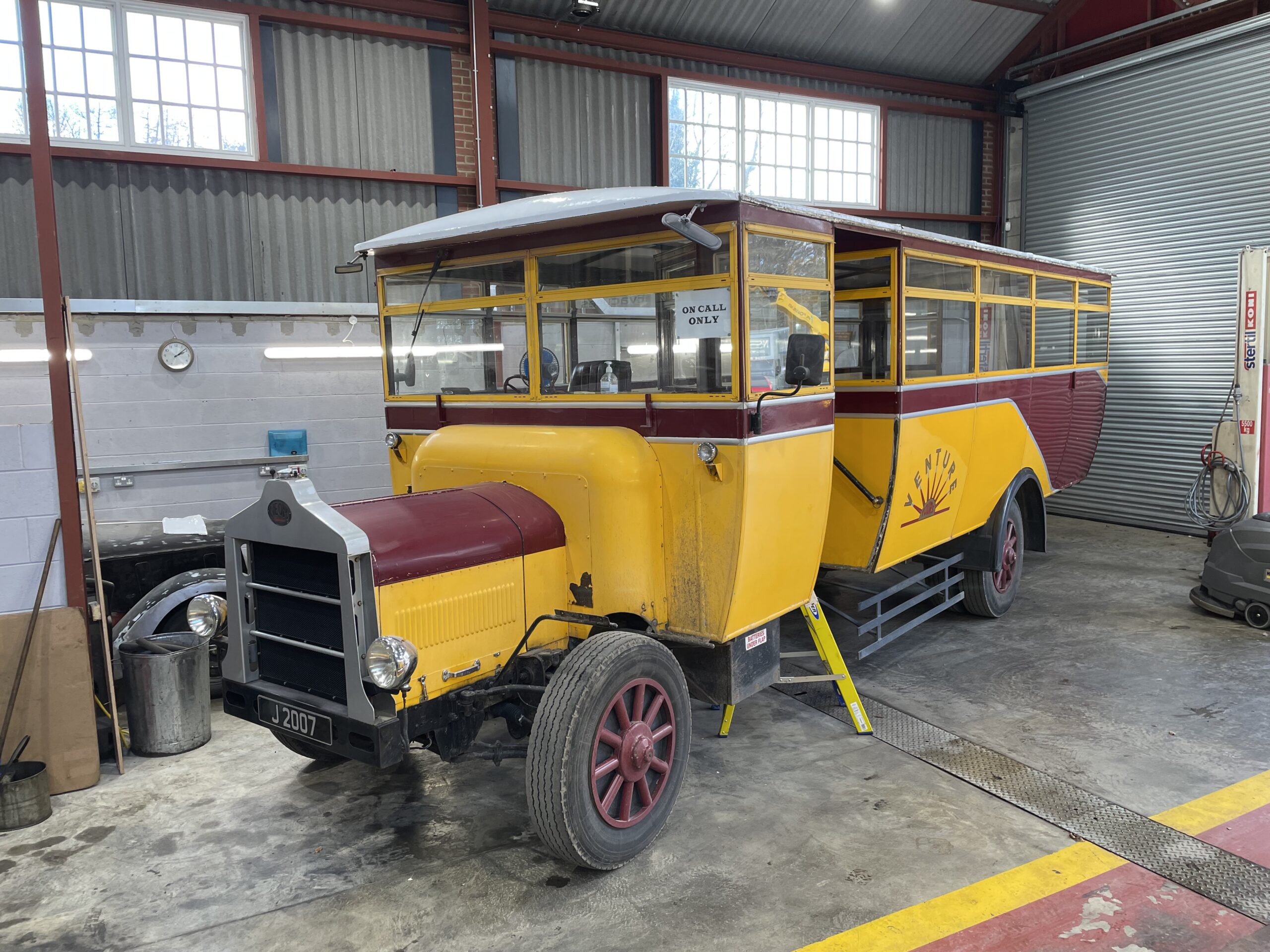
Crosville 716
Below: The cast-iron pulley that drives the water pump and cooling fan suffered a fracture and breakage recently.
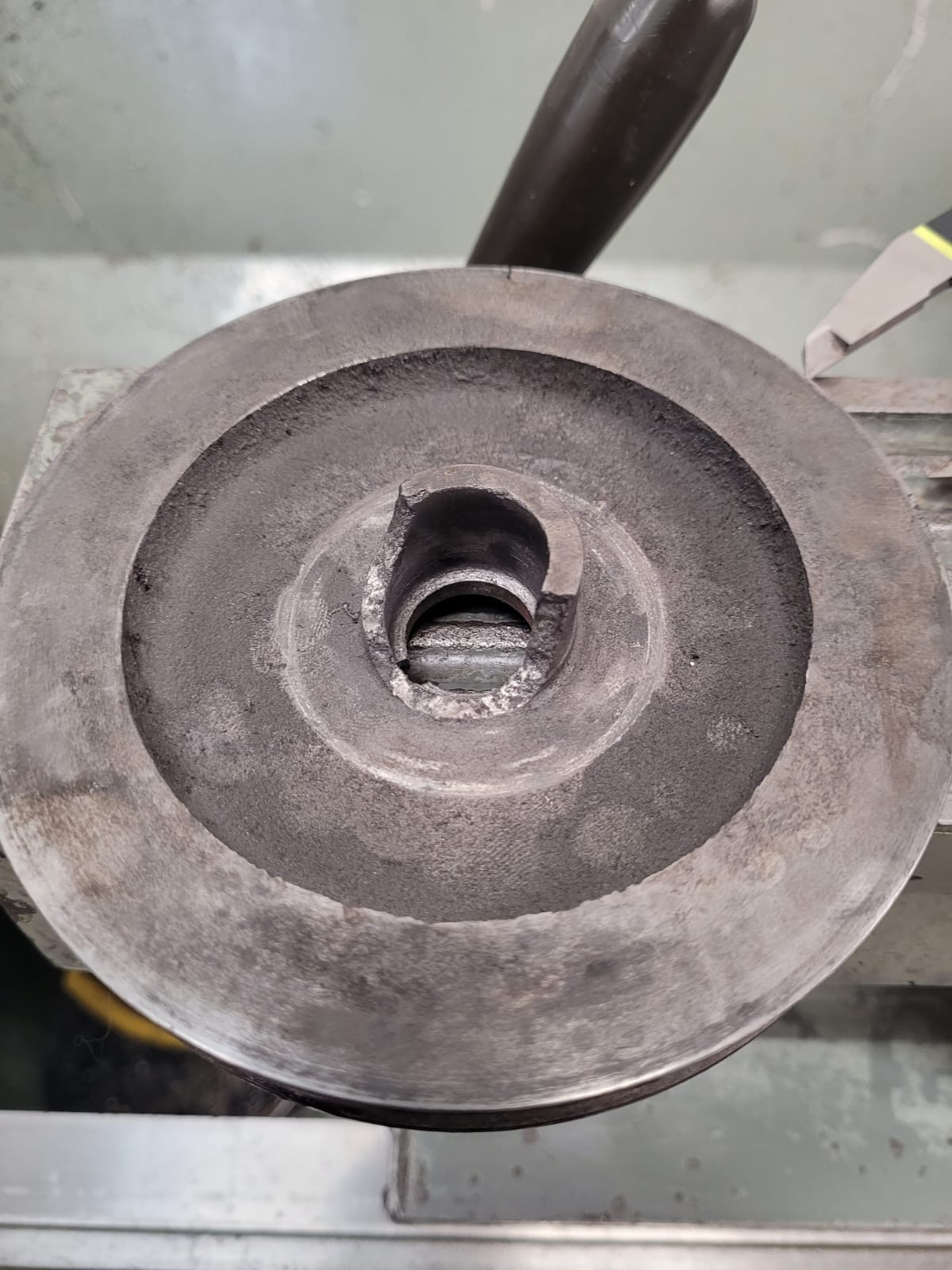
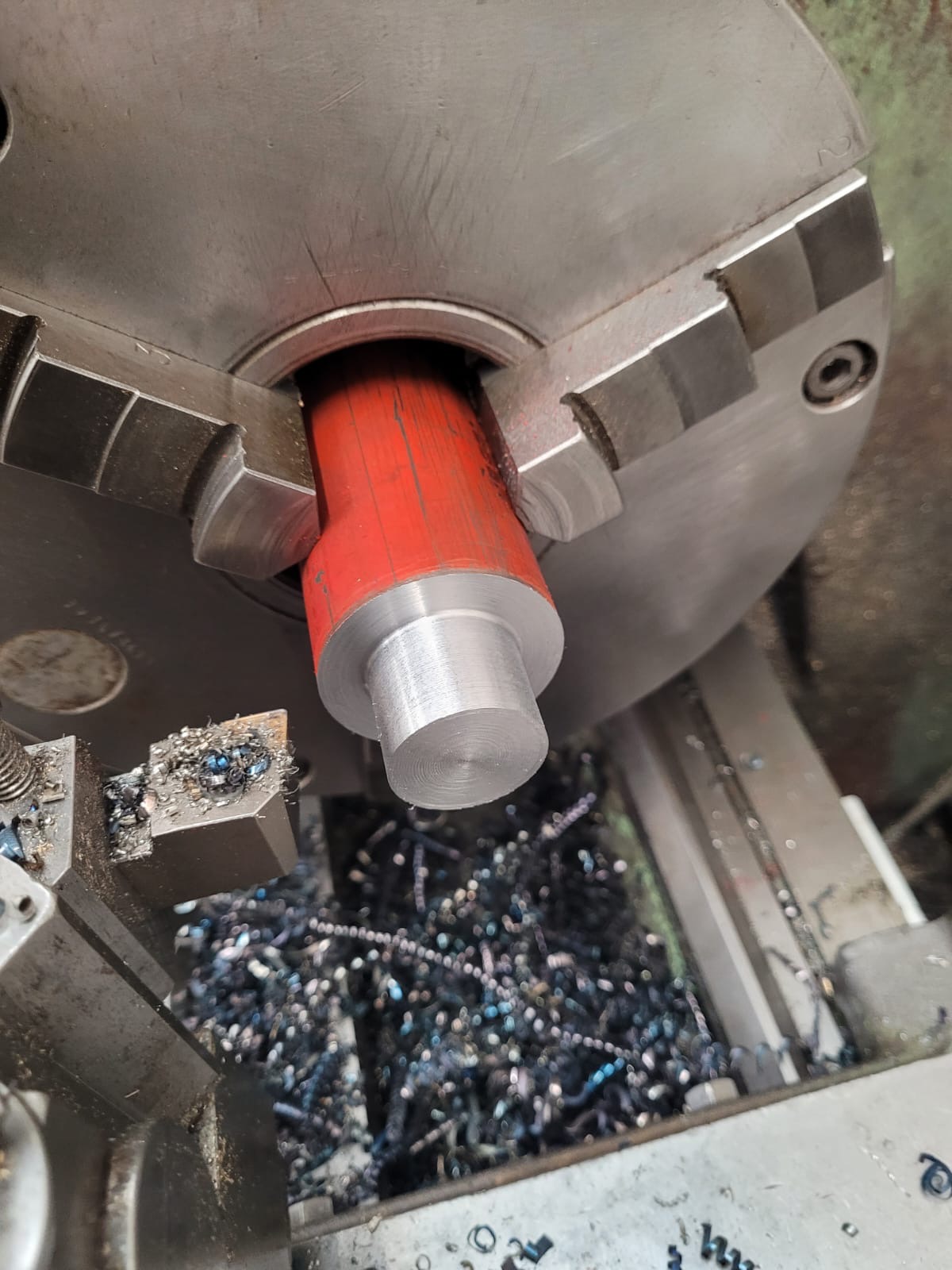
Below: A new spigot for the centre of the pulley was turned…
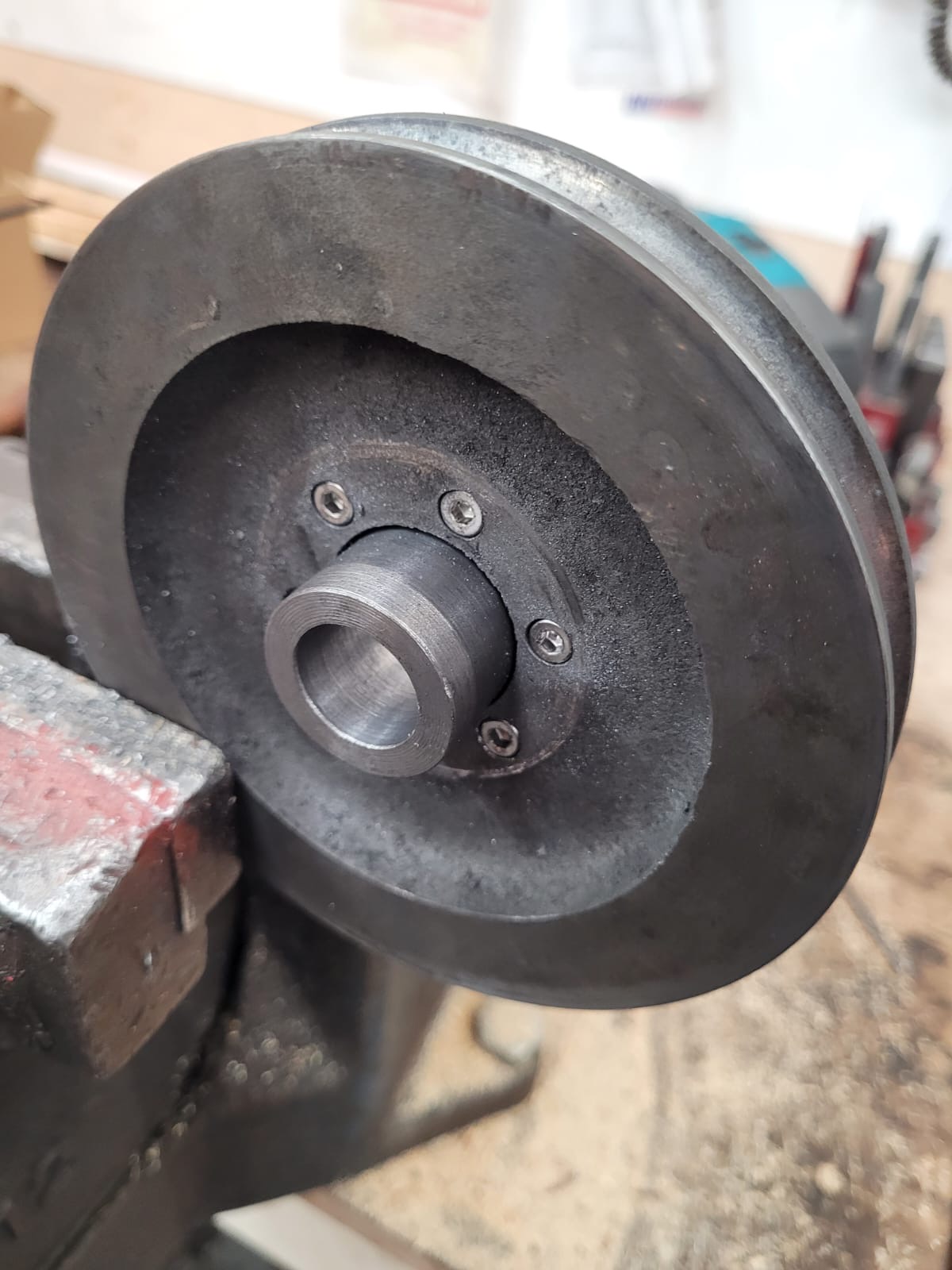
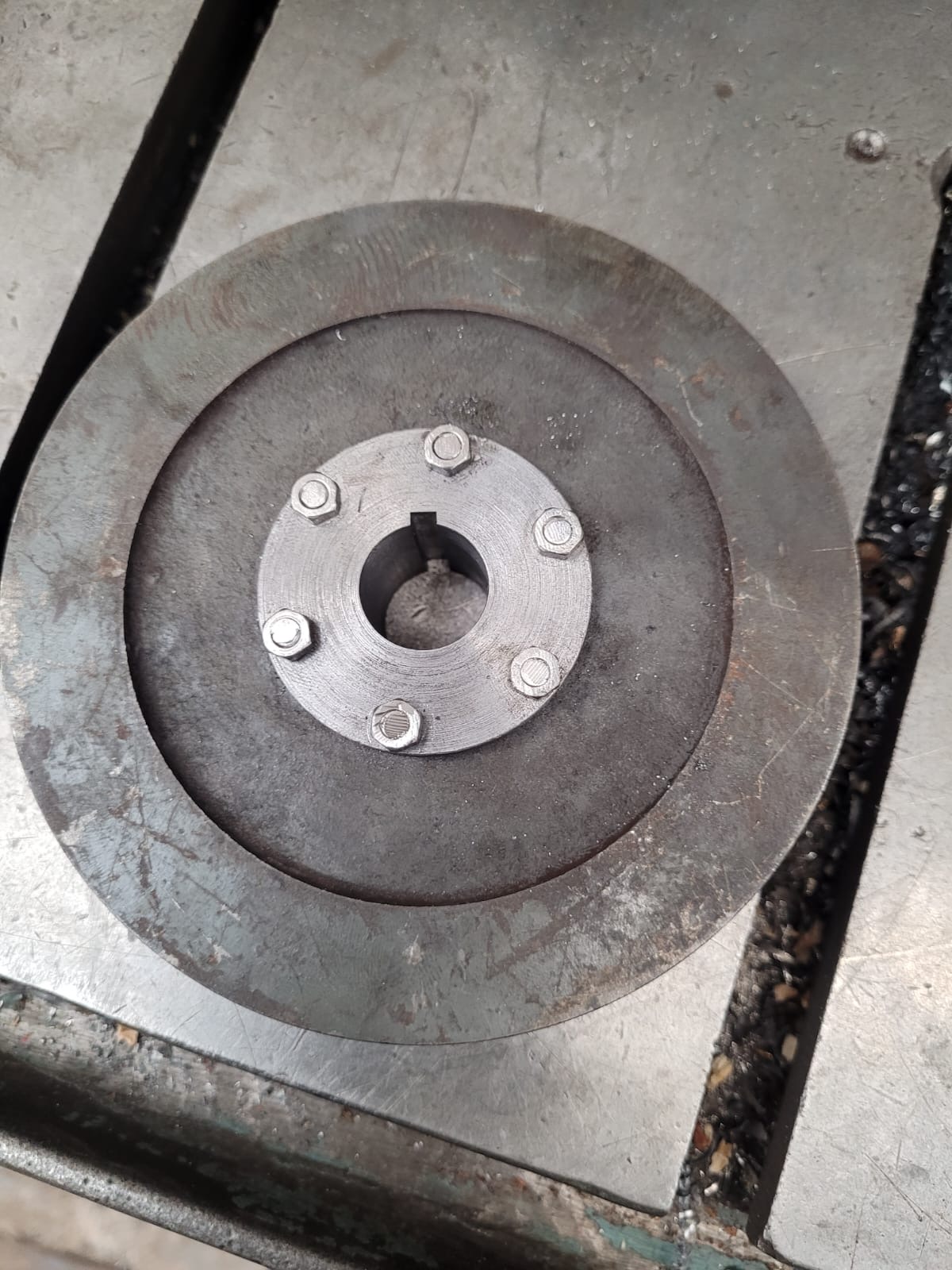
Below: The spigot is shown in place, bolted through the main pulley wheel to replace the broken centre.
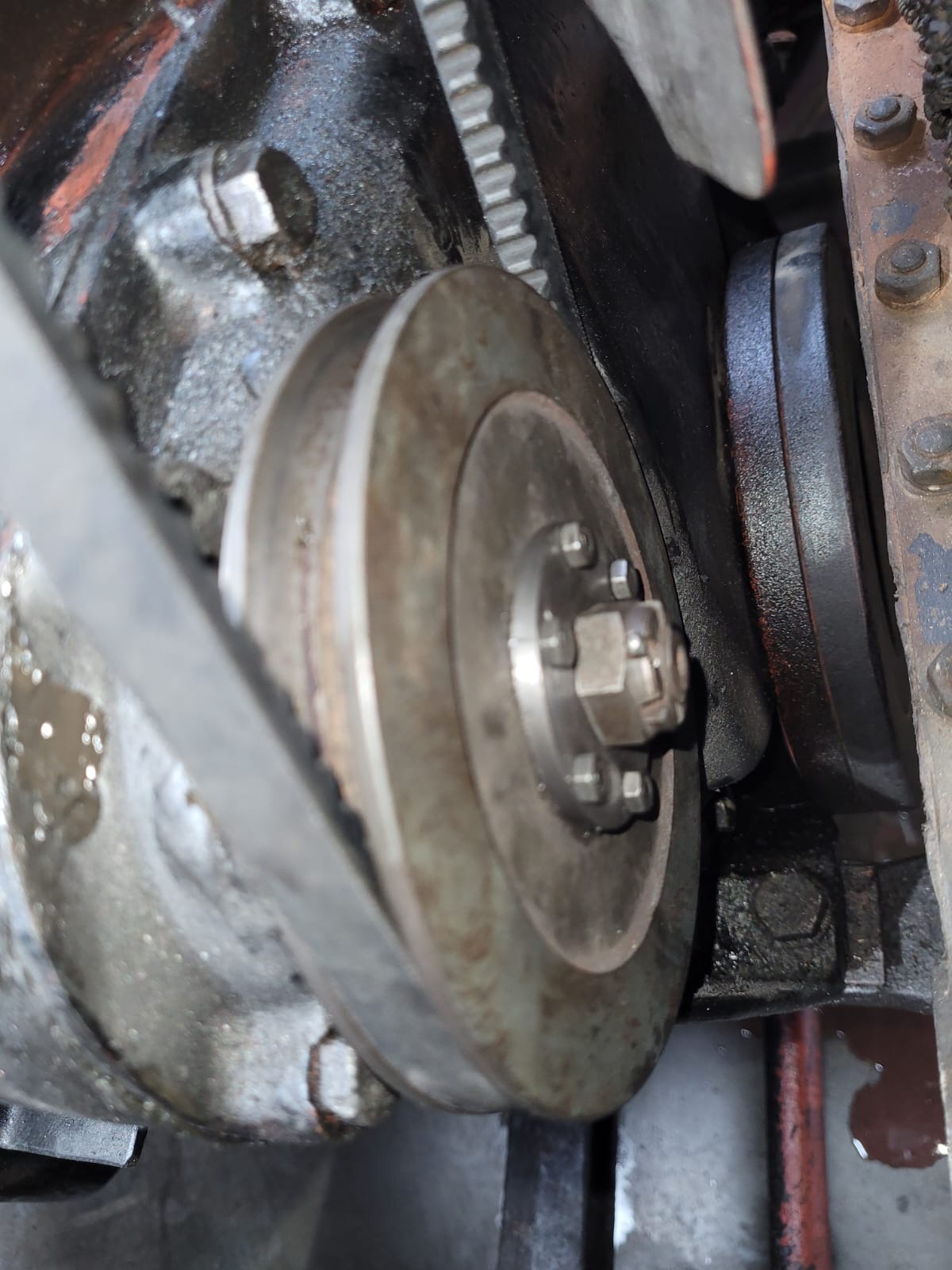
Below: The pulley is shown after installation back into the bus, that then returned to service.
Some thought is being given to creating a spare Leyland Cub petrol engine for this vehicle, that might also involve exchange of some of the Cub engines fitted to the KG2 tipper and FK7 fire engine – this would in theory create an engine to cascade down to the FK1 fire engine as part of the process. A full survey of a Cub gearbox has provided us with a set of suitable drawings for such, which can form the basis of procuring new gears and manufacturing new shafts for a spare unit too. This is deemed to be prudent given our reliance on 716 and the need to minimise down-time for overhaul/maintenance, as well as improve the condition of the KG2 and FK7 and provide an engine for the FK1 which is currently missing this item entirely.
Rotherham 220
Below: The rebuild of 220’s Gardner engine has stepped up in pace with the arrival of the new piston rings. In these views, work to assemble the pistons onto the connecting rods is underway.


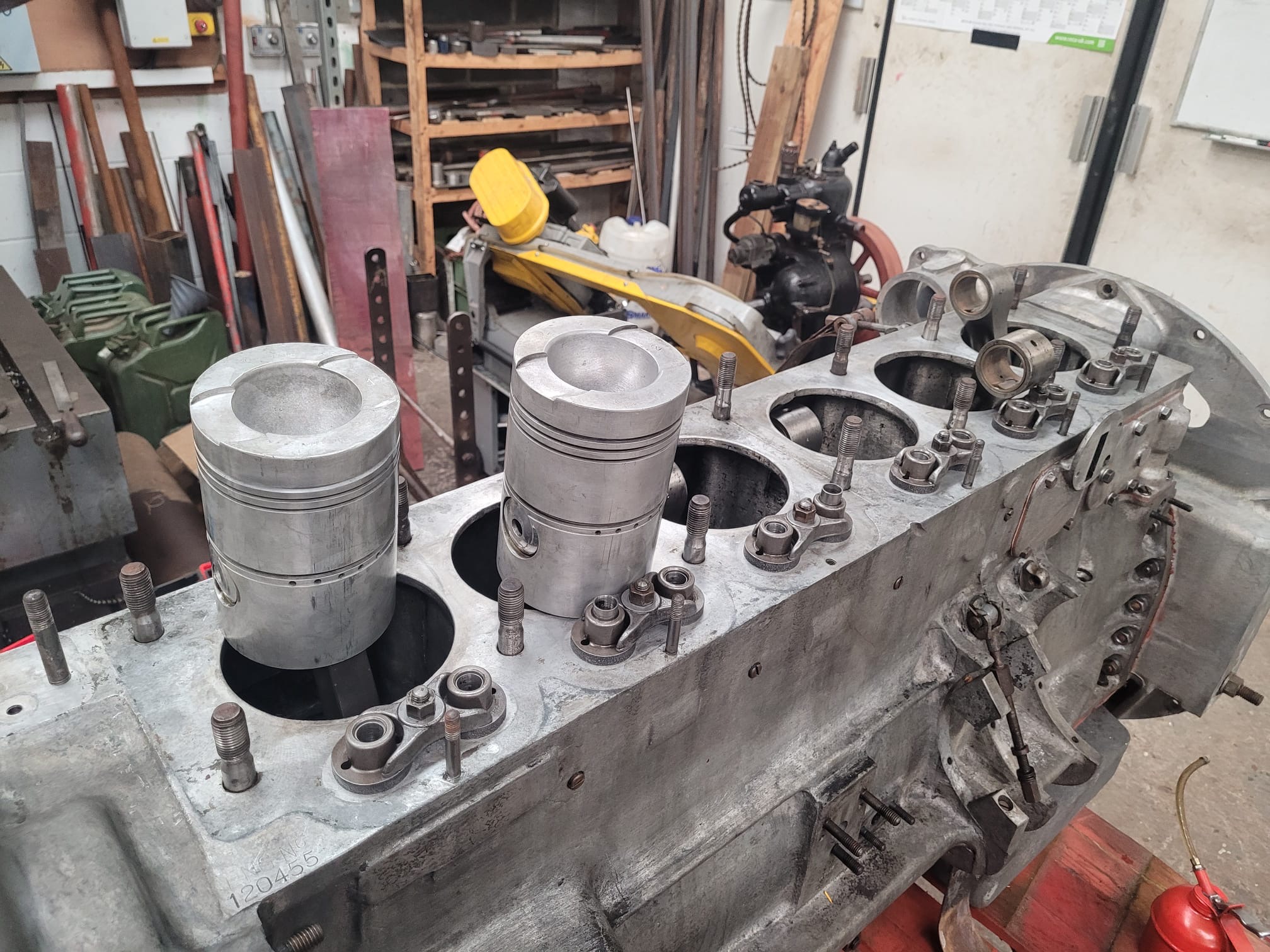
Below: A full set of pistons, awaiting installation of the rings and cylinder heads.
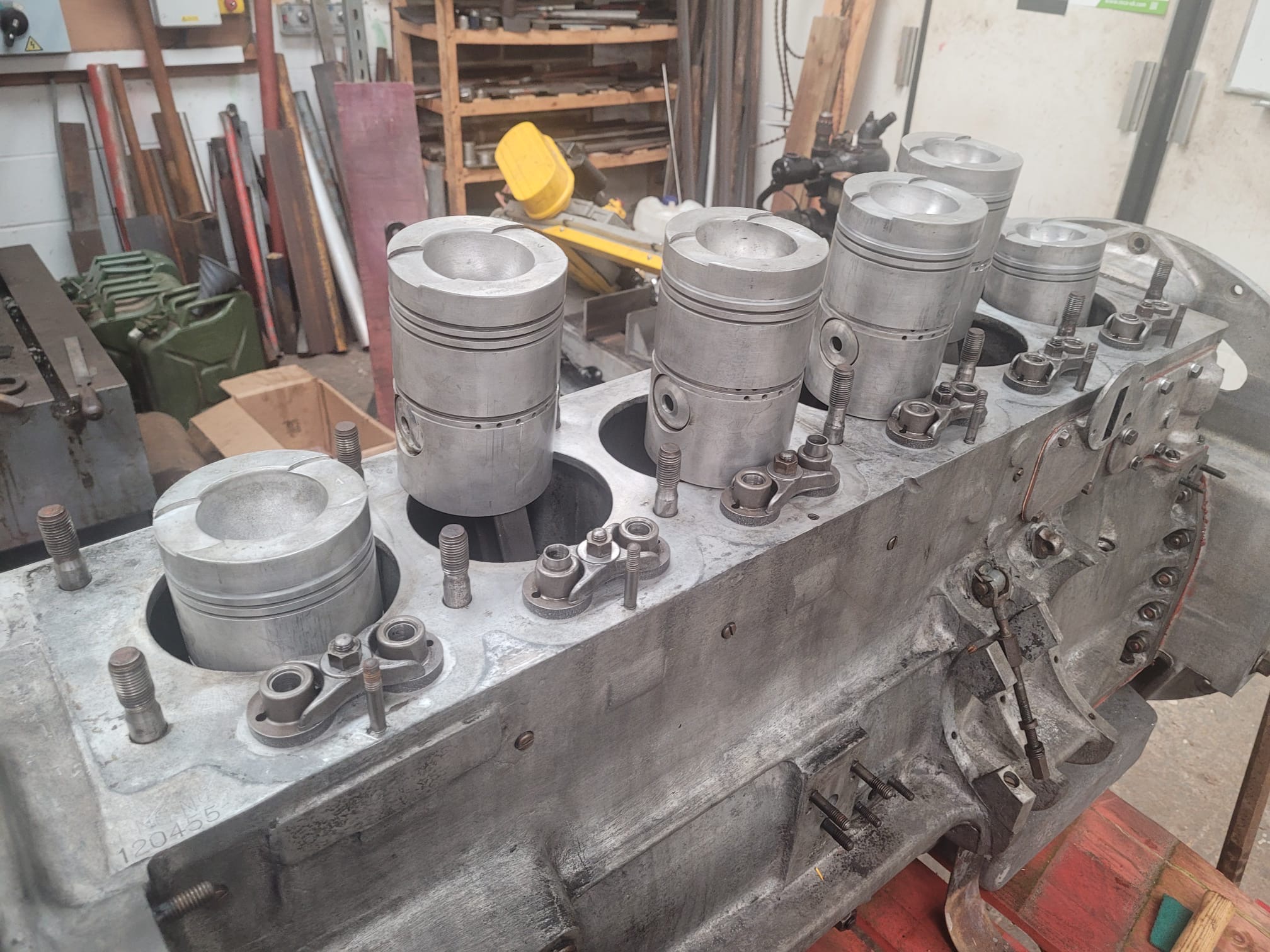
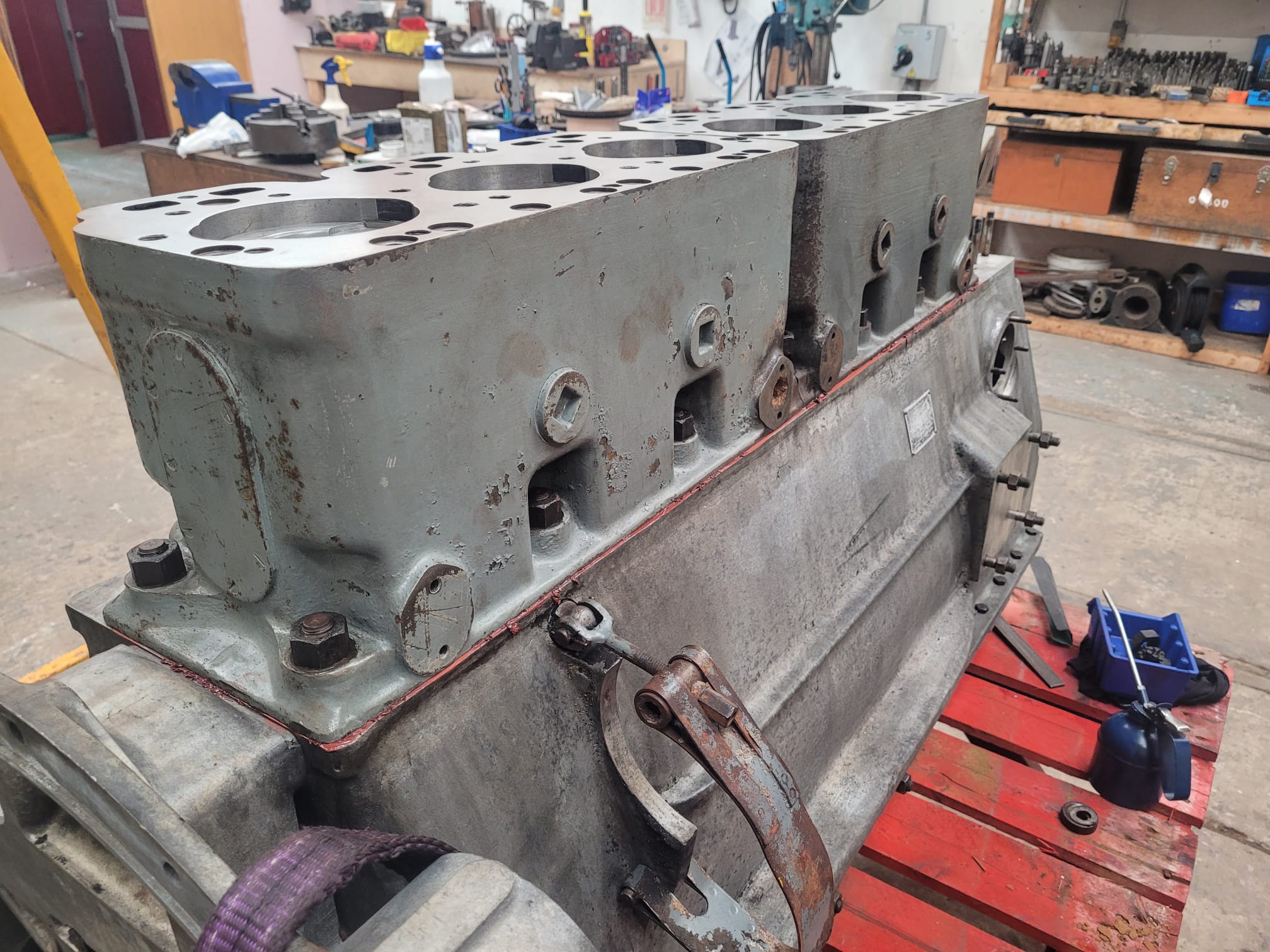
Below: The cylinders, in two blocs of three, have now been fitted.
Below: Meanwhile, with the flywheel assembly from 220 being accessible, this was stripped out for repair to the oil drain plug.
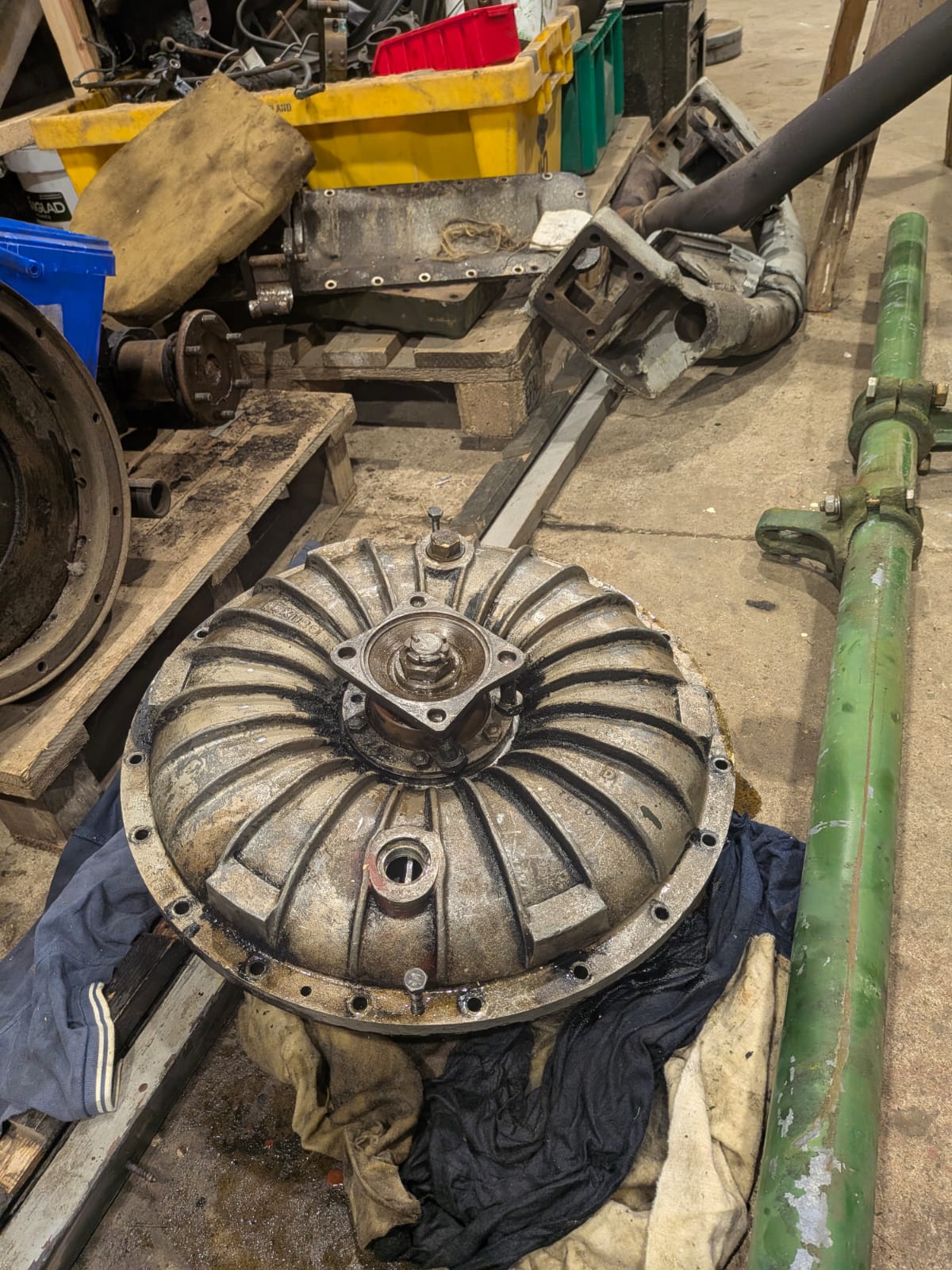
Below: The components were chemically cleaned…

Below: The plug seat was re-cut…
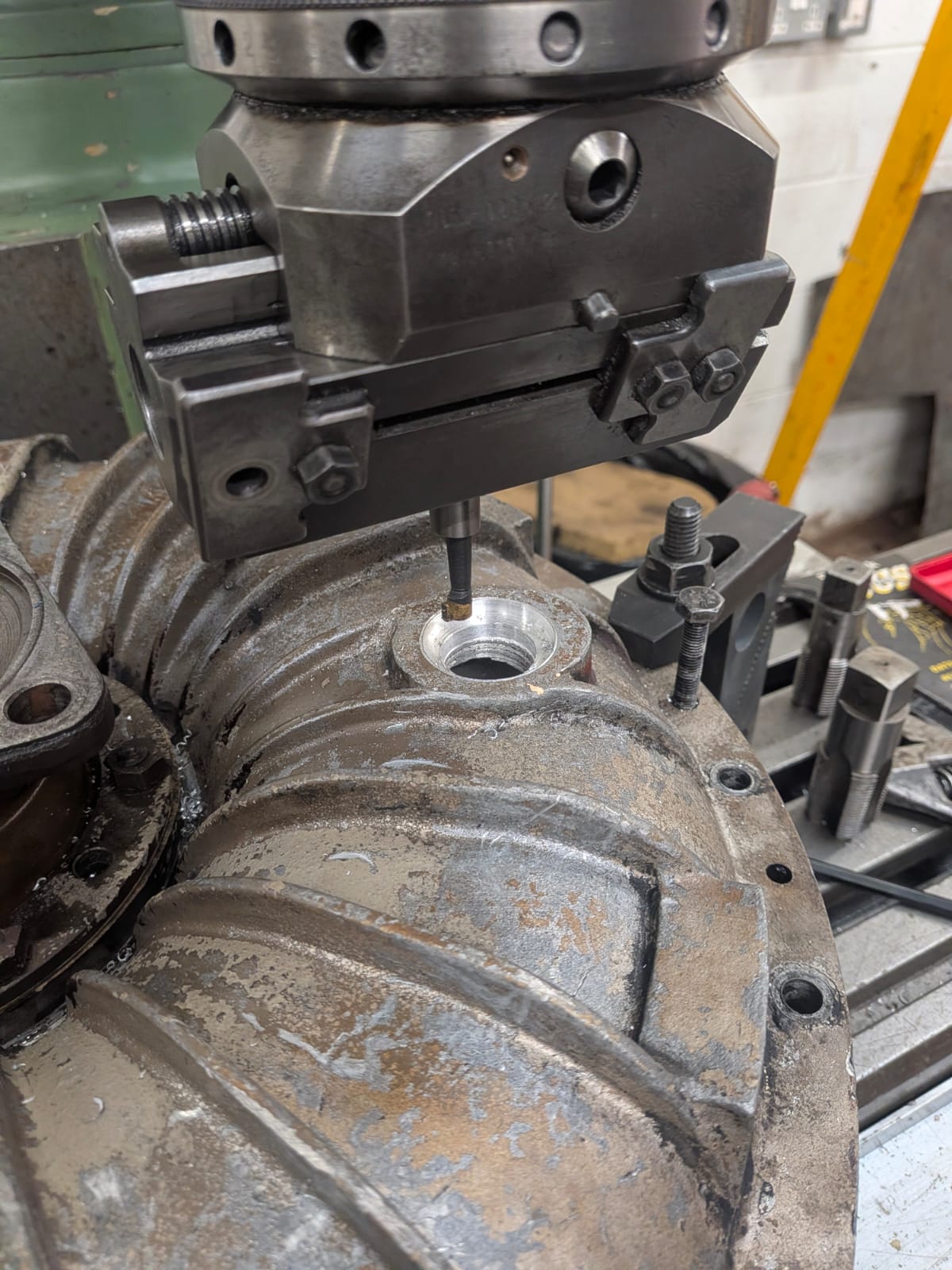
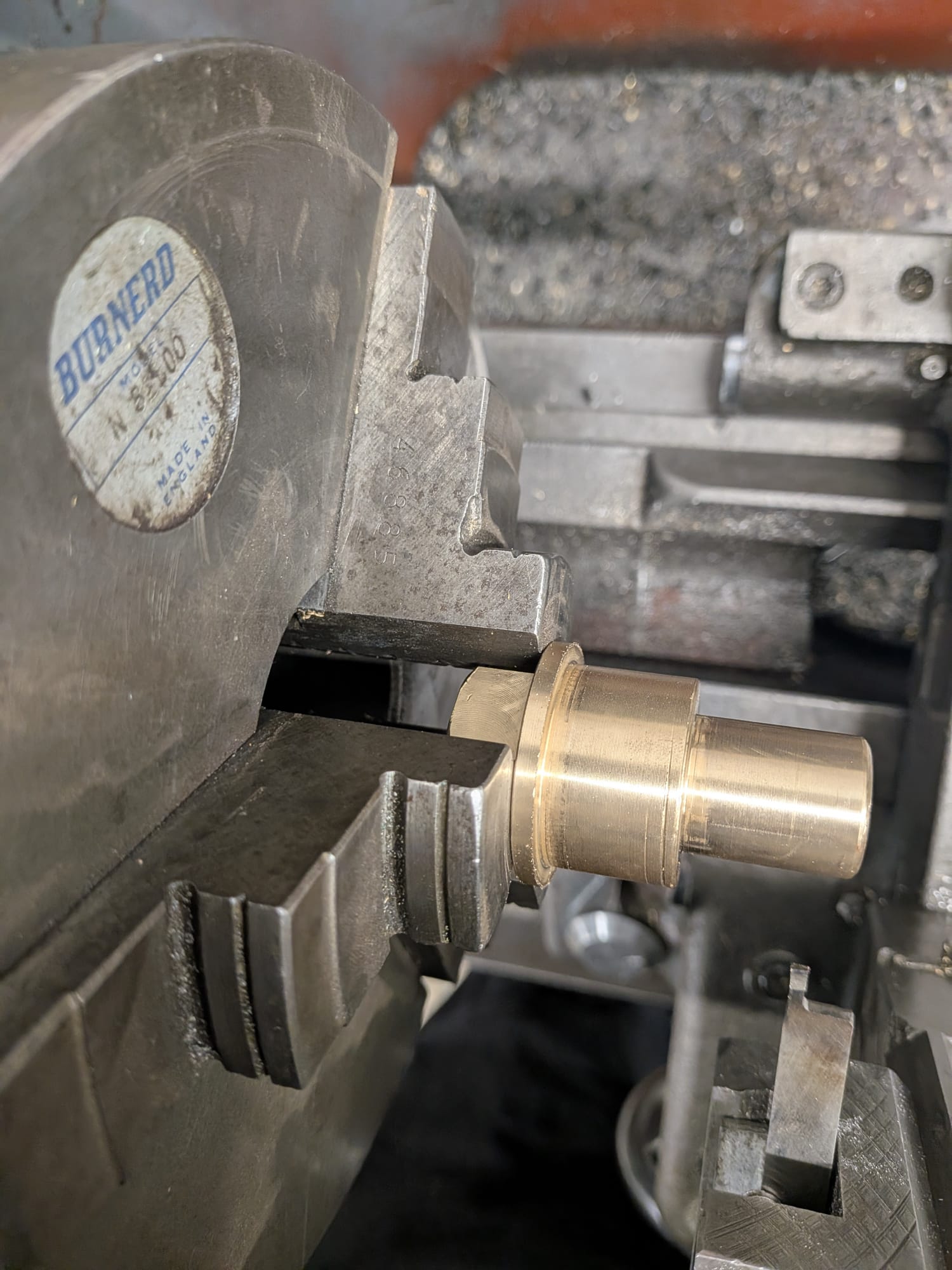
Below: Machining a new plug to fit the newly cut (and enlarged) oil drain hole.
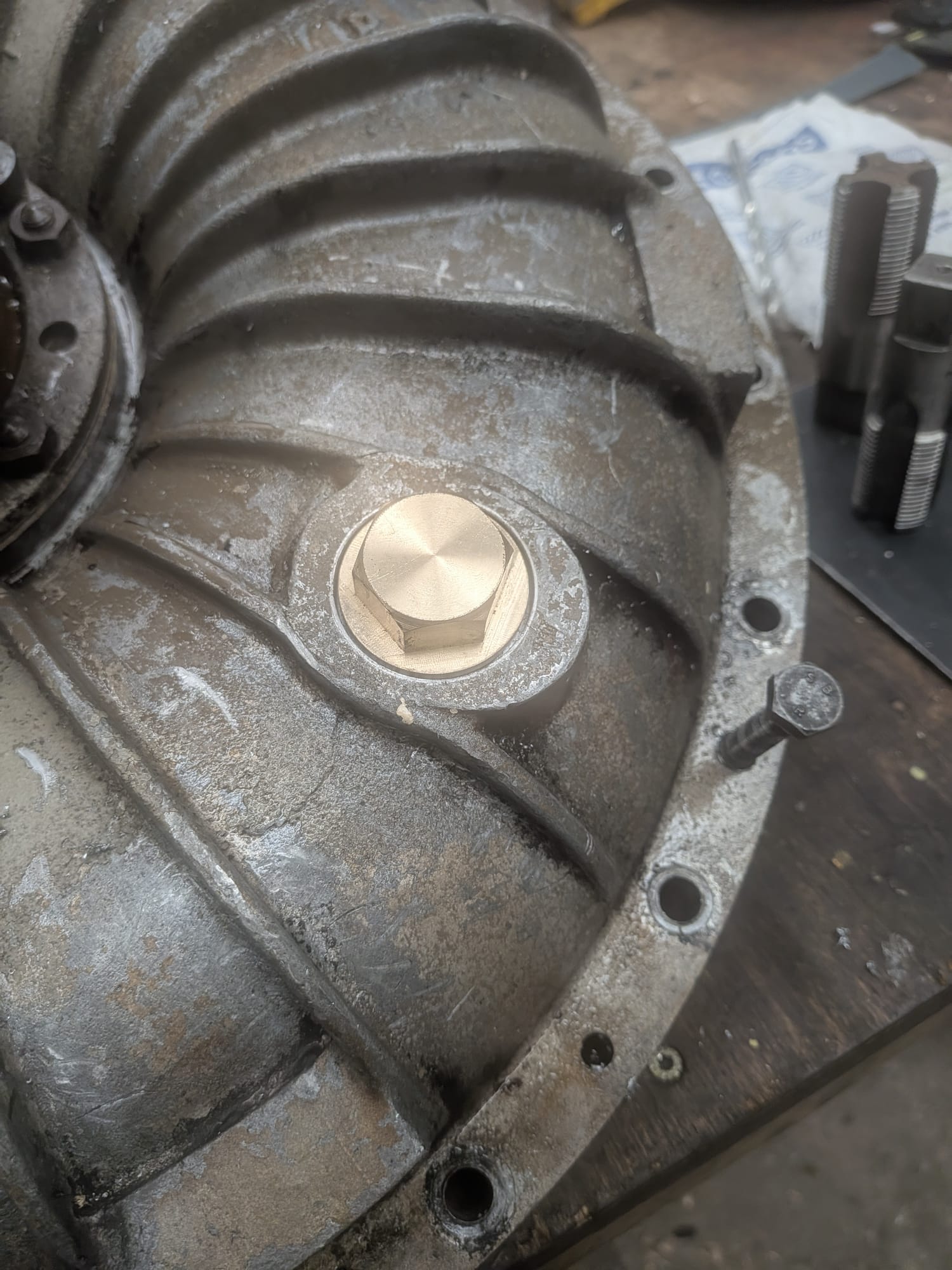
Below: The new plug, fitted to the clutch housing. A job that should make future maintenance much easier on a component that was otherwise not readily accessible for repair.
Armstrong Whitworth Car
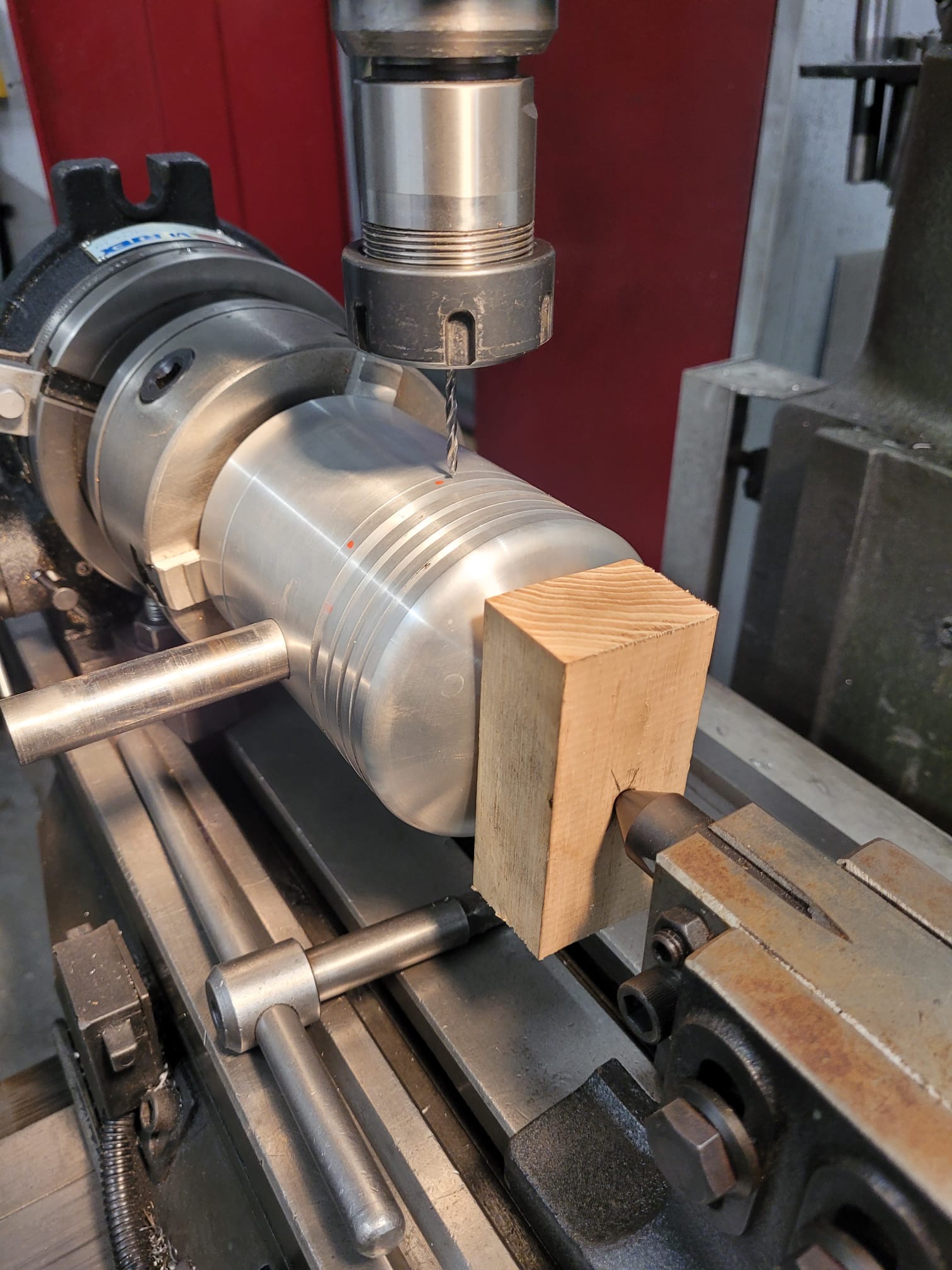
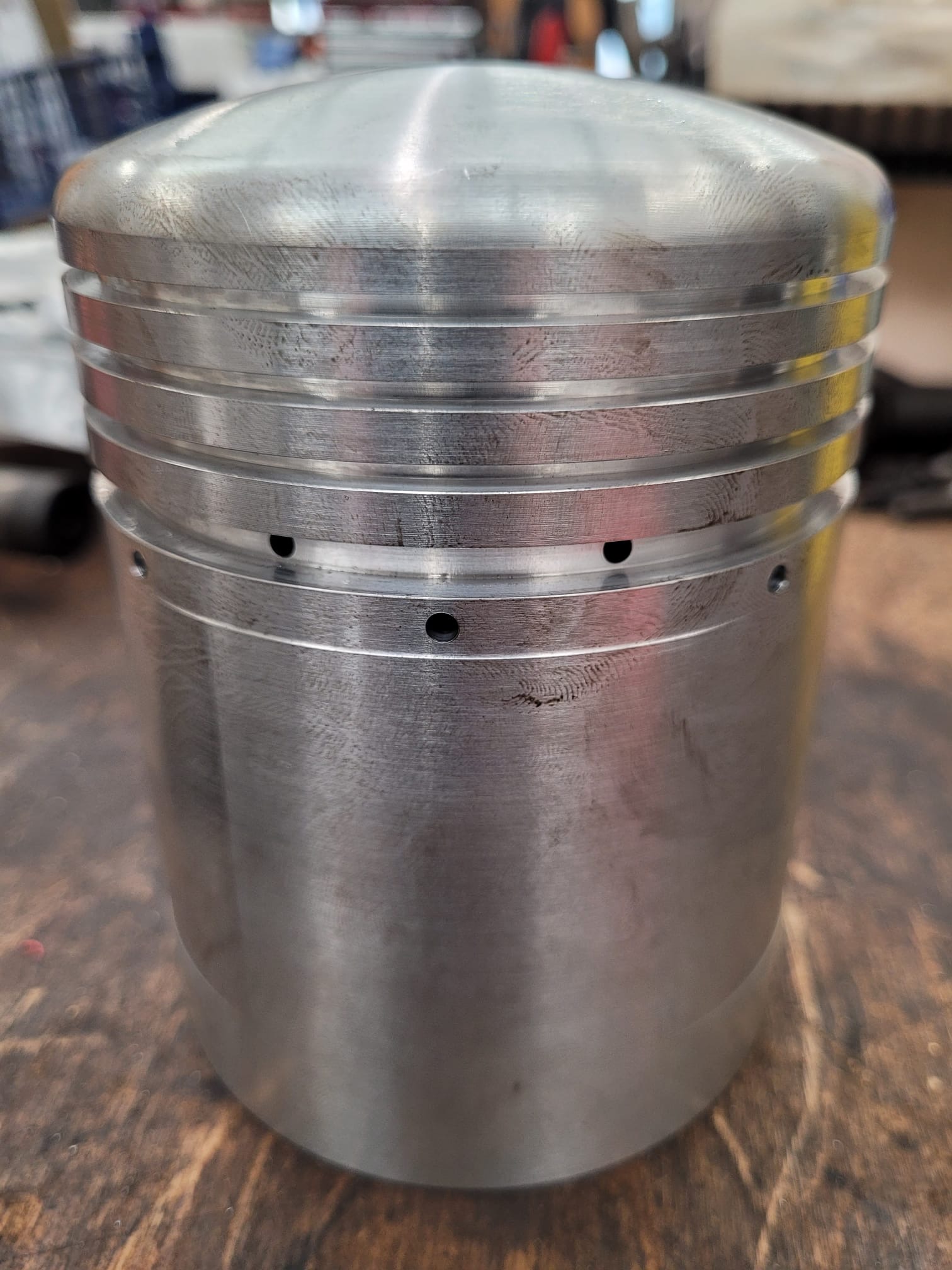
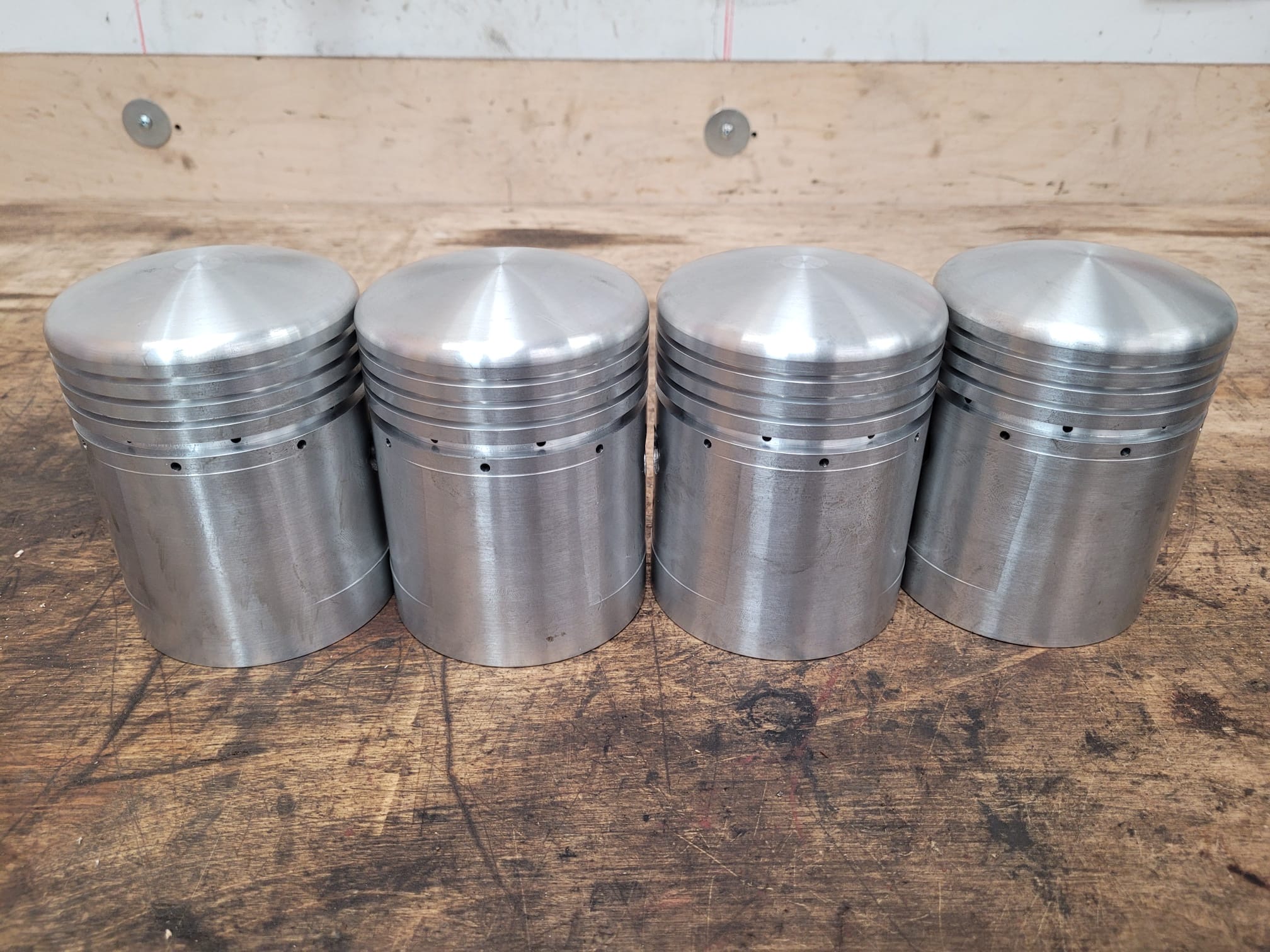
Below: The holes in the pistons have been drilled for the oil return, using the little end pin for horizontal alignment and the Pitch Circle Diameter (PCD) feature on the Digital Read Out (DRO) to place the six holes uniformly around the circumference of the piston. These are now nearly ready for assembly as part of the targetted return to operation of this vehicle in the next month or so.
Trams
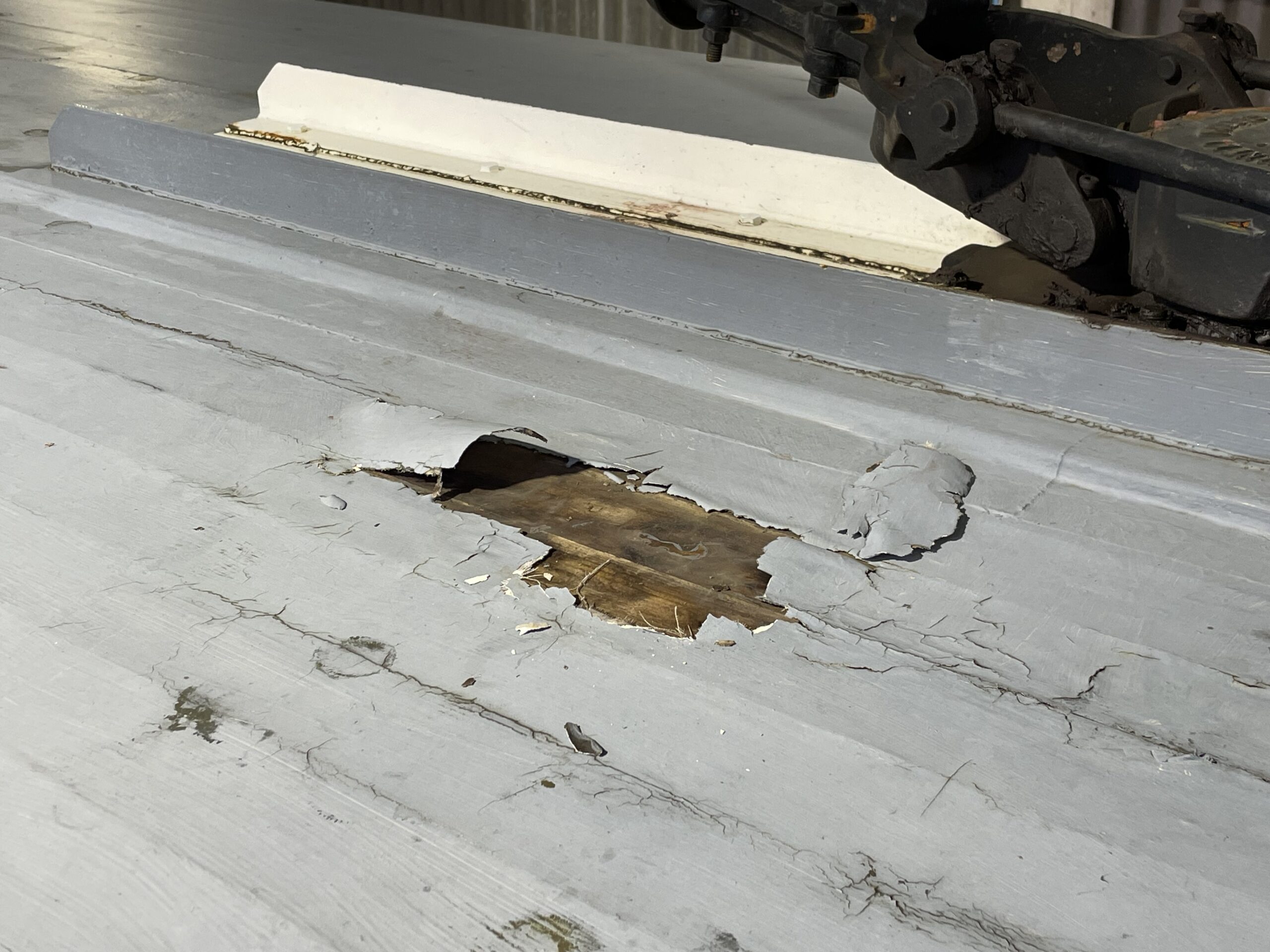
Below: Exploration of the source of water damage of the ceiling panels on Sunderland 16 revealed a patch of damaged canvas – seen here after the damaged area had been peeled away. A large patch of new canvas will be installed shortly to make good this damage and also cover some other areas that are showing signs of degradation.
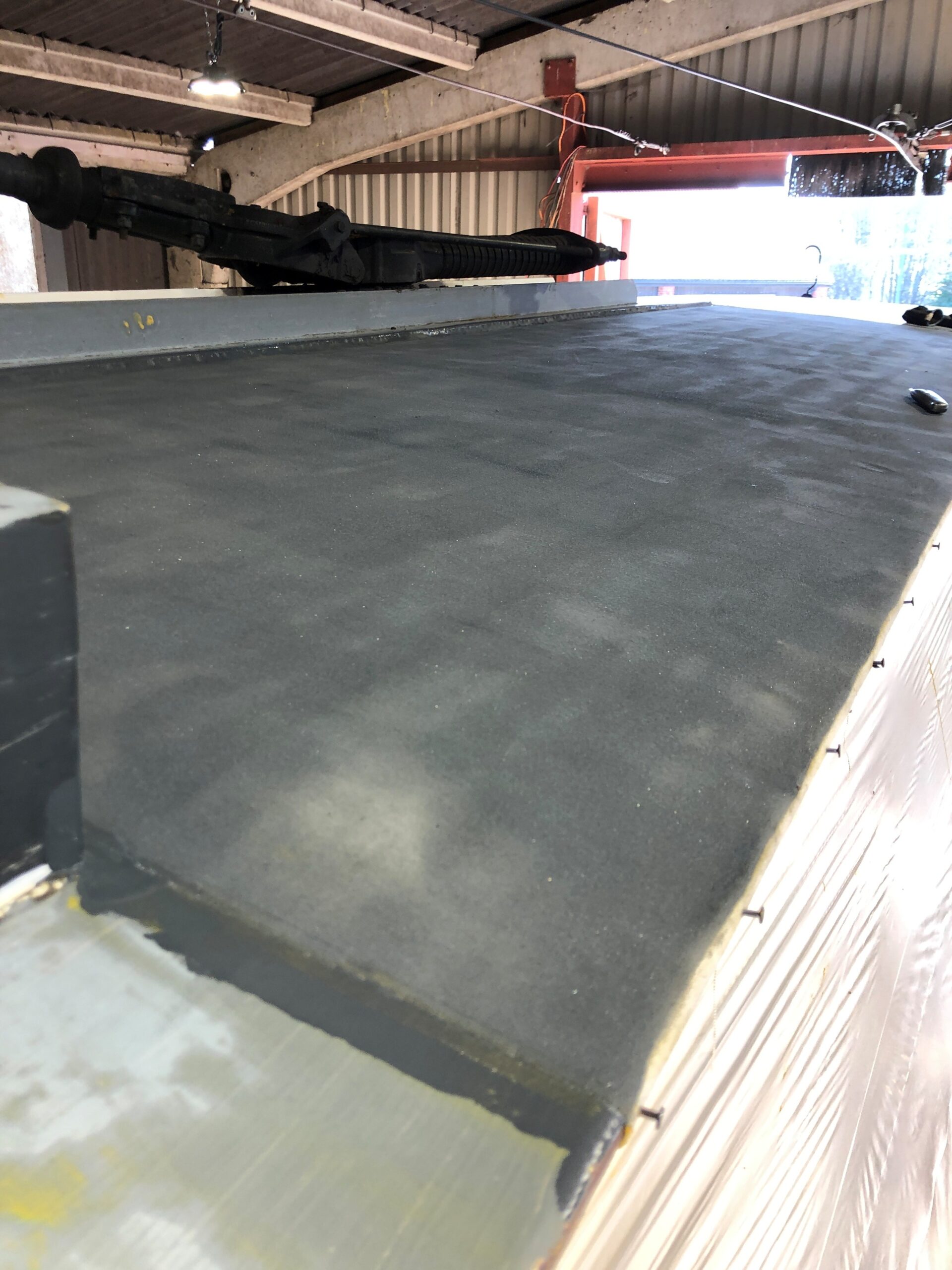
Below: New canvas was ordered and a substantial patch made on 16’s roof, in order to cover both the damaged area, but also the adjacent areas of the roof that were showing signs of deterioration. This was also the first use of the tramcar inspection platform, which is now commissioned for use. Damage to the ceiling in the top-deck saloon of No.16 will now be assessed for repair.
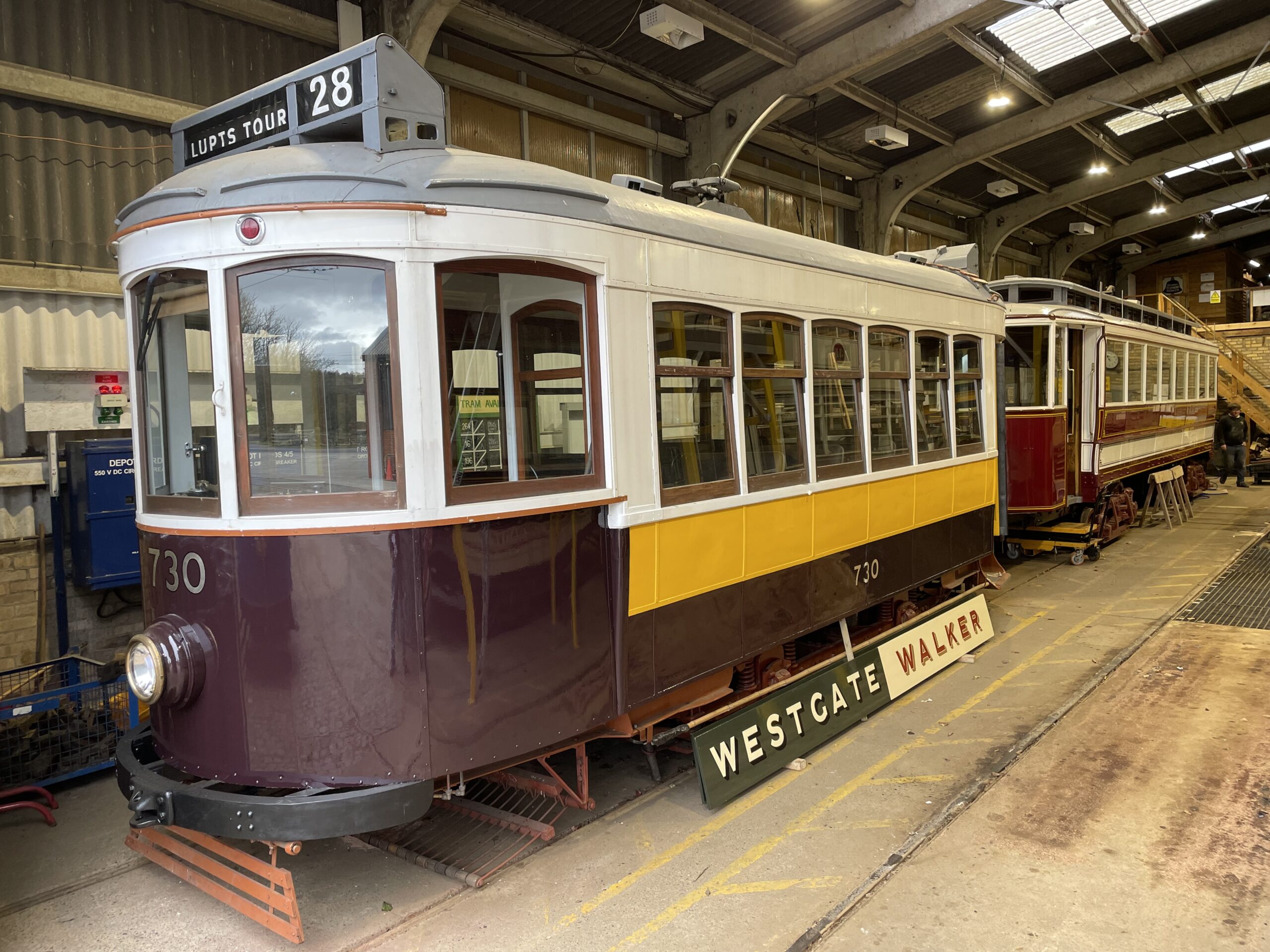
Below: Top coats have been applied to the yellow and plum paintwork on Lisbon 730 ahead of the arrival of the signwriter to tackle this tram and Newcastle 114 later this month.
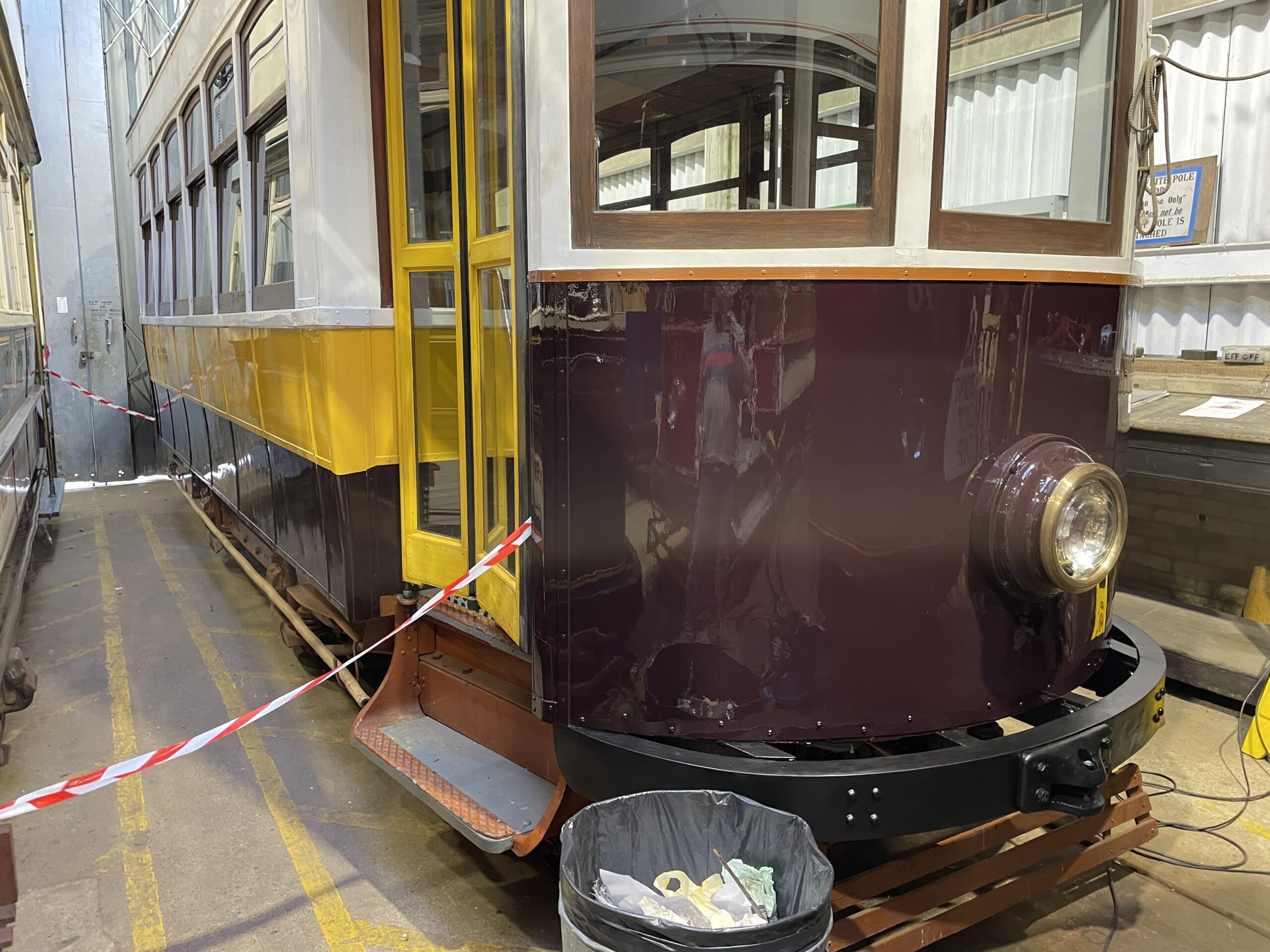
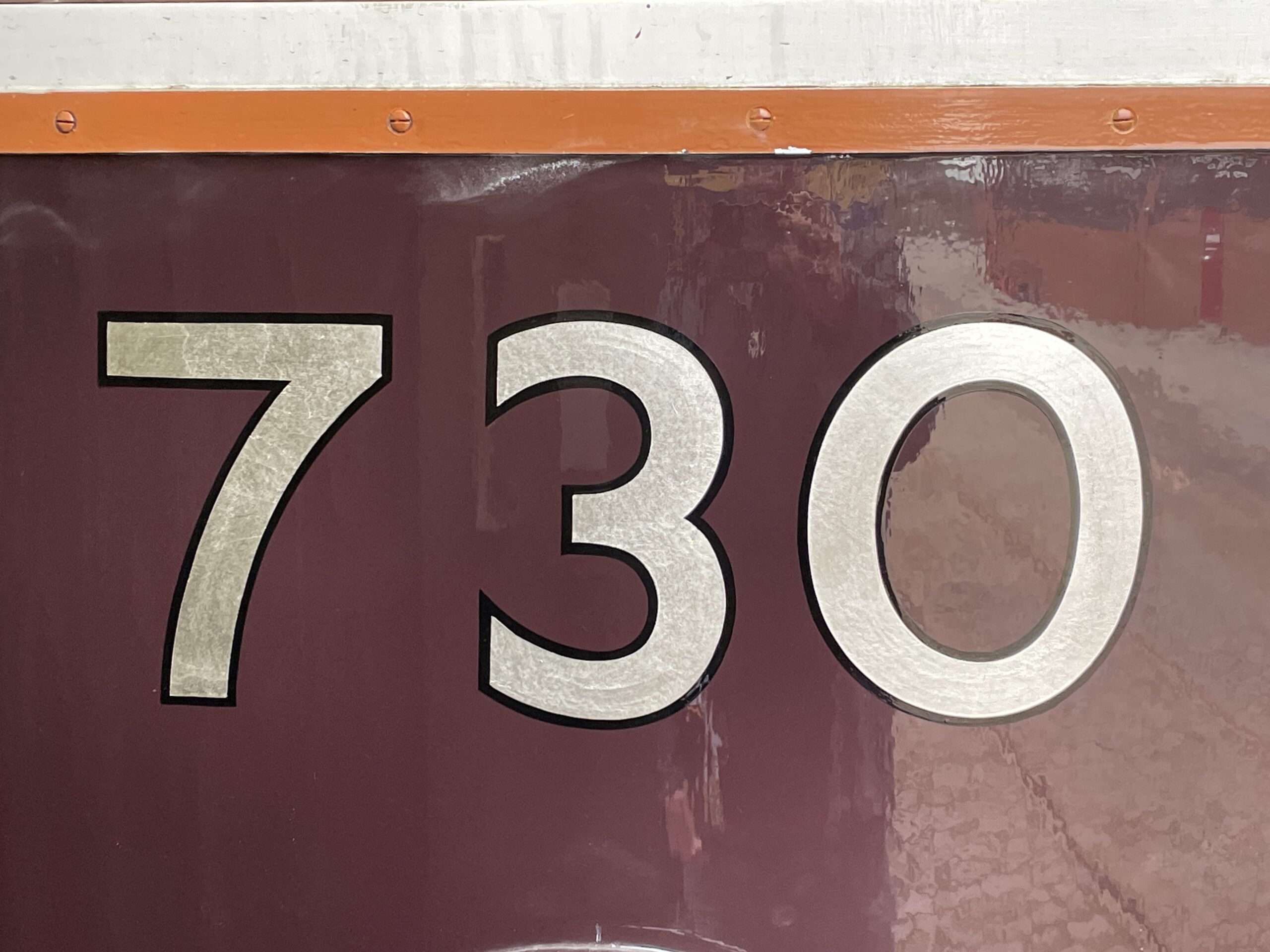
Below: By Tuesday 24th March, 730’s numbers were complete and the lining had been reinstated on Newcastle 114. There are still some tidying up jobs to complete on the latter, and the white paintwork and various beading strips and doors are to still to be completed on 730.
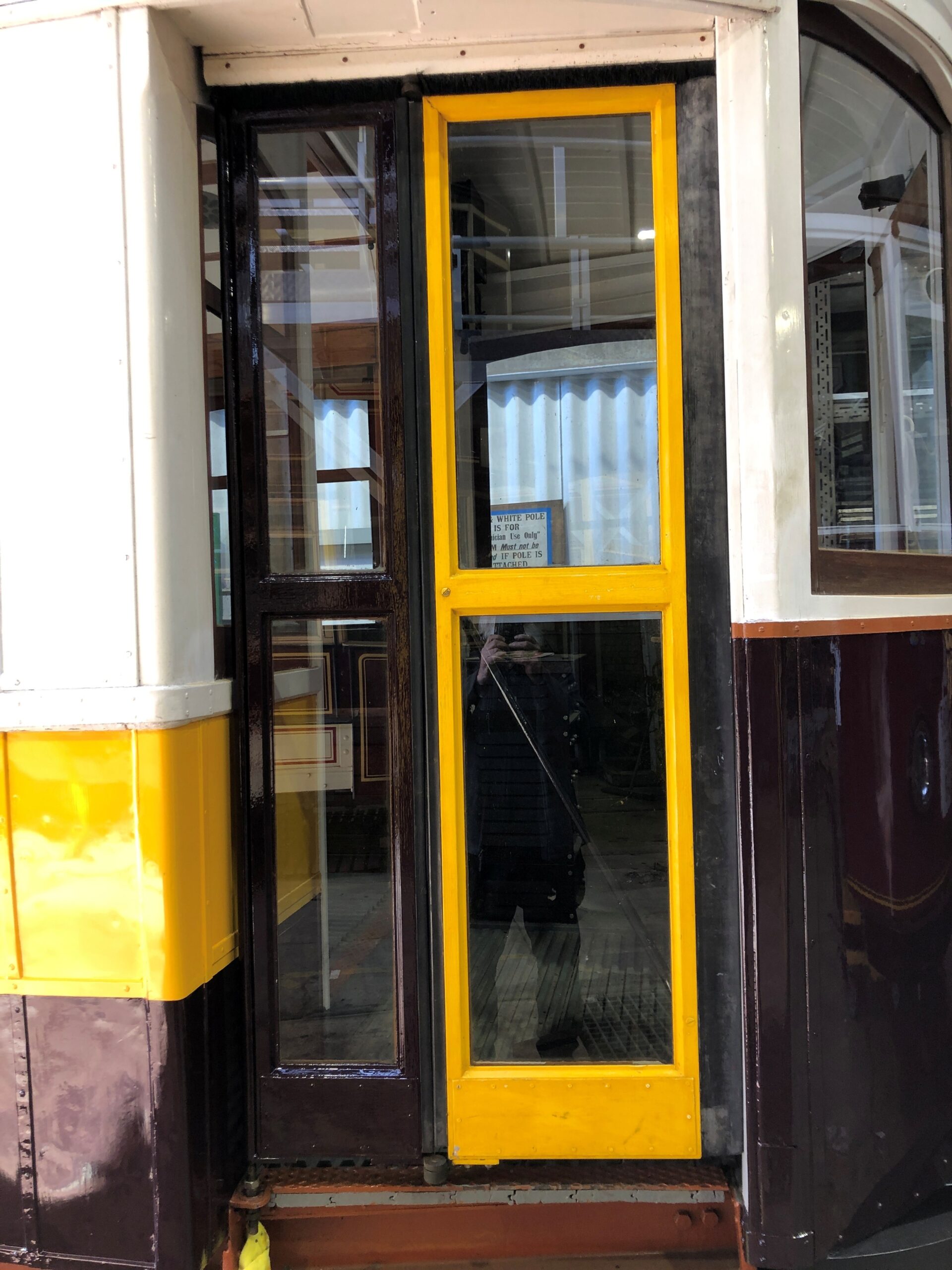
Below: We gave some thought to the colour the doors should be painted, there being no real precedent for this in the Newcastle Corporation Transport past. In the end, we’ve elected to paint them plum, to match Oporto 196 in style (whose doors are the darker of the colours applied i.e. blue). This photo shows the alternative options… The tan-coloured beading and other details will be painted black and the wooden window frames will also be tidied up before 730 enters service. It continues is wait for a gap in the wider programme in order to remove the motors, but Blackpool 31 is now going to receive some attention that will push this back as we want to have 31 back in service as quickly as possible. More on this in a future post.
Below: 114’s lining restored… Crests are on order for this, and 730, which will make a big difference to the appearance of both.
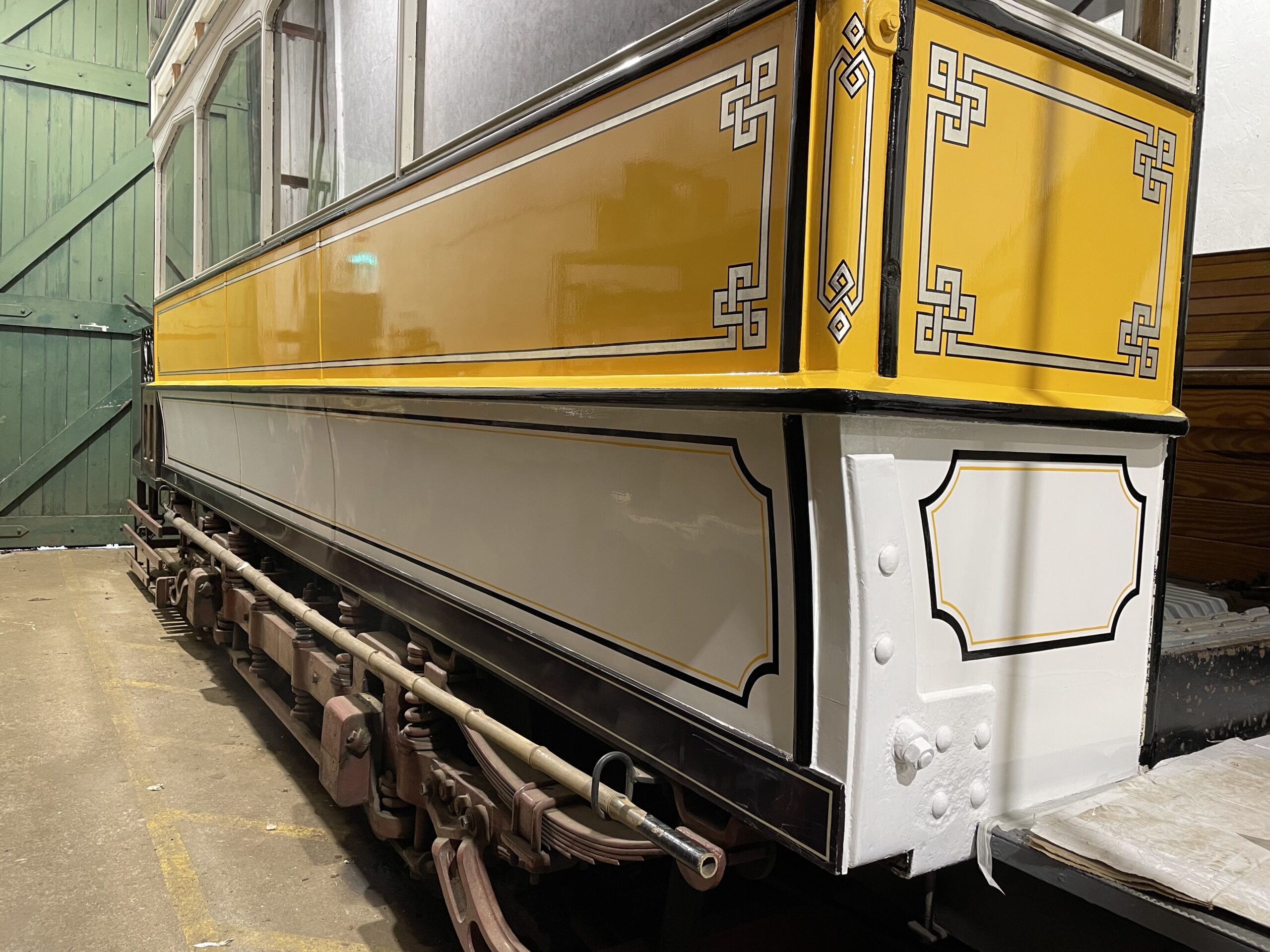
Below: Newcastle 114 also has route-boards to hang on the side decency panels once again – something missing from the tram for very many years, and which have been based on those carried on Newcastle trams in the early years of electric operation in the city. The second board carries the wording for Gosforth and Central Station, all on the olive background.
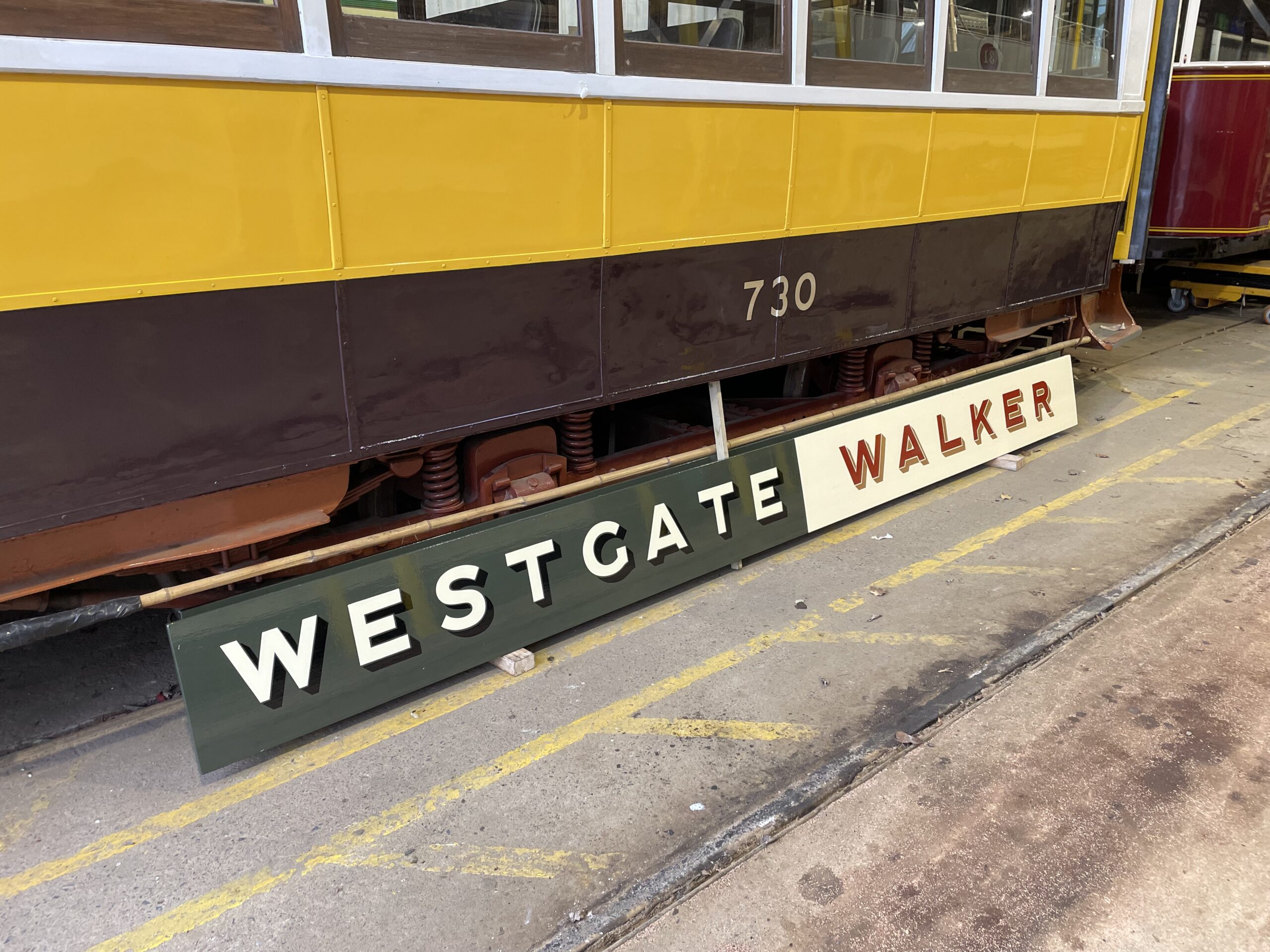
Of note is that this year marks the 125th anniversary of the opening of the Newcastle Corporation Tramways, the electrification of Gateshead & District Tramways and the 75th anniversary since the last tram operated on Tyneside, with Gateshead services ceasing in 1951, but having also, just, carried on into Newcastle after the demise of the NCT tramway itself. More on all of this later in the year… It would certainly be nice to see Gateshead 10, Newcastle 114 and now the NCT-liveried 730 mark this anniversary in some form…
Narrow Gauge Railway
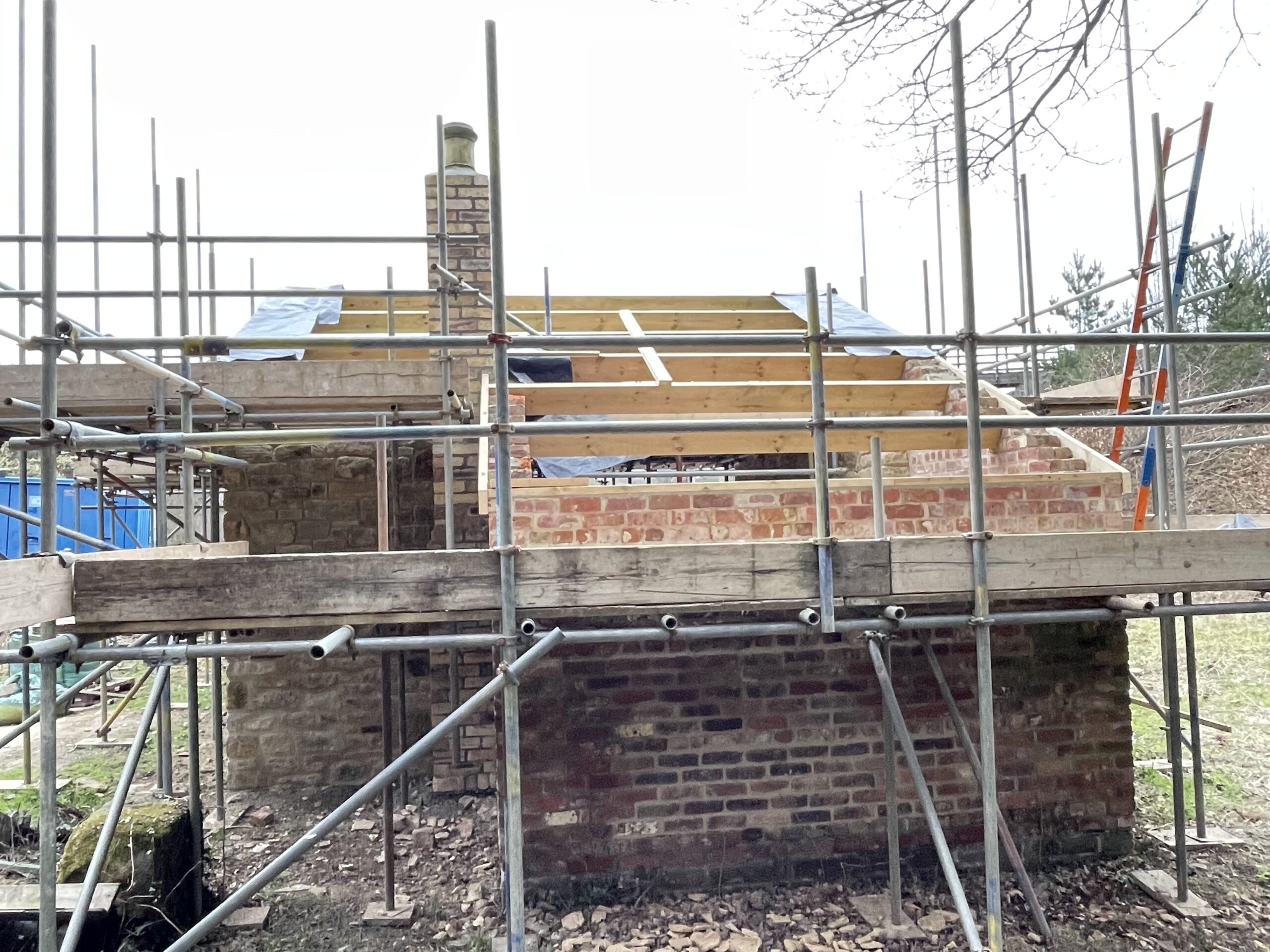
Below: Progress on what is generally known as ‘Samson’s Shed’ has re-started with the improving weather. The team have been competing work elsewhere but have now returned to prepare the gable walls for the installation of roof joists, after which the stonework detailing can be completed and the chimney erected to full-height. Corrugated iron sheet has been ordered to clad the roof once the trusses have been installed. The outline design consideration for the shed doors, personnel door and window has also been carried out. Samson is due back in May (and Glyder needs the pit for its annual boiler inspection late April/early May), so if the good weather continues, the scaffolding should be removed in time for the Transport Festival. The building will then need gutters and downpipes and the area around it landscaping to complete the project. It’s exciting progress however!
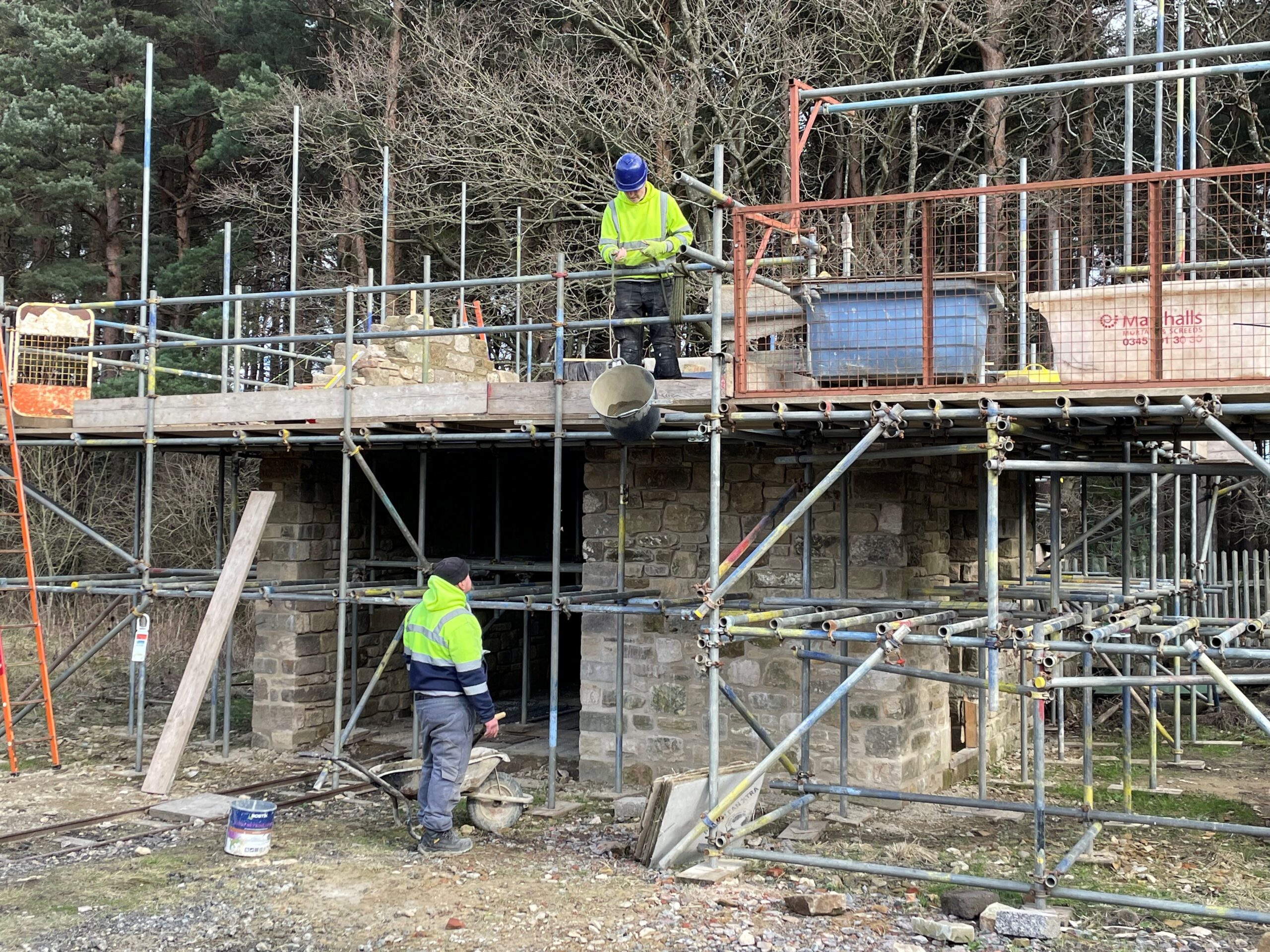
Below: This view from the scaffolding shows an area with potential for future development. One thing we will look at is the approach curve to the shed, possibly substituting the existing rail with rail of a heavier section. Whether the siding to the old Samson shed (centre) continues in use remains to be seen.
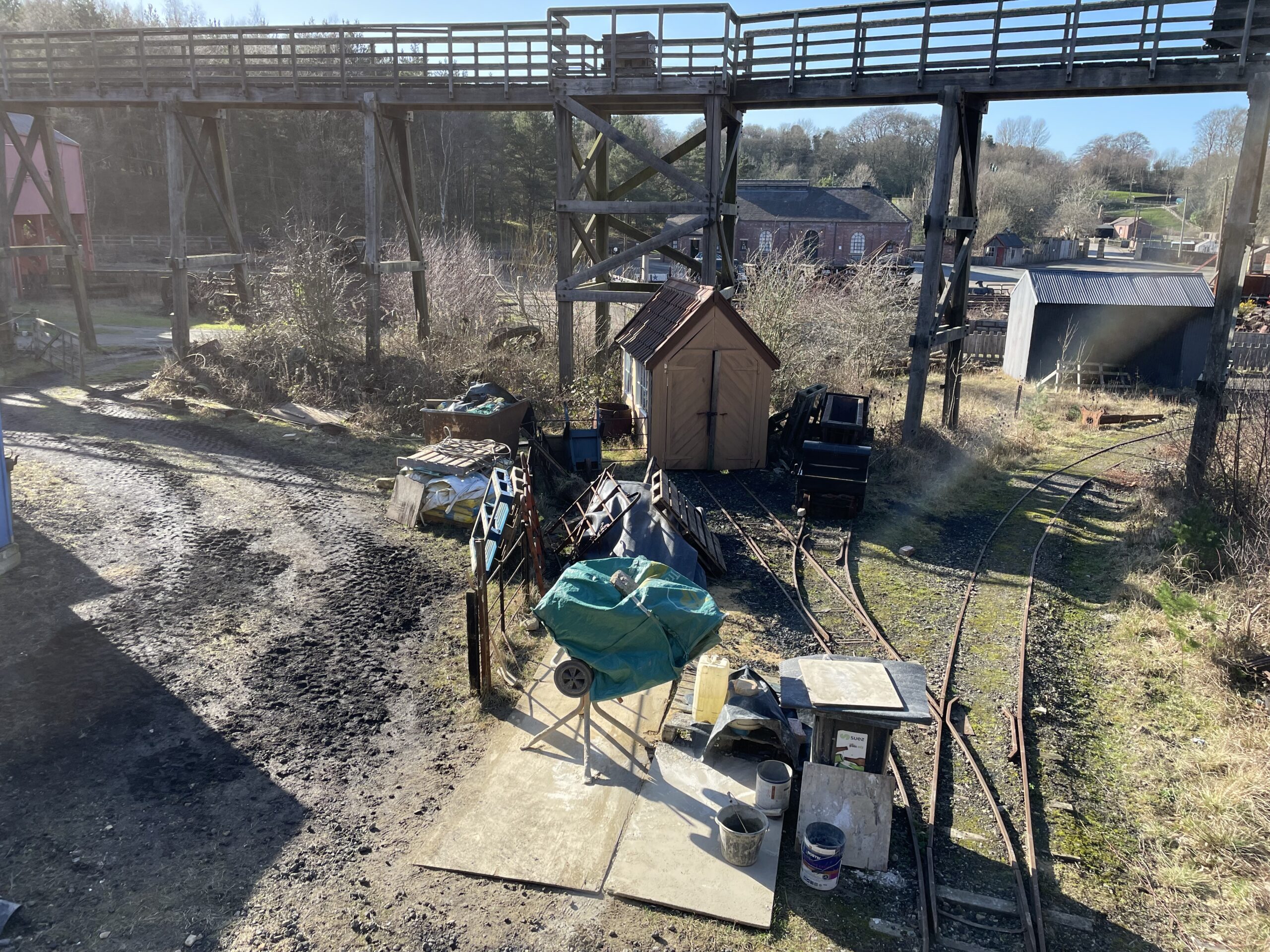
Below: With good weather in March, the roof joists were installed and work to piece them into the walls was underway. Corrugated iron roofing sheets are on order, an once delivered and installed, the scaffolding will be removed to enable final pointing of the stonework, installation of the doors and window and fit-out of the space with some appropriate fittings. Lighting and a power supply will also be installed, the gutters and downpipes fitted and fencing restored to enable public access to the building.
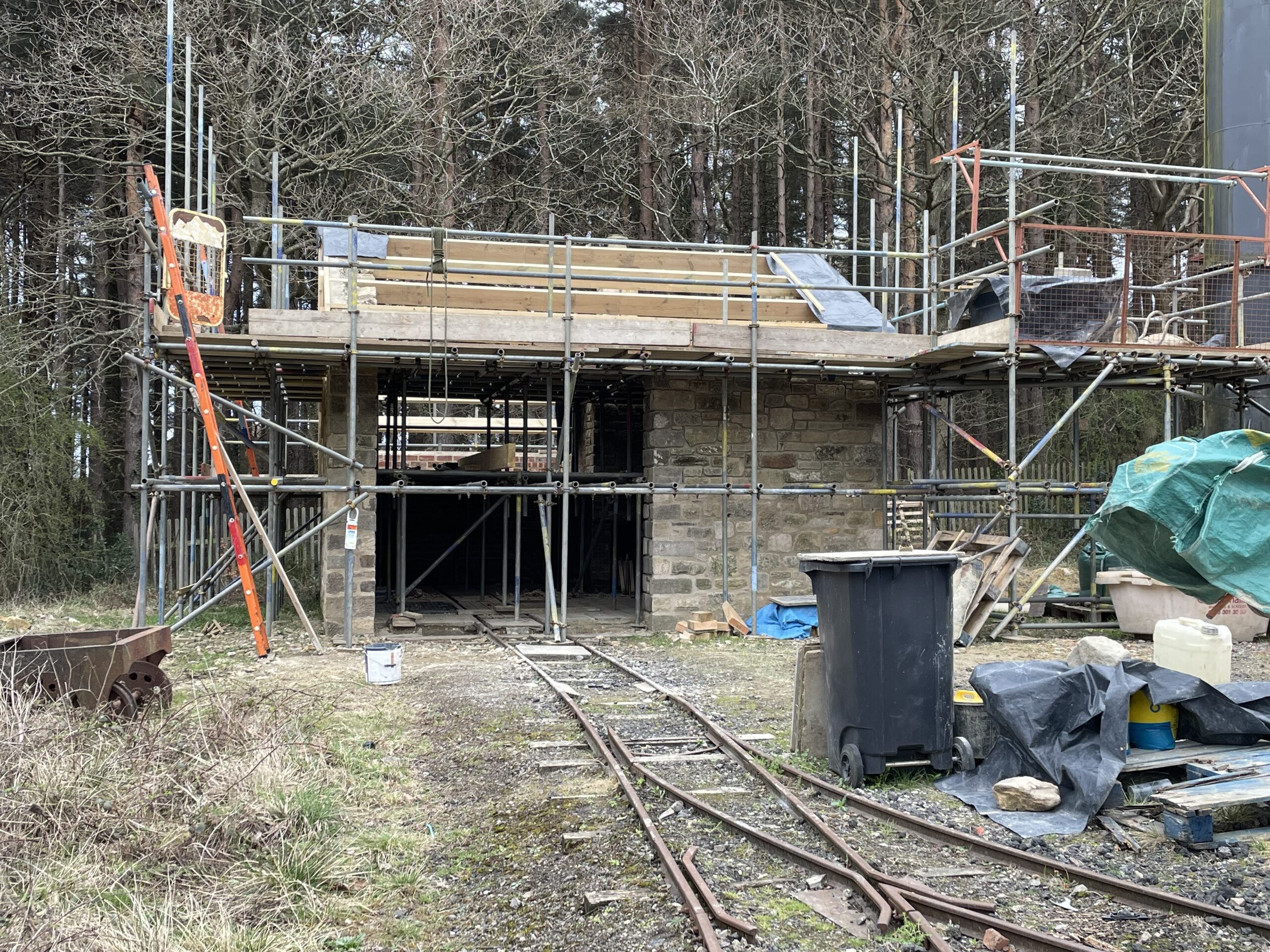
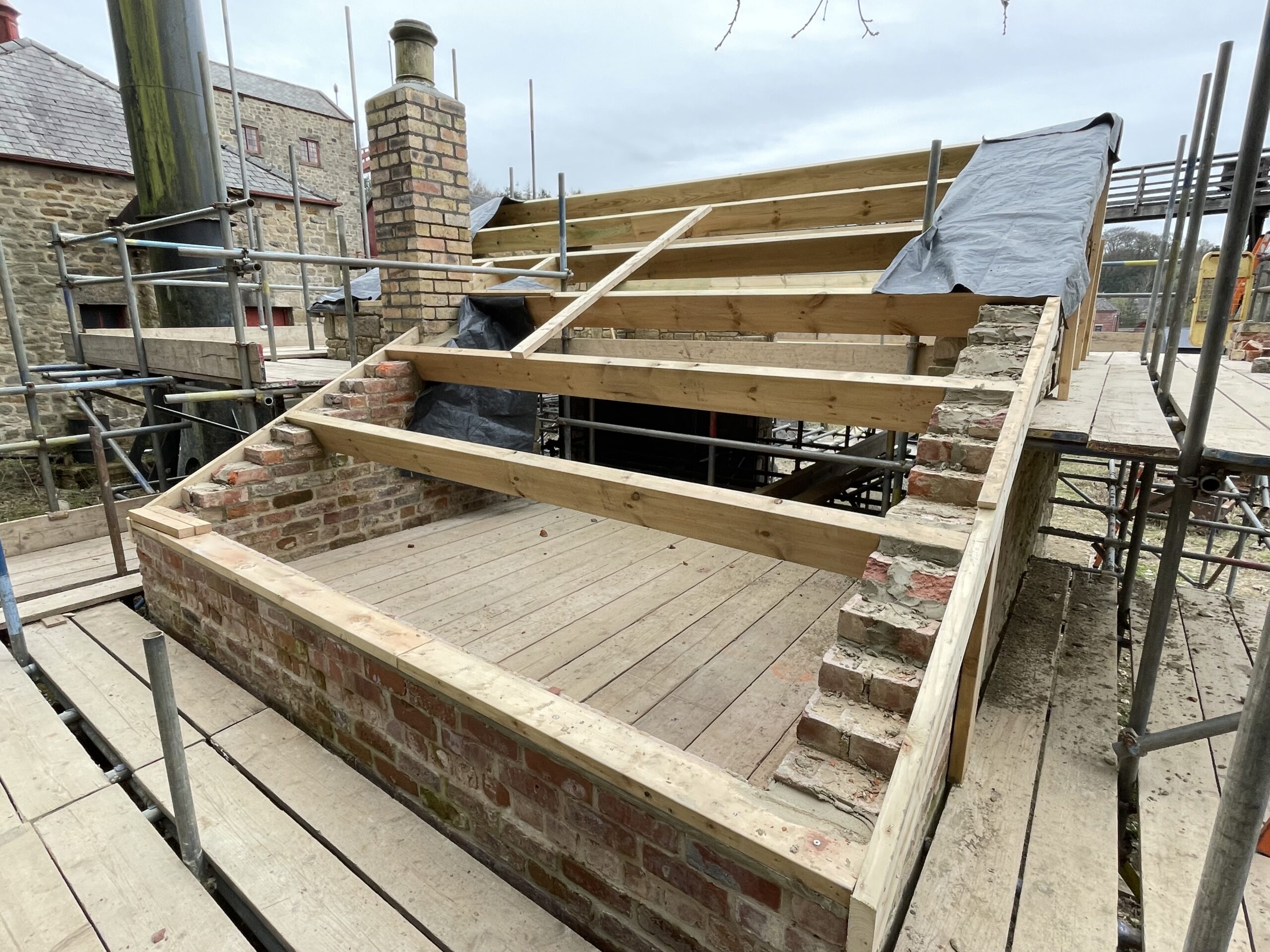
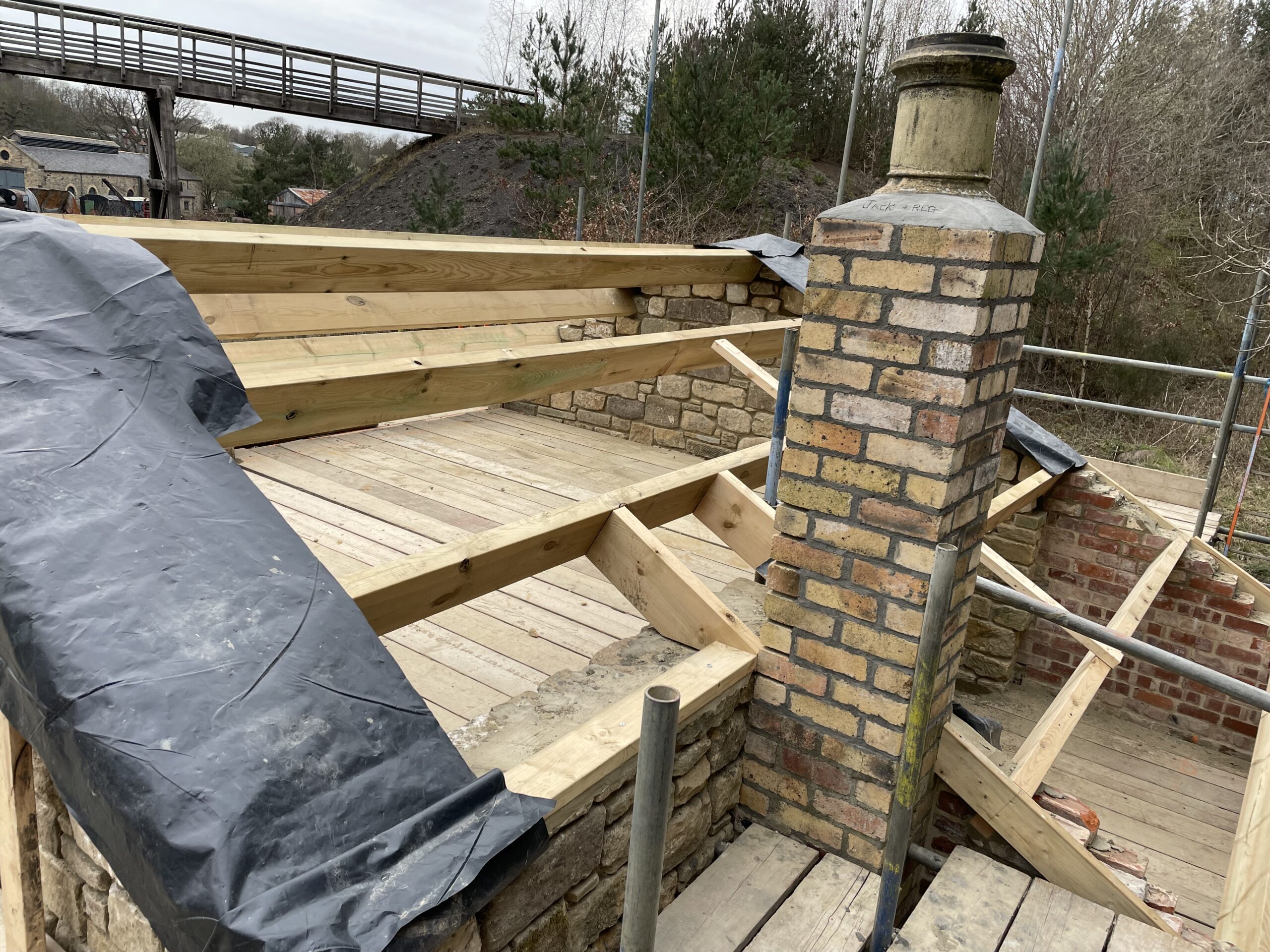
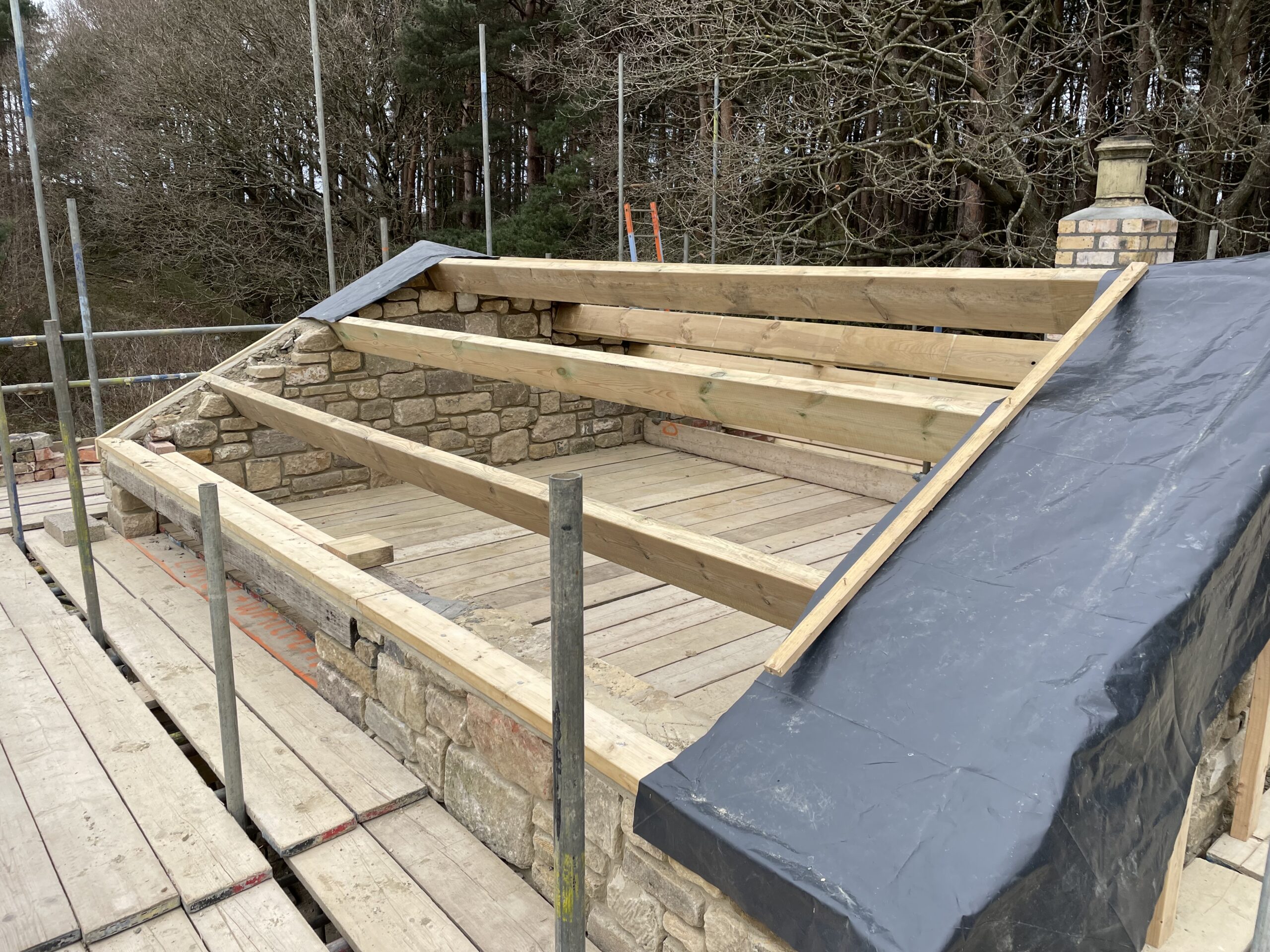
Below: It is very nice to have some projects like this, and the Darlington bus shelter, as so much work recently has gone into maintaining or renewing the existing infrastructure – which after lots of work and expenditure, looks more or less the same as when we started it! A few new features of curatorial interest along the way therefore help to keep the sense of development and change that I think is important to visitors and helps with the sense of the museum not just being a living museum, but one that is alive with ideas and fresh developments to look at.
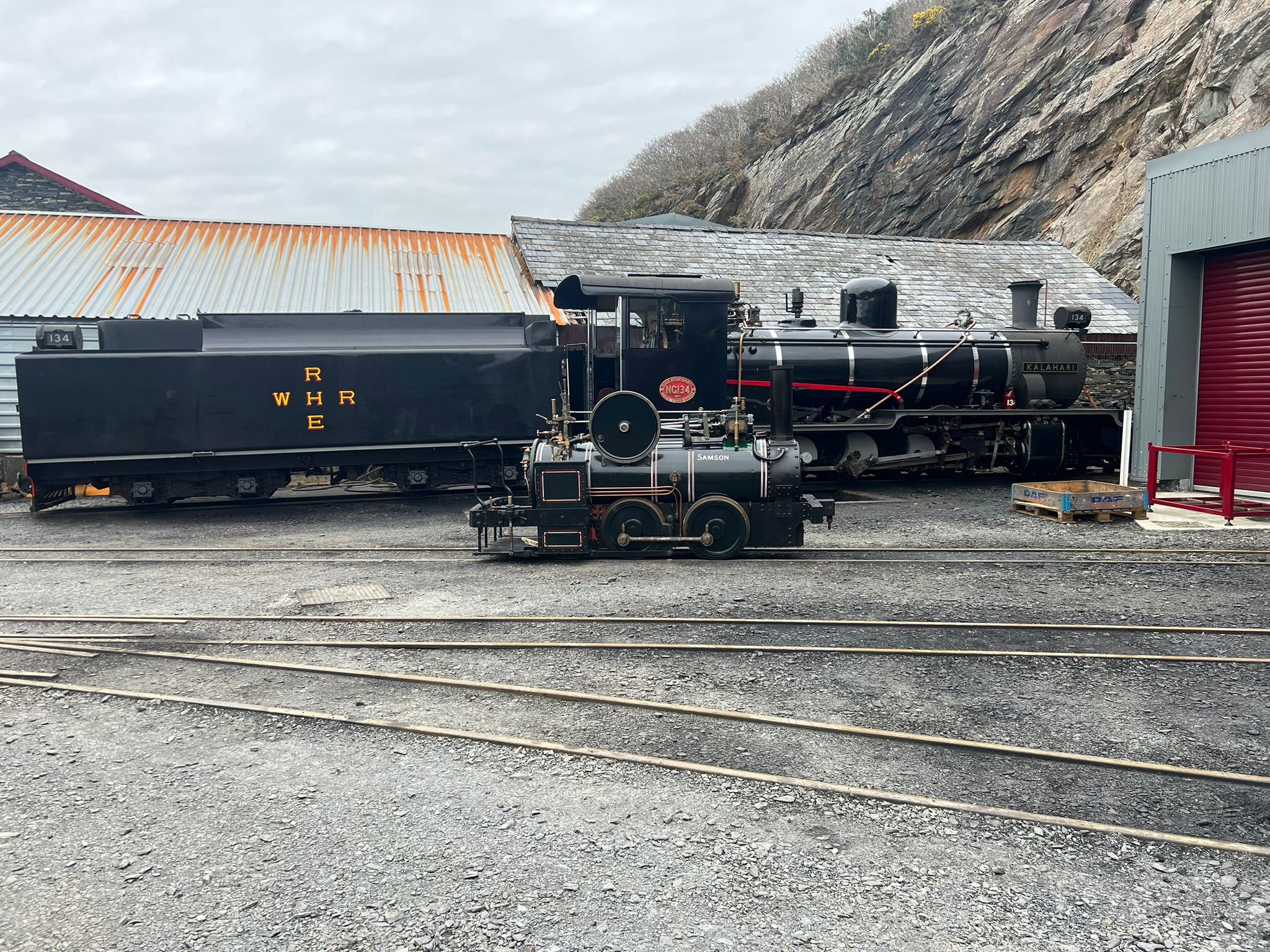
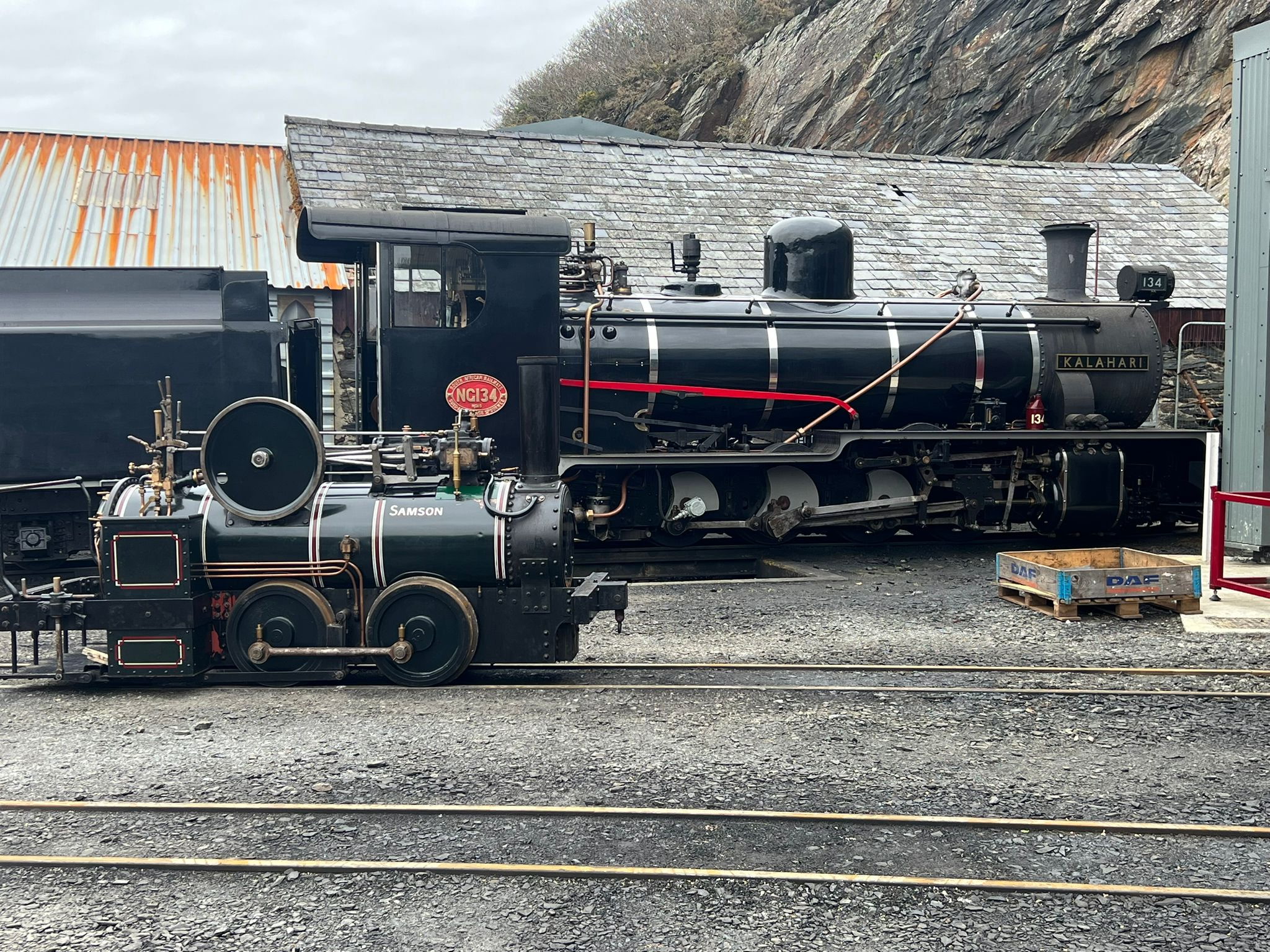
Below: Meanwhile, the shed’s future occupant has been keeping some company on an altogether different scale in Wales – with Samson seen here alongside the enormous NG15 ‘Kalahari’ at Boston Lodge – Matt suggests this might be the smallest and largest (non-articulated) lineup on two-foot gauge (nominal)… It certainly makes for an interesting contrast!
Rowley Station
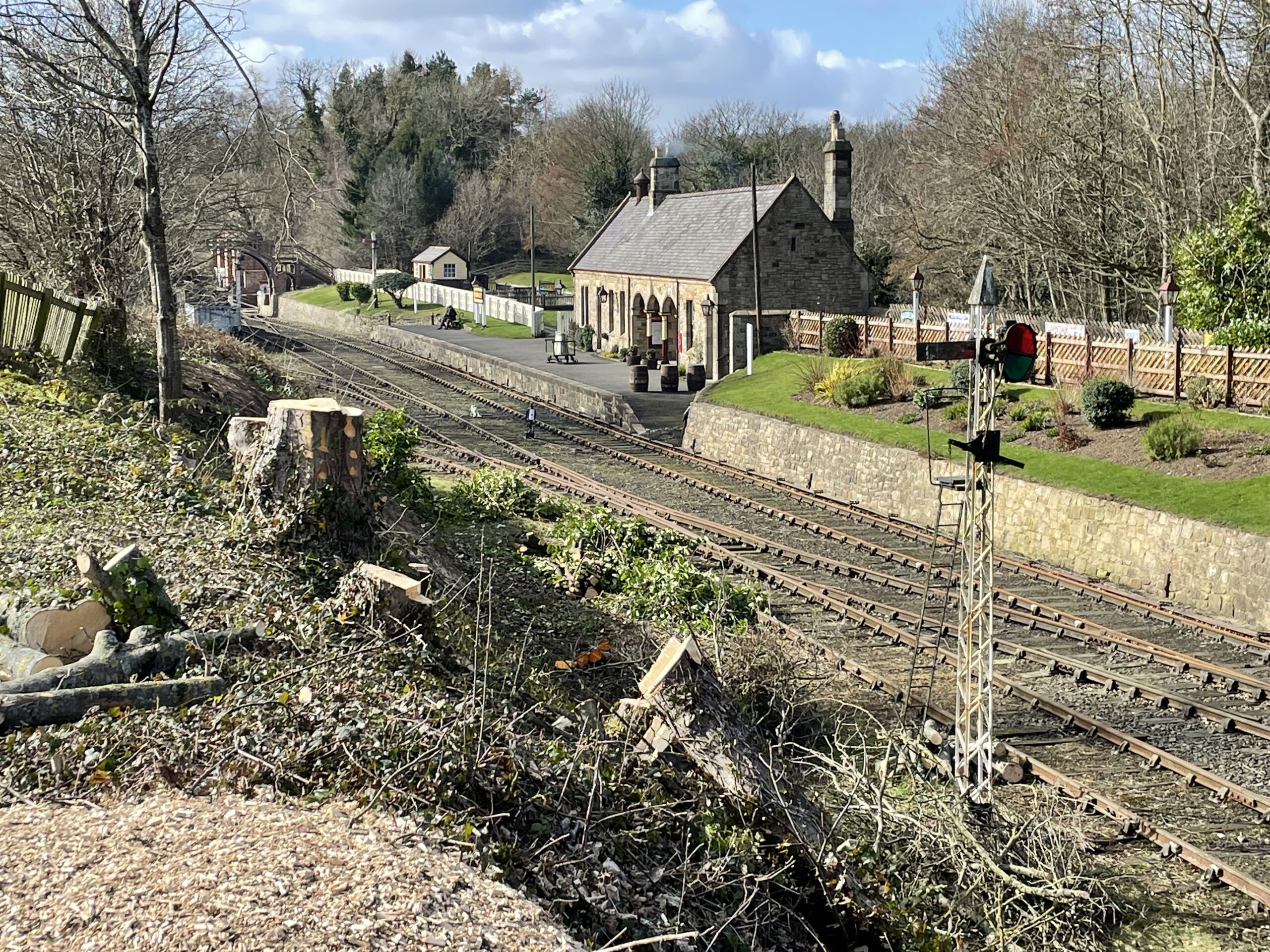
Below: Tree clearance has also been underway at Rolwey Station, again opening up the views and making the station’s connection with the Town much more apparent. The signalbox repairs continue, with work currently focussed on the ledges and renewal of the gutters, whilst new window frames are made for the museum off-site by a local college.
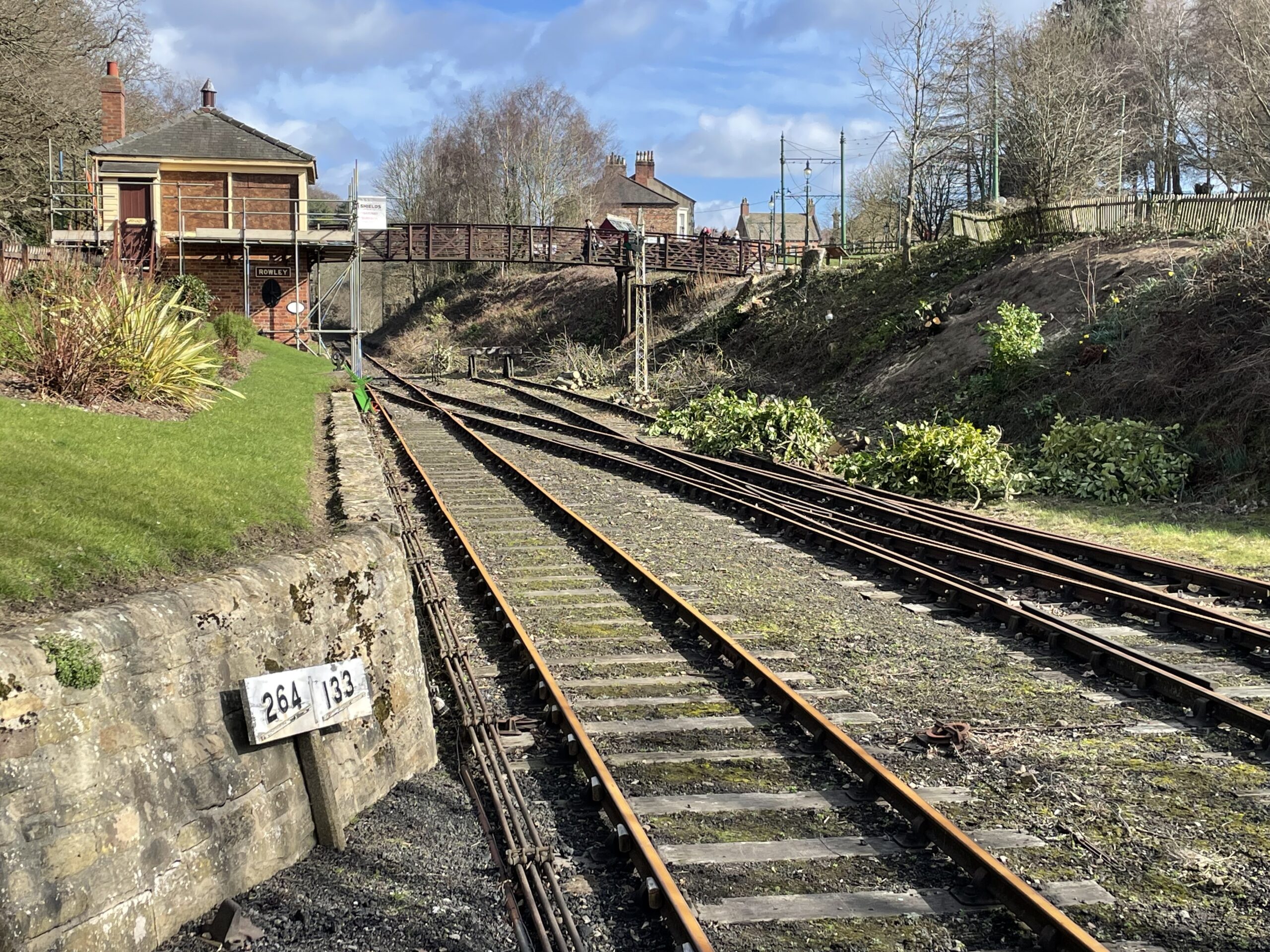
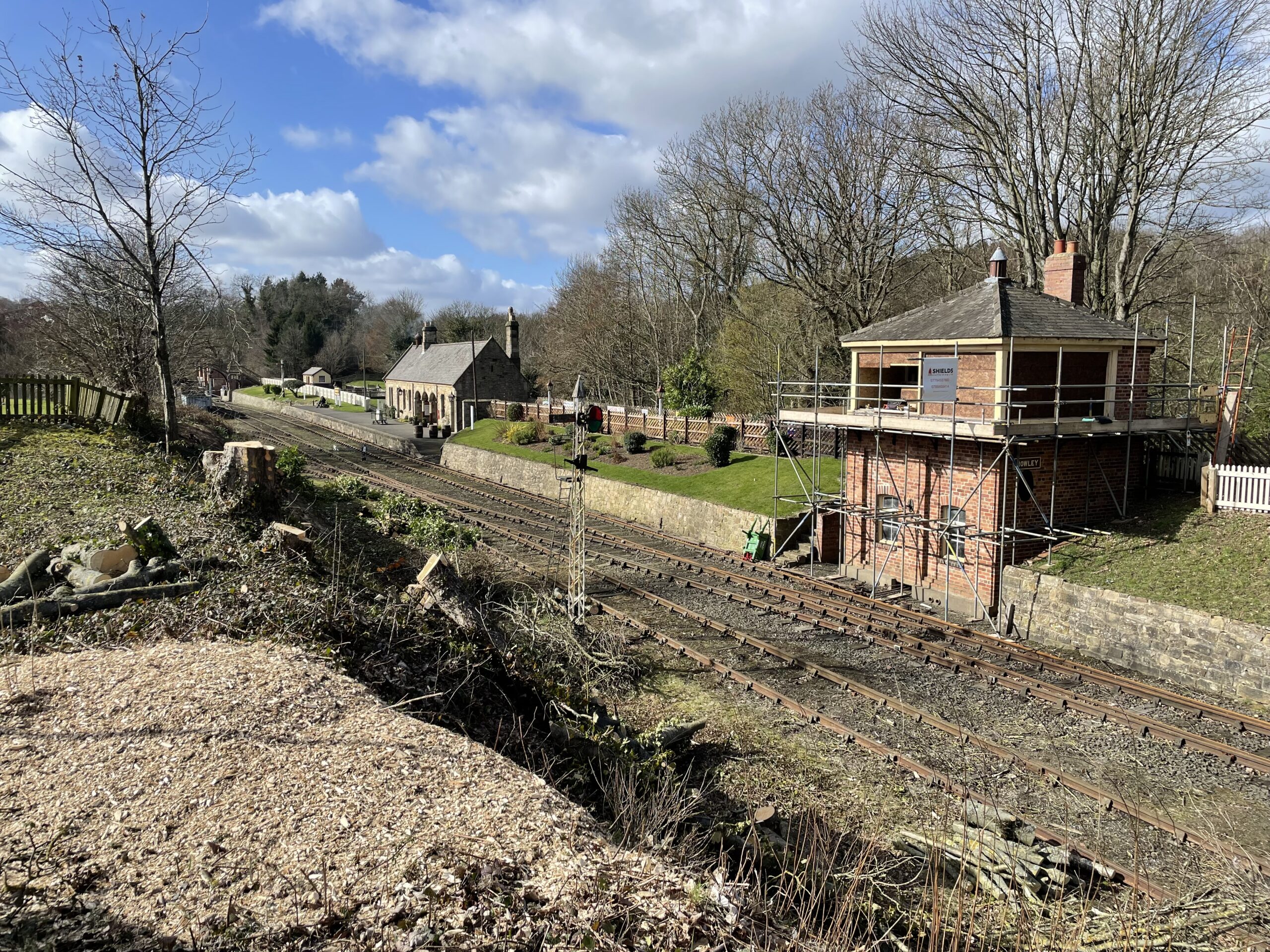
Below: The starkness of the newly felled lineside will soon soften, and the classic view of Rowley Station has been restored.
NER P8 Coal Wagon
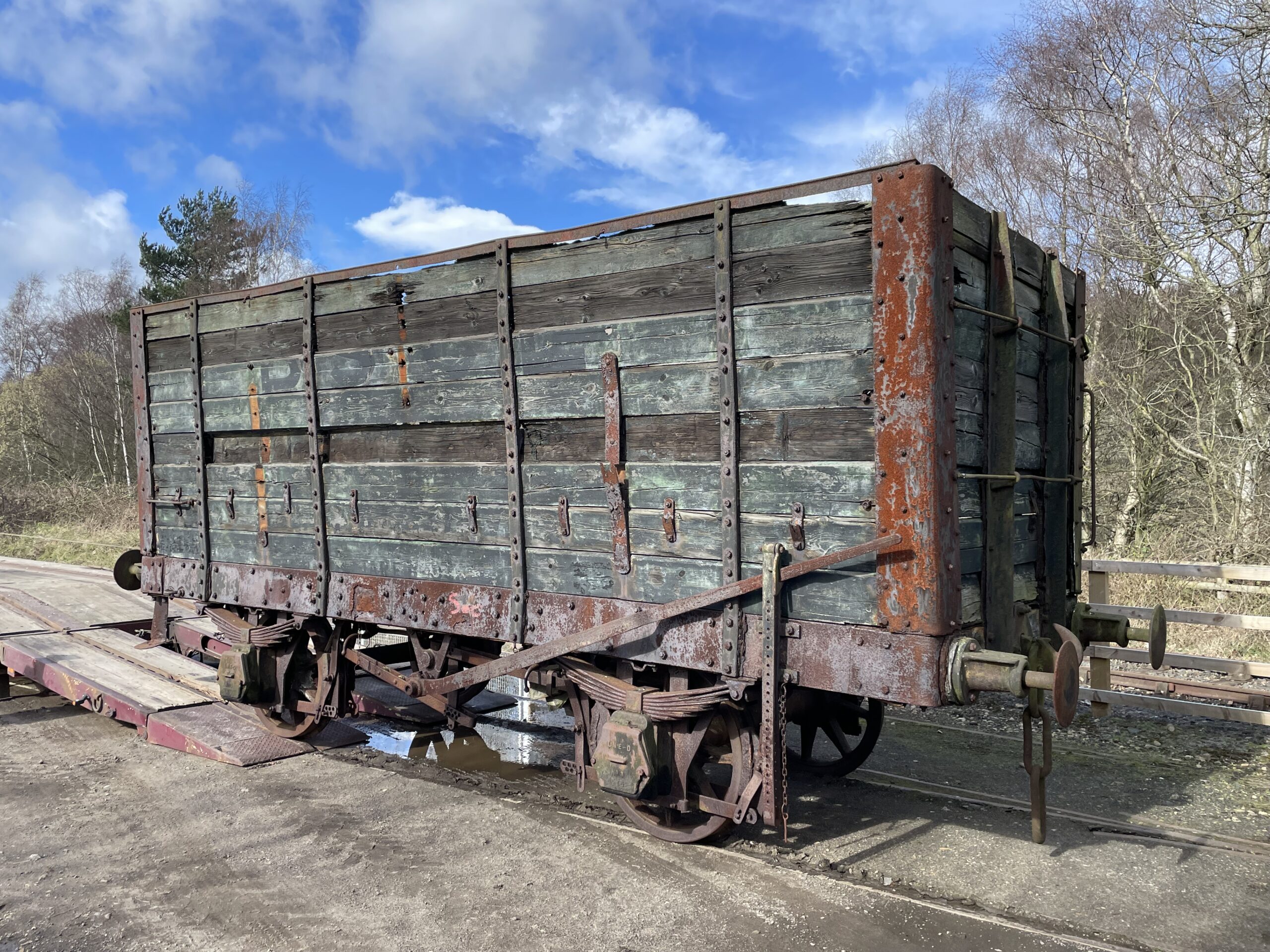
Below: In past posts, I have referred to the healthy nature of museum collections disposing/transferring of items (as well as just collecting them), and the list of de-accessioned rolling stock that has been compiled with a view to placing some items in the hands of those who are better placed to care for them than we are.
Examples have included Twizell and Malleable, for example, but there are also some items of rolling stock that are being removed from Beamish, starting with this NER 20 Ton coal wagon. Its original number is unknown, but it is one that was sold into industrial use at the British Sugar Corporation, Wissington. It later moved to the North Norfolk Railway, and arrived at Beamish in the early 2000s, in part exchange for track components and around the time of the NNR’s J15 making its visit to Beamish.
The review undertaken of rolling stock at Rowley in particular considered its relevance as well as condition – recognising that some items will simply never be restored and will continue to deteriorate in outdoor storage. There are also projects underway elsewhere to conserve or restore NER rolling stock, that we would be keen not to duplicate. With sheds already full, and other items earmarked for restoration or conservation, this wagon was deemed to sit outside of the core collection, and is being transferred to the Locomotive Conservation & Learning Trust at Kirby Stephen East. It will be part of a project that is being undertaken there that will also include another NER 20T hopper at Beamish, which will also to KSE move shortly.
These wagons are too big for the coal drops at Rowley Station and do not readily fit into the NER branchline terminus theme as a result, and so the focus will be on some of the smaller NER coal waggon, as part of a core collection that comprises:
- NER V1 Birdcage Brakevan No.44842 – presently under restoration/conservation
- NER P5 coal wagon No.1077 (presently stored inside the coal drops)
- NER P4 coal Wagon No.64994 (which will be the next wagon to be restored after No.44842)
- NER Implement/Fire Engine wagon No.03938 (this will probably be the third wagon in the restoration programme, after No.44842 and No.64994)
- NER G2 Goods Van No.102833 (on static display in the good shed)
- NER G6 Tranship Van No.108635 (on static display in the goods shed)
- GWR Mink A No.95861 (on display)
- In addition, components/spare parts that might enable future replicas of a NER C2 general goods wagon and a NER K1 Cattle wagon to be constructed, to create a more representative range of rolling stock as might have been found in a NER country station goods yard.
This wagon departed on the 25/03/26 for Kirby Stephen East, arriving there later the same day.
Newcastle Trolleybus No.501
Below: The loan of Newcastle 501 to the Trolleybus Museum at Sandtoft got off to a slow start when it was discovered that the resistance grid underneath the bus was in poor condition and not suitable for further use as it stood. Thanks to the team at Sandtoft, this has now been remedied, and this photo was sent through this week showing 501 on test. Hopefully it can now settle down into regular operation.
This photo and update will no doubt bring about comments regarding trolleybuses at Beamish… The creation of a working trolleybus route (effectively to electrify the 1950s bus route so that it can be operated by motor buses or trolleybuses) remains a strategic objective. There is no timescale for this, but the benefits of electric bus operation are clear to see. That said, a great deal of expensive investment to get to that point is still needed and so external funding would be required to achieve it. Remaking Beamish’s objective was a 1950s bus route – which was often referred to (inaccurately) as a trolleybus route, and whilst some traction poles were installed as part of that project, no real investment became available for a route. We’ve also had to invest substantially in the Tramway, with overhead line equipment (OLE) renewals being necessary, in part to replace paging equipment, but also to remove any items that might contain asbestos. This also meant that the very substantial amount of equipment earmarked for the trolleybus OLE had to be disposed of – something of a setback which has led to the need to start to restore our stocks with alternative fittings and materials. So yes, Beamish still intends to operate trolleybuses in the future, but the timescale has not been set to achieve this. Meanwhile, those who wish to experience a trolleybus ride can visit Sandtoft or the East Anglia Transport Museum, and hopefully in the not too distant future, the Black Country Museum’s trolleybuses will be active again.

Photographs in this post by Tony Barwick, Phil Doran, Paul Jarman, John Marshall, David Moseley, Bill Parker and James Race.


Recent Comments