Transport & Engineering Diary August 2026
A longish post for the whole of August this time – as annual leave disrupted the usual flow of writing! This means that quite a lot of the content happened across the month and was completed by the time I came to write this post – my apologies if the flow of text seems to be a little staccato as a result of this.
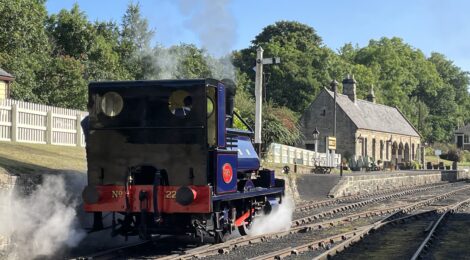
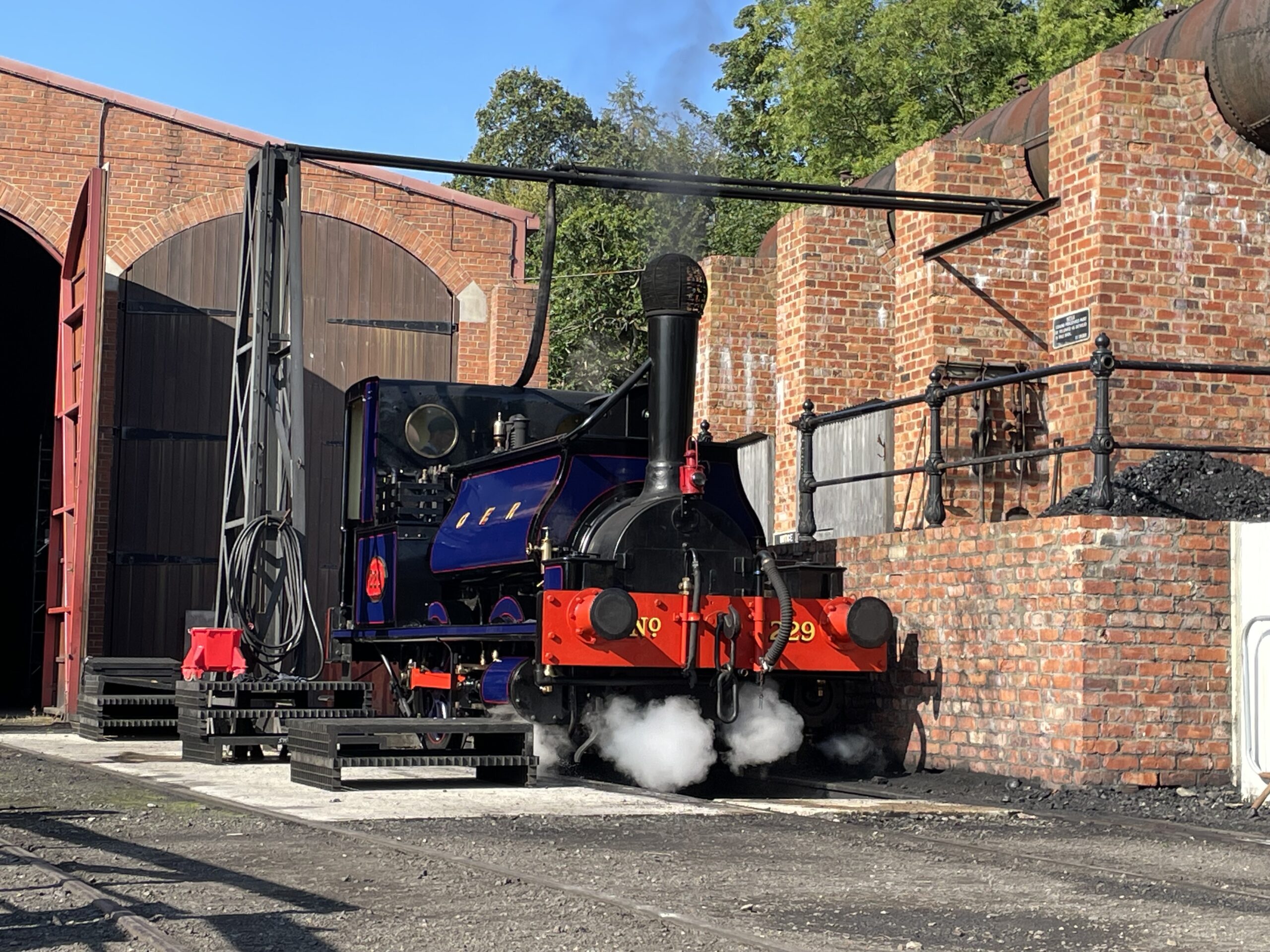
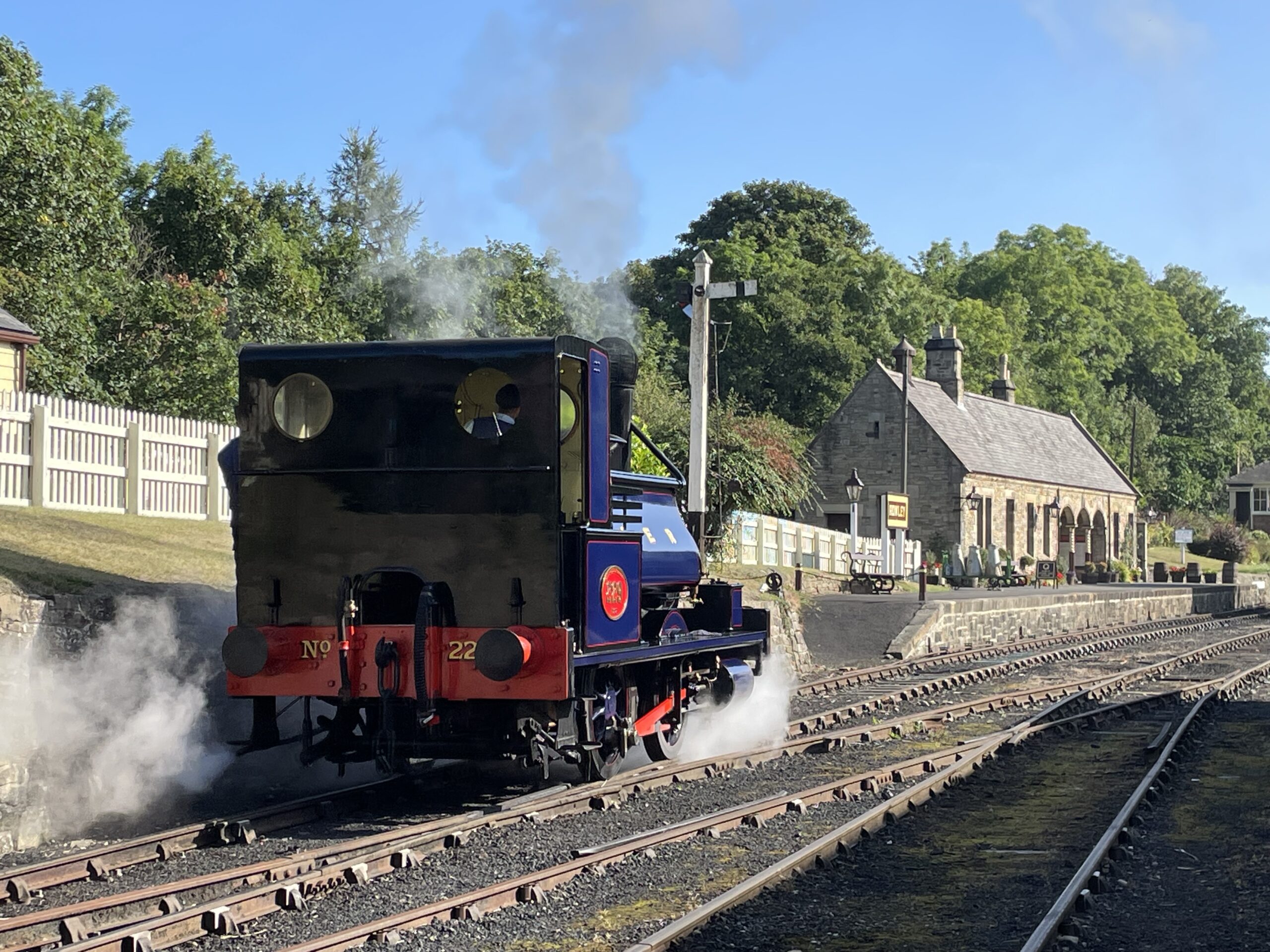
Below: GER 229’s last day in operation occurred on the 23rd of August, the locomotive then departing for events in Essex and Oxfordshire as part of its inaugural year in service. Perhaps we’ll see it back at Beamish again one day… The prior weekend saw steam operations cancelled following the government warning regarding the very high fire risk conditions across the UK. Whilst we have seen one lineside fire during the period of 229’s operation, and took steps to reduce the lineside ‘brash’ to minimise a reoccurrence, it was felt the only responsible action in light of advice and not wishing to put the emergency services under unnecessary strain, was to cancel two days operation at Rowley. The following week saw quite a bit of rainfall, allowing the 22/23 operation to take place. The dry summers are only going to become more regular, and we already have our thoughts turning to climate resilience (hot weather and heavy rainfall – often made more damaging when falling onto baked-dry ground) and how we adapt the museum for operation in a more extreme range of conditions. The heat can cause issues for power supply too – as the ground dries to the extent that the movement disrupts the high-voltage cables that run through the site. So there is a great deal to consider. Spark arrestors and ashpan mesh are obvious mitigations, and locos with open cabs may well be preferable to those with enclosed ones in some conditions – we have a lot to consider in our planning.
It is worth noting that the diesel shunter at Rowley is not vacuum brake fitted so cannot work in passenger service, and also has a limited pool of operators who can drive it and who will tolerate some of its ‘foibles’ – it is usually the means of moving rolling stock of last resort, until a better locomotive can be sourced in due course.
The two photos below show 229 moving off shed at the start of its last day in operation – the large ex Wissington spark arrestor is plainly visible atop the chimney! It was collected on the 24th August and departs for Great Eastern Territory at the Mangapps Railway Museum, after which it will head to Didcot Railway Centre.
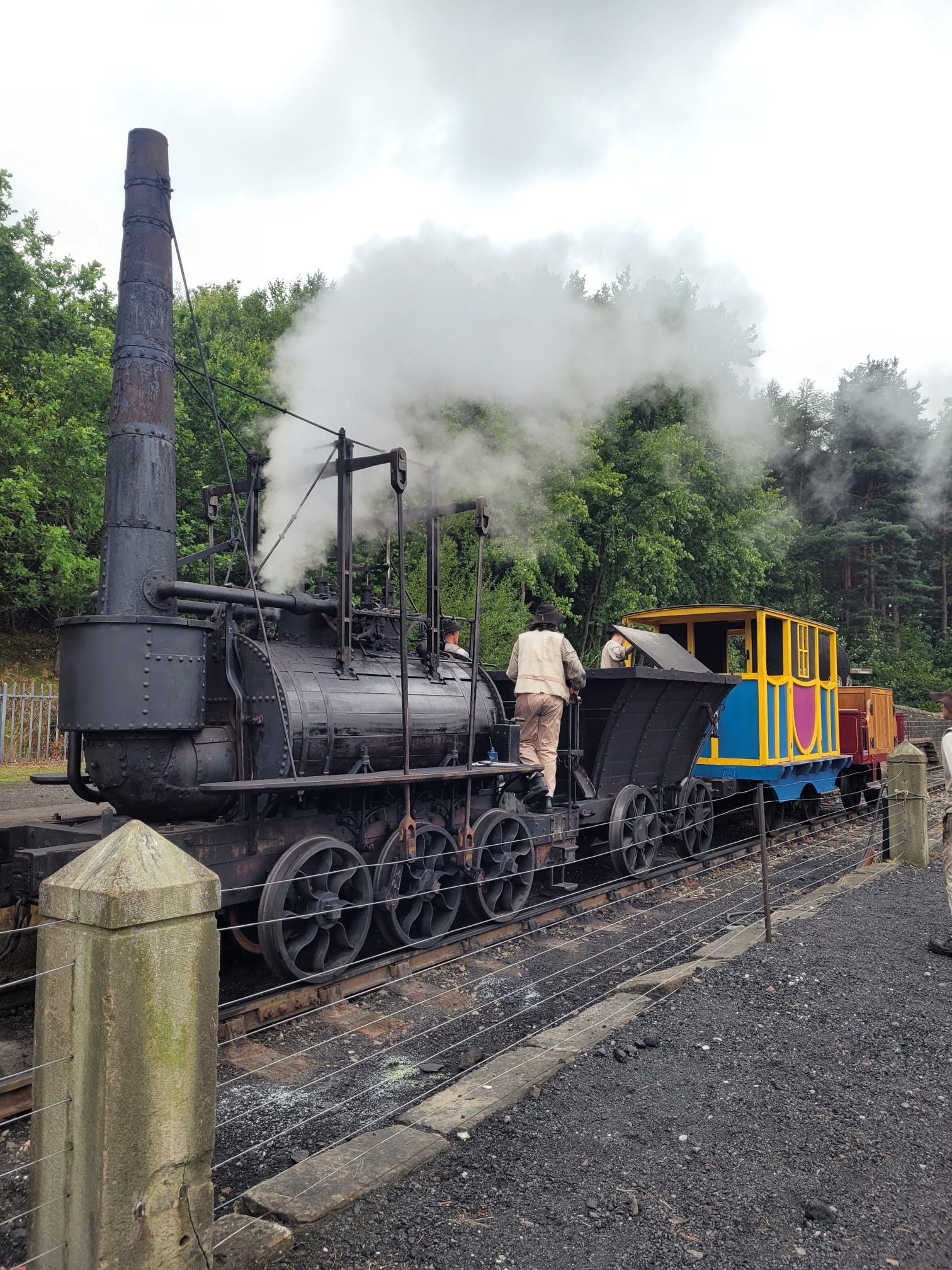
Steam Elephant
Below: After several years out of service awaiting, primarily, a mechanical overhaul, Steam Elephant has now returned to operation. This is limited at the moment, as crew training is required on what is, to many of our staff, an unfamiliar locomotive from the early railway period. Phil and Phill also want to explore a few other issues, which have shown themselves during testing. They have also fitted a temporary water tank in the chaldron waggon (in which the compressor for the air brakes is situated) pending a more permanent replacement for the water tank under the footplate, which (along with the footplate itself) requires extensive rebuilding or a different solution. The locomotive’s lagging is also in poor shape so will be listed for replacement at an early point in time. It is great to see the locomotive back in operation – it provides the essential operational resilience and will allow Puffing Billy something of a breather in the next few years as the two can share duties at the Waggonway. Earlier posts cover the progress of this project in the last 18 months or so, with the first major mechanical overhaul on the locomotive since it was constructed having been carried out. It first entered the workshops in 2019, but progress was delayed by COVID-19 and then the subsequent disruption to programme that we are only now starting to put behind us (Gateshead 10 being another notable project to be affected by the pandemic).
Blackpool 31
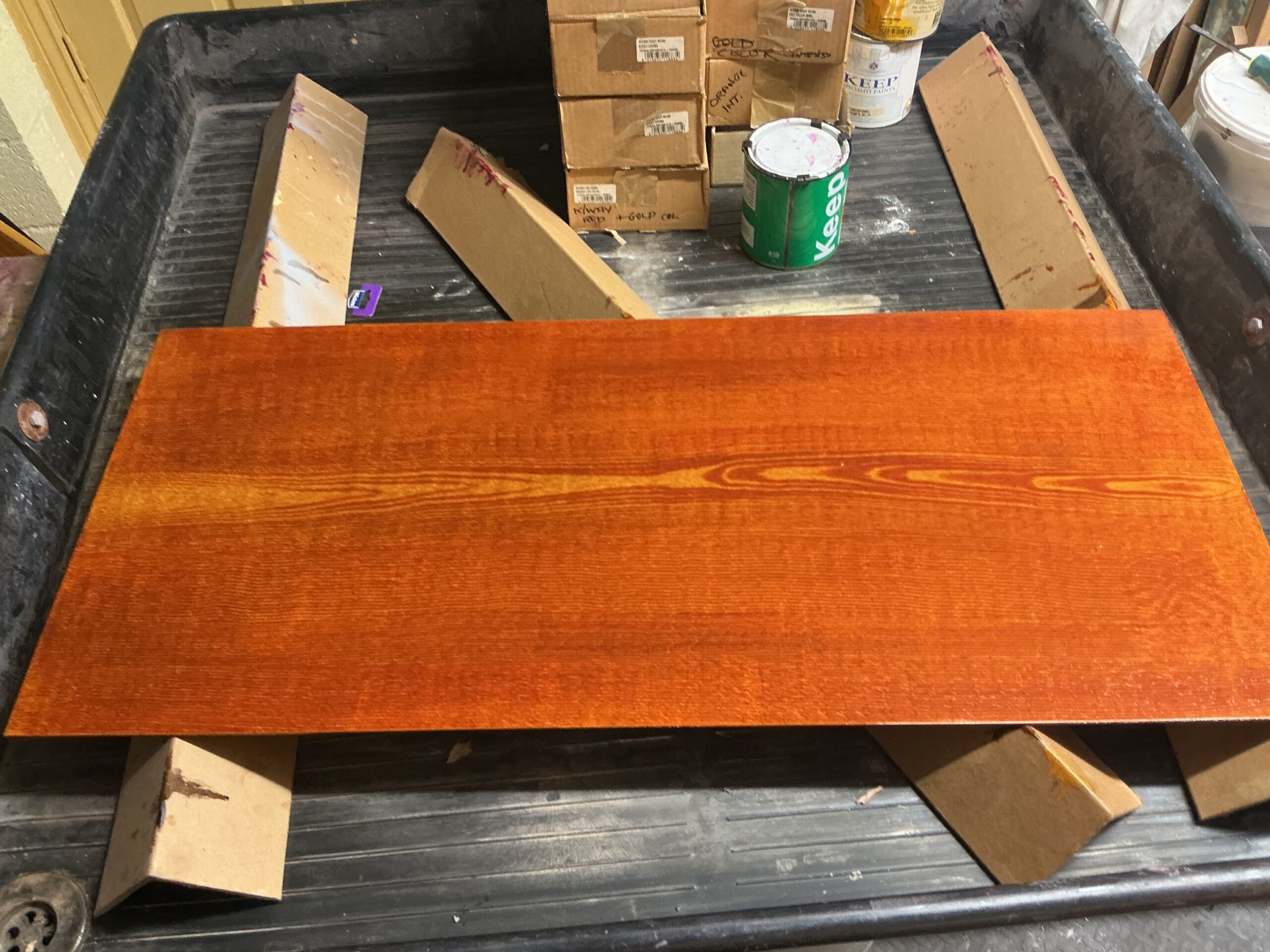
Below: The deteriorating condition of the wood-grained panel on each side of the tram prompted us to programme a partial repaint at the end of the school holidays, aligned with the availability of signwriter Aaron, who will apply the scumble wood-grain effect over the base colour. He will also restore the lining. Additionally, it was also determined that painting the window frames below cantrail level (this is effectively the floor of the top deck), down to the rubbing strip that de-marks the roker and waist panels would also be prudent, again lining having to be re-applied. The plan (as I write) is to prep the surfaces late this week (update – see photos below taken on Friday 28th) and finish the white paintwork to gloss level, allowing the tram to operate over the Bank Holiday weekend. John (contractor), with Mick and Sam assisting prioritised this work towards the end of the month.
It will then be straight out of service for the completion of the paintwork, estimated to take about ten days in total. It will then re-enter service until a body lift this winter (assuming we have Sunderland 16 off the jacks – we are still in the process of procuring the new tyres for this and have decided the lift the tram in order to send the wheelsets to the contractor in the near future and then carry out some other work on the truck with the hope this work can be turned around quite quickly). Blackpool 31 will need rather longer out of service as the wheelsets will be dispatched for tyre re-profiling, the bogies inspected and overhauled as necessary and the motors sent away for inspection/attention as required. I’d like the bogies to be repainted too. But their return will be to a tram body, at least, that is largely ready to accept them. Target Easter 2027. We shall see if we meet this…
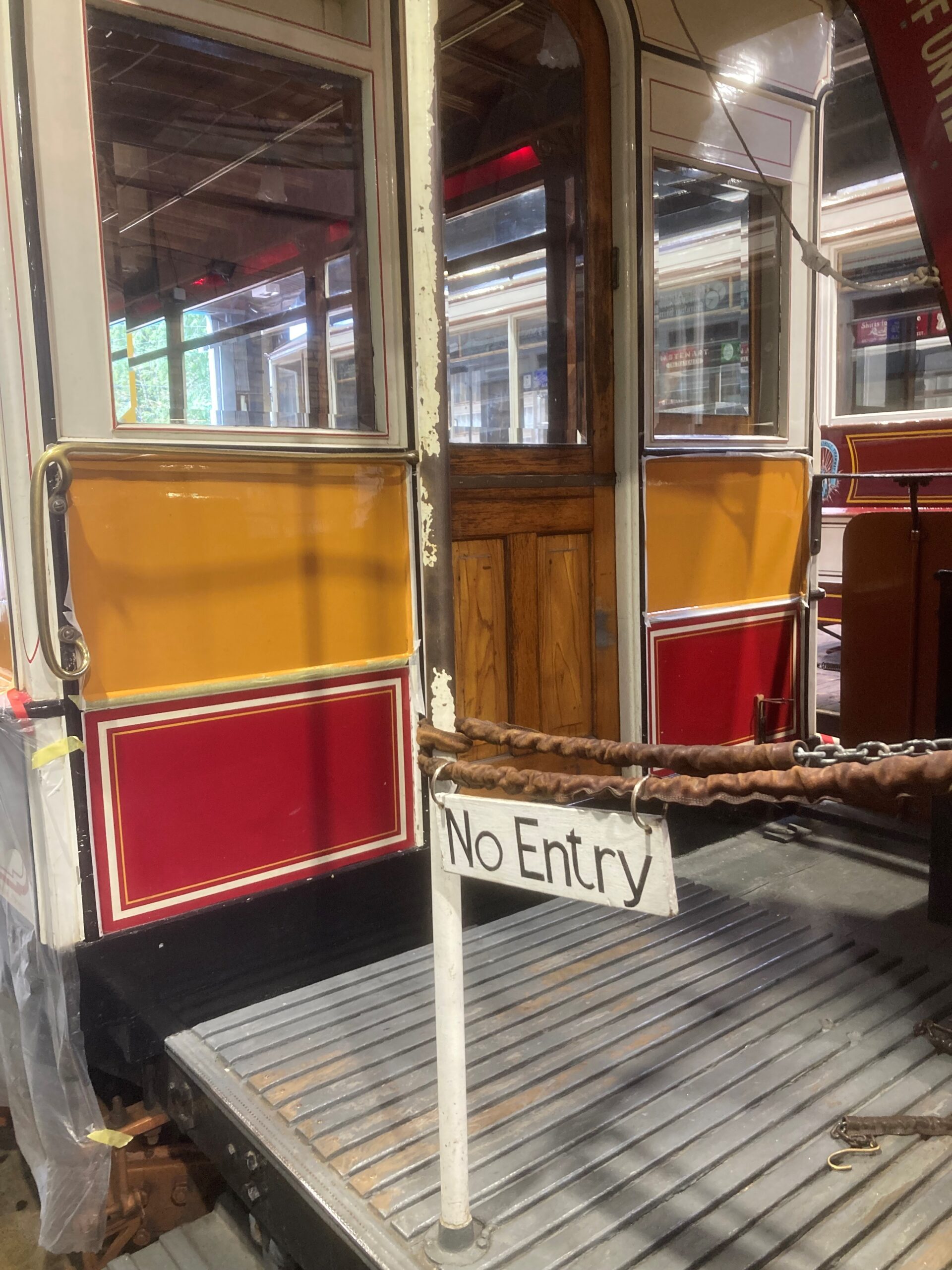
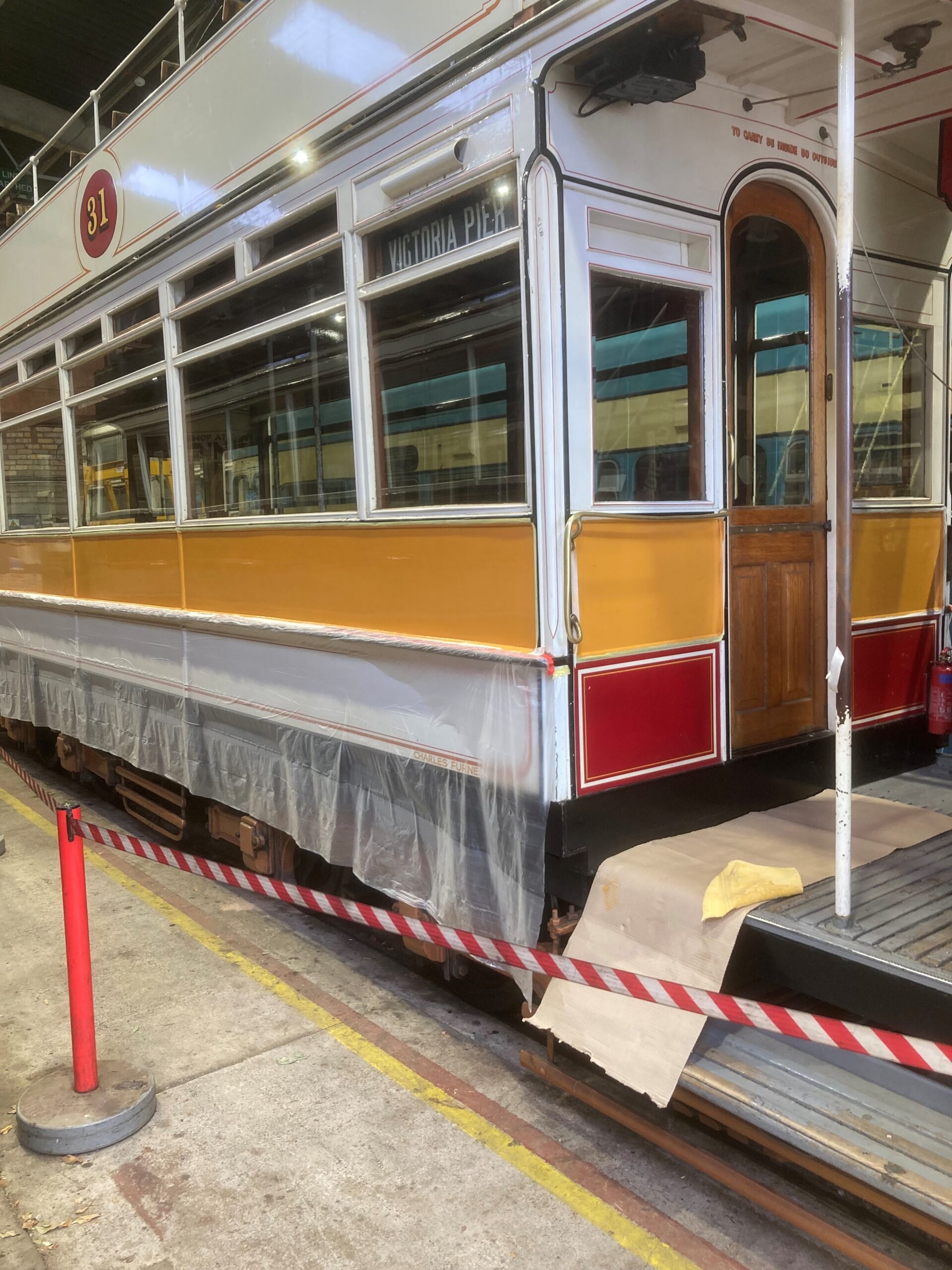
Below: A sample panel for Blackpool 31’s forthcoming partial repaint has been prepared by Aaron.
After the processes outlined above, the next tram for attention will be Sheffield 264, whose re-tyring is already in the budget (like 16). There is some structural work required on the tram too, and we will look at what is needed to get the most life out of it at this point. After 264 will be Oporto 196, which is shortly to receive some attention to the bodywork, but really this is no more than a sticking plaster pending a full overhaul of the tram. Lisbon 730 sits outside this programme but we will take any opportunity to drop the motors for examination of the armature bearings, at the earliest opportunity. It all sounds very easy when it’s written out in a couple of paragraphs!
Crosville 716 – Spare Engine Overhaul
Below: Phil and Phill have continued with the dismantling of the spare Leyland engine, with the block and other components shotblasted to remove many years of paint and verdigris. The next job was to remove the nuts that secure the cylinder head. Something of a gruelling task, with 27 in total to be removed. Some of the studs are shown here, protruding upwards from the block and exhibiting the wear that requires their renewal in the first place.
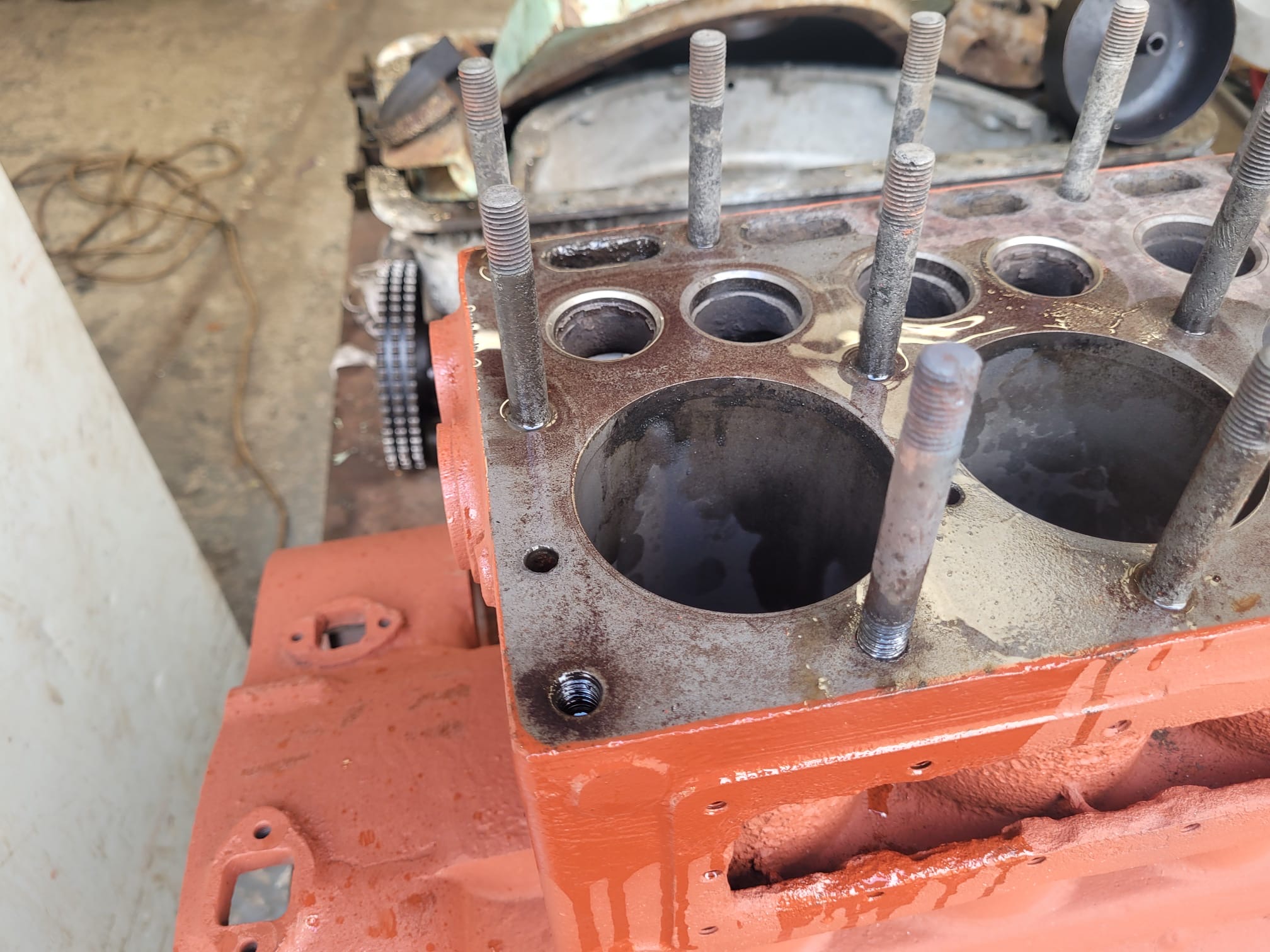
Below: The job reaches the final hurdle – the last stud – which I believe broke during extraction.
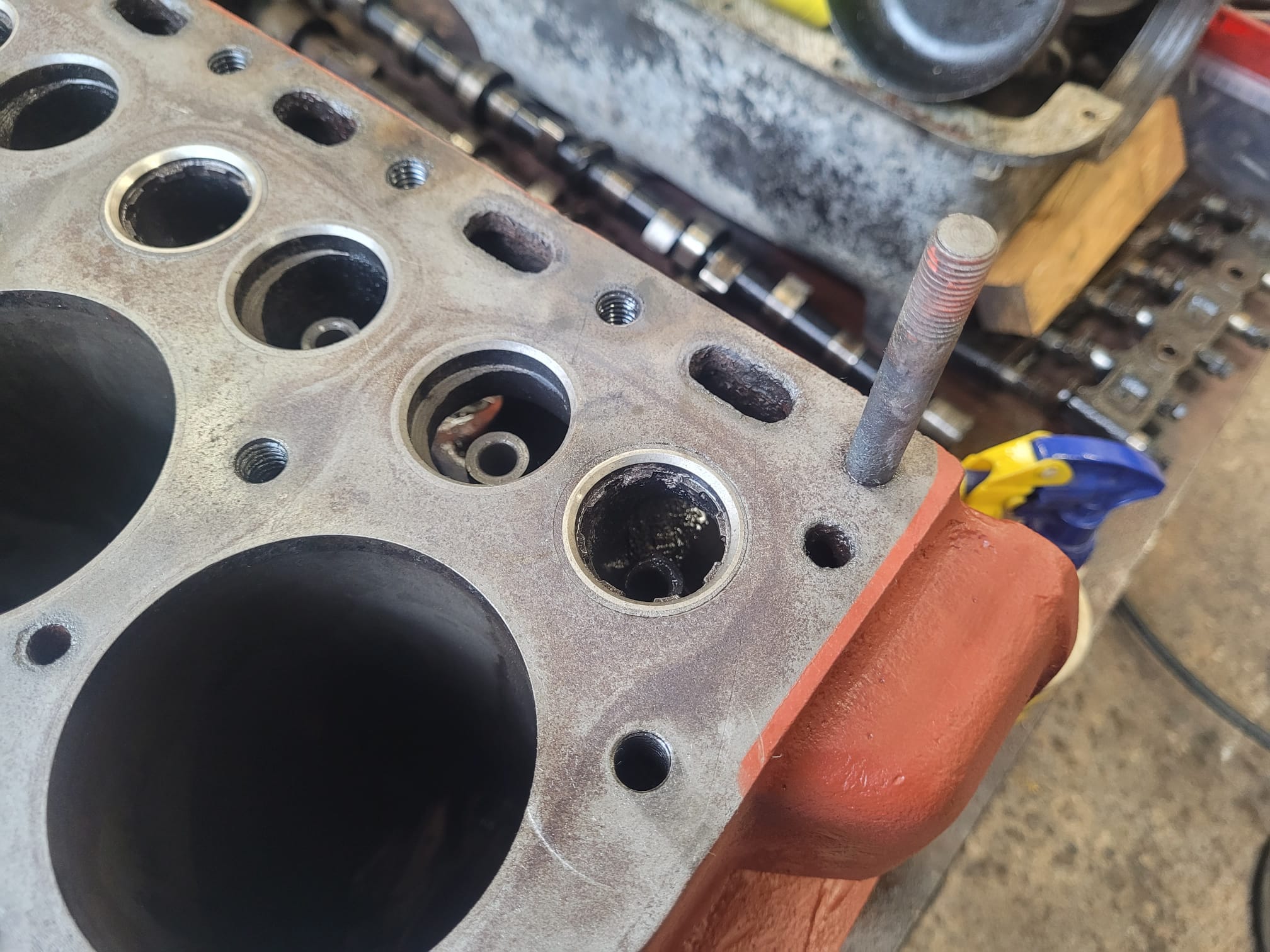
Below: With 25 studs removed cleanly and two broken in situ, the head was clamped onto the block, using loosely fitted studs in each corner. This enabled the broken studs to be drilled out on the radial-arm drill.
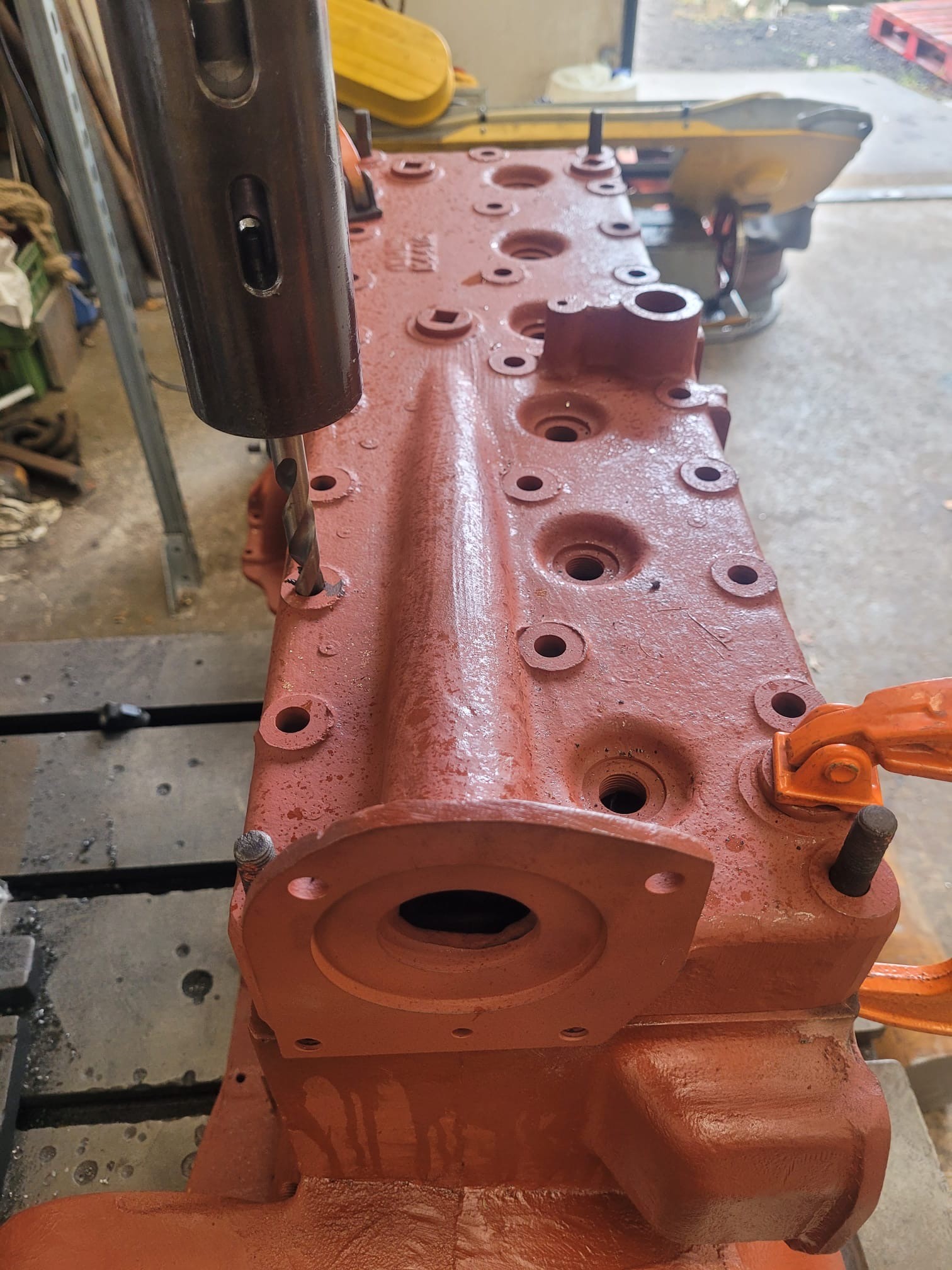
Below: With the hole drilled for tapping, the spirals of old thread remaining were extracted using long nose pliers and can be seen sat between the stud holes alongside the cylinder bore.
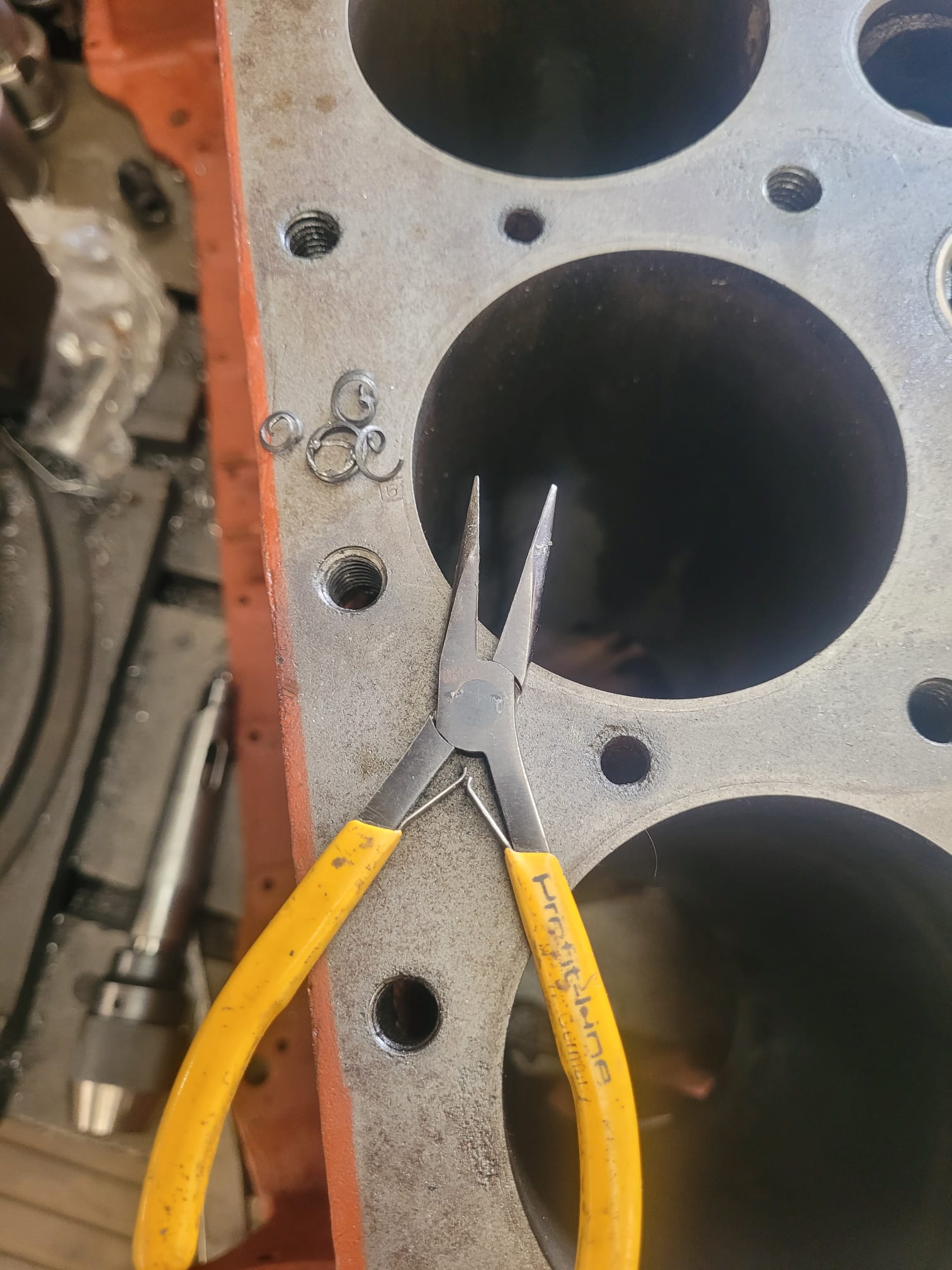
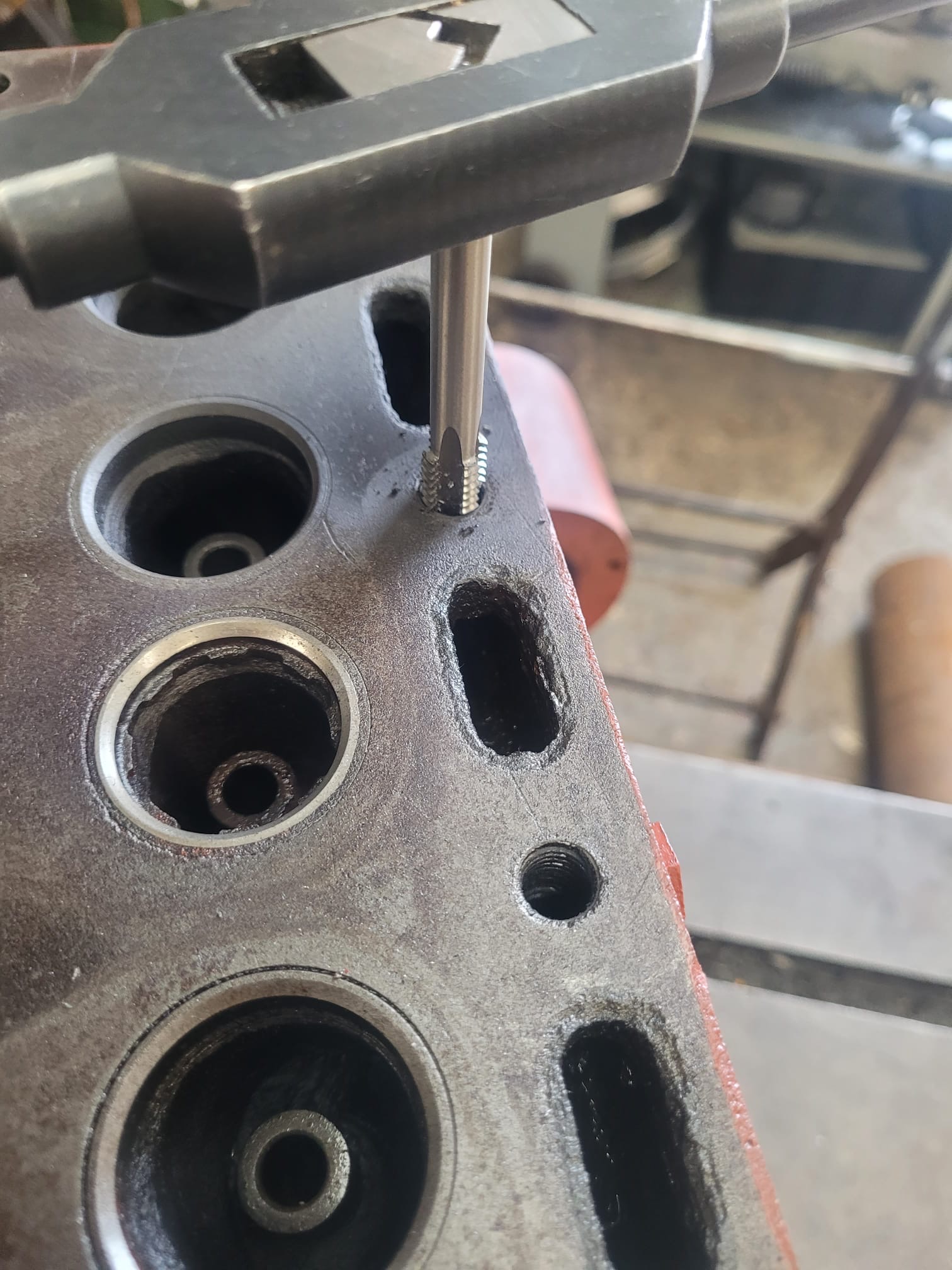
Below: All threads were cleaned up with the correct tap size, ready to receive new studs at a later stage in the rebuilding process.
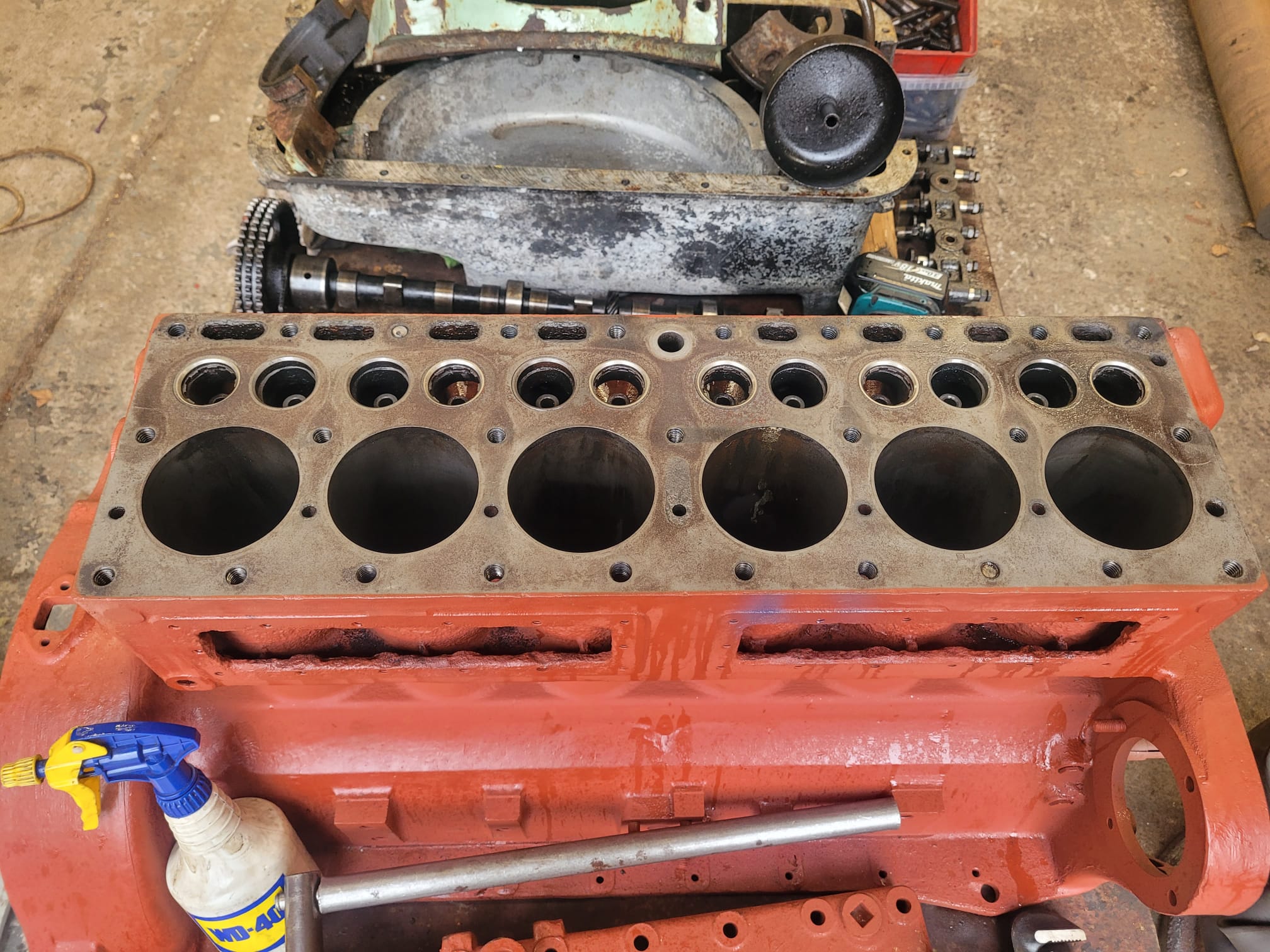
Below: The pile of parts grows… Further items were prepared for shotblasting.
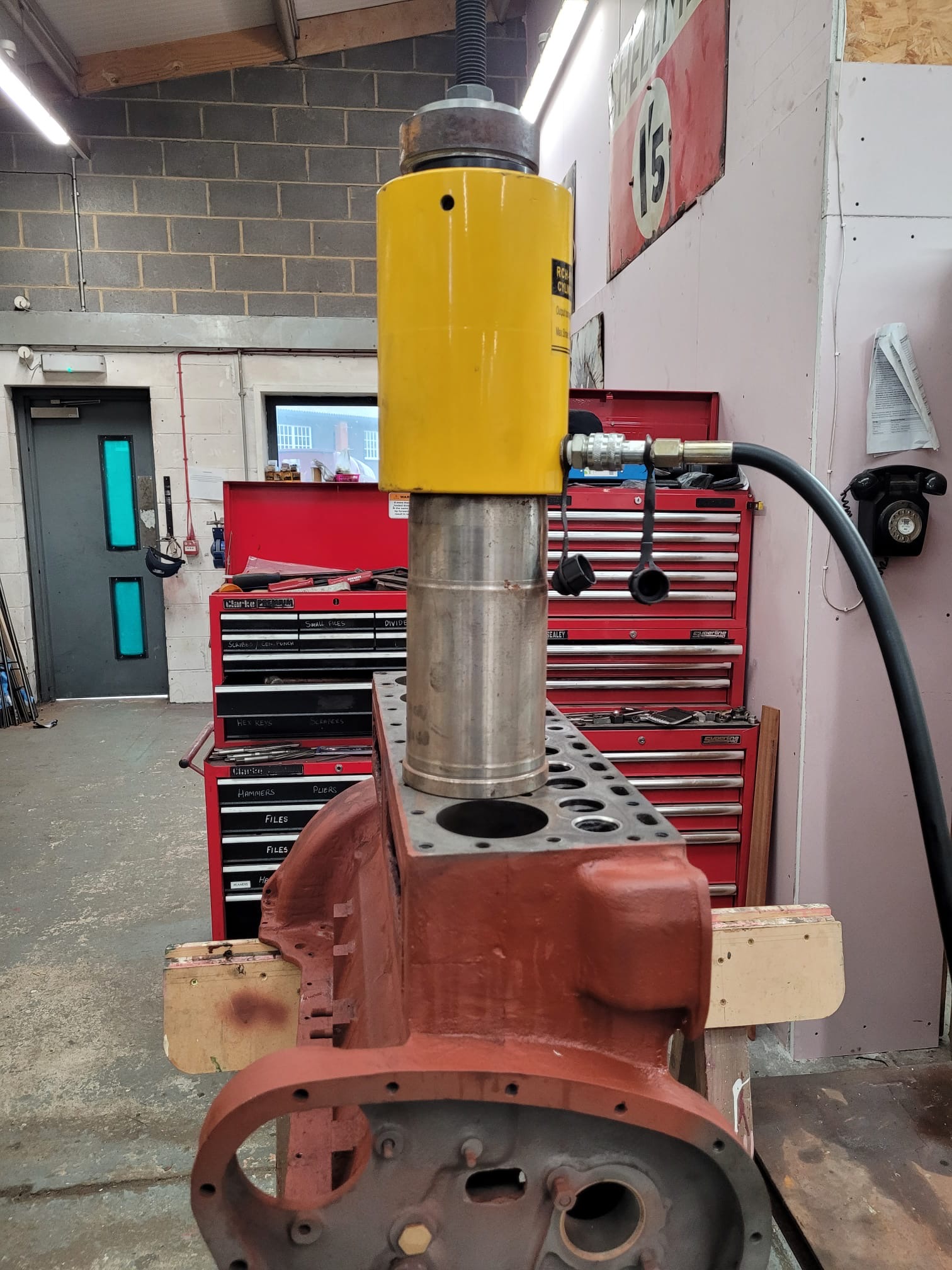
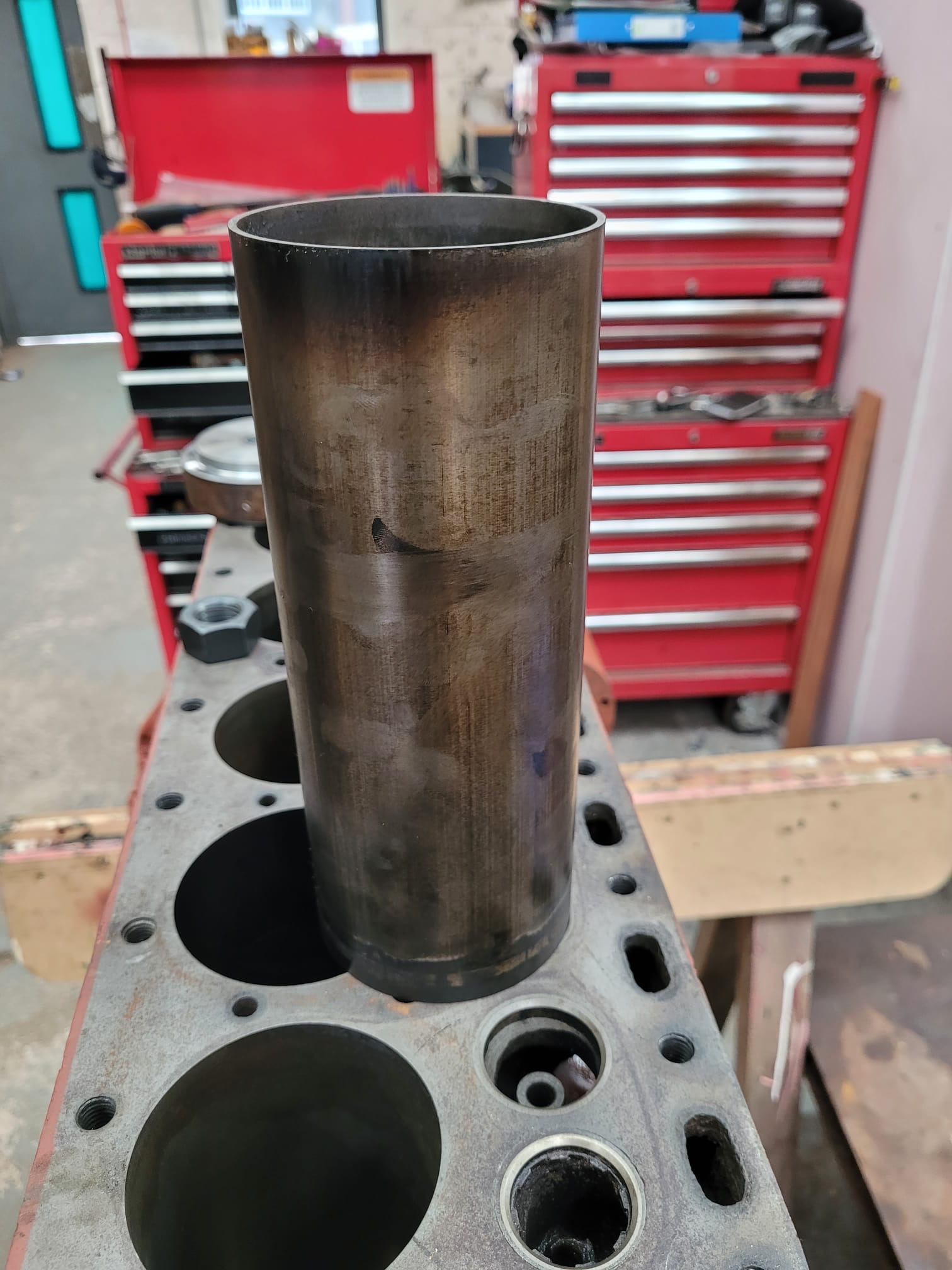
Below: The hollow ram was set up to remove the cylinder liners – it is drawing the liners upwards, its ram being hollow through which a mandrel passes and which, using a collar, bears upon the lower edge of the liners. As it extends, it is braced against the top of the block, giving a static surface upon which the ram can act and drawn the liner upwards and out.
Below: The first liner out, with five more to remove.
Below: The valve guides were next on the list for removal. These will be replaced, and new valves are also to be fitted (these are in stock).
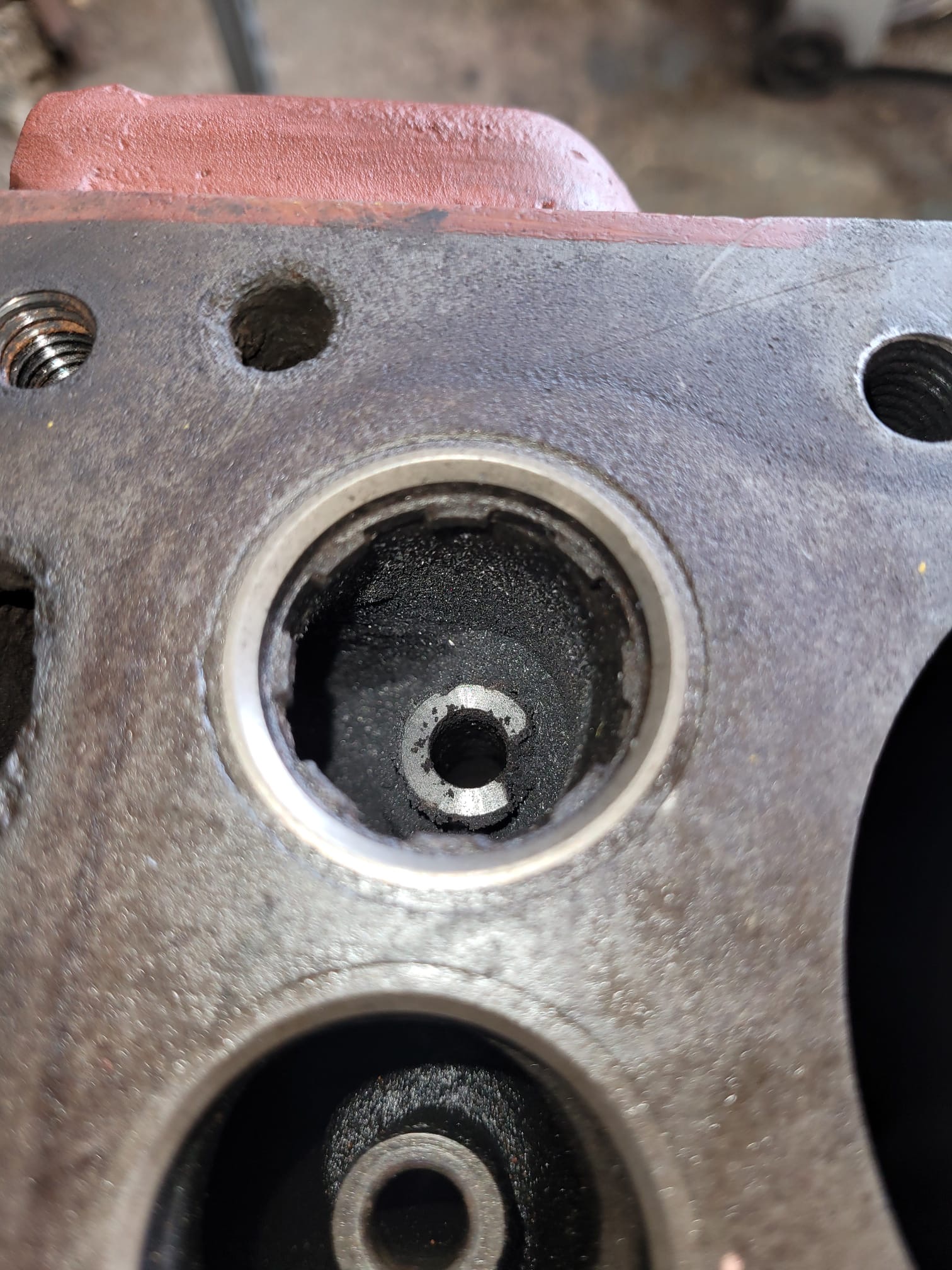
Below: Only two guides came out in one piece, the rest having to be drilled out (there are 12 in total).
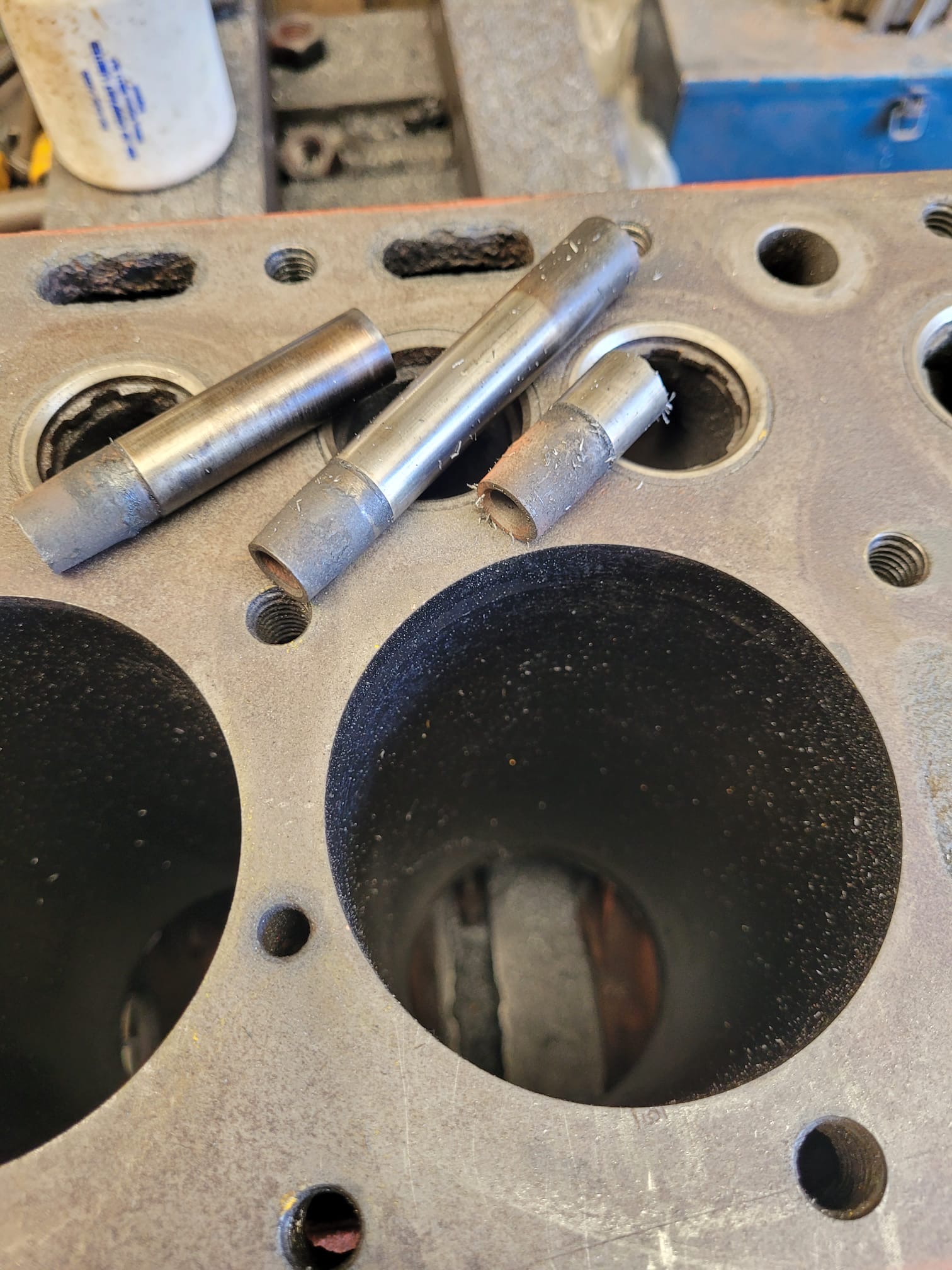
Below: The remains of the guides stand to attention on the block.
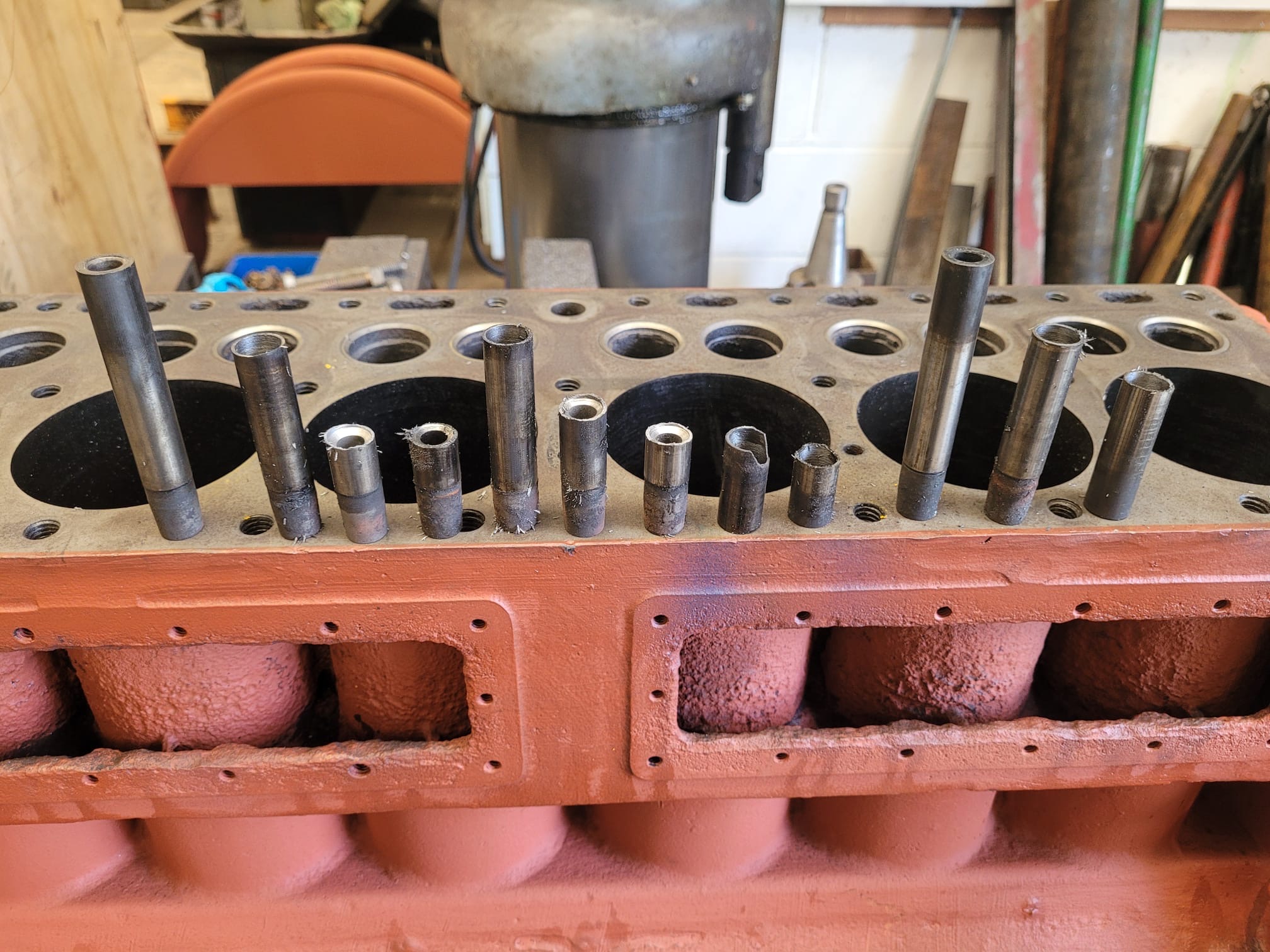
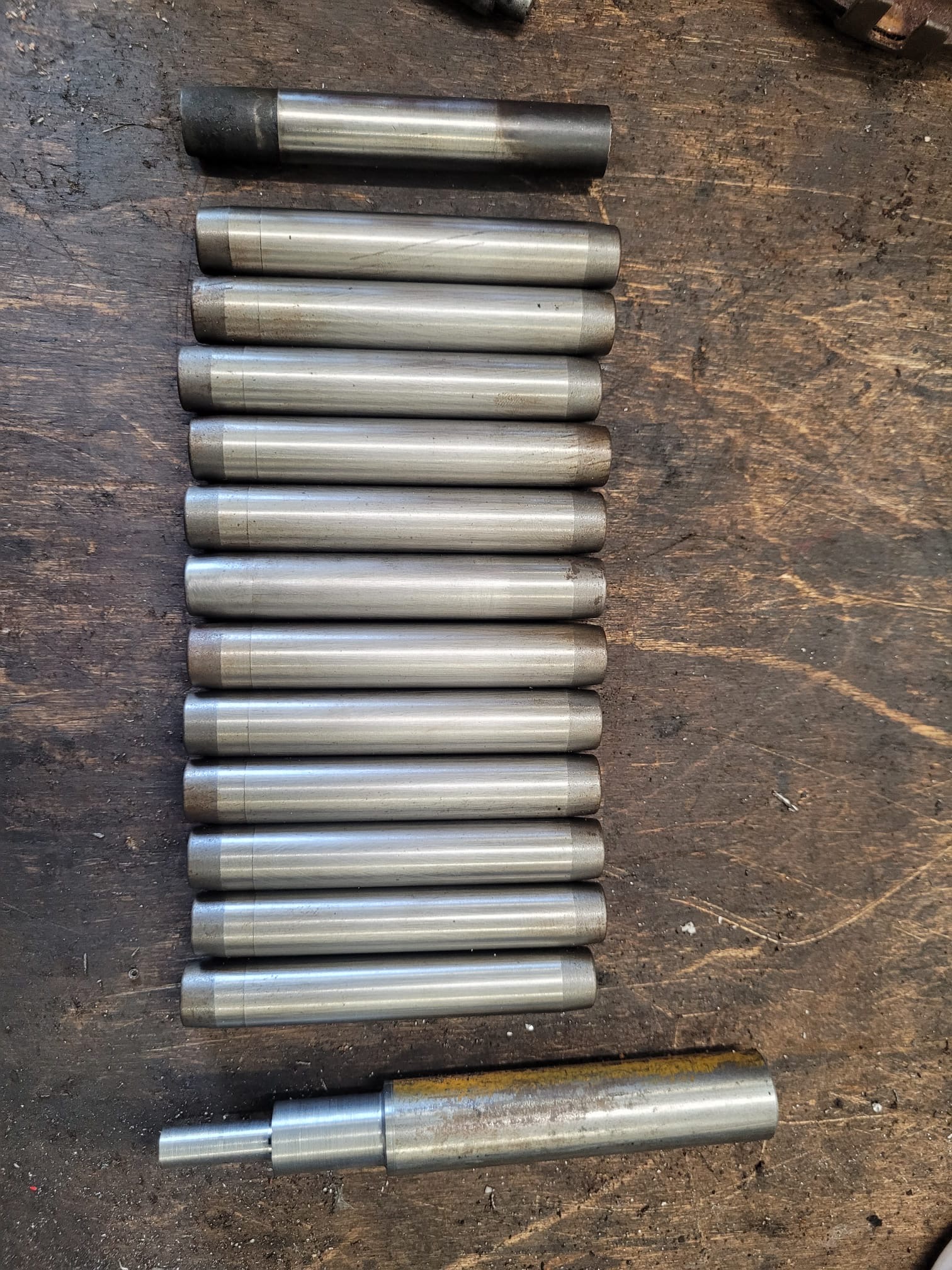
Below: The new valve guides (the top one is an original example, one of the two that actually came out in one piece). At the bottom of the row is a mandrel which will be used to press them into the block.
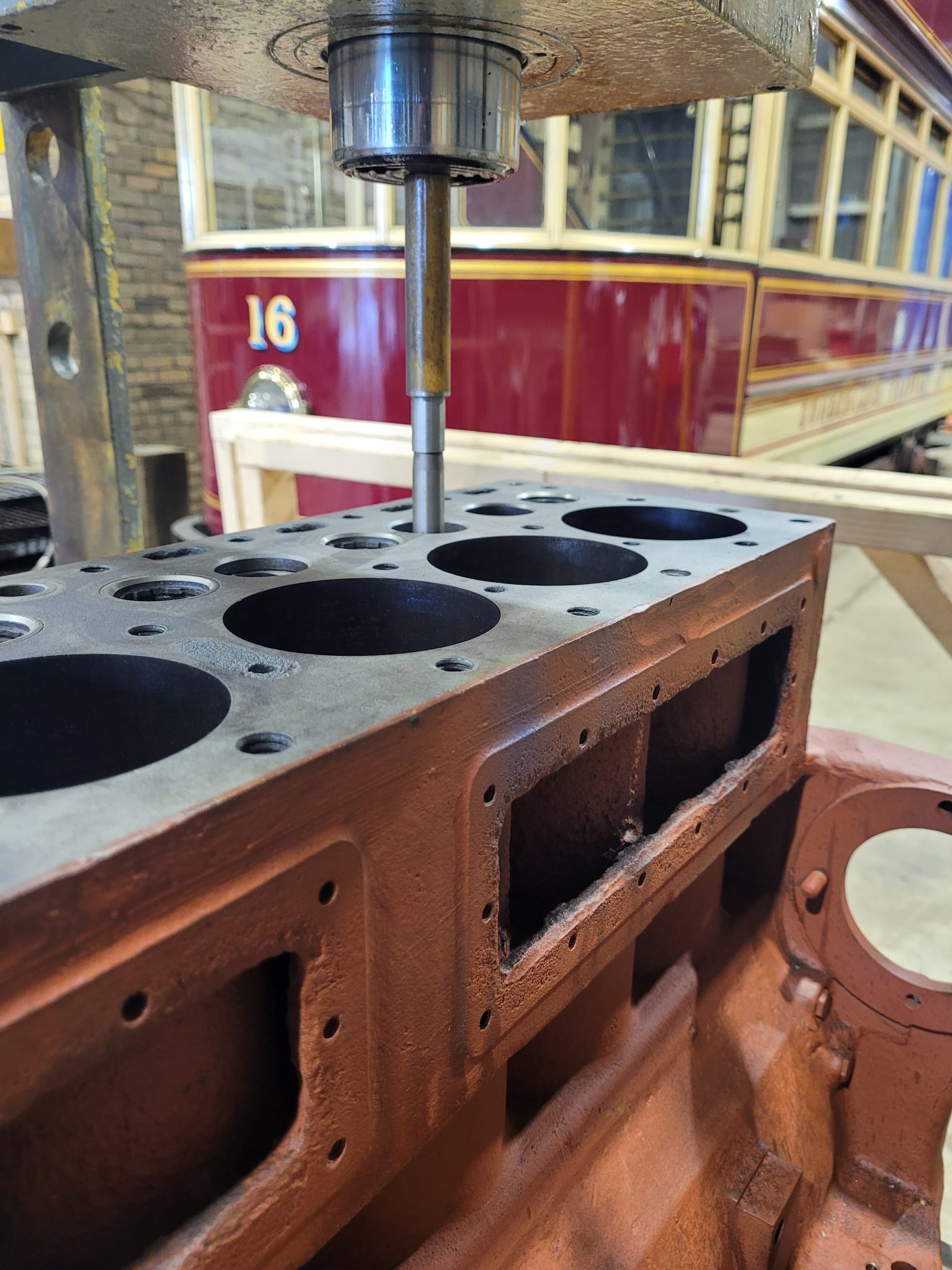
Below: Pressing home the new guides.
New liners are now on order, following design in-house, and once these have been installed, the block and head will be sent to a local specialist for machining the mating faces and dressing the valve faces too. We expect the liners to arrive in October, after which it will be quite a challenge to complete this project for the planned installation in January…
The Leyland Society published a fascinating and detailed history of the Leyland Cub and the development of its engine range, by Neil D. Steele – Leyland Journal No.14 and 15. This gives considerable background to the development of these engines, the trials and tribulations of their introduction into the new Cub range of passenger and goods vehicles and the evolving production methods and price amendments that were driven by the demands of customers as the range became an established element of the Leyland vehicle range. These articles are very much recommended (as is membership of the Leyland Society, whose magazines and publications are of the highest standard). Journals 17 and 18 took the Cub story forward to include the KPZ range (the museum owns a KPZ2 example ex West Riding No.560 built in 1937).
In the Bus Workshop
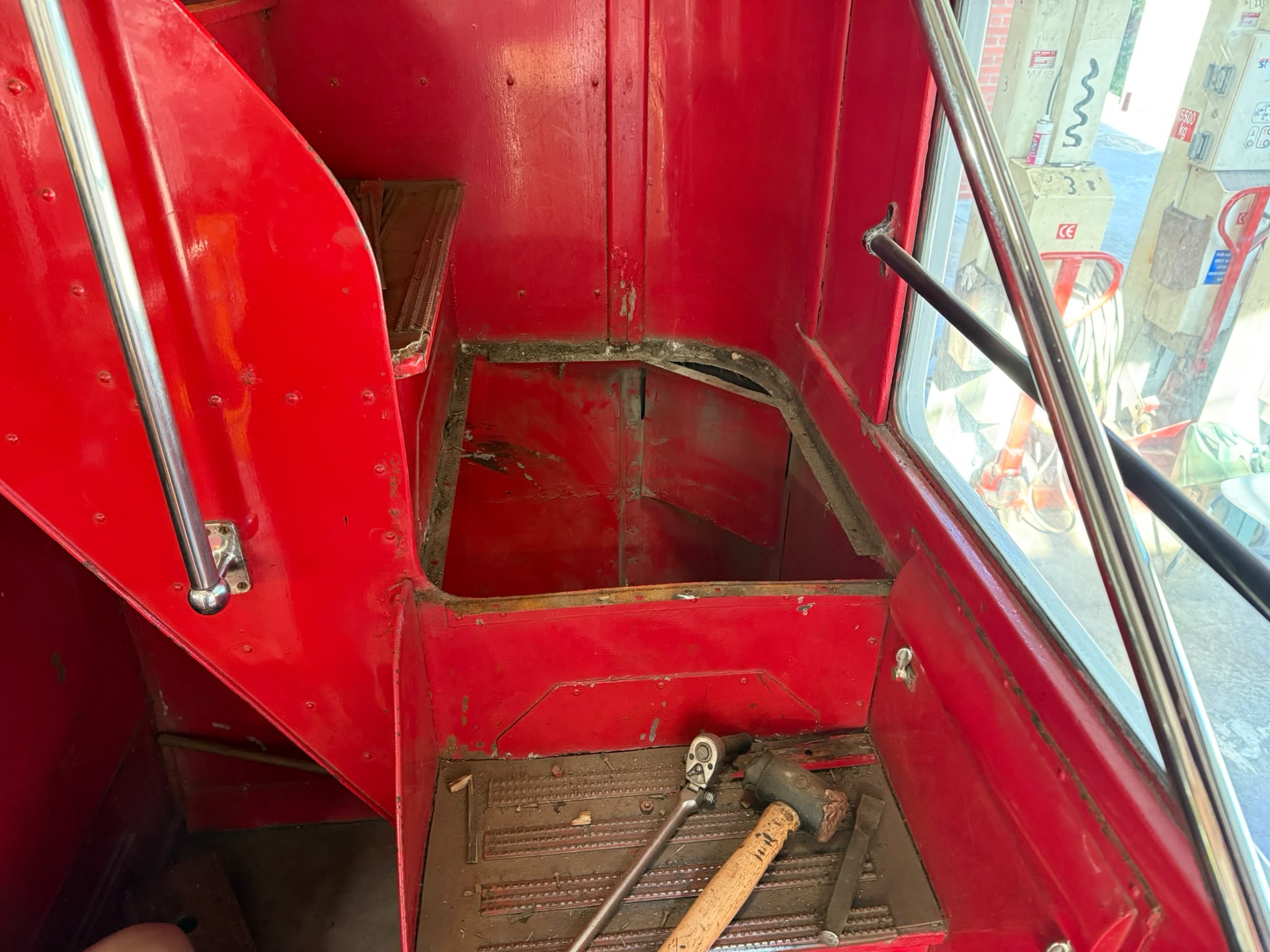
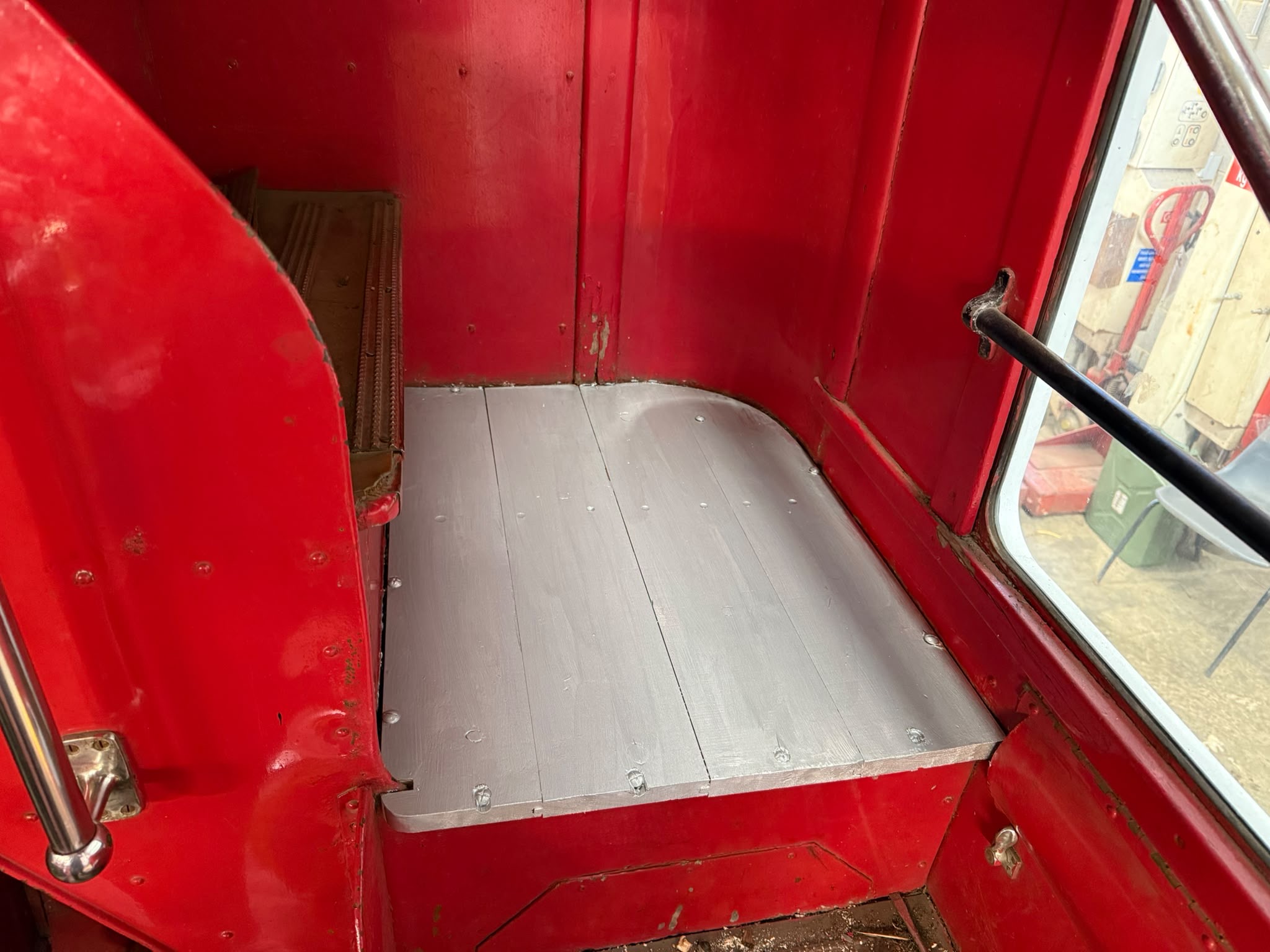
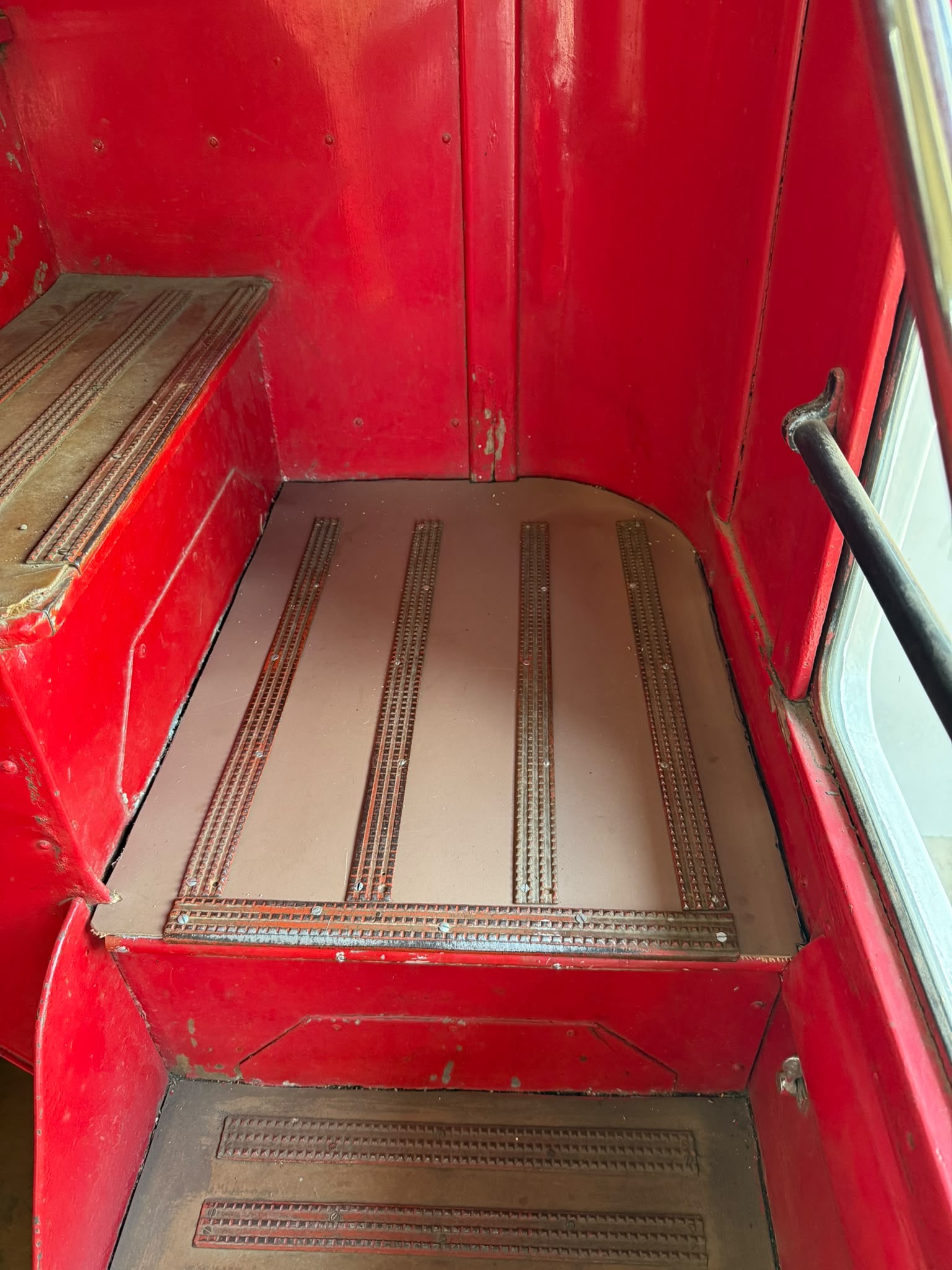
Below: A good example of a routine repair is the replacement of one of the staircase treads on Weardale 909. The first photograph shows the rotten stair tread removed.
Below: New boards have been manufactured by Shaun in the building maintenance joinery in order to replace the rotten examples.
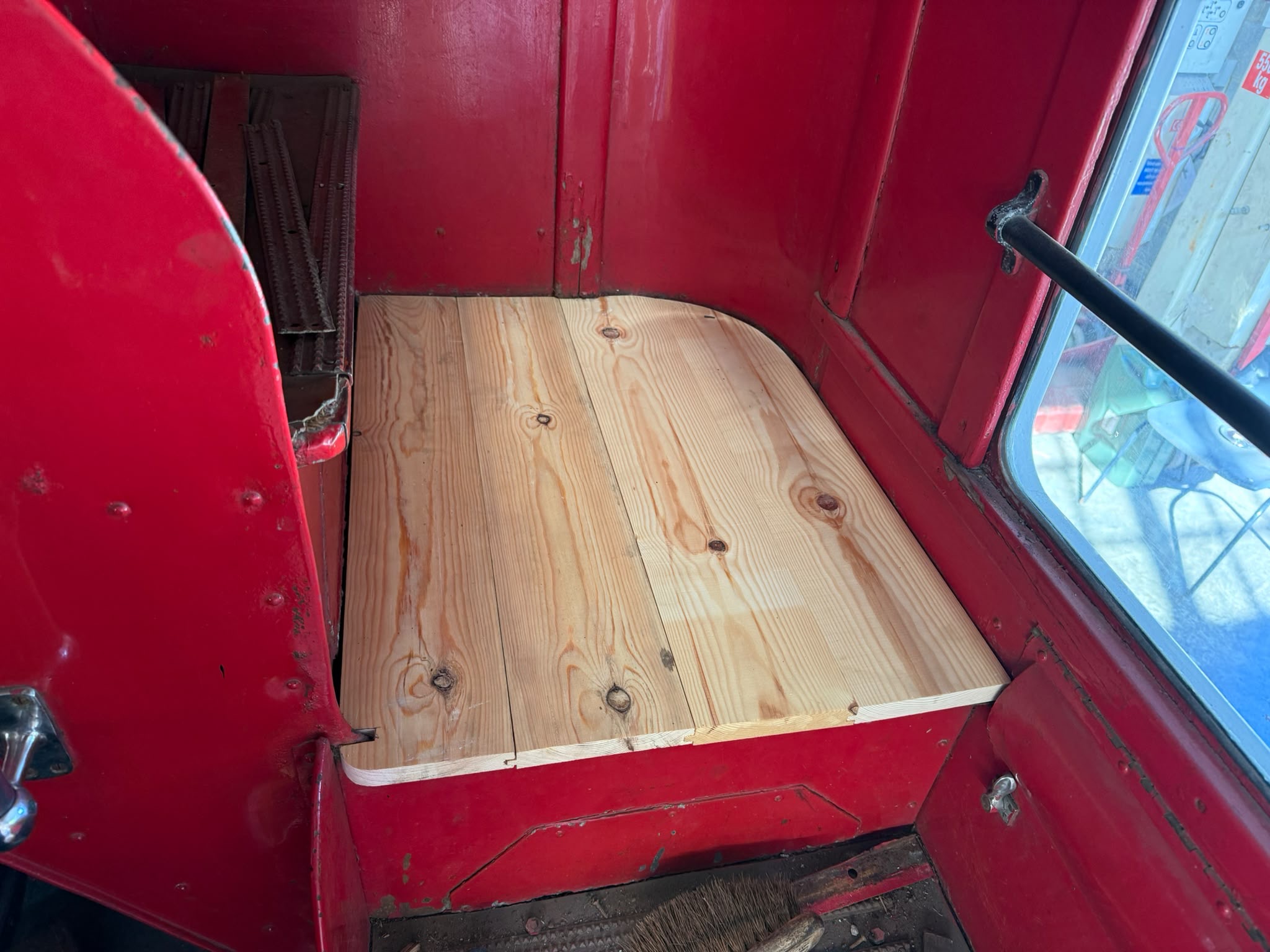
Below: These were then painted to protect them by Ben, who also fitted the new floor covering and reinstated the tread grip plates.
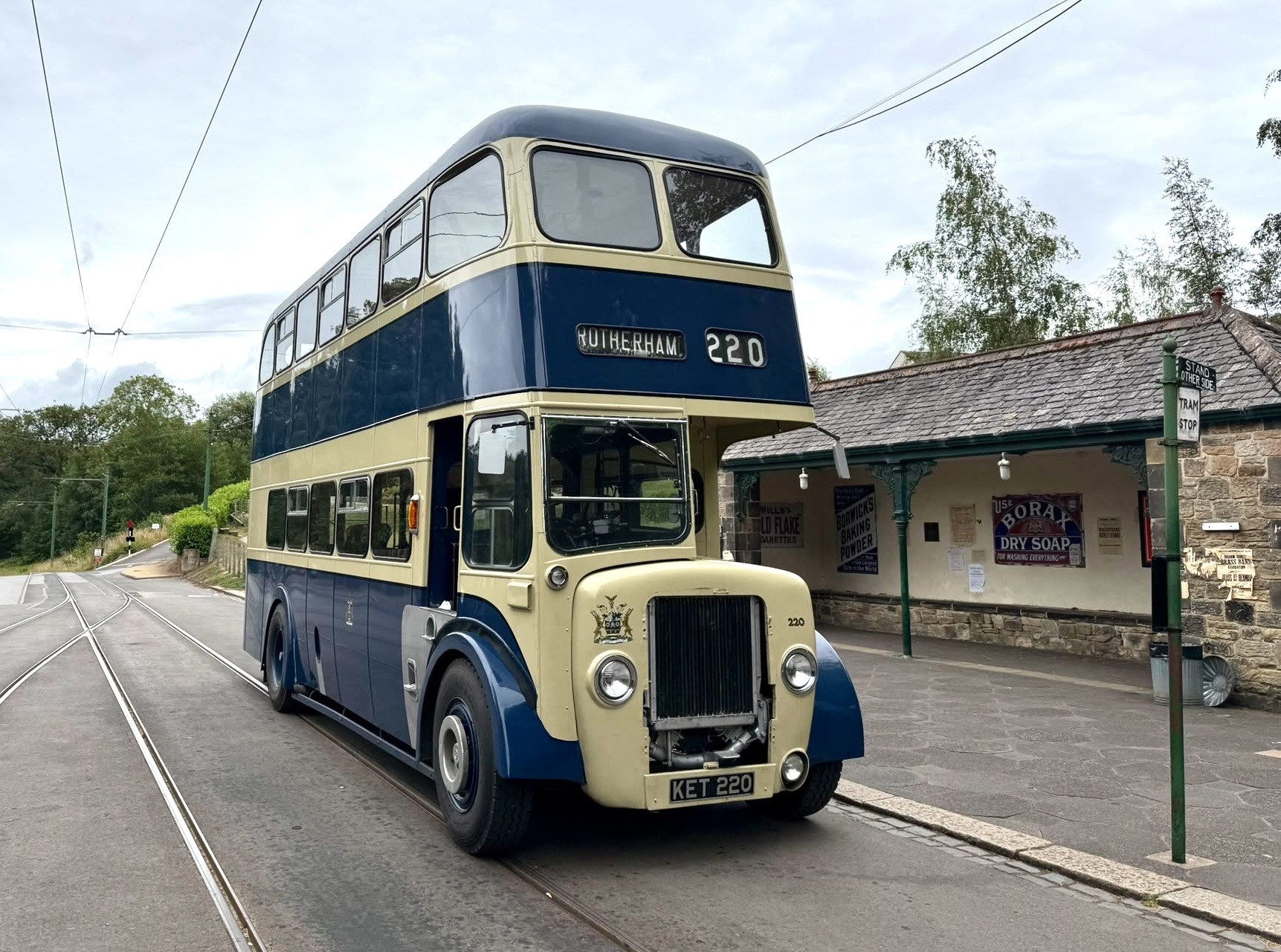
Below: Rotherham 220 has been running-in, sans some of the cosmetic details (to allow access to the radiator). So far, so good. It will continue running-in, before a deep clean, inspection and then entry back into service – new paint, new engine and new upholstery! The bus is due to enter service on Bank Holiday Monday, August 31st when Ben will be in attendance to ensure all goes well. Testing has proven the bus to be running very well and with no vibration, rattles or knocks. So it runs as well as it looks (and will look even better with the front grill refitted).
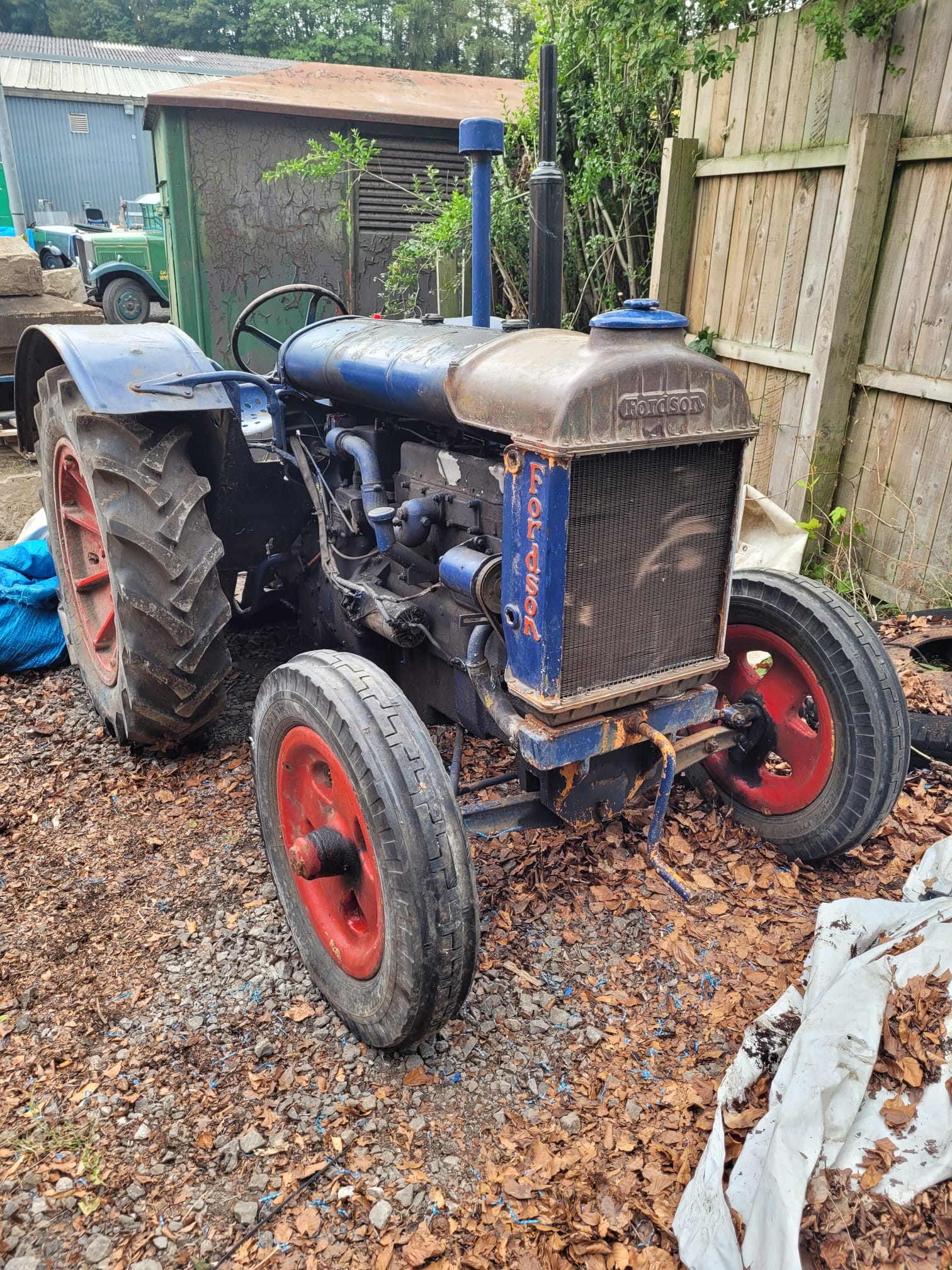
Below: Technically, this is outside the workshop. For several years the Fordson N tractor, fitted with a Perkins diesel engine, has been laid up under sheets following an encounter with a traction pole on the Tramway. This had damaged the radiator and led to an insurance claim that enabled new components to be cast. This is where the work stopped until early August, when in a matter of hours the components were reassembled by Phil and Phill and the tractor was started and driven. It will now receive a partial repaint and inspection for other work that may be necessary after its long period of dormancy.
SHEW Car
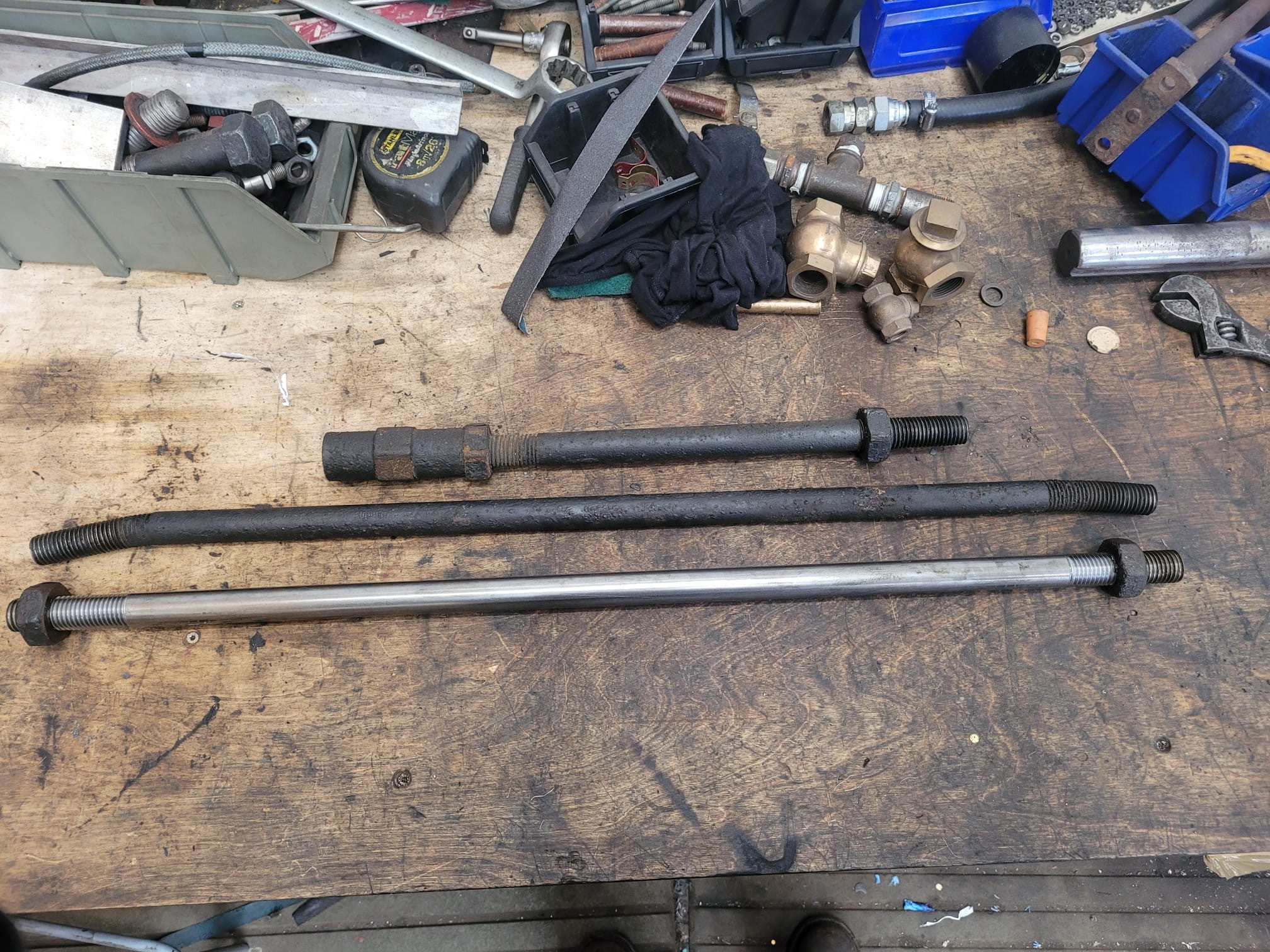
Below: A new chain tensioner has been made for the SHEW as it was felt that trying to straighten the bent threaded portions of the original would not result in a durable repair. The main components are shown here, complete with the new tensioner shaft below. Phil carried out this work, to help the volunteer efforts on this vehicle progress.
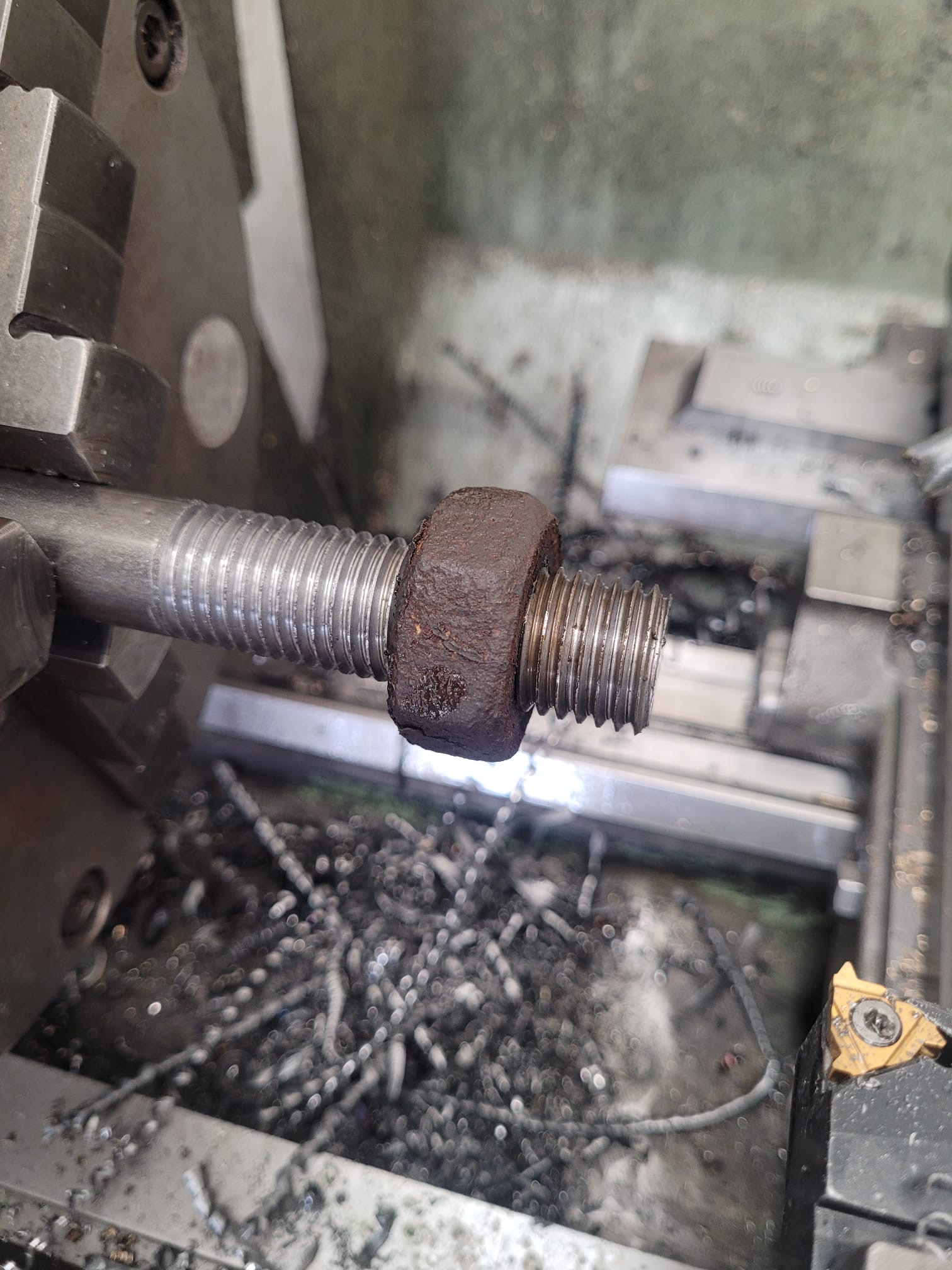
Below: The new shaft re-uses the original nuts to try and retain as much of the original SHEW material as possible. It is seen in the lathe after the threads were cut to match.
Outdoor Works
Below: The United noticeboard is making good progress in the care of volunteer Peter, with restoration work more or less complete and a slot with the painter awaited. A spare Beamish noticeboard, of the same design, is being refurbished and will also be turned out in Tilling Red to match the United example. Both can then be installed at Pockerley, to the rear of the Darlington Corporation bus shelter.
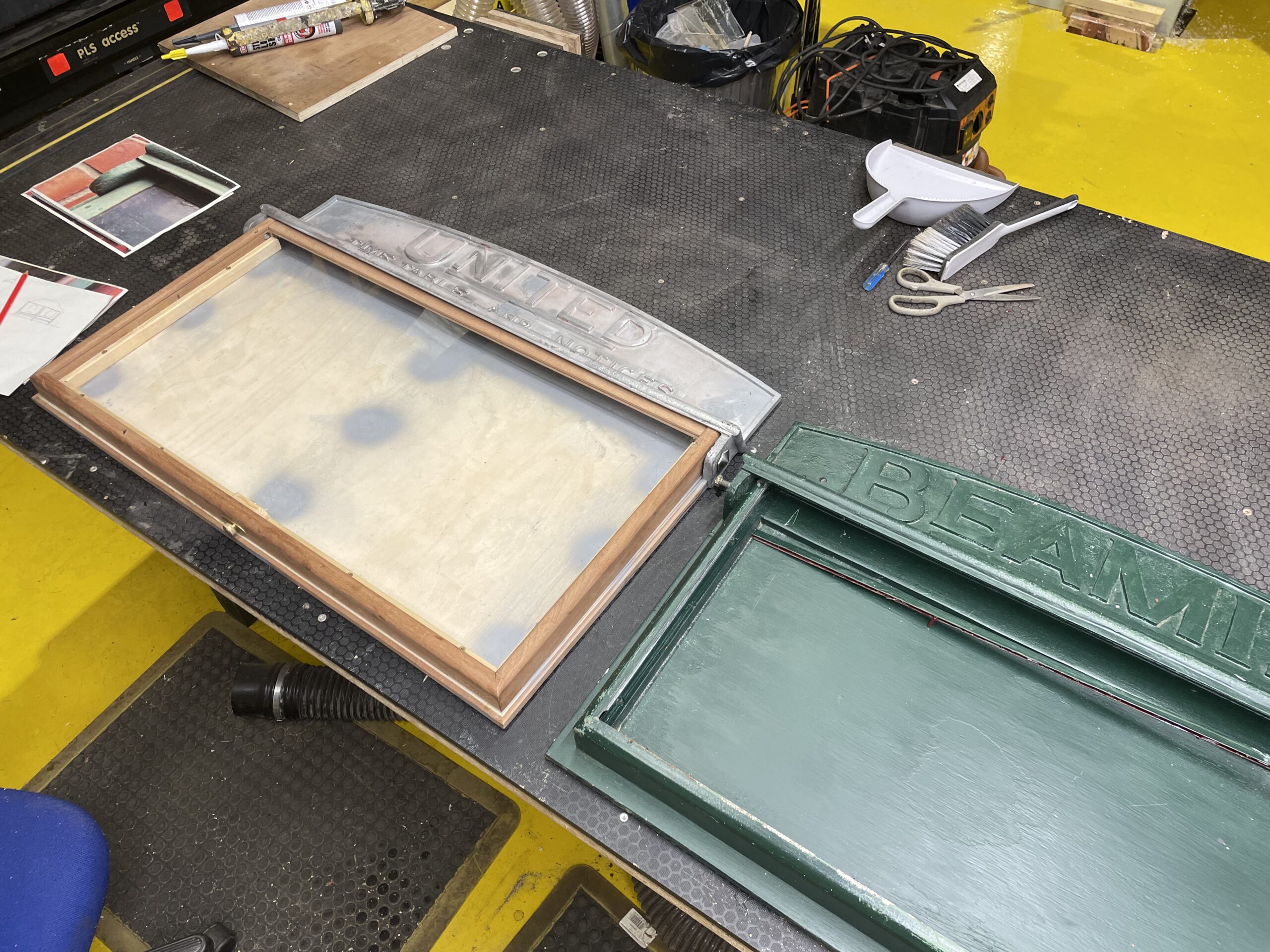
Below: By the end of August both noticeboards had moved into Rebecca’s workshop for their first coats of Tilling Red (the United colourscheme that had been evident on the original example being restored).
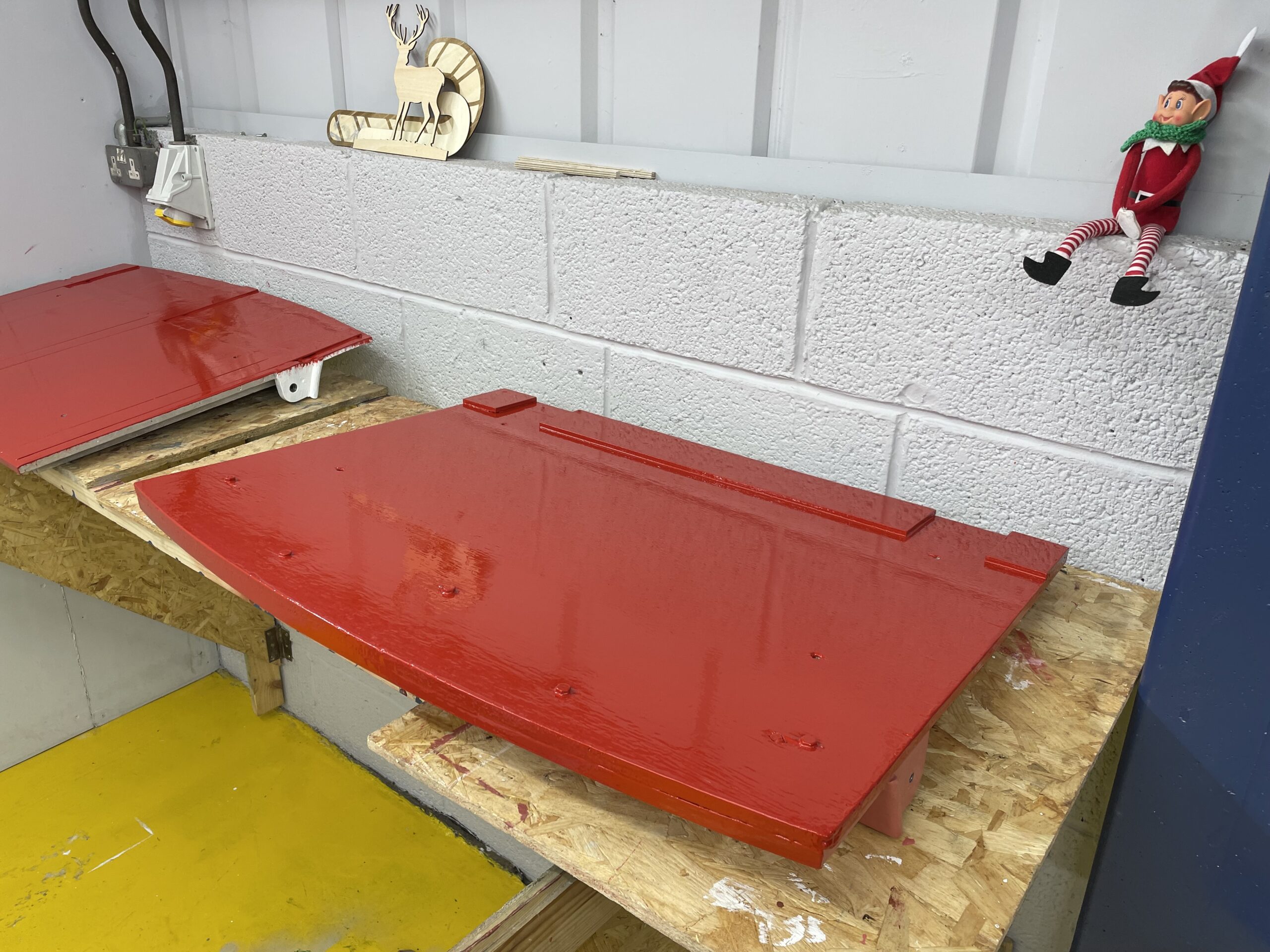
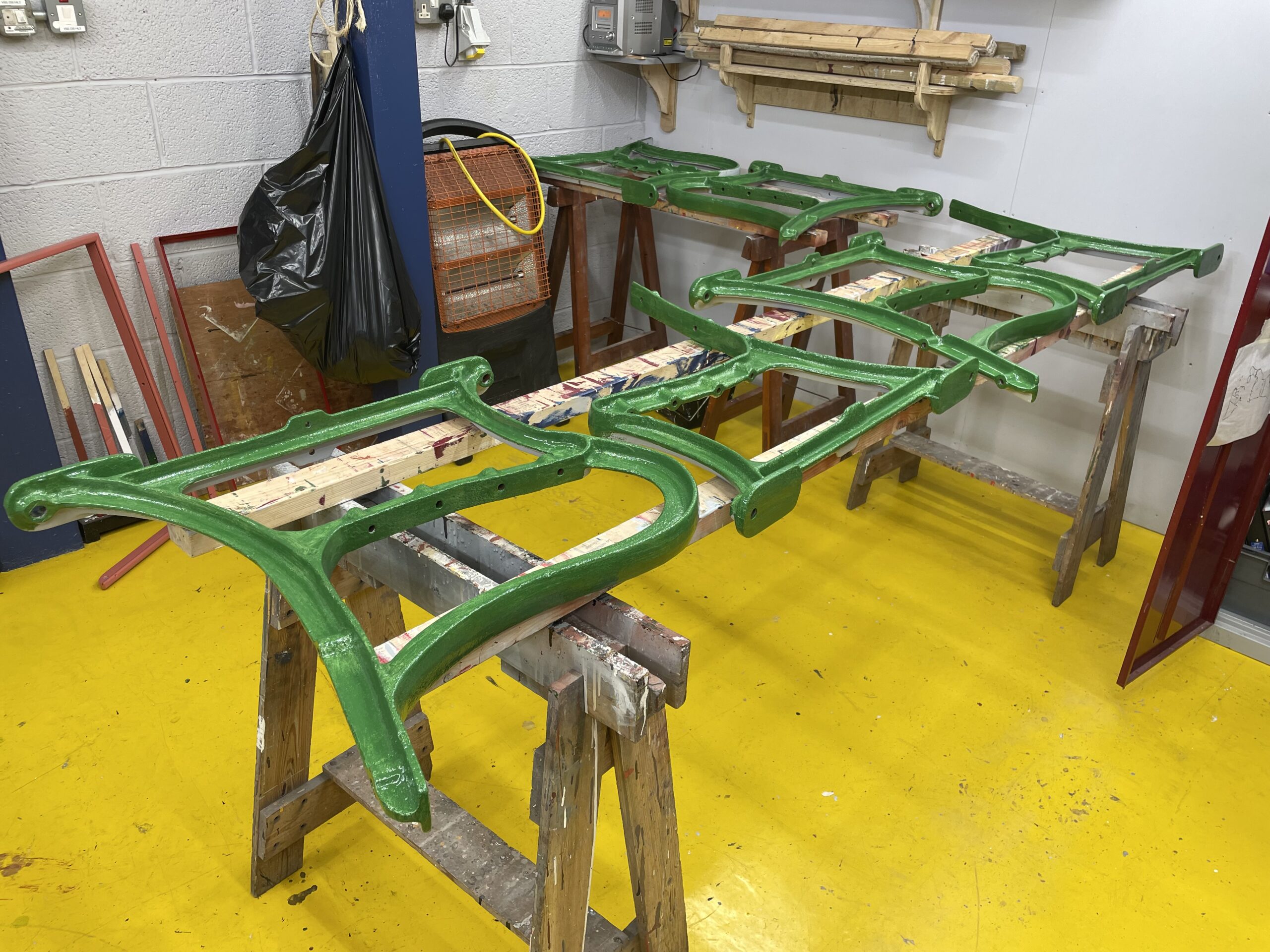
Below: Also destined for the new bus shelter… Components to assemble two benches have been recovered from around the museum. These were shotblasted before painting and the manufacture of the new seat and back rest planks. By the end of the month, the castings were being painted into Brunswick Green, to match the bus shelter. Cutting the wood for the new seat boards and backrests will follow soon, enabling them to be assembled and installed, hopefully before October half-term.
Below: The water hydrant is also nearing completion and installation at Pockerley. This will hide the conduit that protrudes from the ground there, and add an interesting item of street furniture to the museum’s streetscape. Dan manufactured a replacement door and this was subject to aggressive shotblasting to try and remove the ‘newness’ so that it blends better with the components around it.
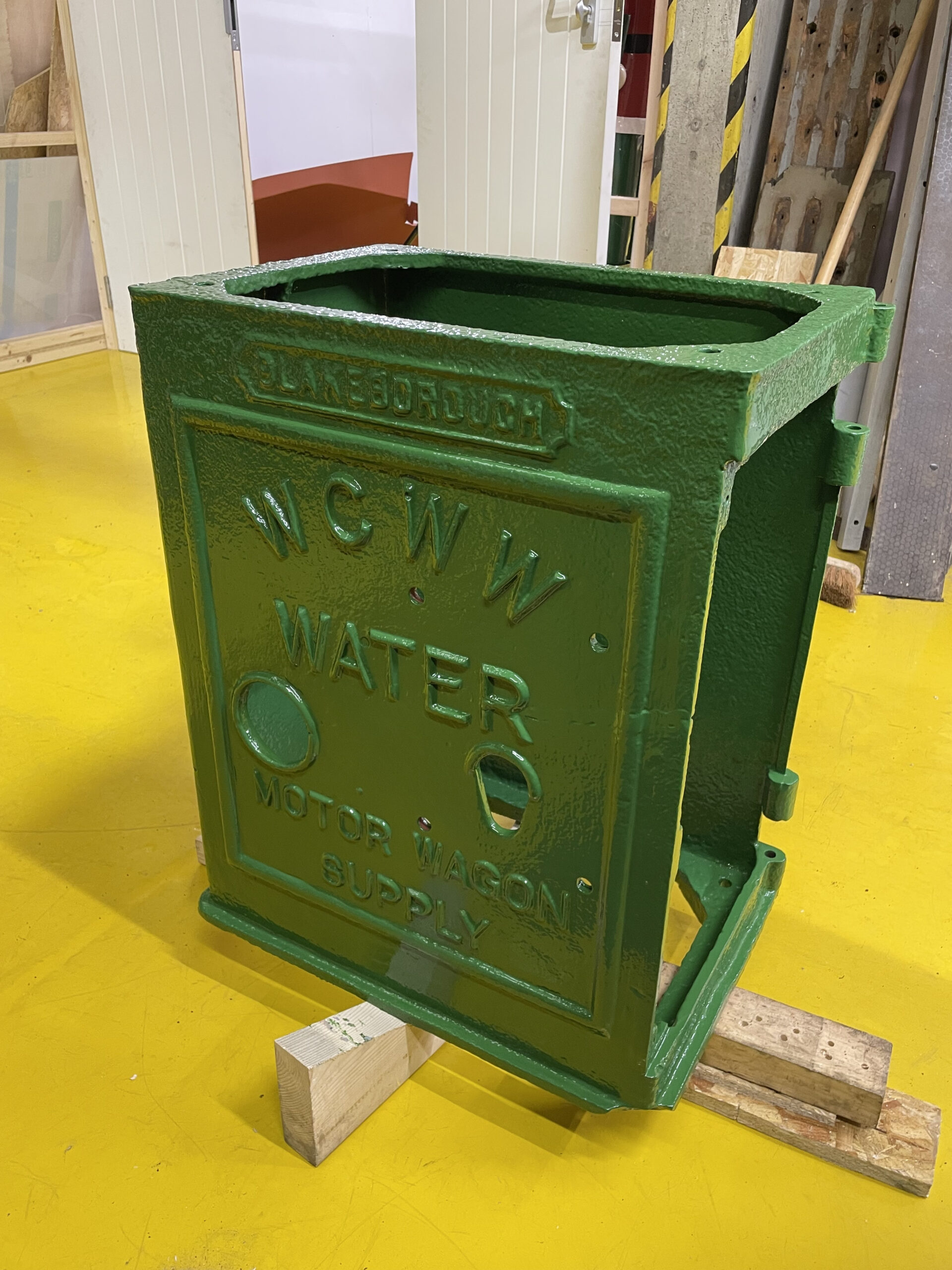
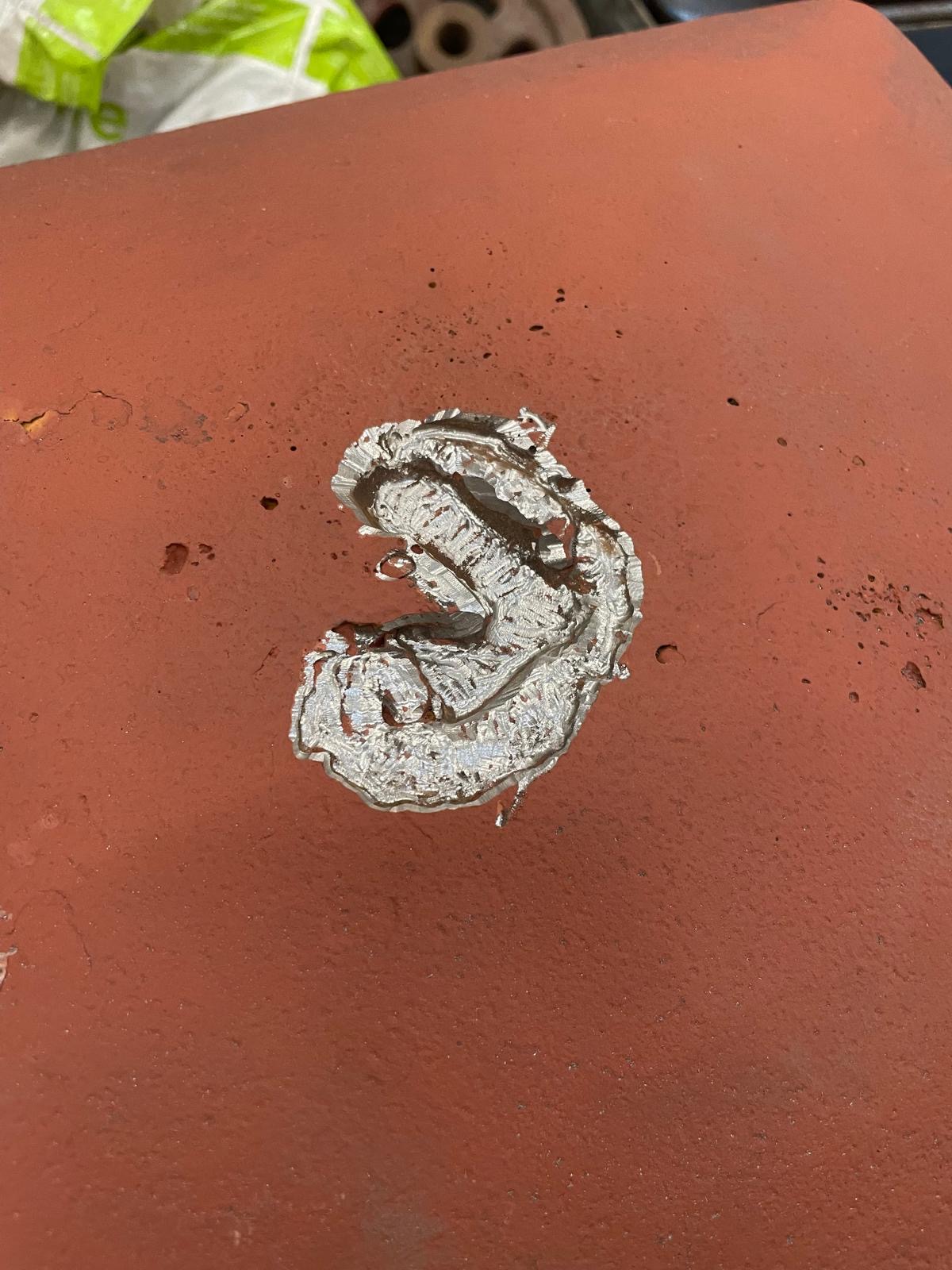
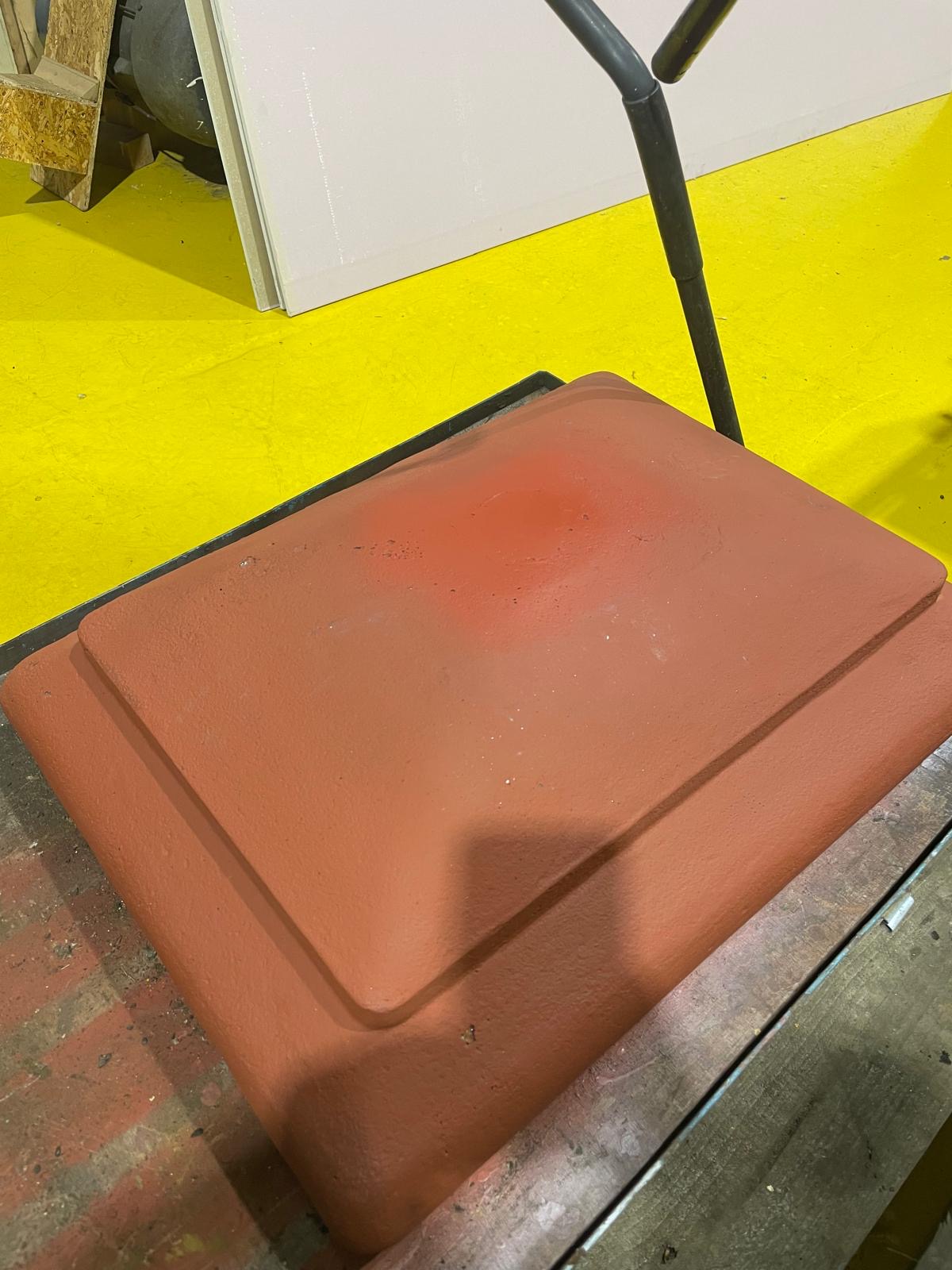
Below: The top of the hydrant is a single casting, which had some extensive pitting. Chris filled this with lead, dressed and primed it before it moved to the paintshop. A new side door for the box has been manufactured by Dan and was then sent for a ‘heavy’ shotblasting, to try and impart some patina into the surface so that it matched the original components.
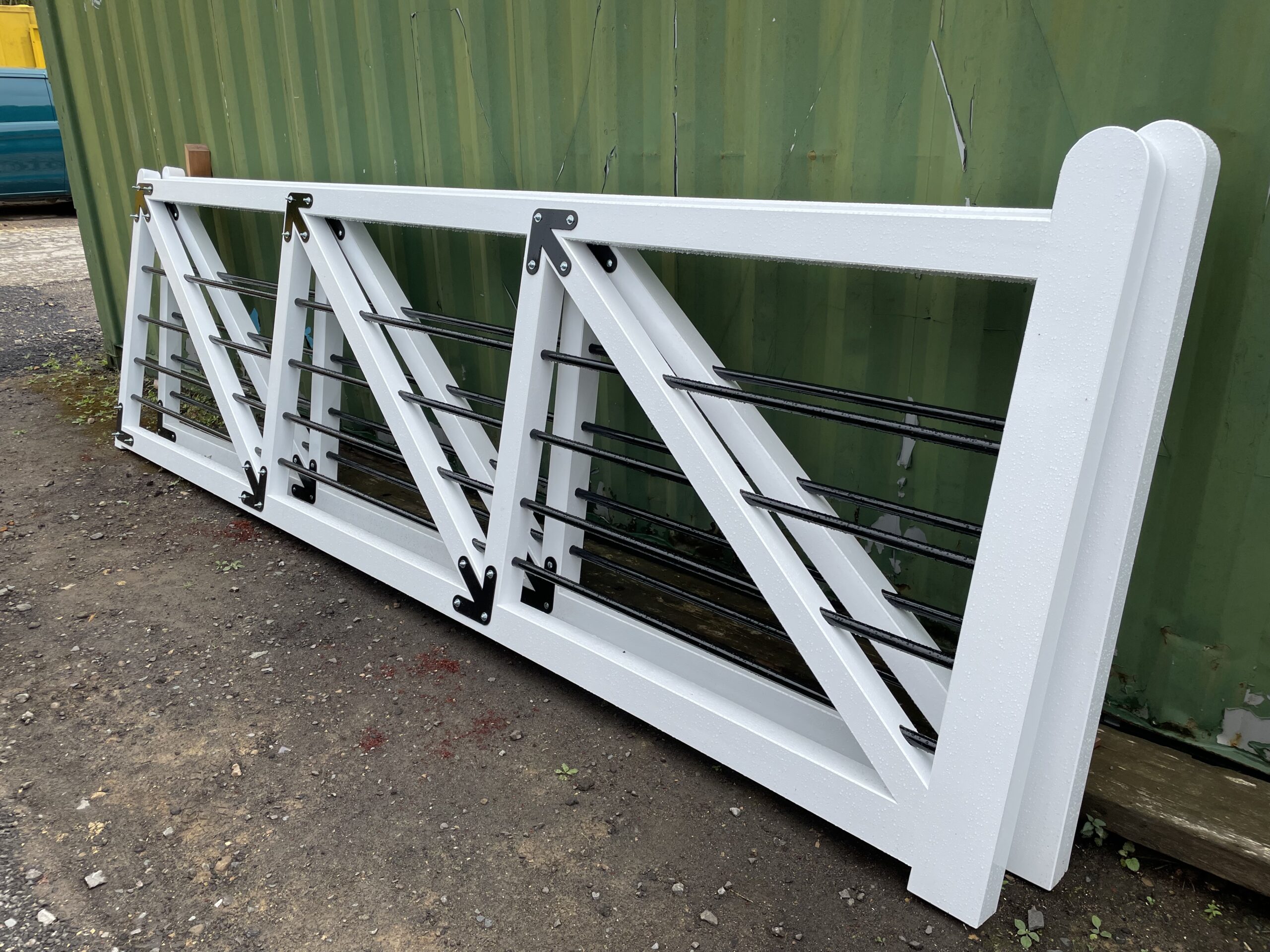
Below: Two out of the four level crossing gates for Rowley Station have now been painted. Shaun will hang the gates in the autumn. These are superb pieces of carpentry and it is almost a shame to paint them and leave them outside!
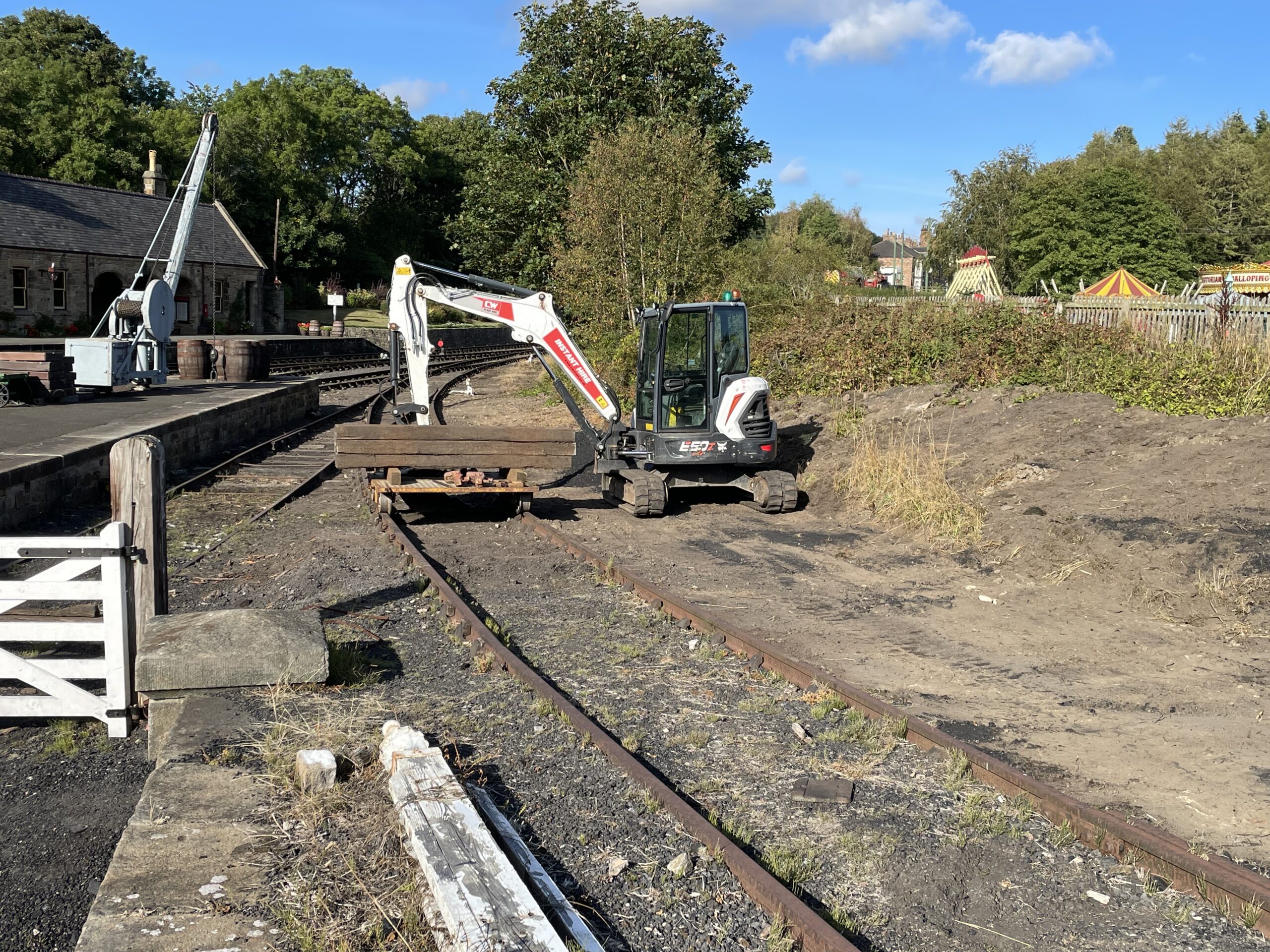
Below: The PW team of Darren, Callum and Shaun II have continued with re-sleepering work around Rowley Station throughout the month. They are now replacing rotten sleepers (which is pretty much all of them) on the siding that accesses the coal drops. This has never been used in my time at Beamish and I doubt it saw any real use in the preceding years either, other than to place the Port of Sunderland open wagon and one of the NER hoppers inside the building. The track has a sense of impermanence to it (particularly where it joins the rails into the coal drop building itself) so hopefully this will be resolved at this time as well. This work will enable us to move rolling stock if required (using a diesel shunter, as our steam locomotives generally face the wrong way for such gradients to be approached).
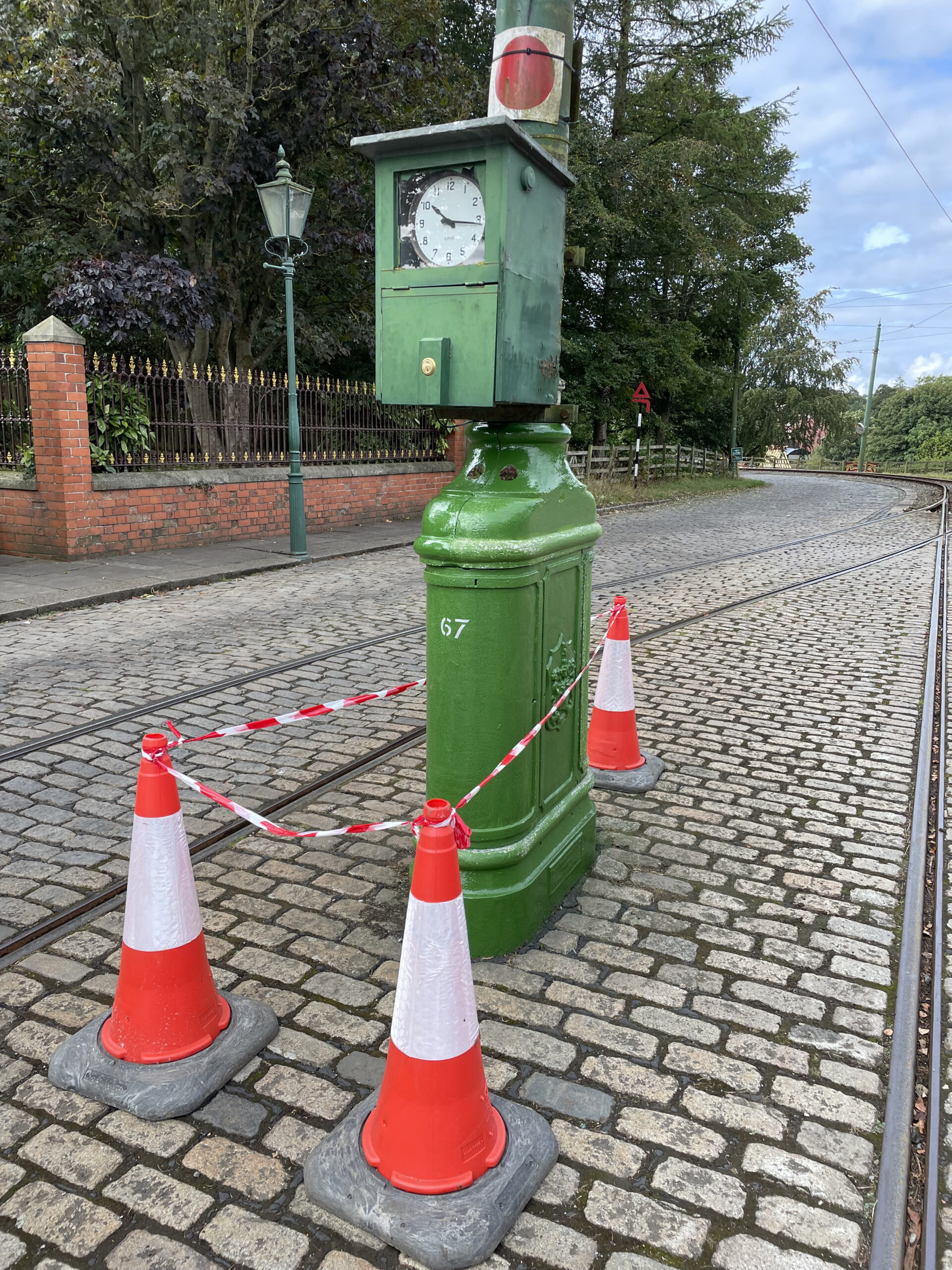
Below: Some progress has been made on what will be a large and ongoing job to repaint the traction poles and associated Tramway infrastructure around the museum. The first signs of Brunswick Green have appeared on new components, and these have rather shown up the faded or mossy areas around them. The base of one of the two ex Newcastle Corporation traction pole/lamp standards in High Street is being repainted this week. It was struck by a vehicle during filming some years ago, and so work to complete the repair (the renewal of the paint) has now been undertaken. Some traction poles on the Tramway are being washed to remove the verdigris, and the poles around the Pockerley Tram Stop are well-known for the degradation of the green paintwork, revealing the blue beneath -marking them out as ex Transperience traction poles (the museum purchased the OLE equipment when the museum/experience in Bradford closed: https://en.wikipedia.org/wiki/Transperience
Gateshead 10
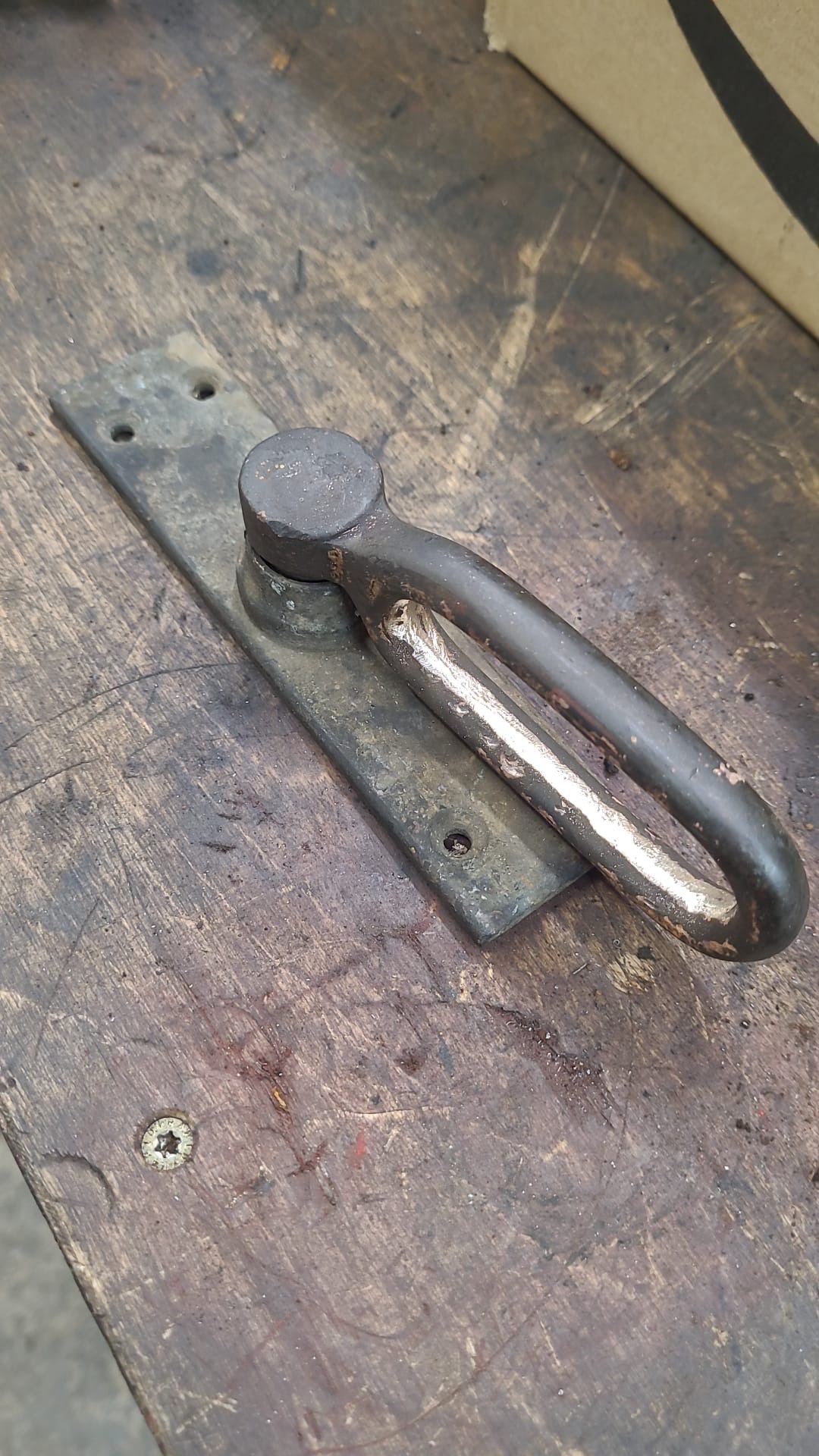
During August the tram began test running, with some initial issues arising that required attention. Meanwhile, work on installing the doors was transferred to another member of the team to complete once they have returned from leave, and this also flagged up that some of the door furniture had gone missing whilst the tram was dismantled. We found that we had an incomplete set of handles for the sliding doors, so some spares were sought out, modified and the central threaded spindle (that engages with the handle and the latch mechanism) were replaced after the handle itself was sent for spark erosion of the square socket into which this spindle is located.
Below: One of the overhauled and modified handles, prior to being sent away for professional polishing.
NER Birdcage Brakevan 44842
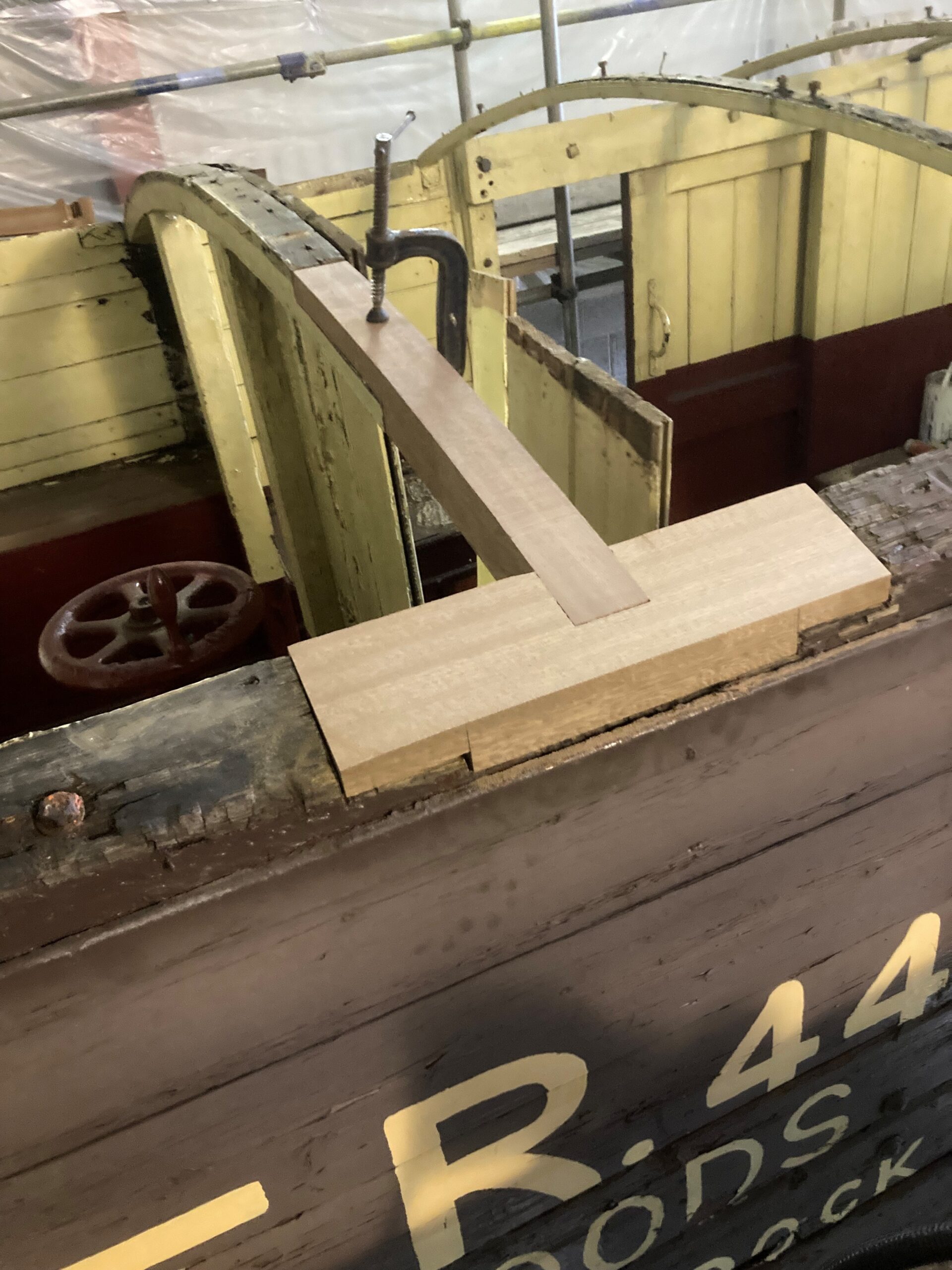
Below: John Marshall (the contractor who usually carries out our coach painting) is replacing sections of the roof structure and cantrail, to create a sound basis upon which to install the new (reclaimed – see earlier post) roof boards. Because our birdcage top was fitted on top of the van structure (the van having lost this feature when it was sold into industrial use, and a donor birdcage section was added as part of the 1970s restoration), a certain sequence of installation and repair is necessary as the roof boards will effectively be trapped and held captive by the birdcage structure. Once again, following the ‘conserve rather than replace’ ethos for this project, John has grafted new wood into the old sections, retaining as much of the original NER material as possible. Here part of the roof hoop beneath the front of the birdcage has been replaced, and the corresponding section of cantrail has also been cut back to good wood, and the rotten section replaced.
NB: I have referred to the guard’s look out section of the van as ‘Birdcage’ in these posts for consistency, but they are sometimes referred to as Topcotes by some authors.
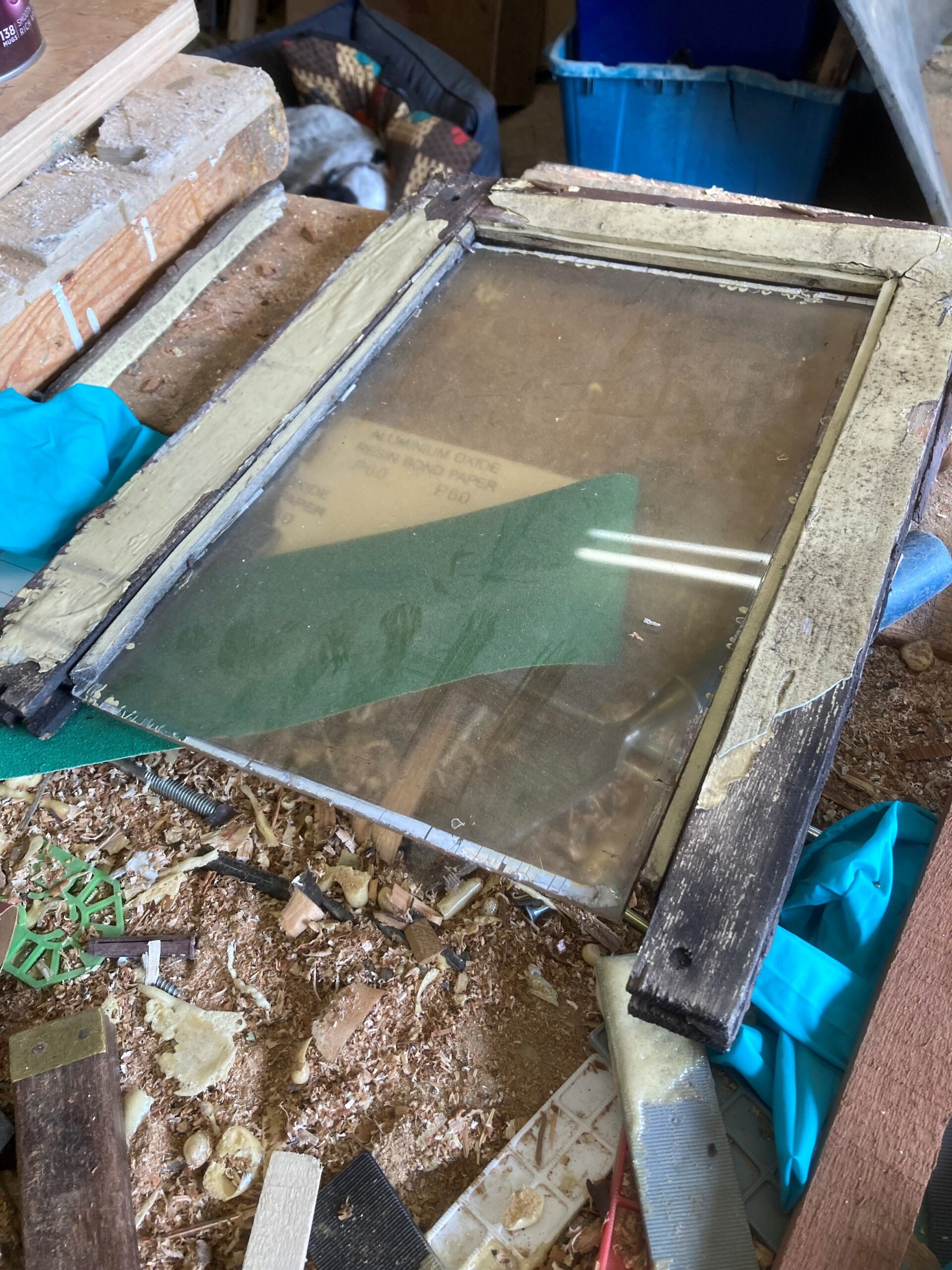
Below: The next two views show the old window frames, and the new replacements during construction. The brakevan had been glazed in Perspex, or a similar acrylic plastic sheet, and these have discoloured over the years. The objective was presumably cost/ease of manufacture/safety, but they will now form useful patterns for replacements in safety glass. Experience elsewhere suggests this is often one of the biggest improvements that can be made during a restoration – the clarity of new glass being transformative to the appearance of whatever it is being incorporated into.
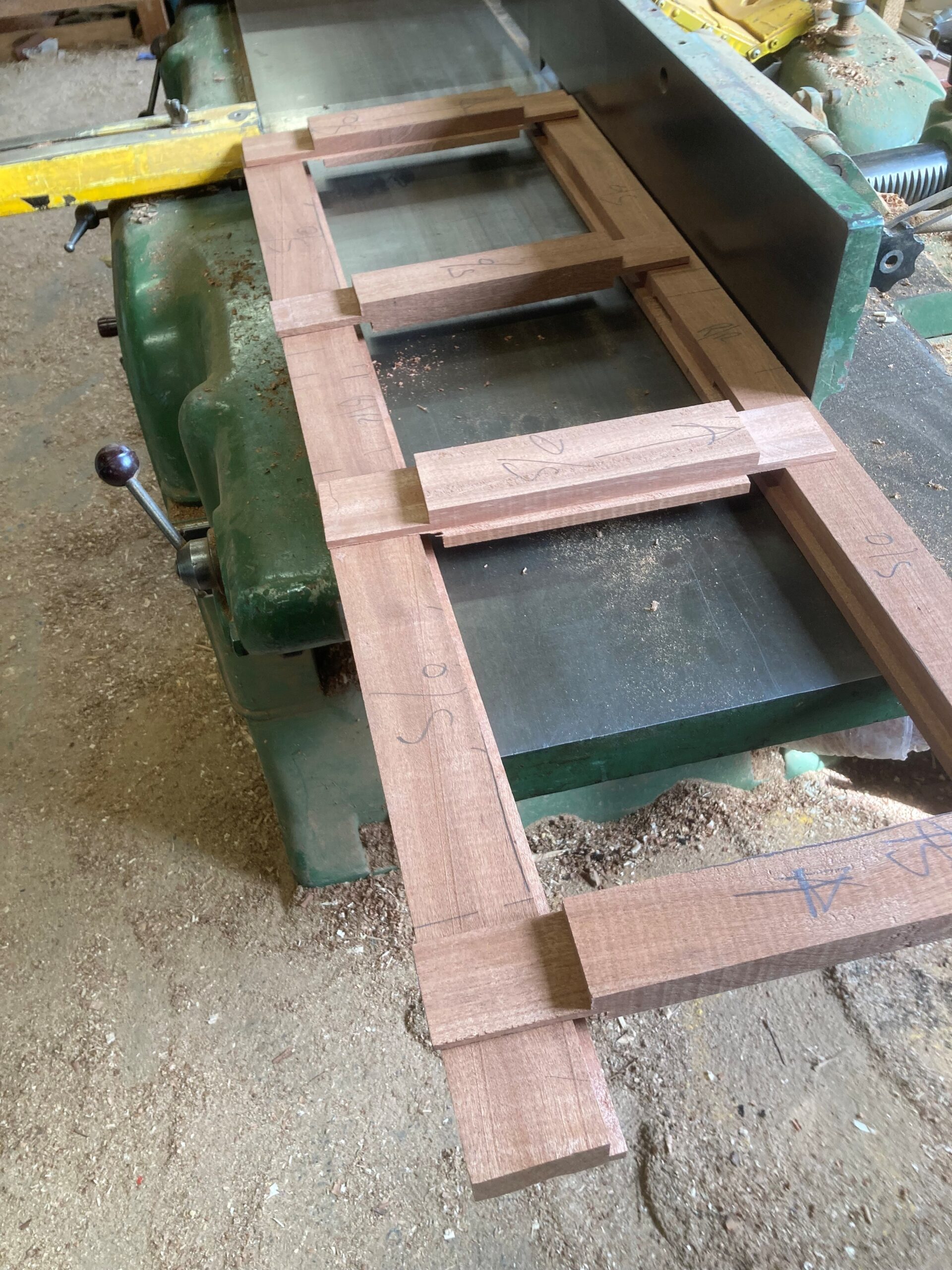
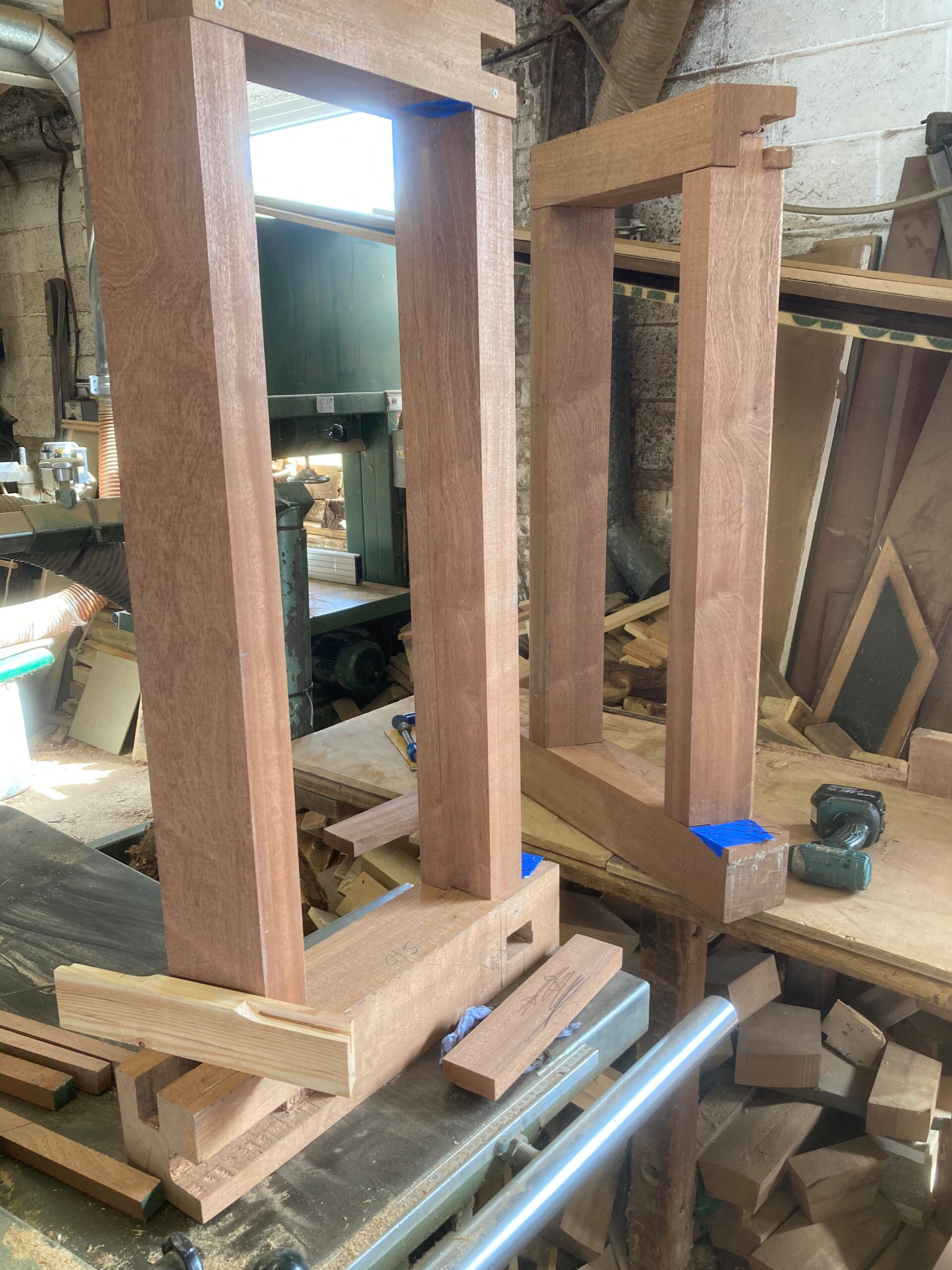
Below: Sections of the side framing for the Birdcage are being manufactured off-site.
Below: The roof hoops are a channel section into which a timber insert is fitted, enabling the roof boards to be screwed securely into position. The wood within these hoops was rotten to say the least, so John has removed these (including the tedious removal of the original screws) and replaced them with new sections of Sapele. There are sections of the end timberwork to harden/renew, and various items to be painted, but the fitting of the roof boards is not far away now and this will in turn allow assembly of the birdcage components. We have also been shown a sample of contemporary Indian Red paint, that has been colour matched to a high degree of accuracy and which will be the main body colour for No.44842 when completed. This will contrast with the Vermillion ends – though we are a little way away from this stage of the project!
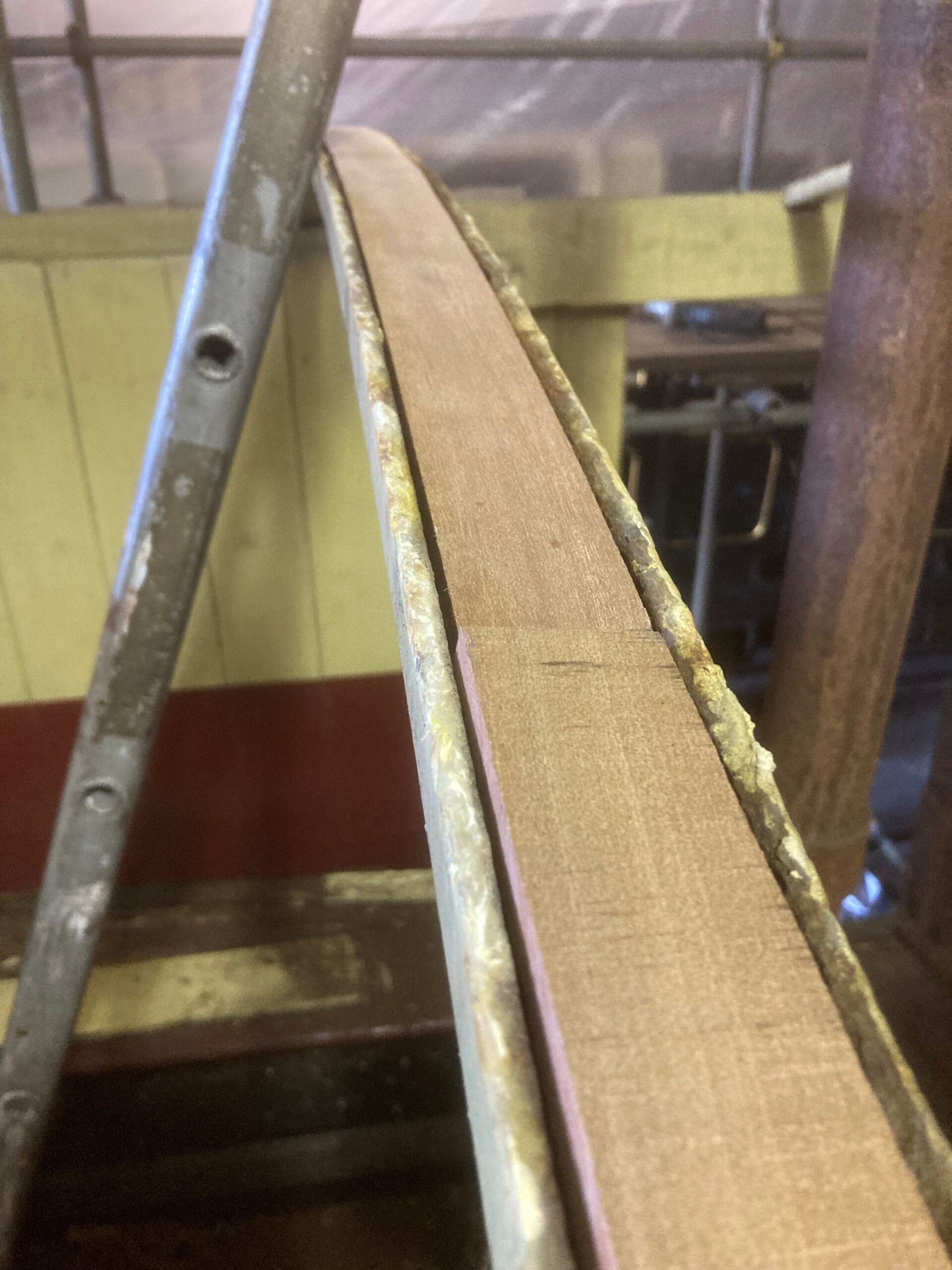
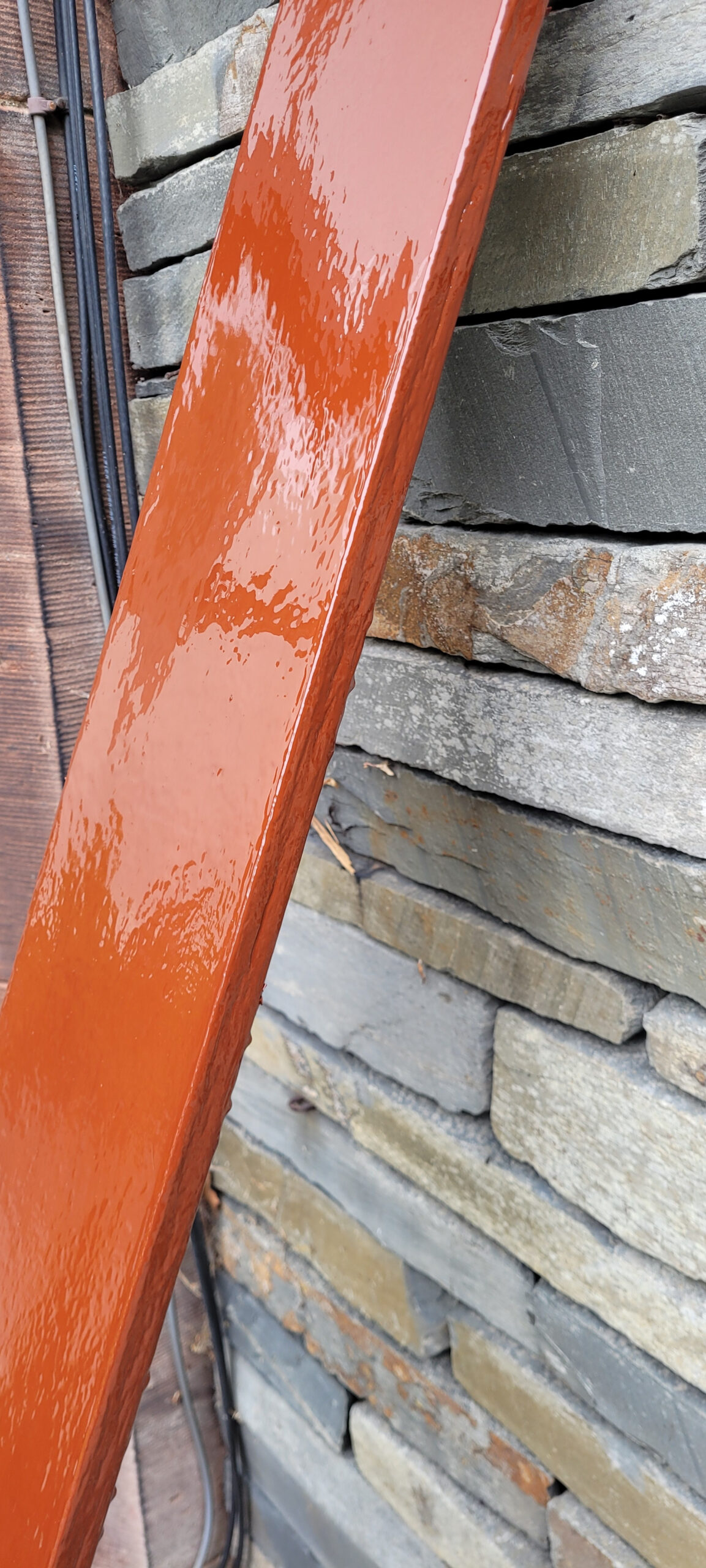
Below: A sample of the matched Indian Red colour – always a shade that prompts debate and with a wide variety of interpretations – this colour was matched for Alex Tring, who is constructing a replica of the S&DR/NER Shildon/Bouch Brakevan at Kirby Stephen East, and who kindly made it available to us for this project. Hopefully our vans will meet in due course so at least we will be consistent in our colour selection!
Dunrobin
Below: The second side tank was moved into the Welding/Fabrication shop for the work on the tank doubling plates. The two apertures can be seen clearly in this view, with the plates being set back into the tank and welded in situ, in order to present an uncluttered base, free of protuberances – allowing the tanks to sit flat onto the footplate. The tank steps (one is seen to the right of this view) are also being removed as these were a Canadian addition. By the time this post is live, the tanks should be back at Bridgnorth to be united (rather than reunited – as they are both new!) with the rest of the locomotive.
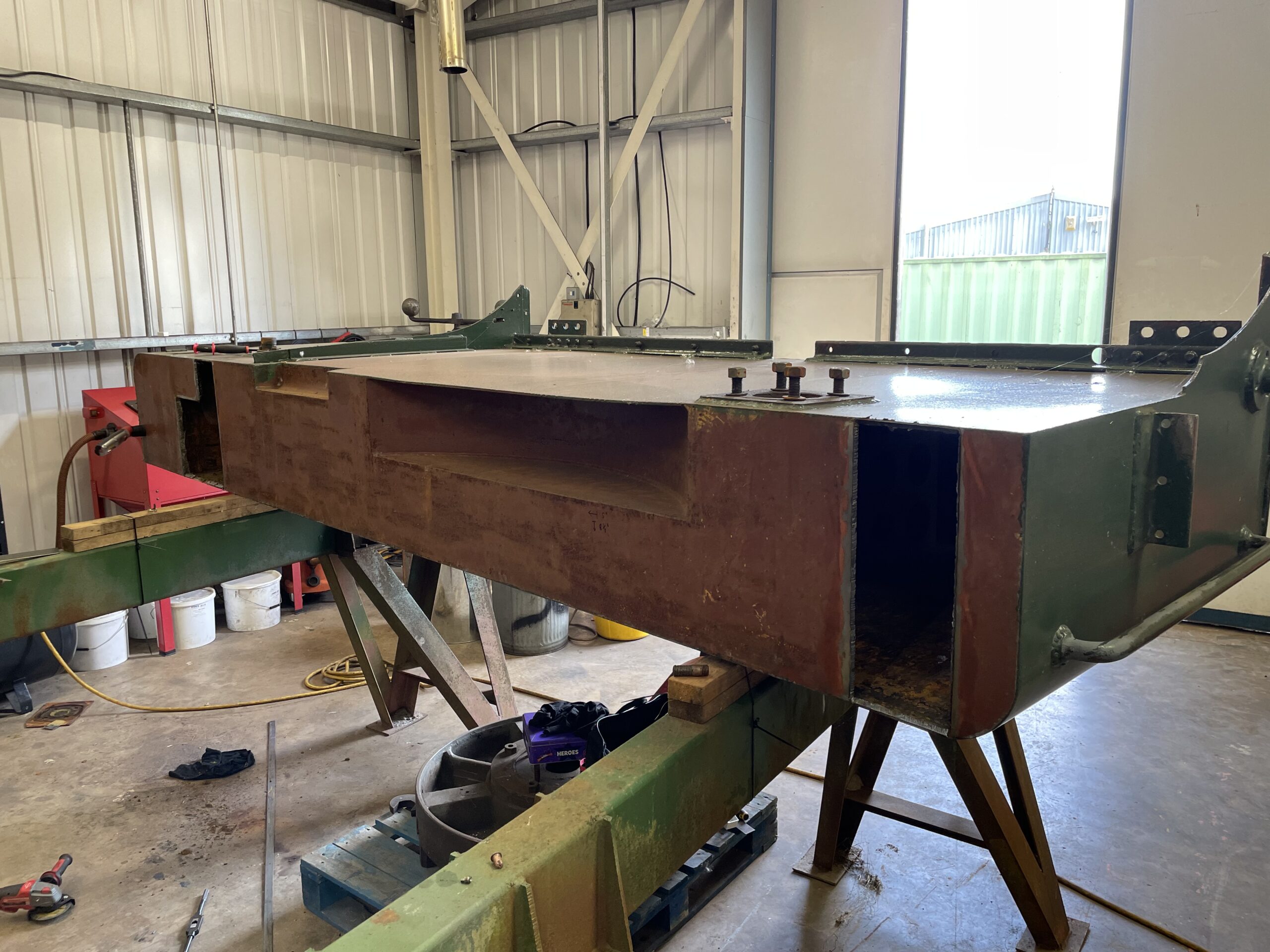
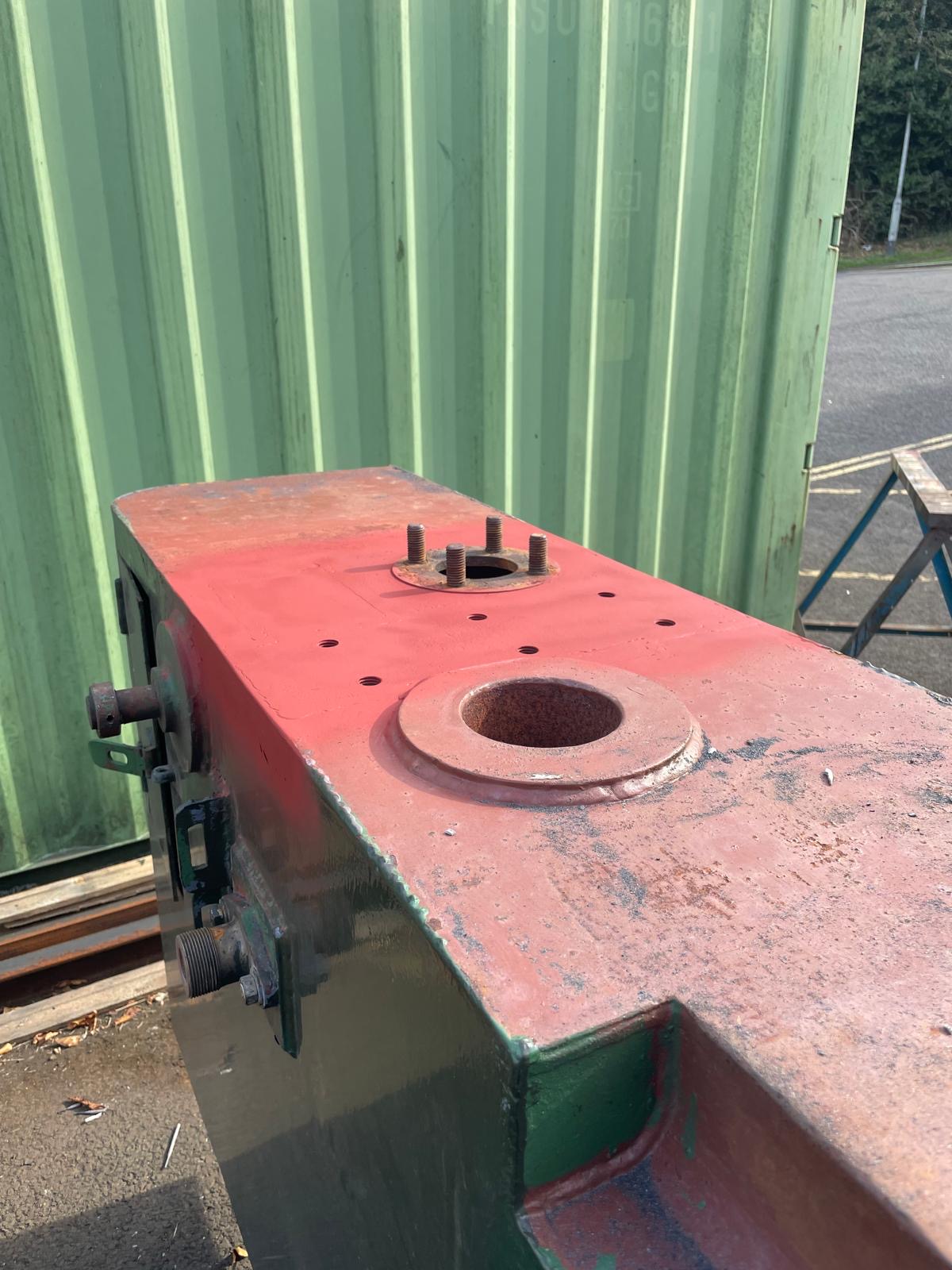
Below: A view of the underside of one of the tanks, showing the area made flush – this will sit on the running plate of the locomotive, which acts as a datum for the rest of the cab/bunker assembly and also the handrails around the smokebox and which locate into sockets on the tank fronts. The task was complicated by the need to keep the register of tapped holes (which are blind i.e. don’t pass right through the doubling plate) in the same place. The position of the internal baffles within the water tank made positioning the cuts all the more complicated so what looked to be a relatively straightforward job proved to be anything but! The weather (intense heat) and other work requiring attention has all conspired to make this quite the ordeal for Chris, who completed it this week, no doubt with a sense of great relief!
Meanwhile, in Bridgnorth, the smokebox has been attached to the boiler and the cab roof is in the paint shop receiving attention ahead of the arrival of the tanks. Numerous components have also been under manufacture, for example, new castings for the sliding windows in the cab. These are produced from patterns made in the volunteer pattern shop at Bridgnorth. Photos to follow in a future post.
A lot has taken place this month! The pace has been unrelenting and the team members and our contractors are all working hard to progress these jobs. I understand that the work on Newcastle tram 114’s controller will be completed up to a point, with it returning to Beamish for us to complete the overhaul and reassembly. This work has not gone particularly well up to now, and various challenges arose with the job, which if nothing else gives us some learning points to consider for similar work in the future (and the ongoing programme of removing all Asbestos materials from tramcar electrical equipment).
Photographs in this post by Phil Doran, Paul Jarman, John Marshall, Phil Smith, Alex Tring and Ben Wilson


Recent Comments