

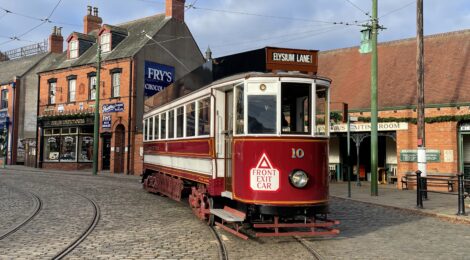
Gateshead 10 returns to service
On the morning of Wednesday 11th November, we formally launched Gateshead 10 back into passenger service. The tram had actually seen some limited service already – as crews became familiarised and assessed on No.10, it having been a decade since it was last in operation.
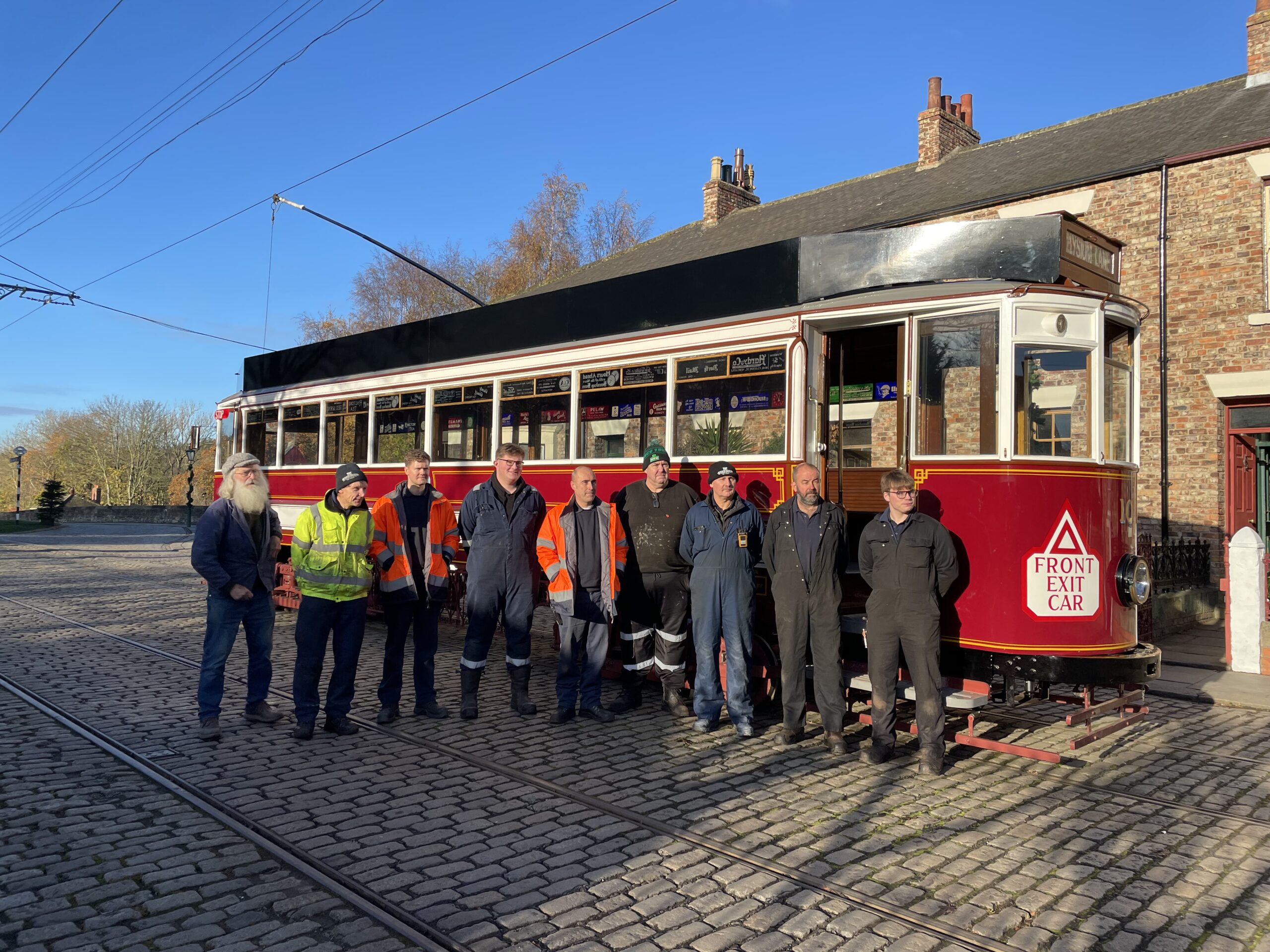
The opportunity was taken to have a group photograph with some of those involved in the overhaul, and to note this momentous occasion – ten years out of a service is a long time and far exceeded the original planned down-time for the job (the global pandemic in 2020 caused significant disruption to progress).
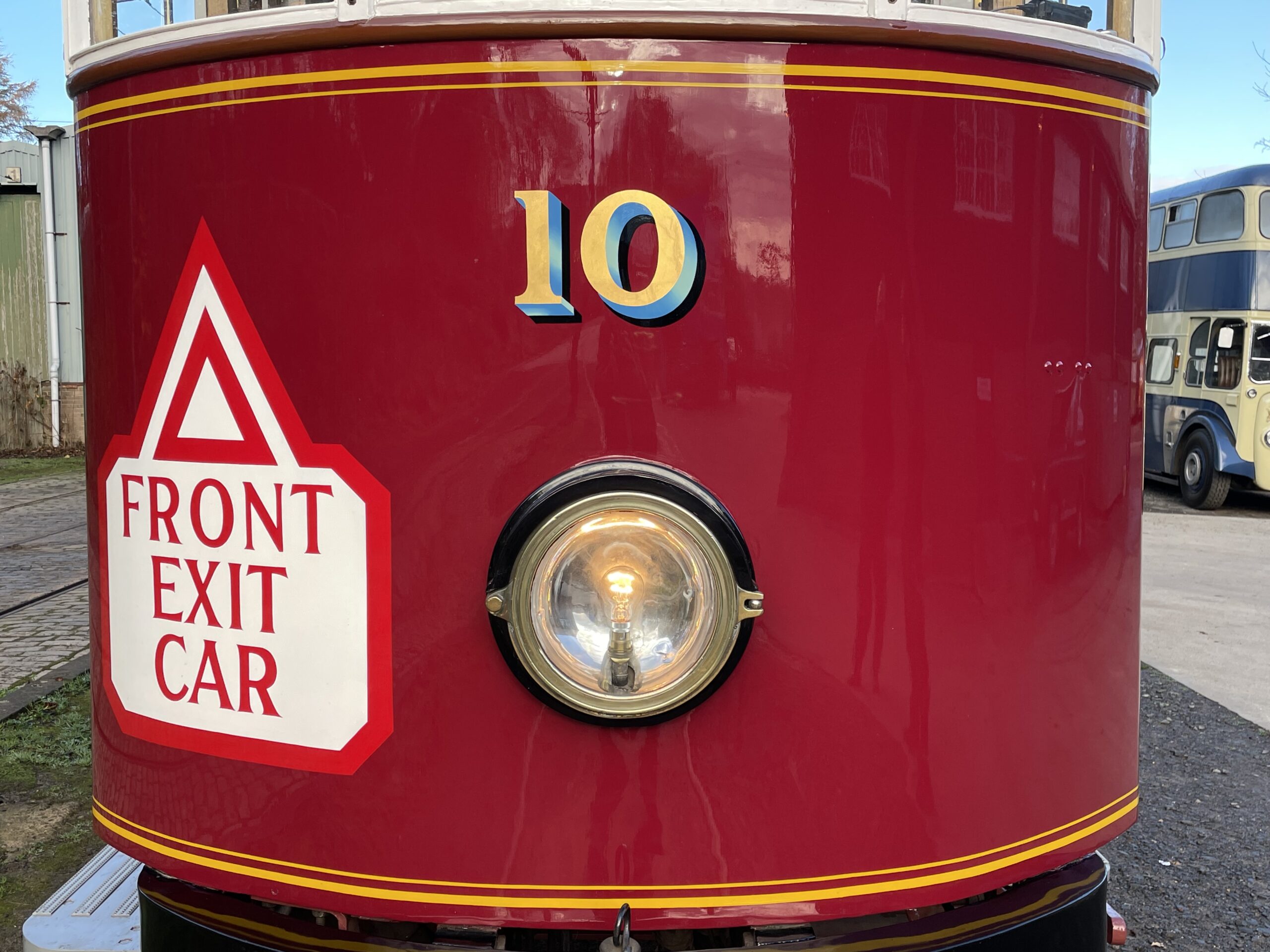
Below: For so many years, Gateshead was a familiar and everyday sight around the museum. We have become quite accustomed to not seeing it over the last 10 years, so it is a source of great pleasure to see it at work again (I can observe it from my office window as I write these notes!).
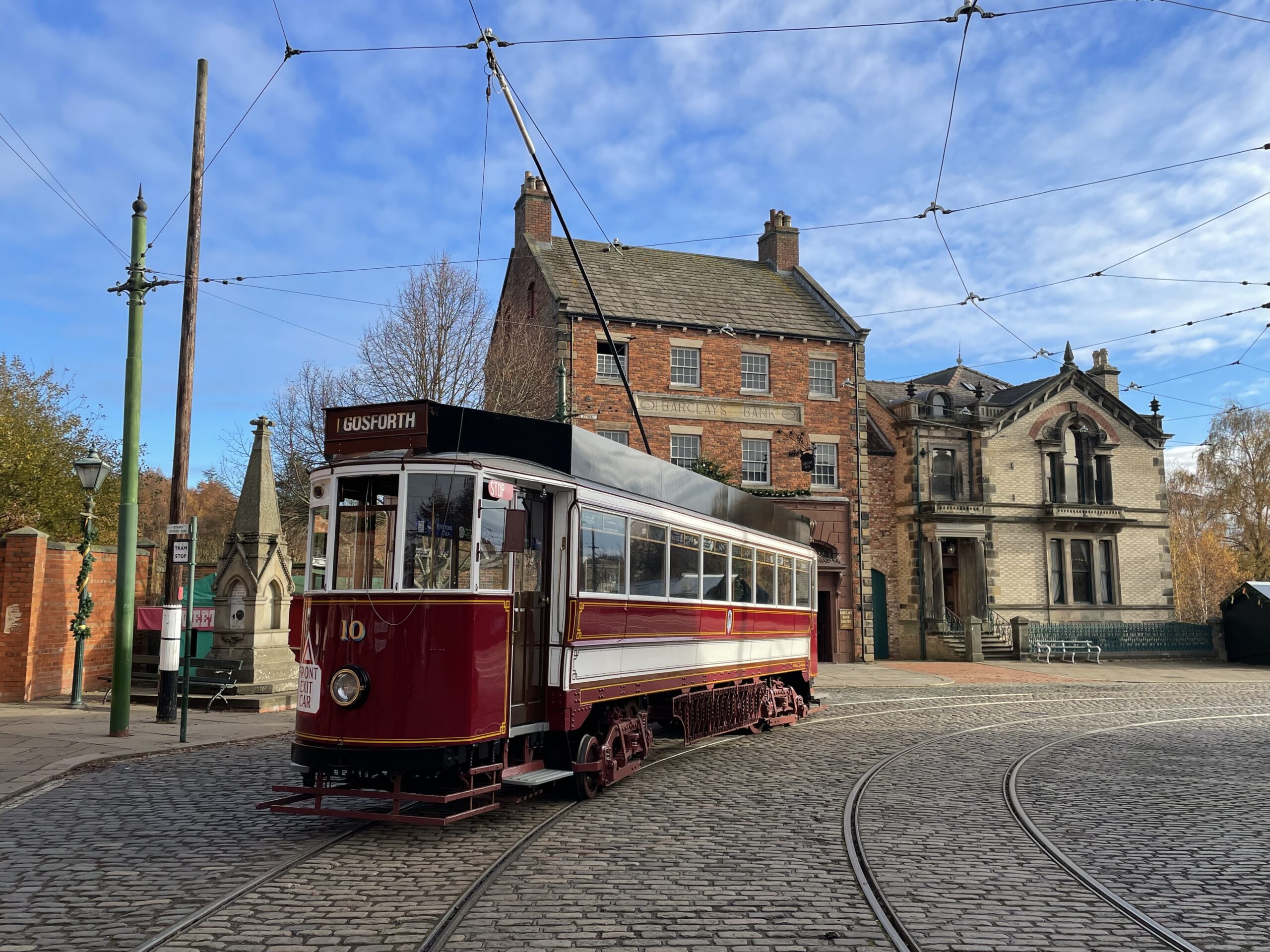
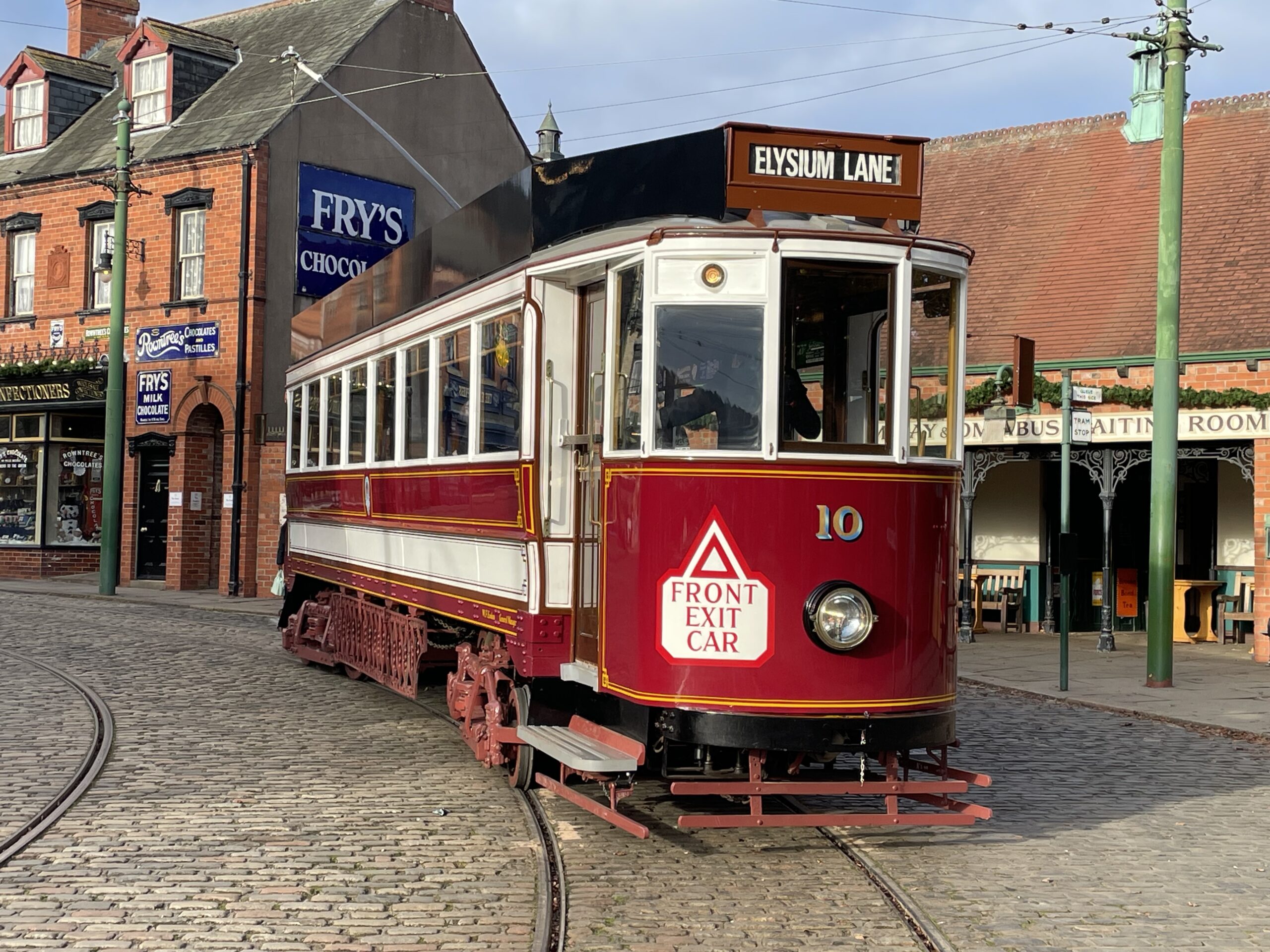
Below: The work carried out has been extensive, and covered in depth on the blog, but it is worth reviewing some of the highlights here for readers new to the story:
- Dismantling and removal of the bogies, brake gear and all underframe equipment
- Replacement of forward facing glazing with safety glass and installing ‘bomb blast’ laminate to side windows
- Restoration/replacement of the four passenger doors
- Research into the original bogie design specification via the Brill archive in Philadelphia, USA
- Replacement of all wheel tyres
- Overhaul of the two traction motors and bearings
- Overhaul trolleybase and trolley head
- Restoring the bogie frame bearing surfaces to original tolerance
- Overhaul of the controllers and circuit breakers plus installation of a roof-mounted fuse
- Manufacture of self-lubricating plastic bogie carrying bearings, replacement of the bogie side bearing slippers and manufacture of new bogie centre pins
- Replacement of most of the track brake fittings, including manufacture of bronze slipper guides
- Installing parallel journal sleeves to fit over the taper journals that were a feature of this tram (uniquely) https://beamishtransportonline.co.uk/2021/08/gateshead-10-engineering-update/
- Overhaul of the primary and secondary suspension, including replacement of hangers, overhaul of springs and adapting the secondary arrangement in line with later Brill practice
- Commissioning a new resistance unit, manufactured by Cressall and installed within the original cast iron equipment case
- Extensive overhaul of the brake rods, swaybars and fastenings, to remove lost-motion that contributed to previous brake inefficiency
- Overhaul of the air brake valves and installation of water trap/air filters into the air brake lines to improve future reliability
- Restoration of destination boxes and blinds (these had been removed when the tram was painted in British Railways green livery)
- A complete repaint of the tramcar body, roof and bogies/running gear followed by signwriting and varnishing
- Internal conservation and varnishing of the seating and bulkheads
- Manufacture of new side advertising panels and refurbishment of the end panels
- Working with Fox Transfers to develop artwork and produce new waterslide transfers for the Gateshead & District/BET crests that are positioned on the waist panels
- Testing of mechanical and electrical components and air system at various stages – final sign-off included a D exam for the tram before acceptance for trials
- Replacement air receivers to original dimensions
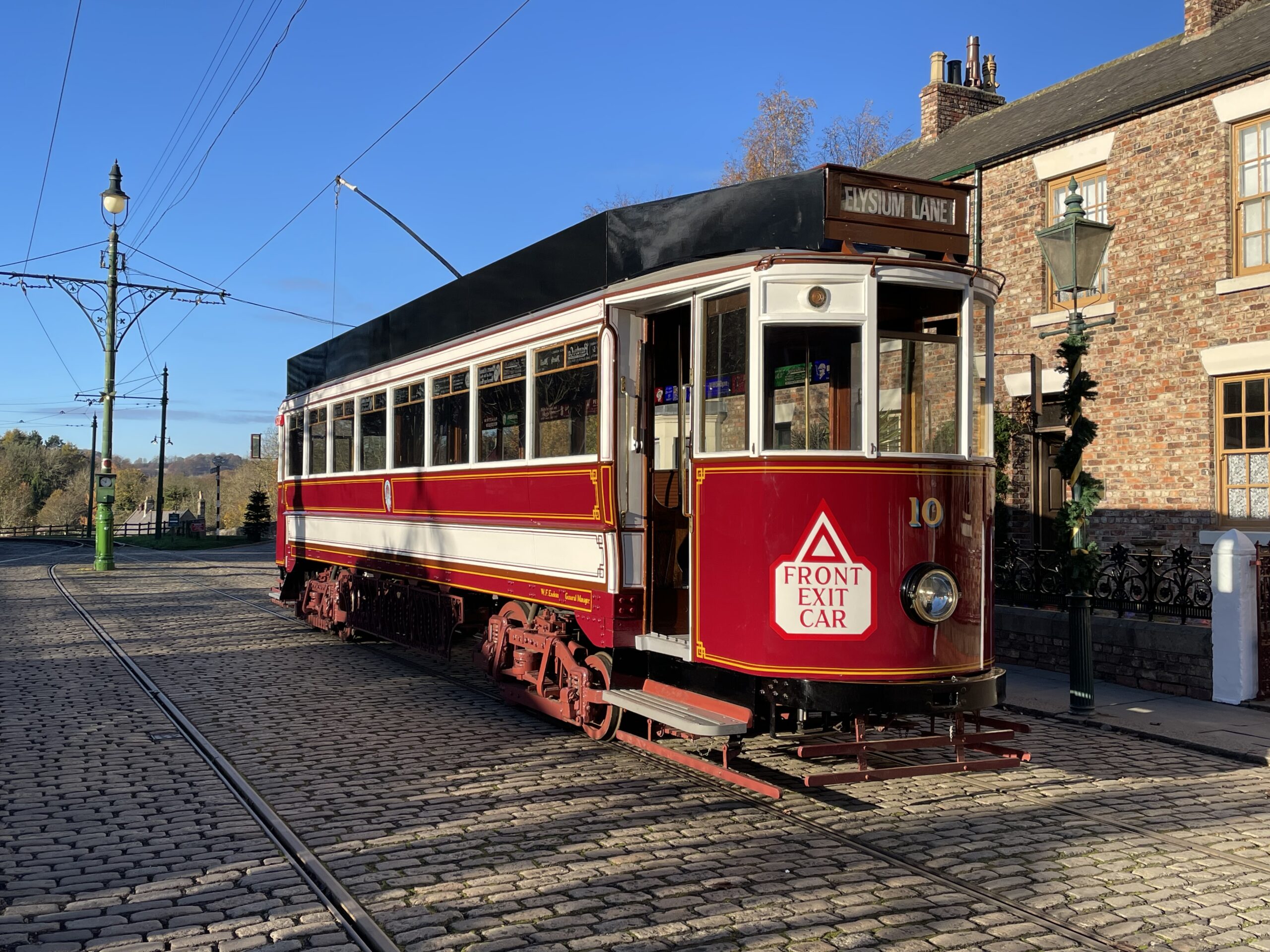
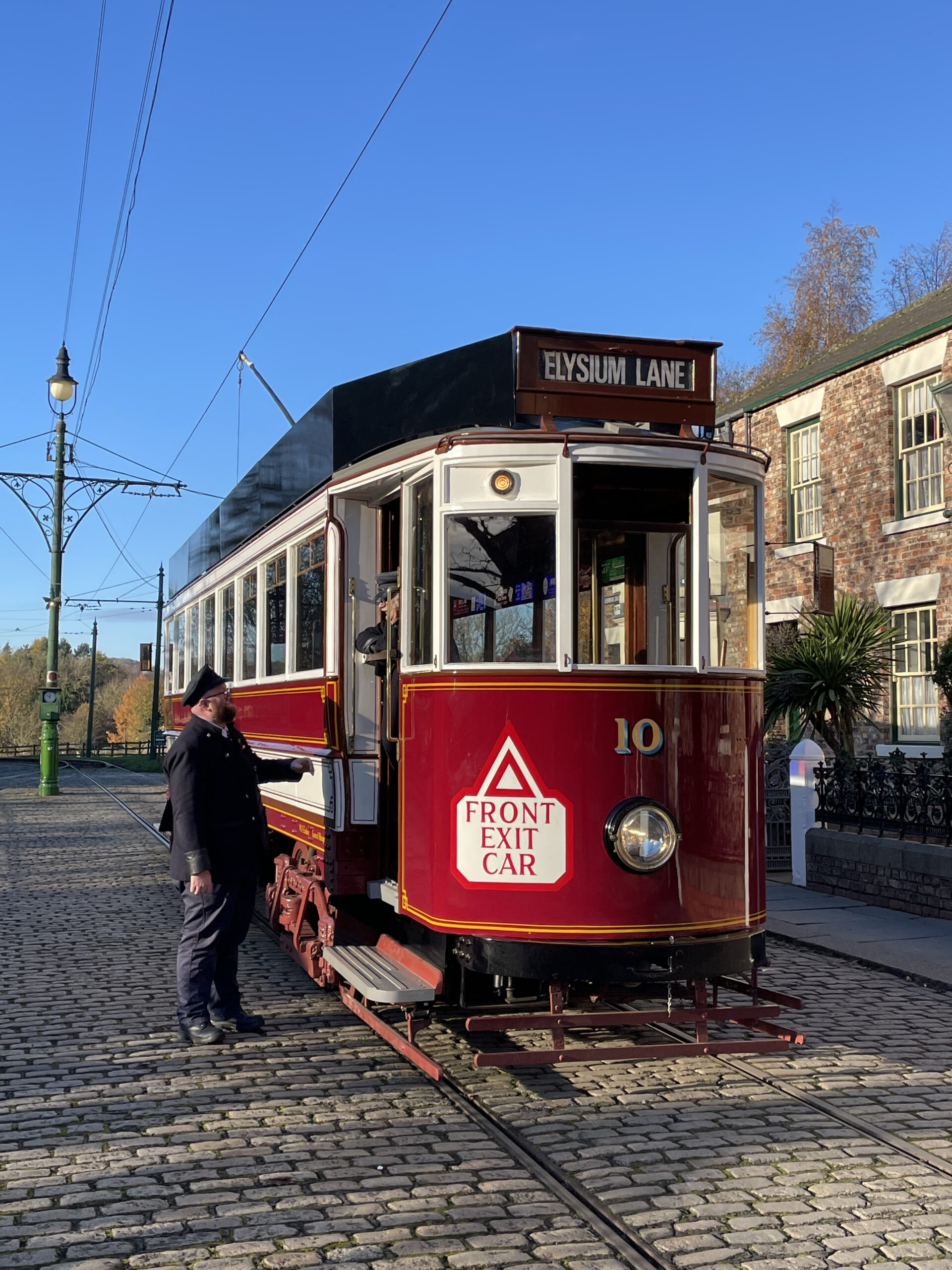
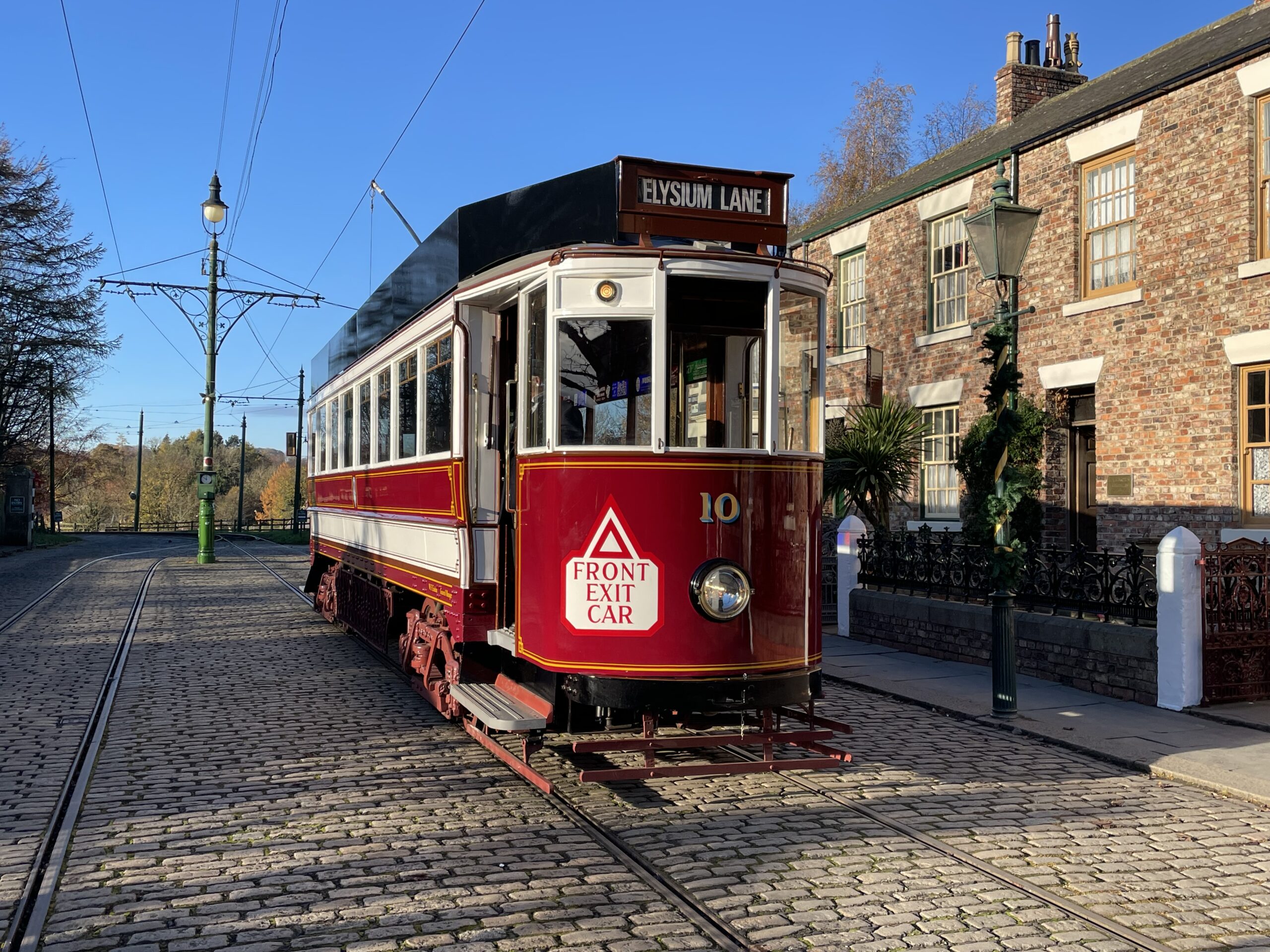
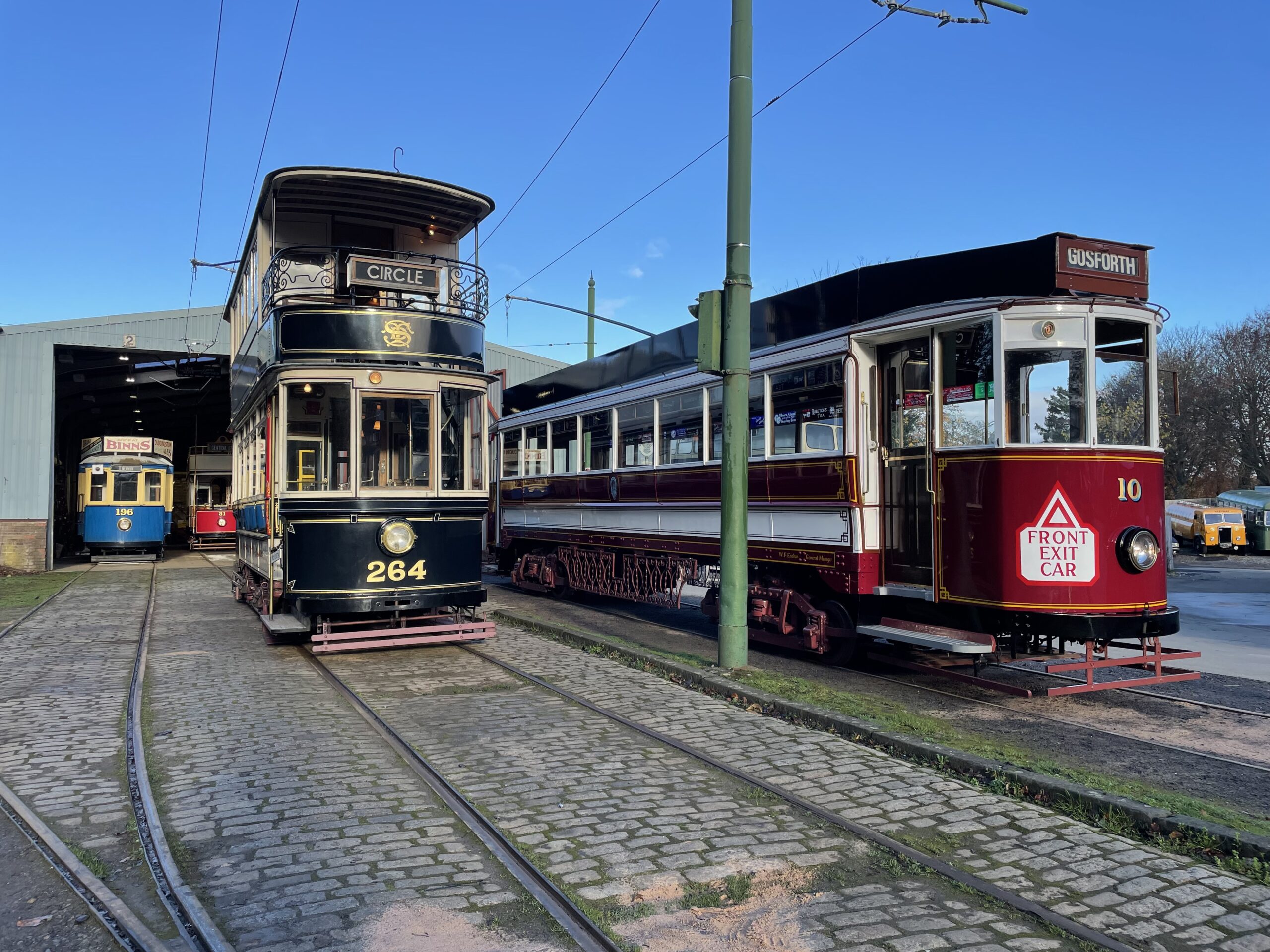
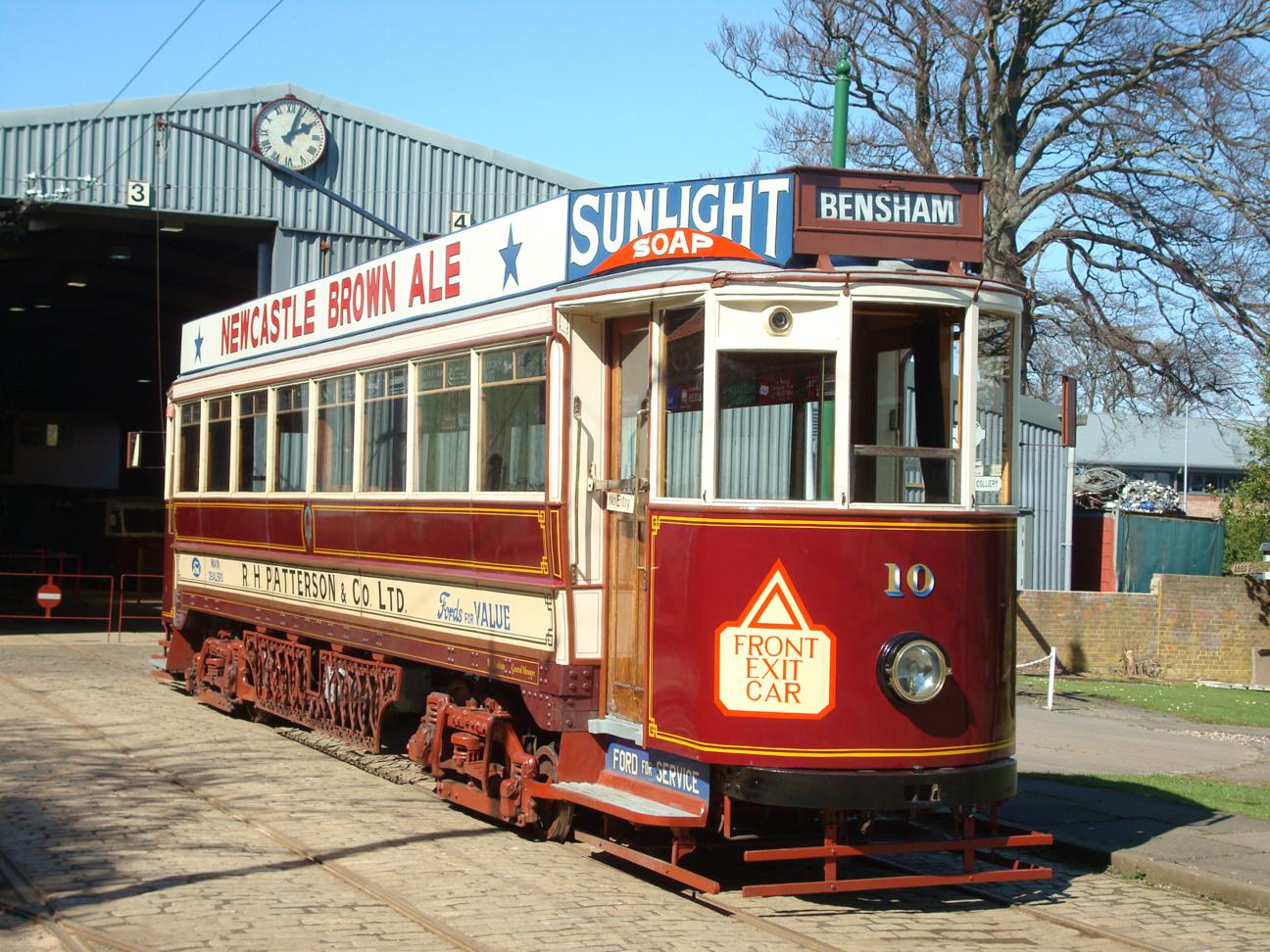
Below: Gateshead 10 has been returned to its pre-WW2 condition and appearance – noting the absence of adverts on the roof advertising panels. We might change this in due course, but for now, it runs with the dark blue/black panels, as were applied in service in Gateshead to trams that were not carrying revenue-earning adverts.
Below: Some of the team involved in the second-half of Gateshead 10’s overhaul (L-R John, Ian, Daniel, Ben, Chris, Tony, Mick, Phil and Sam). We should also note the contribution of Rebecca, Phil, Don, Matt, Zoe, Brian, Terry, Tony V, Matt B, Les, Peter and Mel (the latter three being members of the Beamish Tramway Group). I am sure there are others too. Those pictured here are all staff, except for John Marshall (left) who spends a great deal of time here at Beamish as a contractor, and who painted Gateshead 10. Lining and signwriting was applied by another contractor, Aaron Stephens.
Below: The current tramcar fleet… Sunderland 16 is lifted, for re-tyring this winter. Newcastle 114 awaits its overhauled controller (a prolonged and frustrating job that has had significant delay). Oporto 196, Blackpool 31, Sheffield 264 and Gateshead 10 are visible here. This also leaves Lisbon 730 in the depot, the repaint and cosmetic transformation into Newcastle Corporation livery now being virtually complete.
The overhaul of this tramcar has been a long-running project, with significant challenges from external forces working against it at times. However, it is now finished – and perhaps a single blog post seems something of an anti-climax given the amount of workshop time, money, energy and mental load that has been consumed by the job. As we’ve done large amounts of the work in-house and at our own cost, it is hard to determine what the actual cost of the project has been, but my estimate would be that it is somewhere in the region of £200,000 when labour, sub-contracts and materials are all accounted for. Heritage is not a cheap business to sustain! I am, though, sure that all who enjoy riding on Gateshead 10 for (I hope!) decades to come, will agree that the end result has been well worth it.
What next then? We have running maintenance/renewals to carry out on Sunderland 16, Blackpool 31 and Sheffield 264. I’d also like to build some momentum to finish and commission Lisbon 730 next year. Newcastle 114 is complete apart from the aforementioned controller (which is a frustrating position to be in) and after this we will be looking to commence Oporto 196’s overhaul, which is likely to be fairly extensive and will include a truck overhaul, re-tyre, systems inspection/overhaul and a deep exploration of the body structure. I also have a few cosmetic changes in mind for it, including a livery that it has not previously carried… We need to better store Gateshead 52 pending an eventual move to restore that tram (something I am very keen to do), and Oporto 65. In terms of future additions to the fleet, we have some irons in the fire for one tramcar that may join the fleet in the future, but we are limited by space and resource – and as the list above shows, there is a huge amount to do to keep the existing fleet operational – especially given that the team who look after the trams are also covering buses, road vehicles, rolling stock and steam locomotives too.
In the time that it has taken to write this post, Gateshead 10 has passed my window three times – so I’ll sum up by simply saying, it’s great to have it back!
Gateshead 10 in 10 pictures
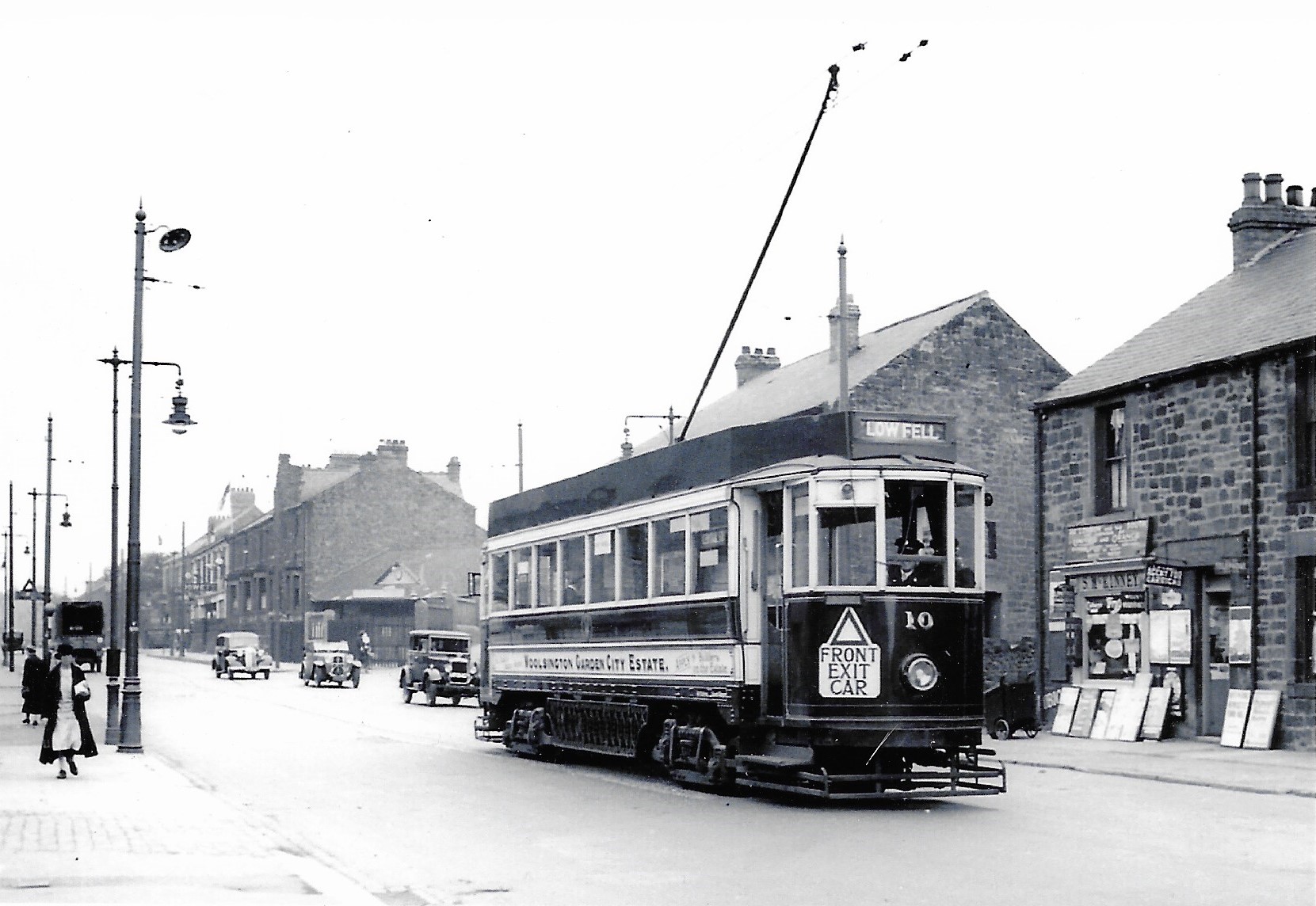
Below: This is Gateshead 10 at Low Fell in 1938. Built in 1925 by the company in its Sunderland Road workshops, to a well-proven design for the system, the tram was well suited to the enviromnent – a fairly compact system with high usage and operating in both an industrial and civillian terrain. The tram is sans adverts on its roof panels, but does feature an advert for Woolsington Garden City Estate on the roker panel -this being an area west of Newcastle, close to Newcastle Airport. Also of note is the destination blind inside the window immediately adjacent to the platform door and the illuminated indicator panel to the right of the same door. I’d be interested to research this feature further, as it might be something we could consider for future reproduction for our tram. (Beamish Collection)
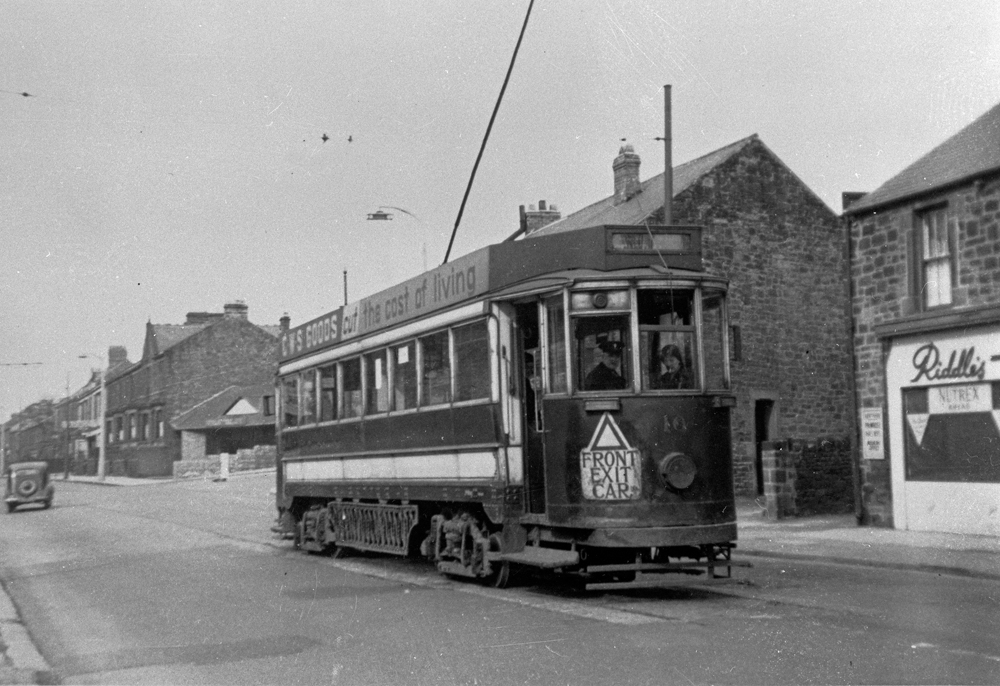
Below: In the post-war period Gateshead 10 is once again captured at Low Fell terminus after preparing for the reversal and journey north along Durham Road. The paintwork is simplified, but lining is still evident, the advert is more conventionally positioned (the Cooperative Wholesale Society being a regular advertiser on Gateshead’s tramcars). The dash panel has been patched at its base and the tram is in fairly unkempt condition by this date. (George Hearse, Beamish Collection)
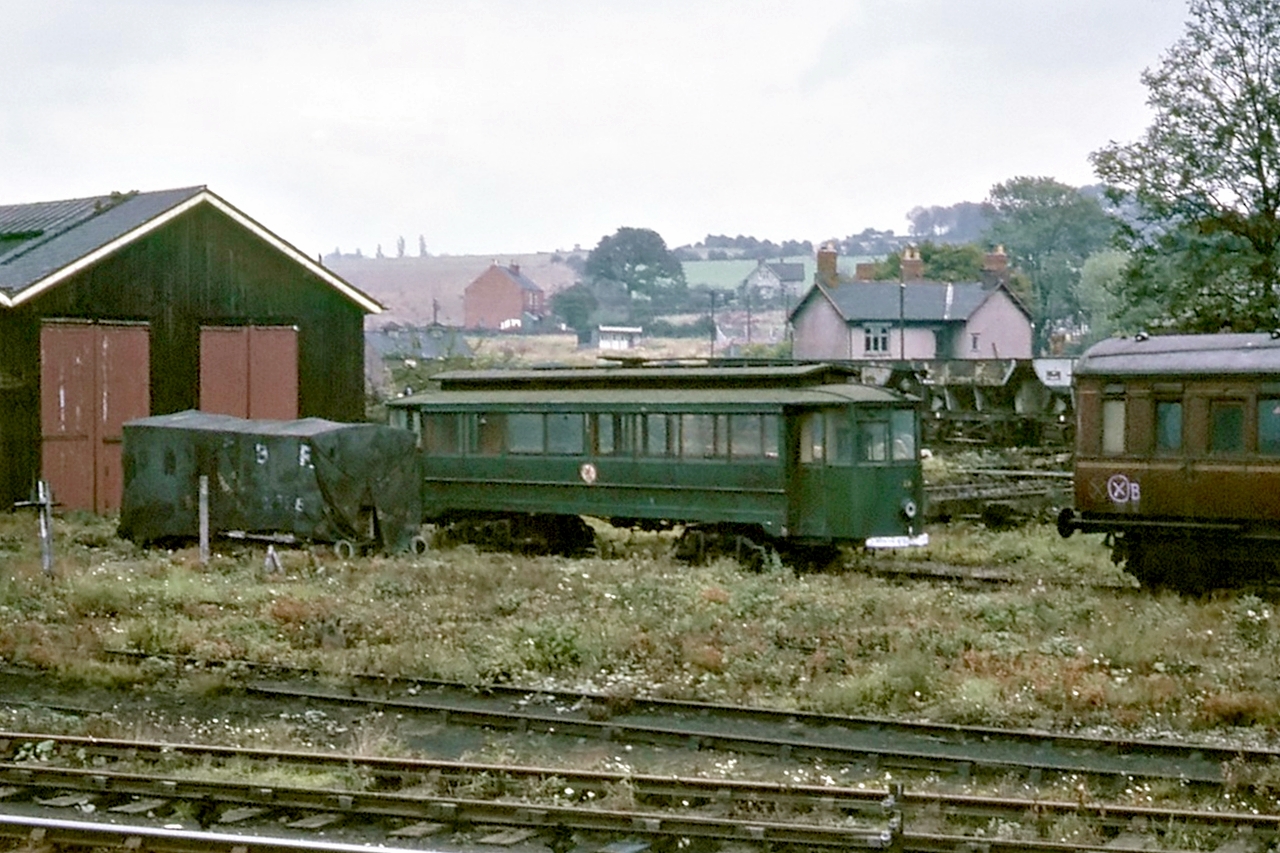
Below: When Gateshead dispensed with the services of its tramcars in 1951, 19 single deck trams were sold to British Railways for use on the Grimsby & Immingham Electric Railway. Gateshead 10 became No.26 in the BR fleet, and upon closure of the G&I route, it was designated by the British Transport Commission and placed in store at Clay Cross in Derbyshire, where it was observed and photographed outside the building that was to later become the National Tramway Museum’s off-site store. (Bill Wright, Beamish Collection)
Below: In 1968 Gateshead 10 was taken into the custodianship of the Northern Tramway Sponsors, who were looking at opportunities to create a working electric tramway in the North East of England. The tram was moved to Templetown, the workshops of the Consett Iron Company, where the group set about its restoration into Gateshead & District Tramways condition. (Beamish Collection)
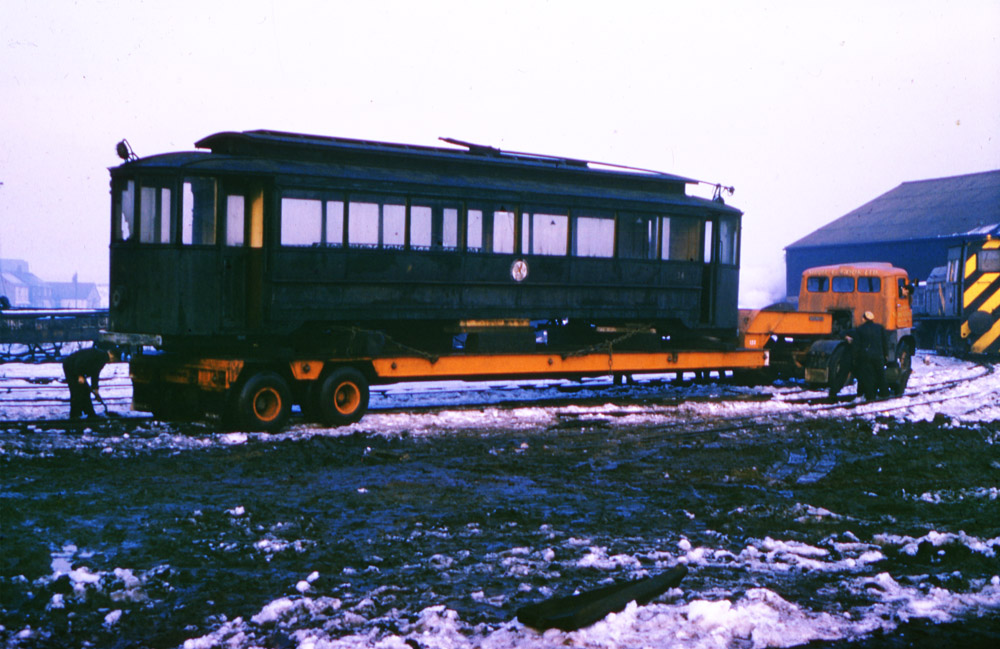
Below: Following restoration, Gateshead 10 was able to operate (with Sheffield 264, which was also in the BTC collection and based at Consett) on a short length of line that had been electrified with overhead line equipment. (Beamish Collection)
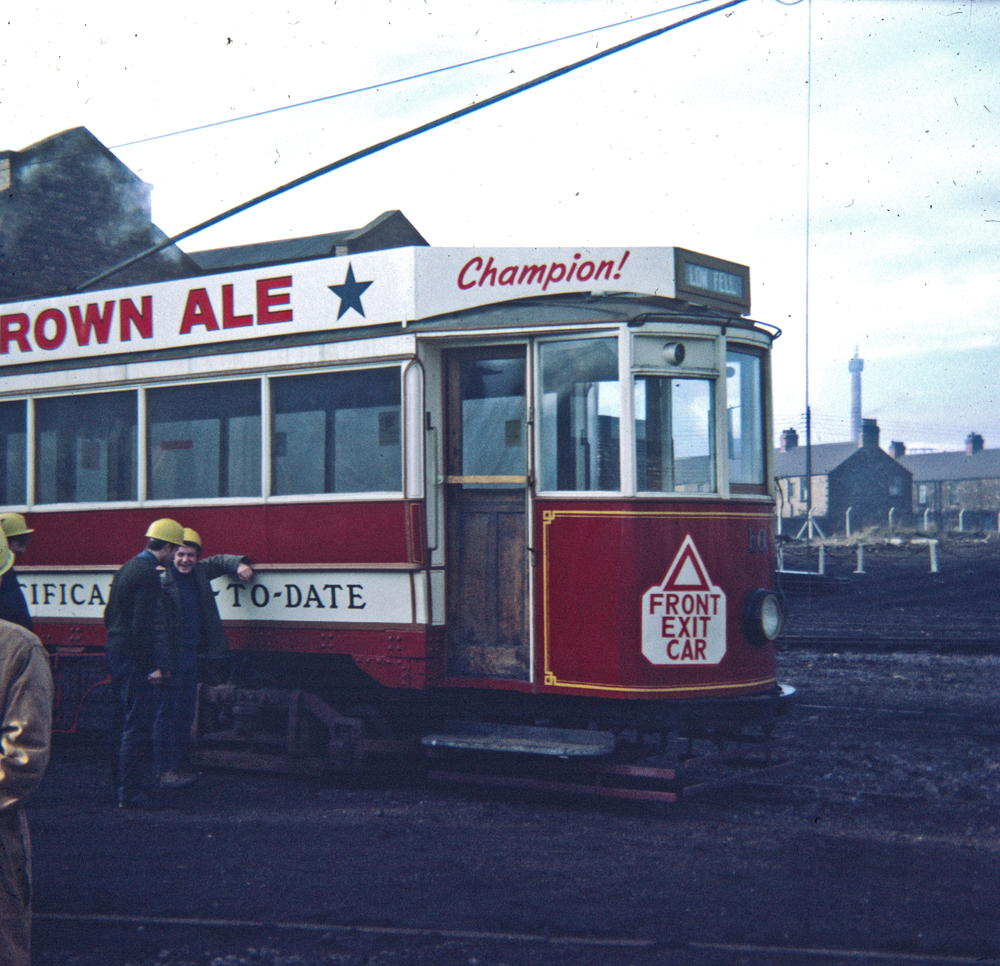
Below: In time for the opening of the Tramway at Beamish in May 1973, the tram moved the several miles from Consett to the new museum site. It is seen arriving at Foulbridge, where it was unloaded (and placed back onto its bogies) pending commissioning and inauguration of the new Tramway service. (George Hearse, Beamish Collection)
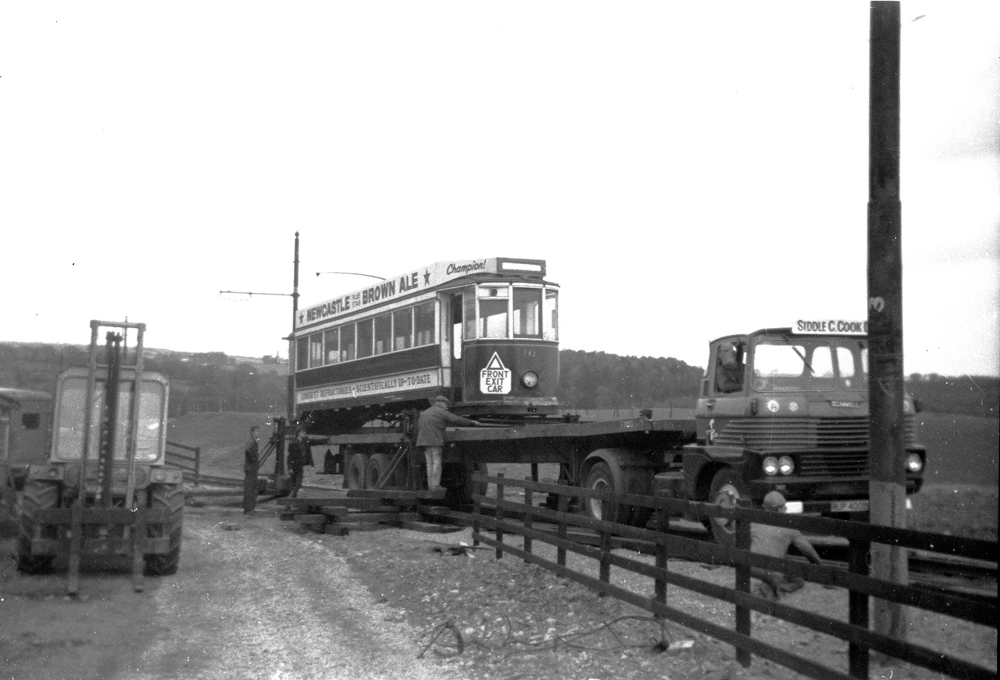
Below: Gateshead 10 settled down to become the flagship of the Beamish Tramway and an iconic working object at the museum. It is shown here leaving Bog Bend as it approaches the crossing at Foulrbridge, having departed from the site of the present Town (High Street) on its way to Foulbridge and the then terminus at the Tram Depot. (Beamish Collection)
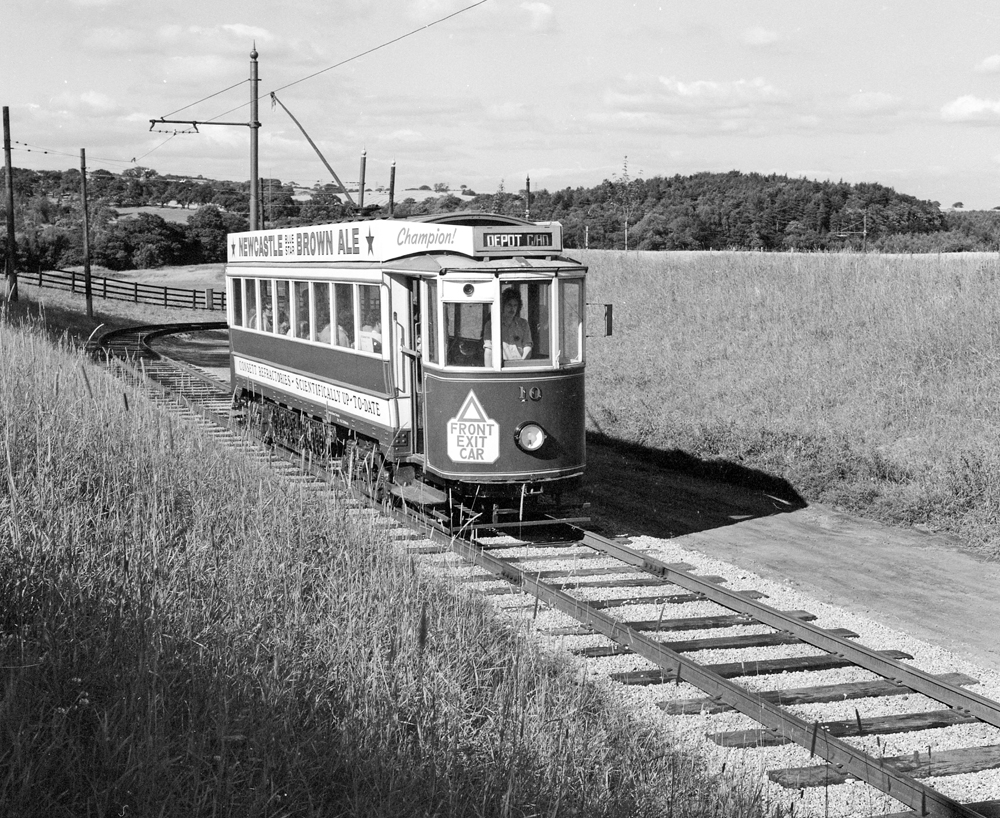
Below: This photograph is a well-known view of Beamish and shows how Gateshead 10 is integral to the image of Beamish – it must have appeared in many thousands of photographs taken by visitors between 1973 and 2016. (Eddie Ryle-Hodges, Beamish Collection)
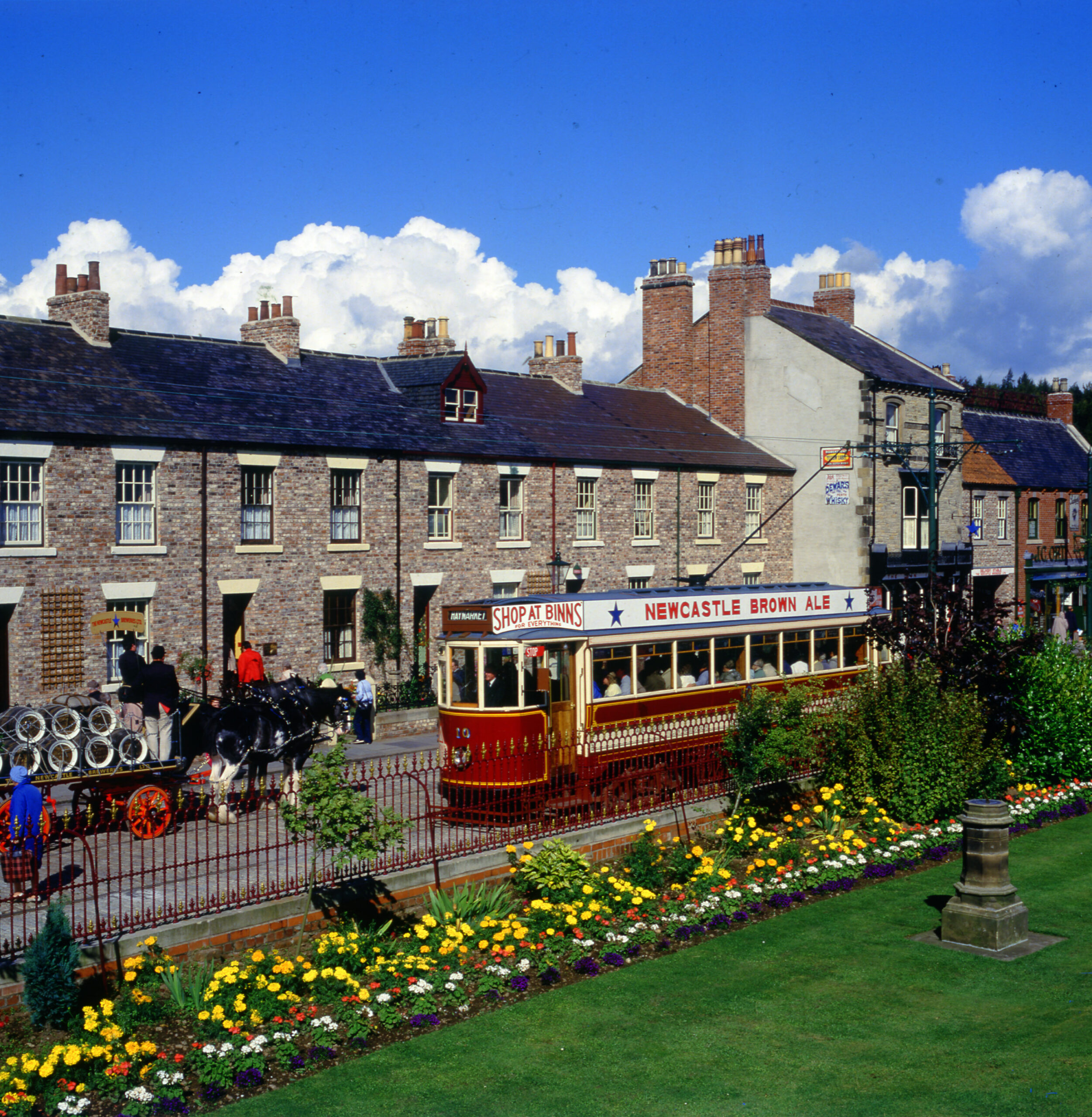
Below: The tram was overhauled between 1983 and 1985, but otherwise (and until 2016) was a regular performer on the Beamish Tramway, into the 2000s when I came to know it for the first time in 2004. (Paul Jarman, Beamish Collection)
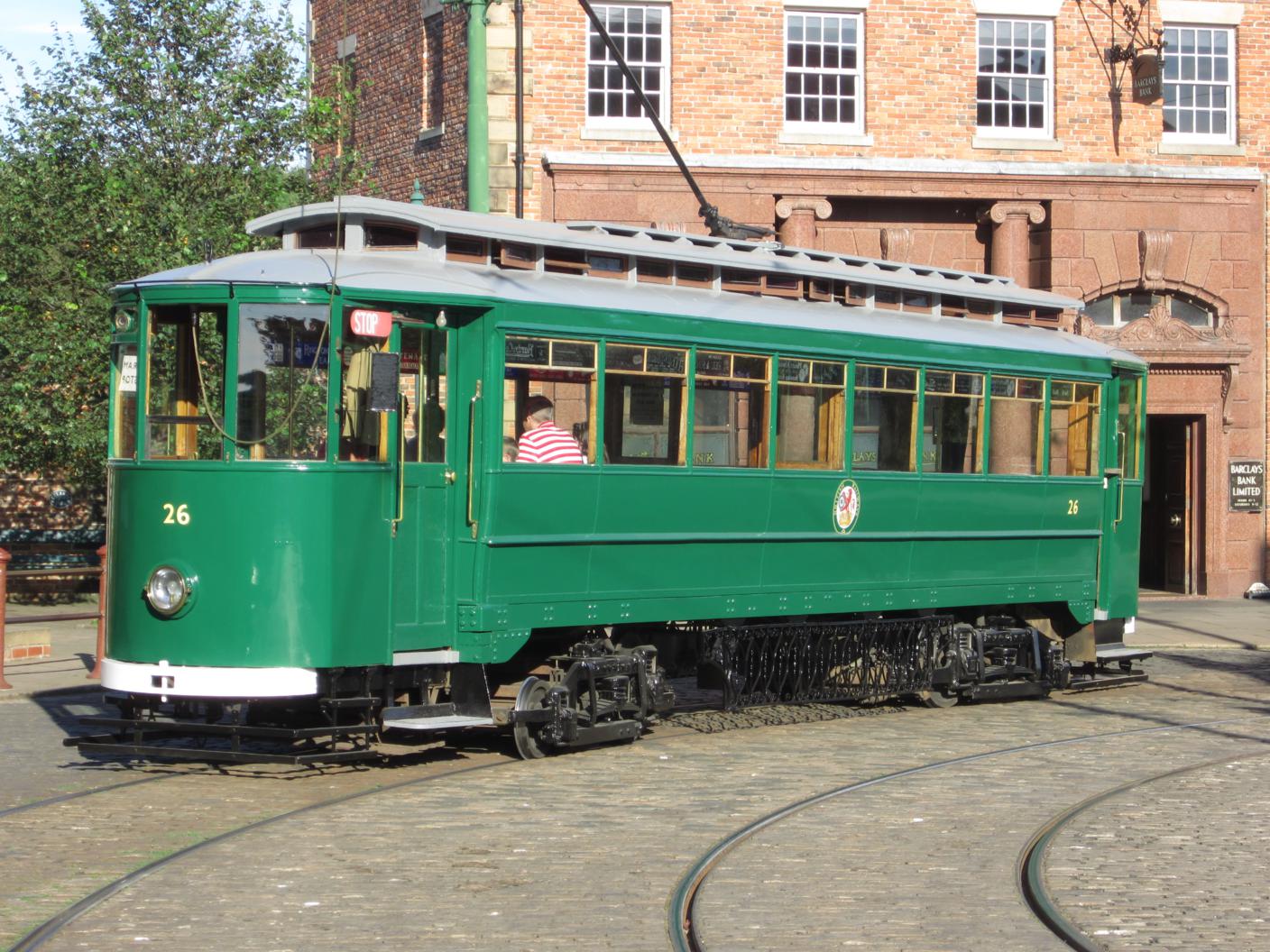
Below: In 2012, with Gateshead 10 requiring a repaint, some sponsorship became available to apply British Railways green livery – knowing this would be temporary (four years!) with a heavy overhaul anticipated at that time. As well as changing the colour, the advertising panels were removed and roof-mounted headlamps fitted (ex fishing boat) to complete the transformation. No.10 ran in this condition until withdrawal in October 2016. (Paul Jarman, Beamish Collection) see also https://beamishtransportonline.co.uk/2014/03/past-and-present-a-remarkable-coincidence/



Recent Comments