
Transport & Engineering Diary October 2026 Part 1
Here we are again – the fortnights roll by very quickly! For this post, we have lots of shorter news-bites, tracking progress in various areas of the museum as well as recording some new arrivals and the exploits of the transport, infrastructure and engineering team…
Rowley Station
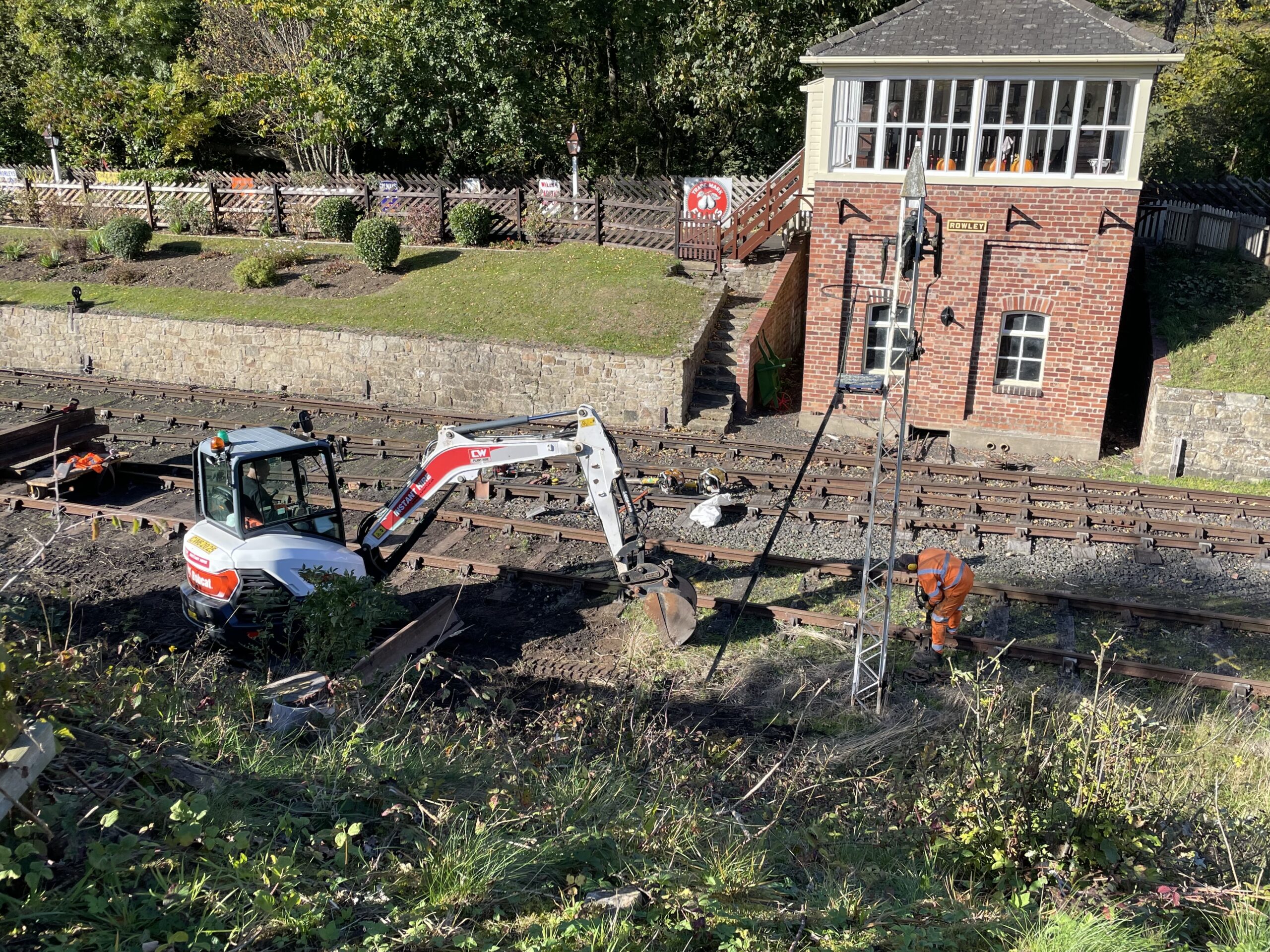
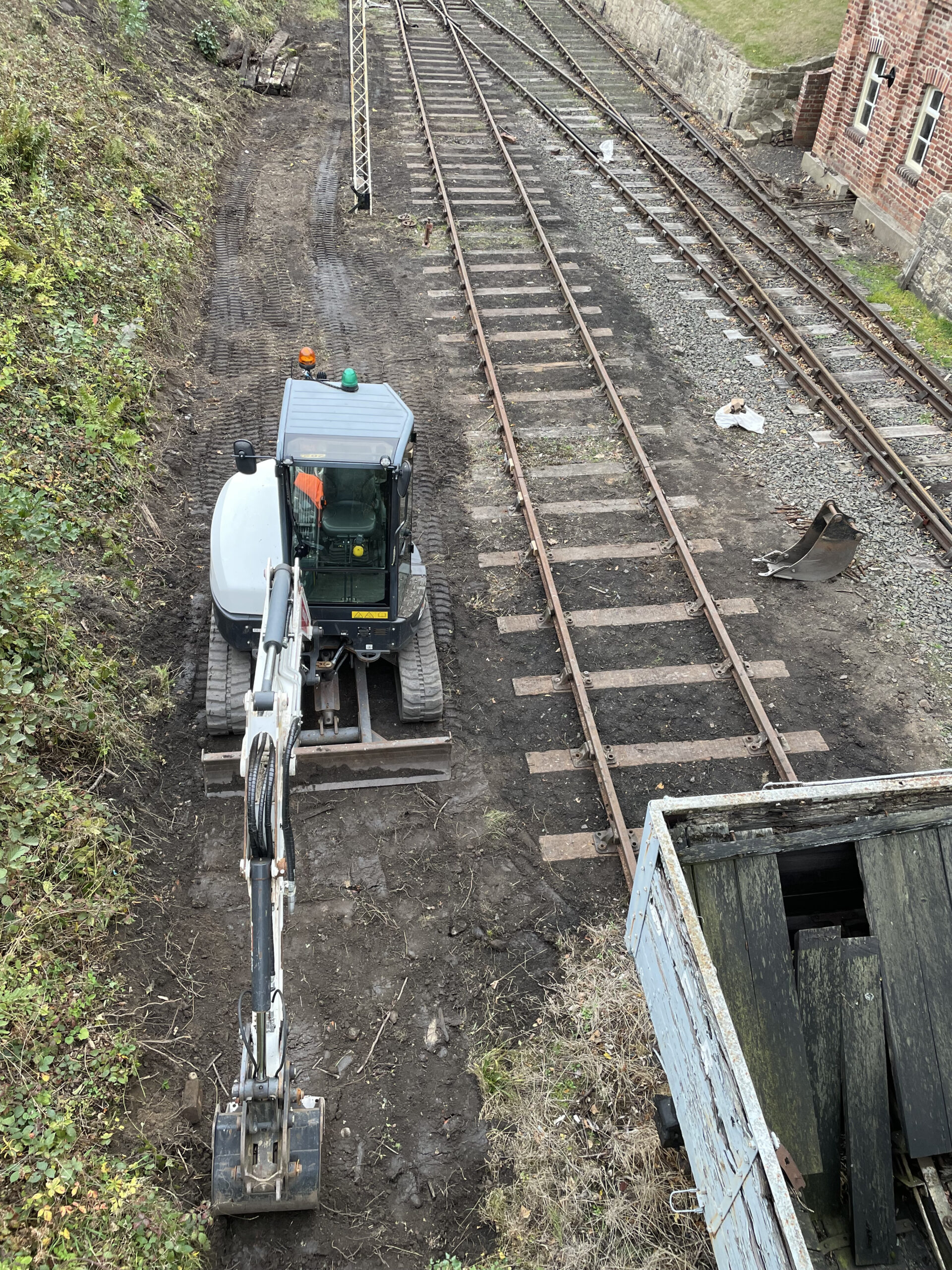
Below: With work on the coal drops siding completed, and the winter Tramway programme of re-sleepering the other side of Christmas, the team have turned their attention to another ‘cosmetic’ siding, that of the headshunt which stretches under the footbridge at Rowley Station on the North Eastern Branch. This has only ever been used for storage due to the poor condition of the sleepers, but these will all now be replaced – offering some enhanced shunting arrangements as the double-slip pointwork being usable in all four directions. This is bonus work so it is very pleasing to see it being started after sitting on the ‘to do’ list for so long (as the siding was not operationally necessary). There are no plans to extend the siding as part of this work.
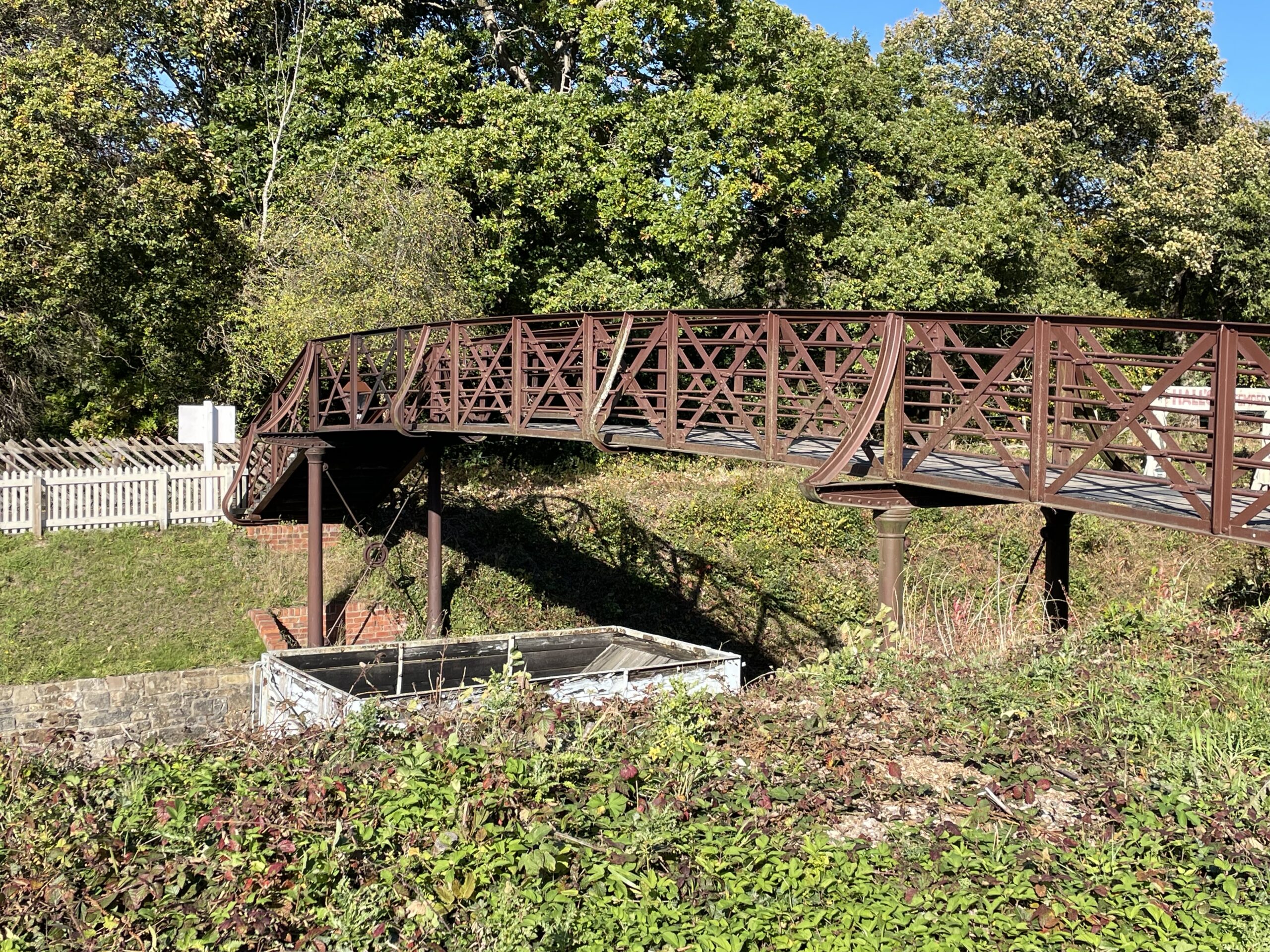
Below: Rowley Station platform is a fairly inaccessible area of the museum – being some distance from other exhibits and reached by two flights of steps, or via a lengthy detour through the Fairground, Events Field and station goods yard. To improve this, a project is being developed that will look at the extension of the ex Howden-le-Wear footbridge to eliminate the staircase and instead reach a landing level (brick-clad), that would enable a 90 degree turn to be made onto a ramp running to the rear (north side) of the Signal Box. To avoid the second set of steps, a route to the rear of the station building would reach the platform at the western end of the building.
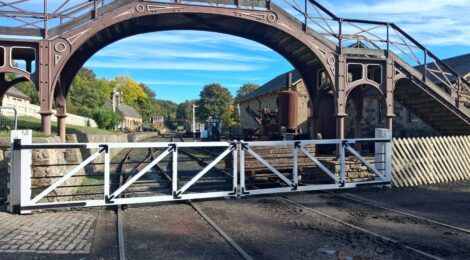
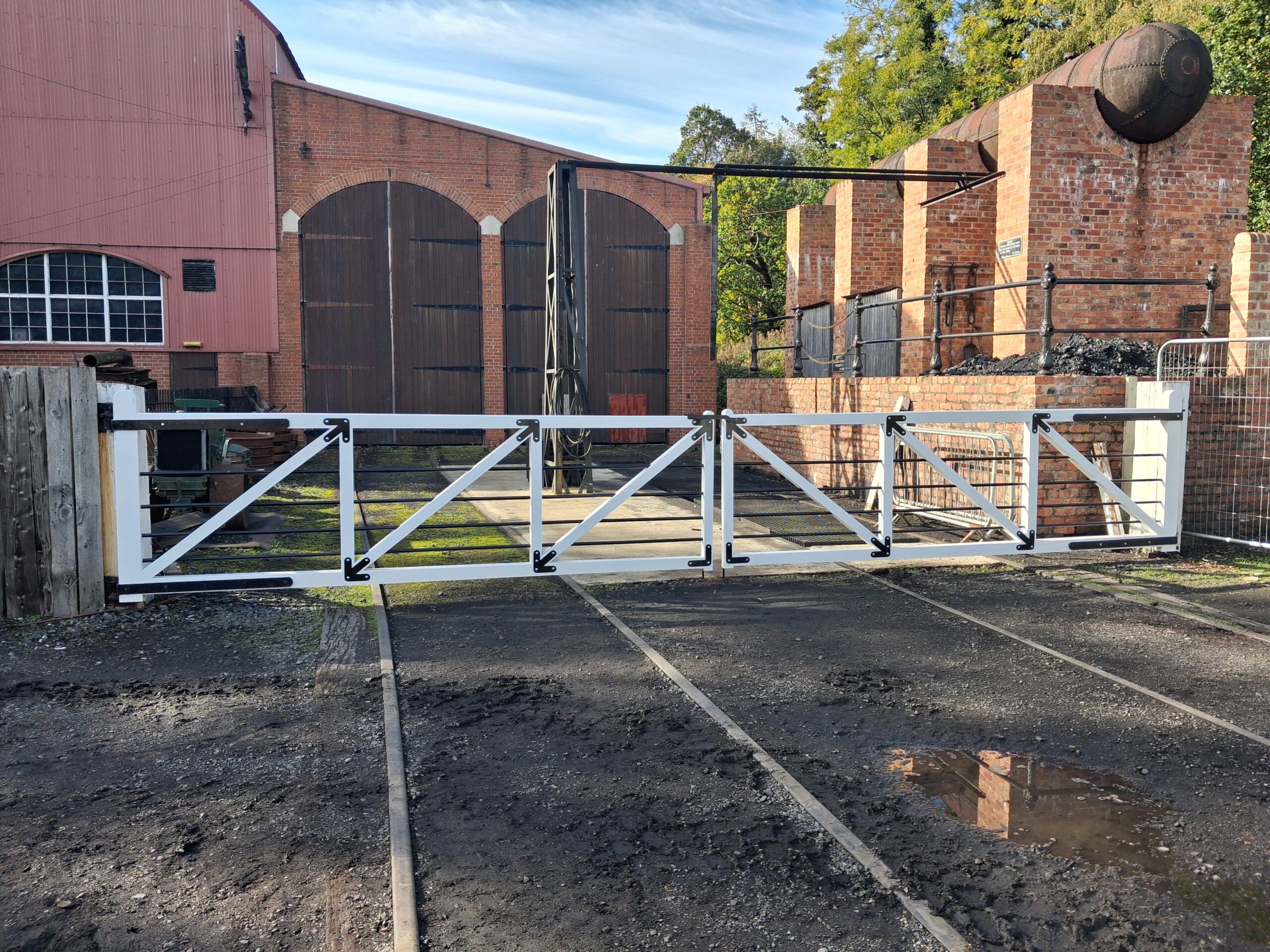
Below: The replica NER crossing gates have now been installed and adjusted so that they sit level and true. Lamp brackets for one are being modified in order that the red lamp can be re-instated on the approach from the running line/platform road. A preliminary survey of the work required to reopen the footbridge here has also been undertaken, work that we hope to carry out this winter, ahead of operations in 2027.
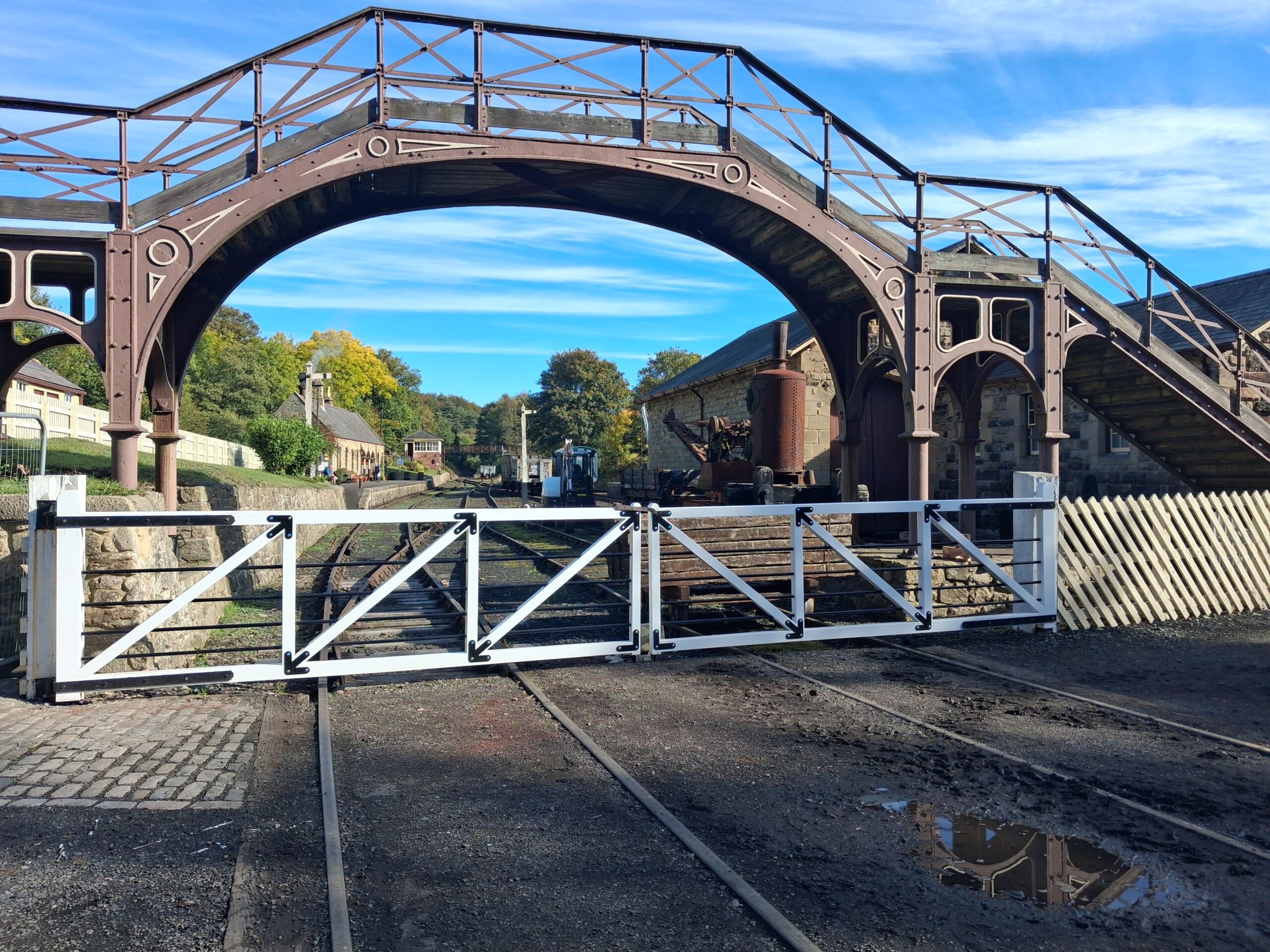
Below: Installation took Shaun several hours, the result being very rigid and well-fitting gates.
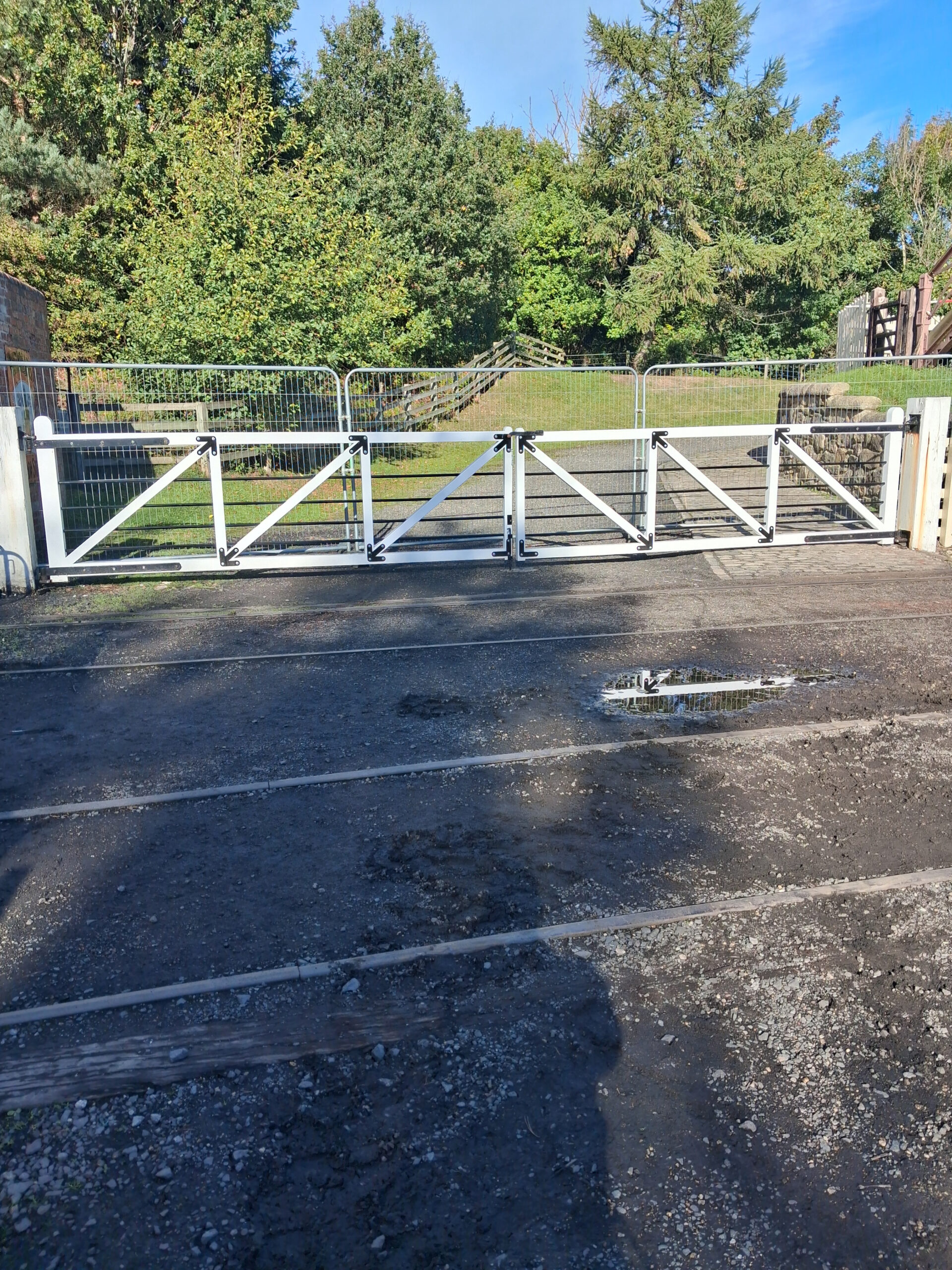
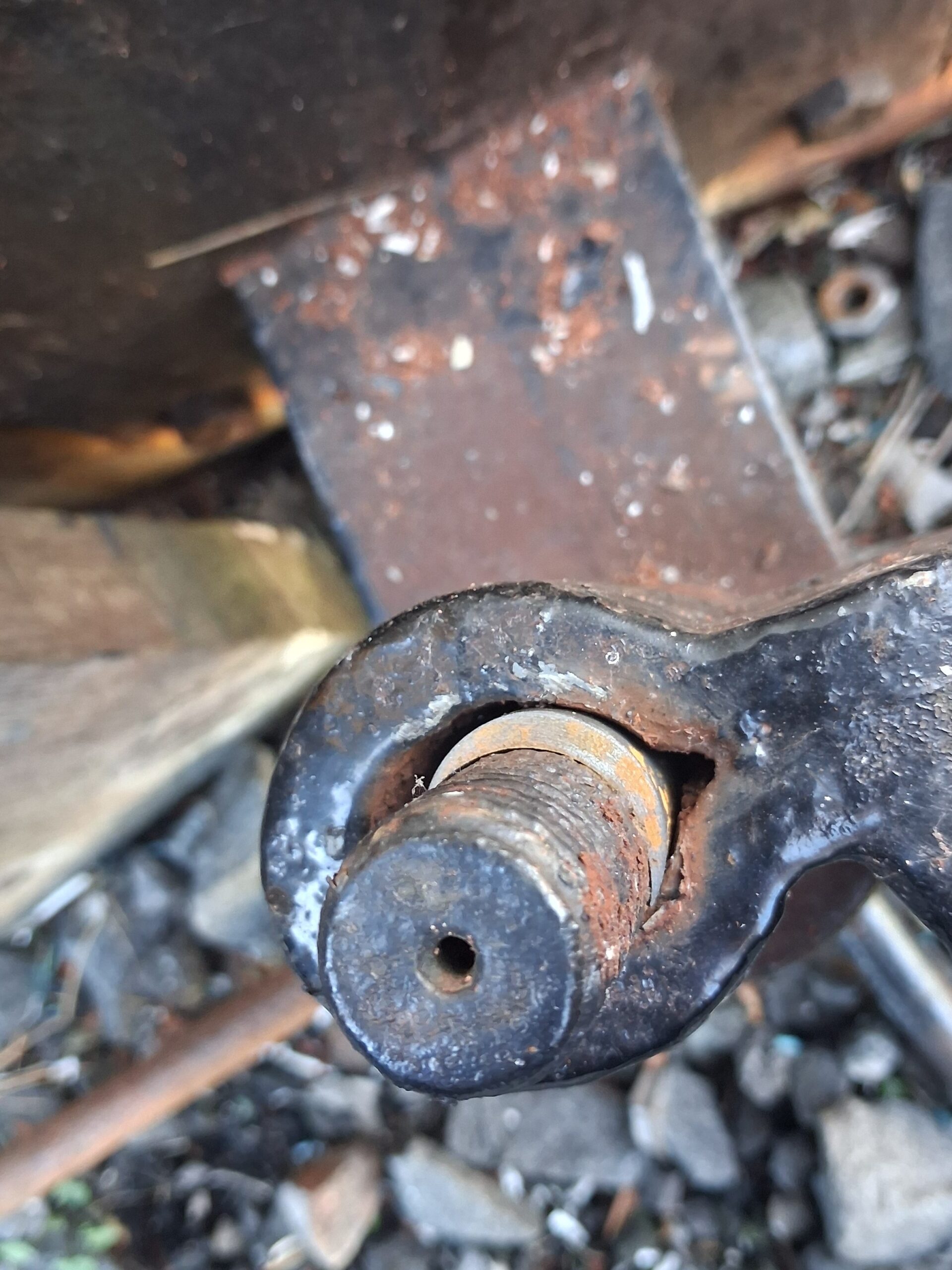
Below: The hinges didn’t encourage level adjustment of the gates, so bushes were made and fitted to remove the considerable clearance that had word into the hinges.
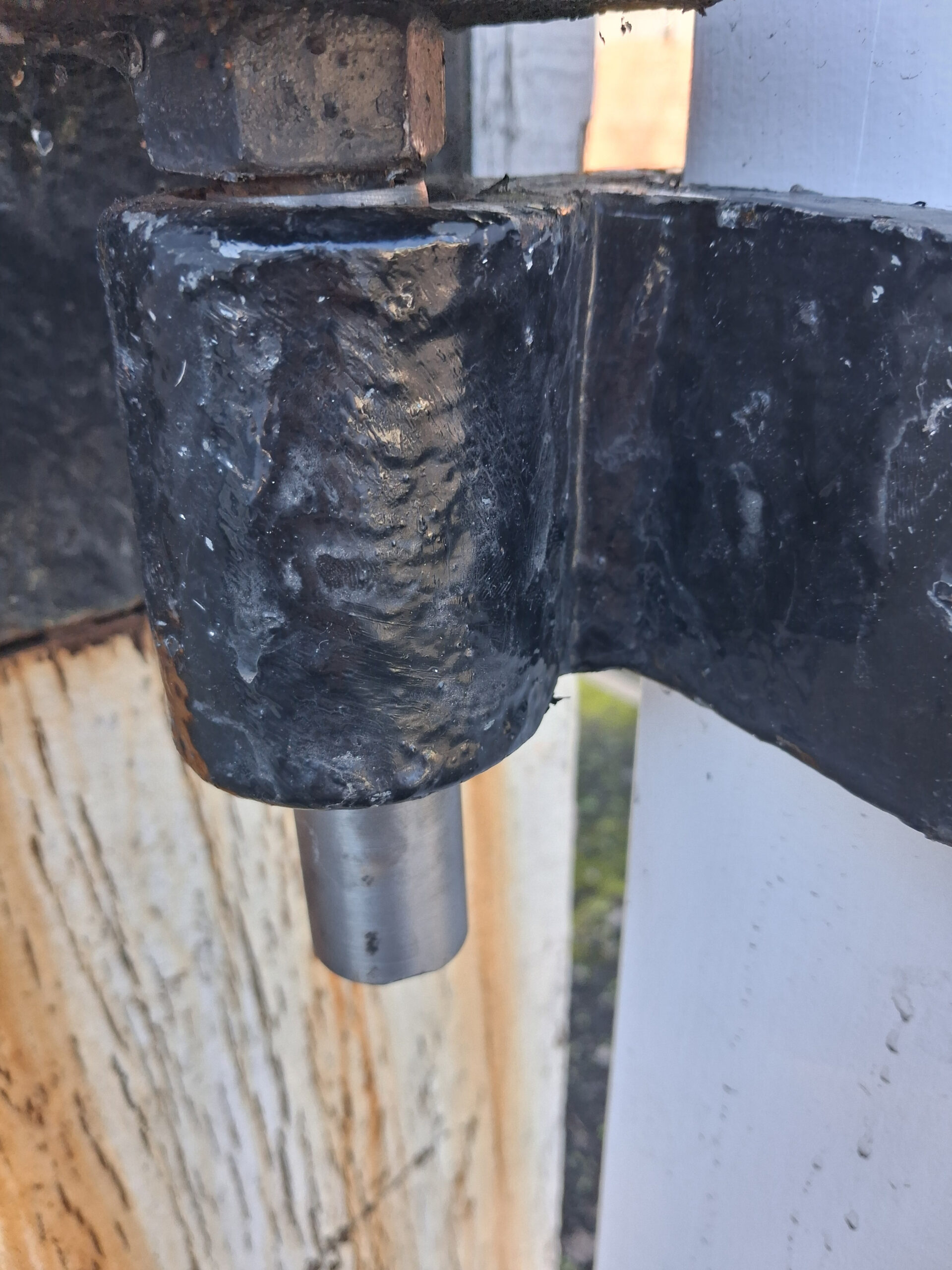
Below: Looking down into the hinge, showing the bush in place (the brighter section of steel).
Tramway
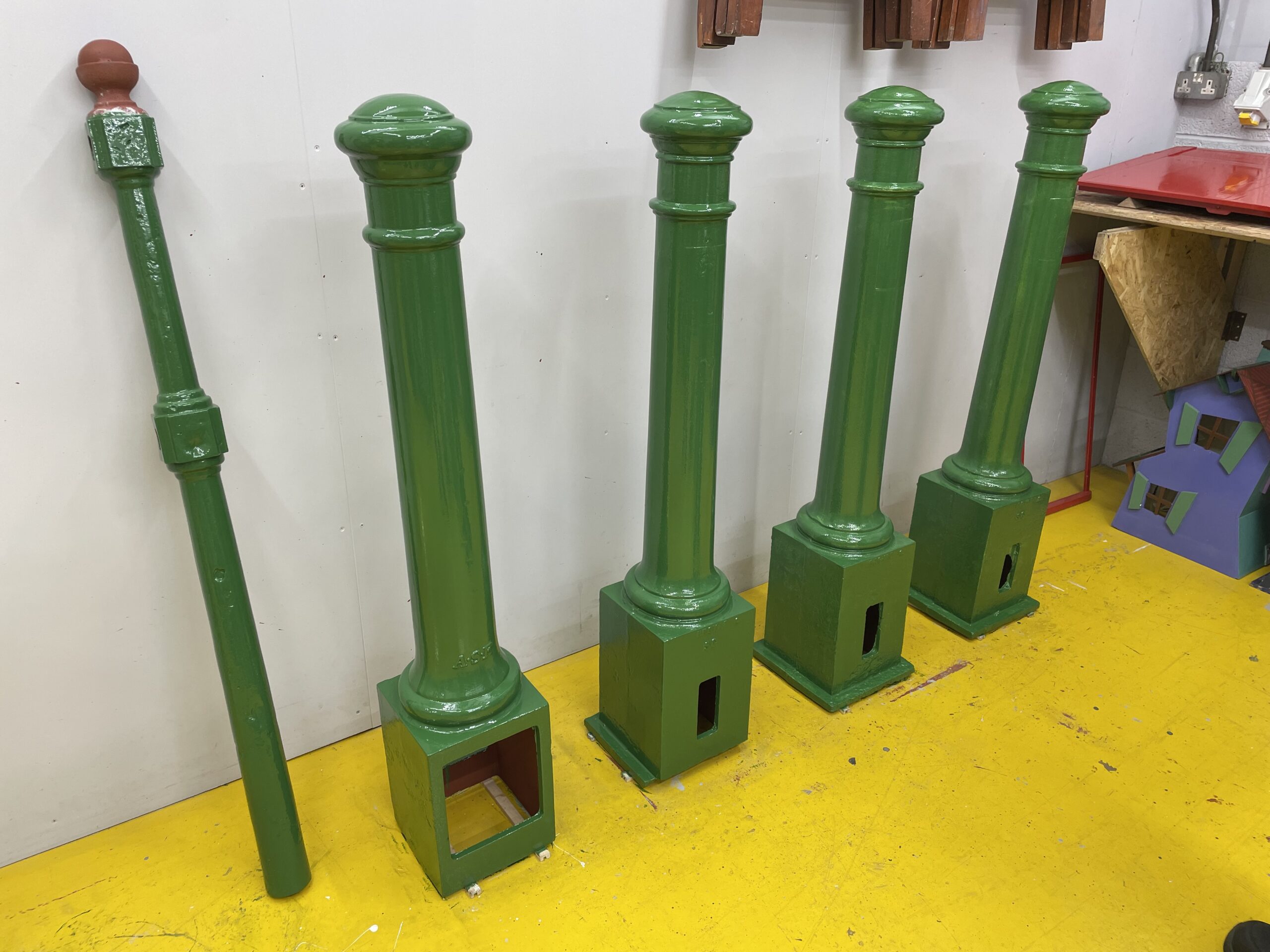
Below: Four large Victorian bollards have been restored for installation alongside the Tramway on the curve opposite the Bakery. This is to try to discourage visitors cutting across the corner, or at least provide guidance as to a safe route for them to walk if they do. To the left is one of four bollards of a different design that is being prepared for installation outside the Pit Hill Chapel (Colliery Village area) where the path has been raised above the roadway to create a level access route into the Methodist Chapel, but in doing so created a step that some visitors find challenging to negotiate.
Railway Hand Crane
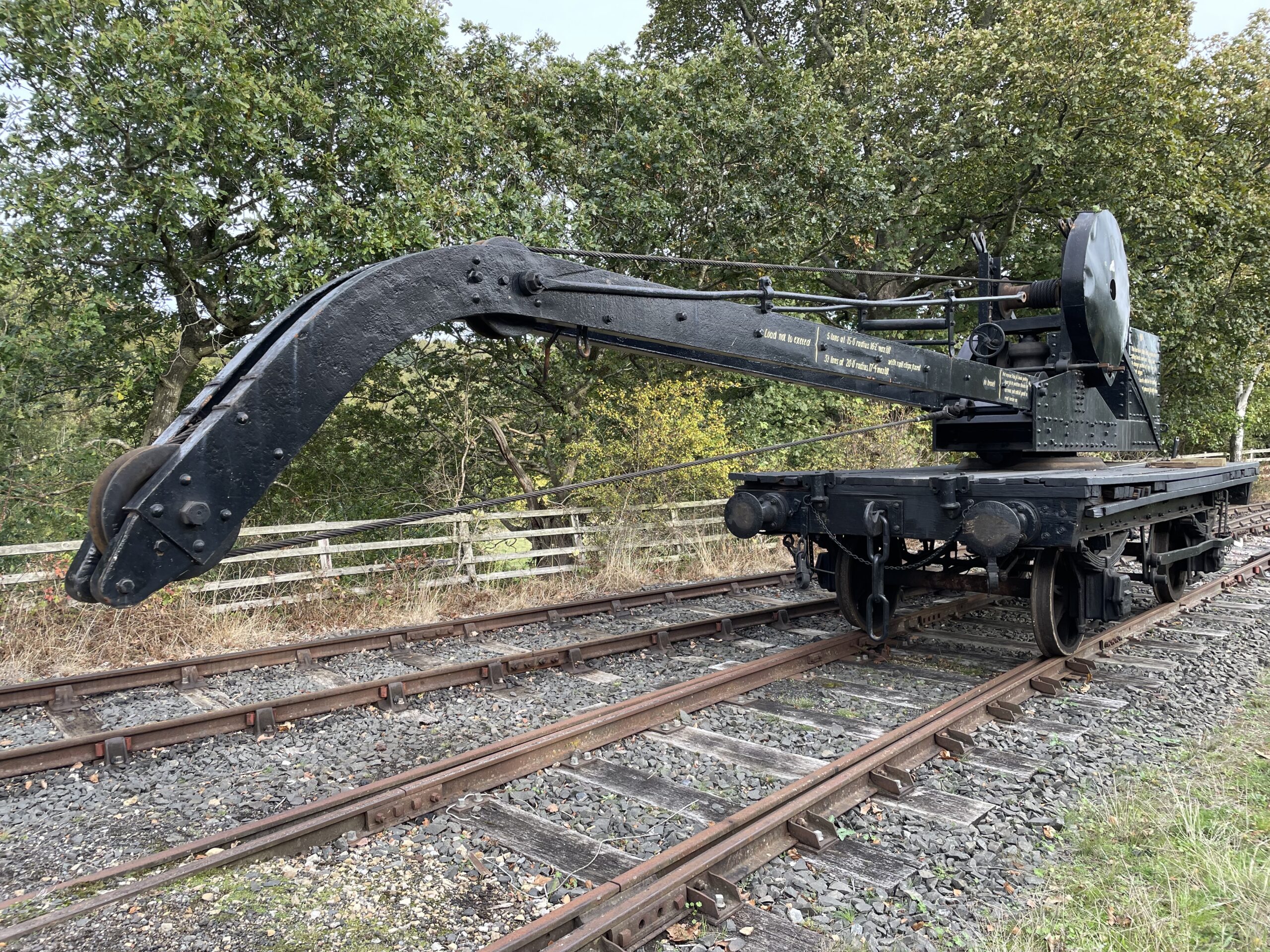
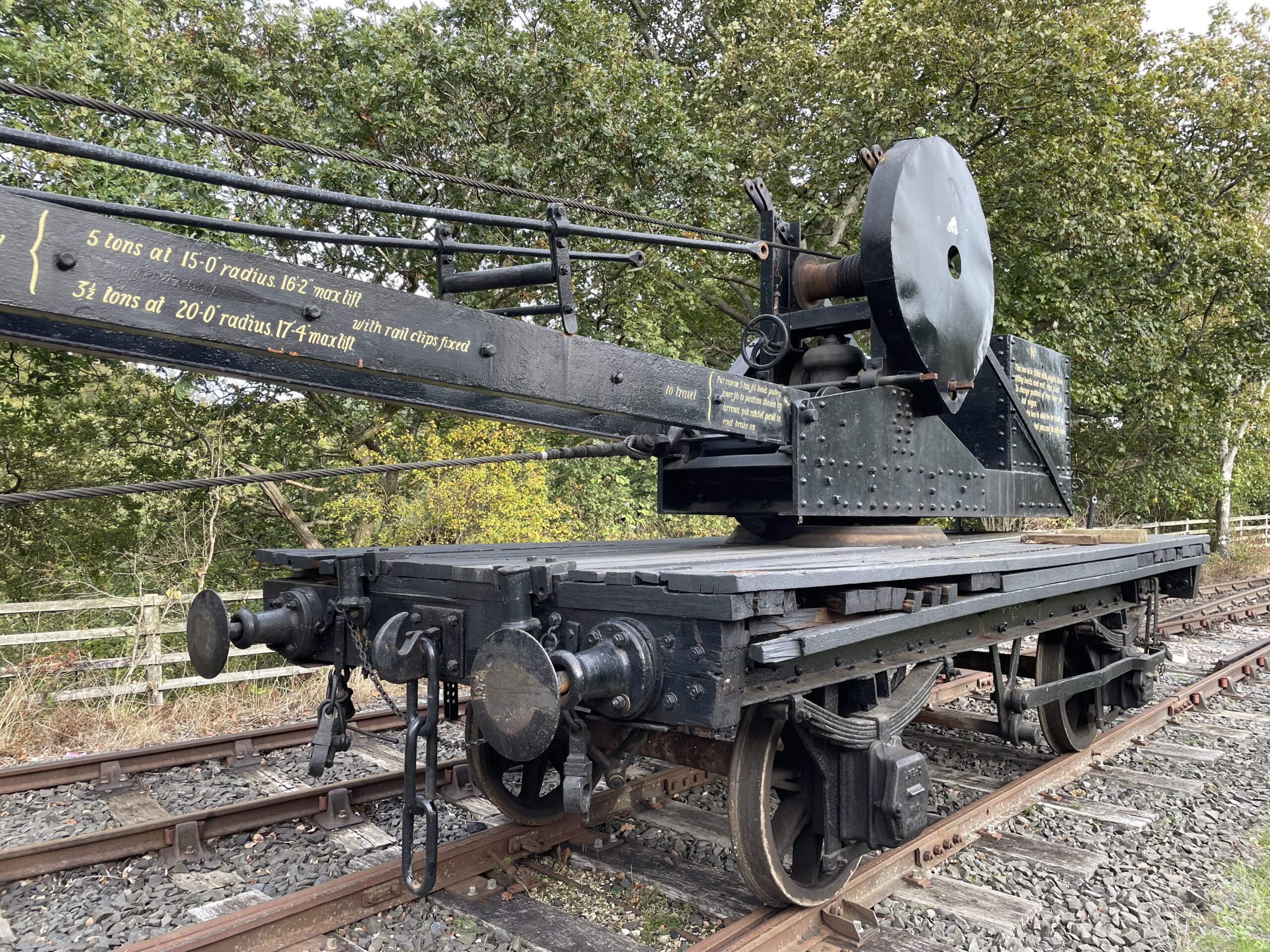
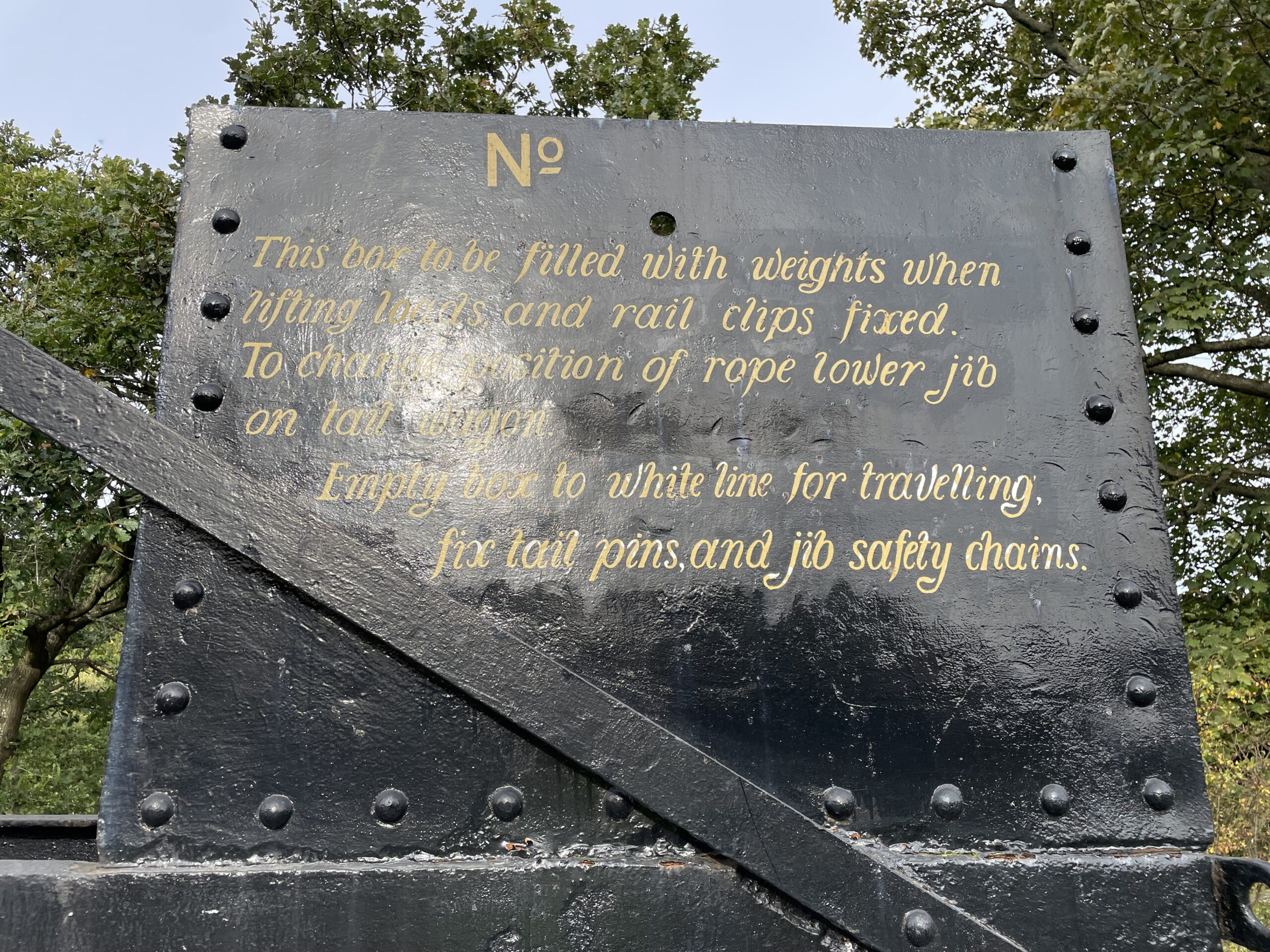
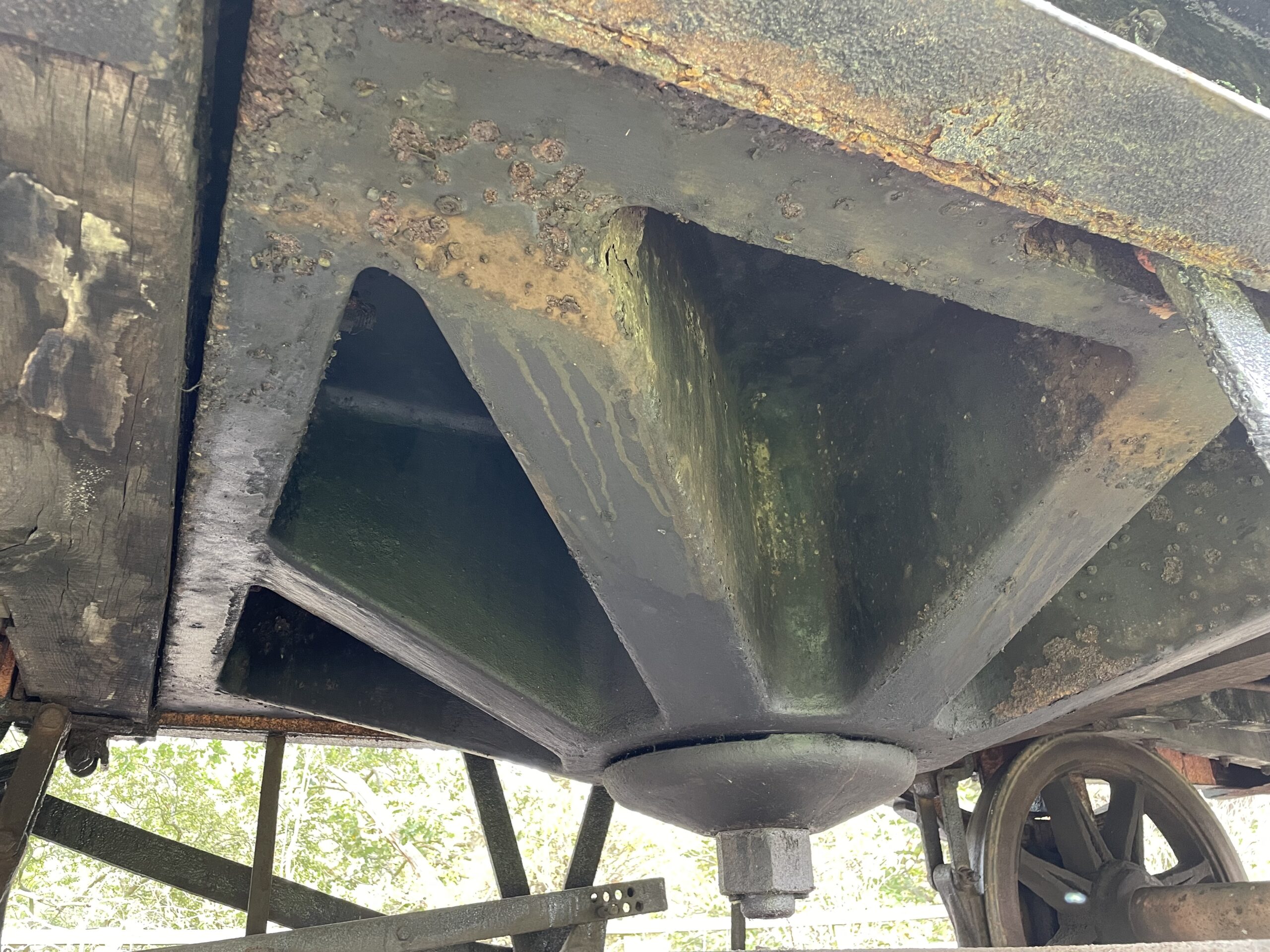
Below: This manual crane has been transferred to Beamish from Bury Transport Museum. It is noted on the Railway Wagon Survey as being NER DE 331400, built in 1880. It later carried the number E902135. It has been on static display in Bury for well over a decade and to date, I have little additional information to what I’ve written above. From initial observation, the crane appears to be older than the chassis (which has LNE axlebox covers and a steel channel frame). The substantial crane base is incorporated within the chassis itself so is clearly ‘deliberate’ (this isn’t a crane sat on a flat wagon). The plan is that we incorporate it into a display at Rowley, and we have an early form of container (used for bunker coal) in the collection, that might sit well with the crane. Meanwhile, there is a little work to do to prepare it for display and I’d be very pleased to hear from anyone who has further information about its history both in service and in preservation.
Newcastle 114
Below: Phil has been continuing to manufacture contactors for 114’s BTH controller overhaul. We’ve previously seen the contactors being formed, here they are being machined to create consistent lengths for all of the components.
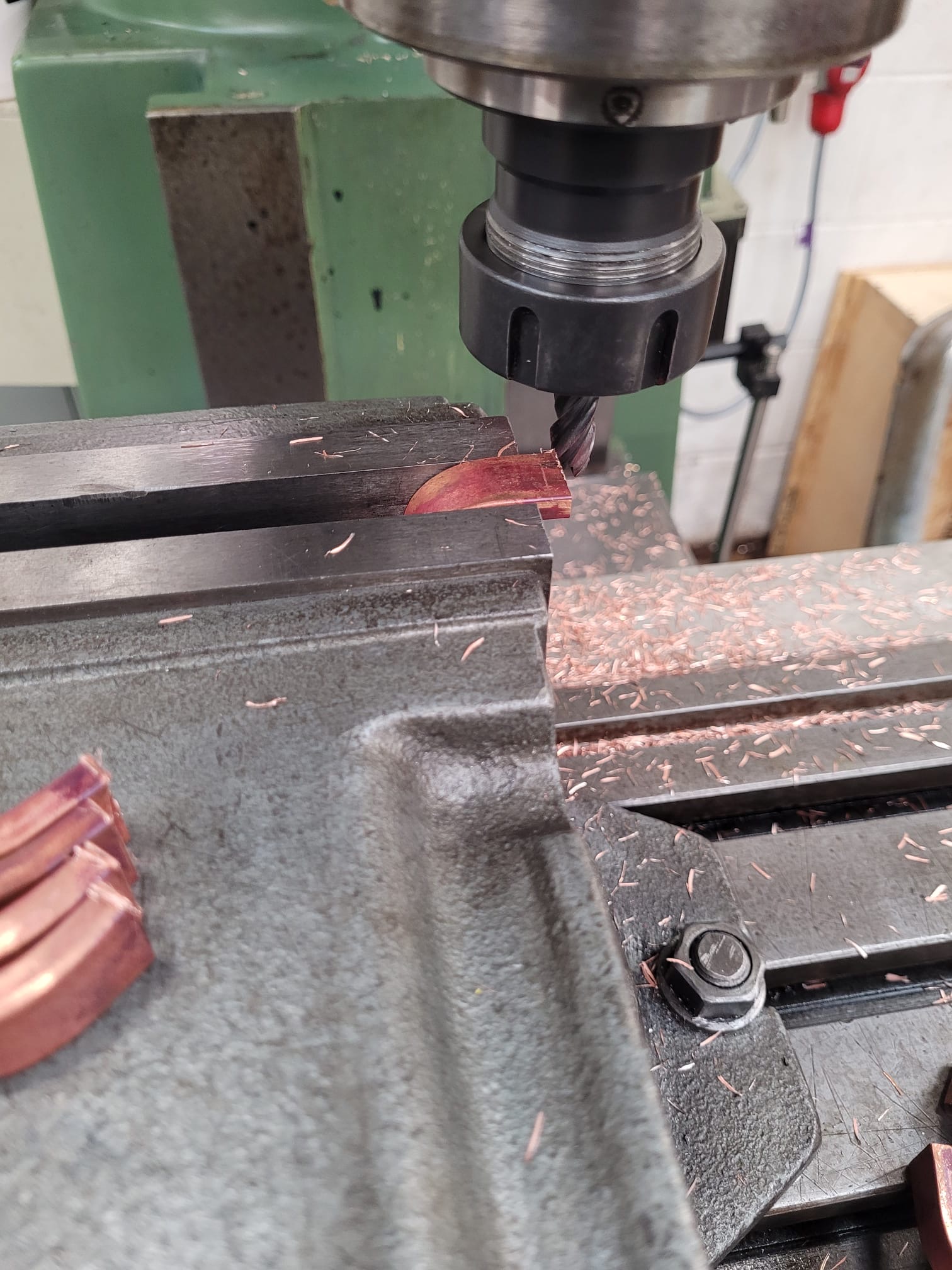
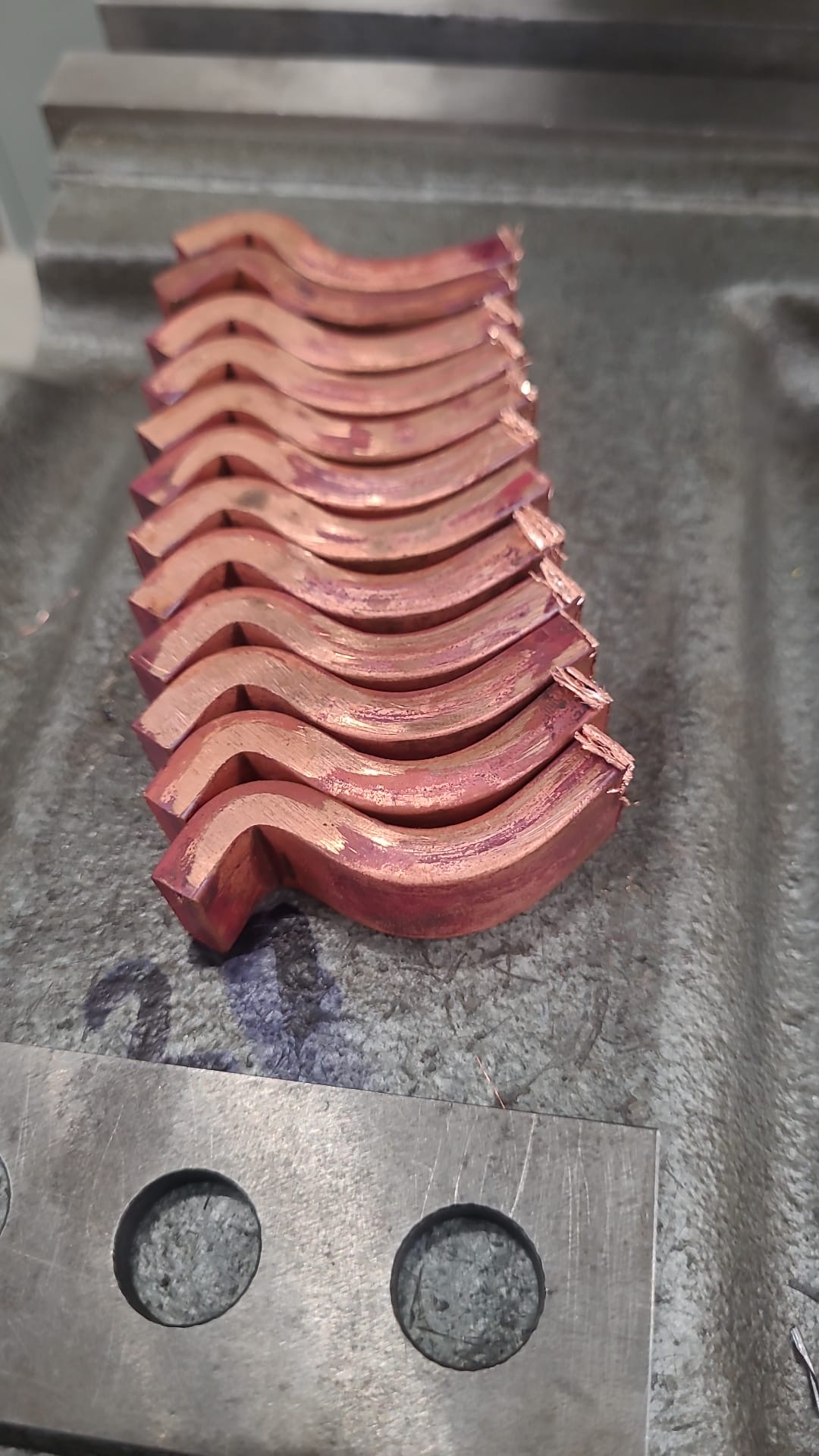
Below: The next step was to drill each of the fingers, so that the various components could be riveted together. This is the copper finger.
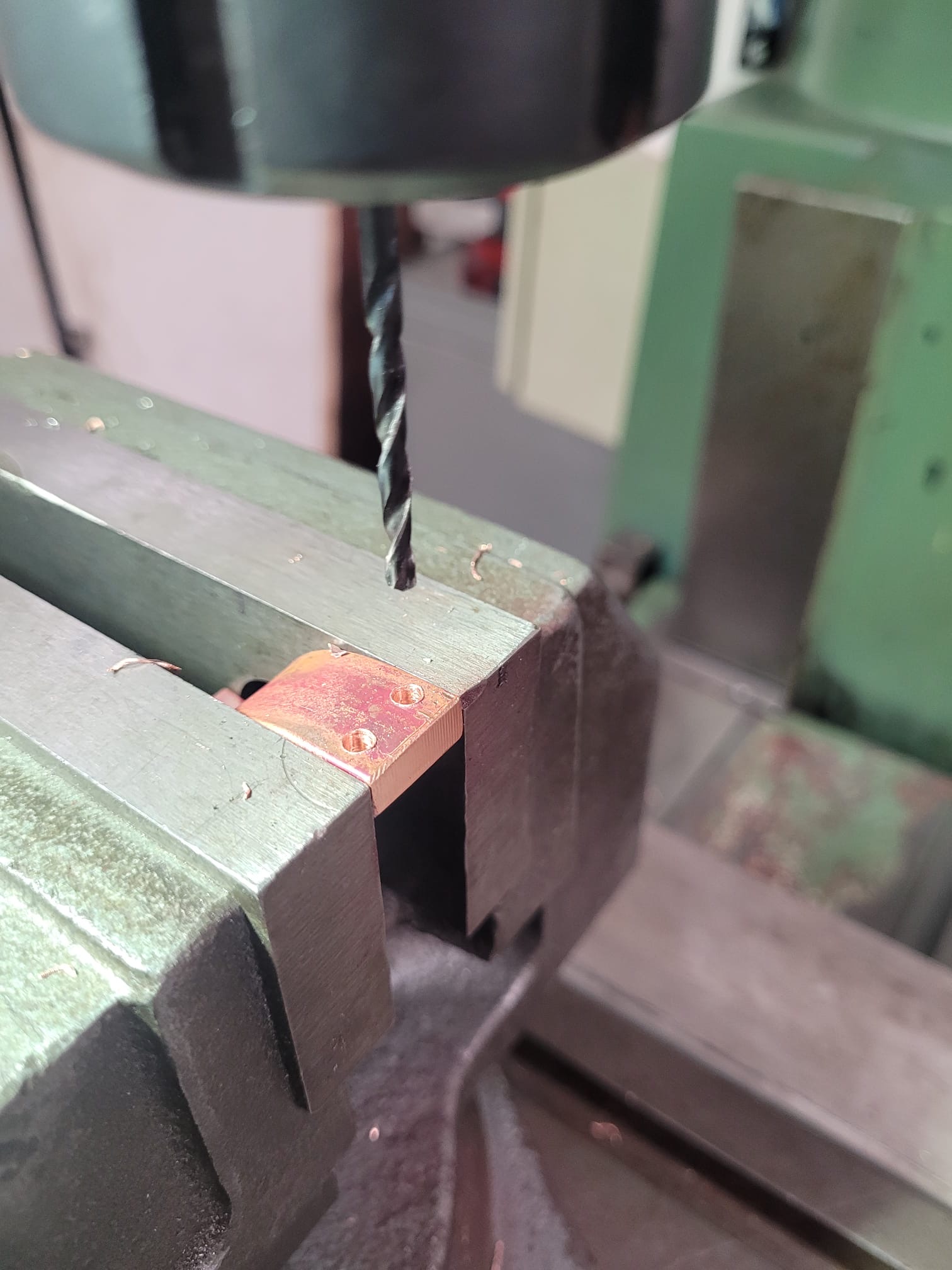
Below: The Phosphor Bronze contact piece having the corresponding holes drilled.
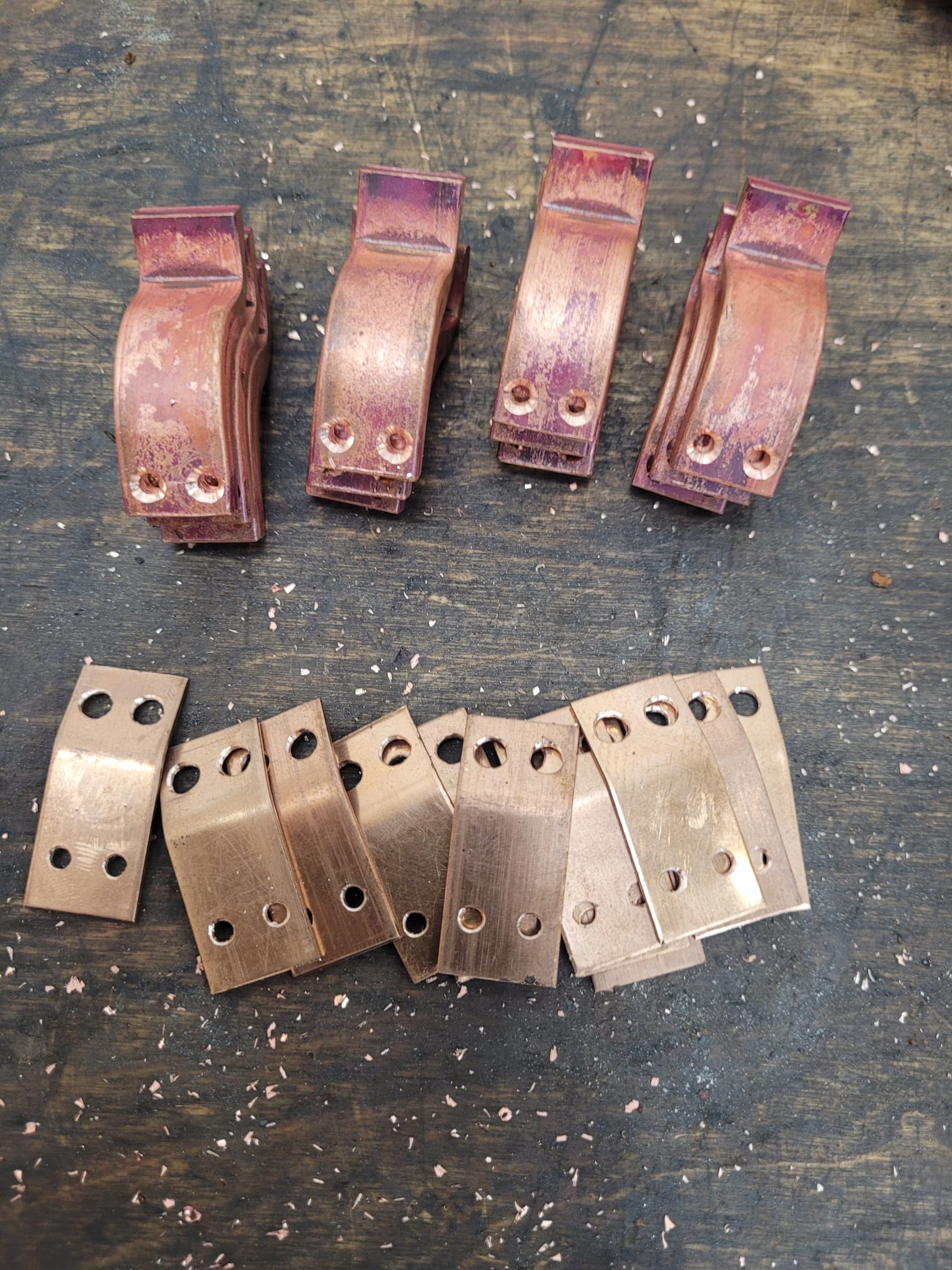
Below: Two sets of parts, ready for riveting together.
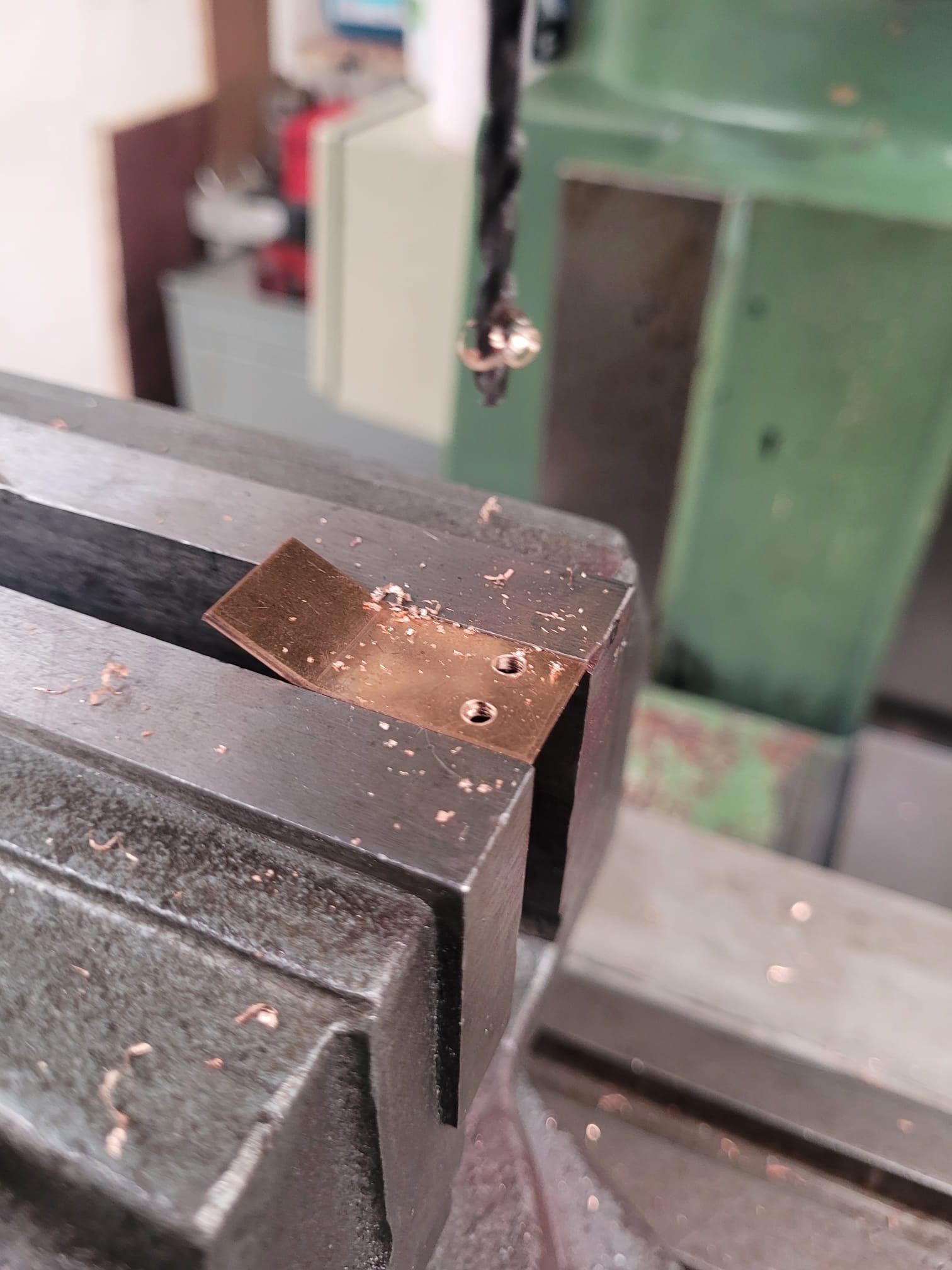
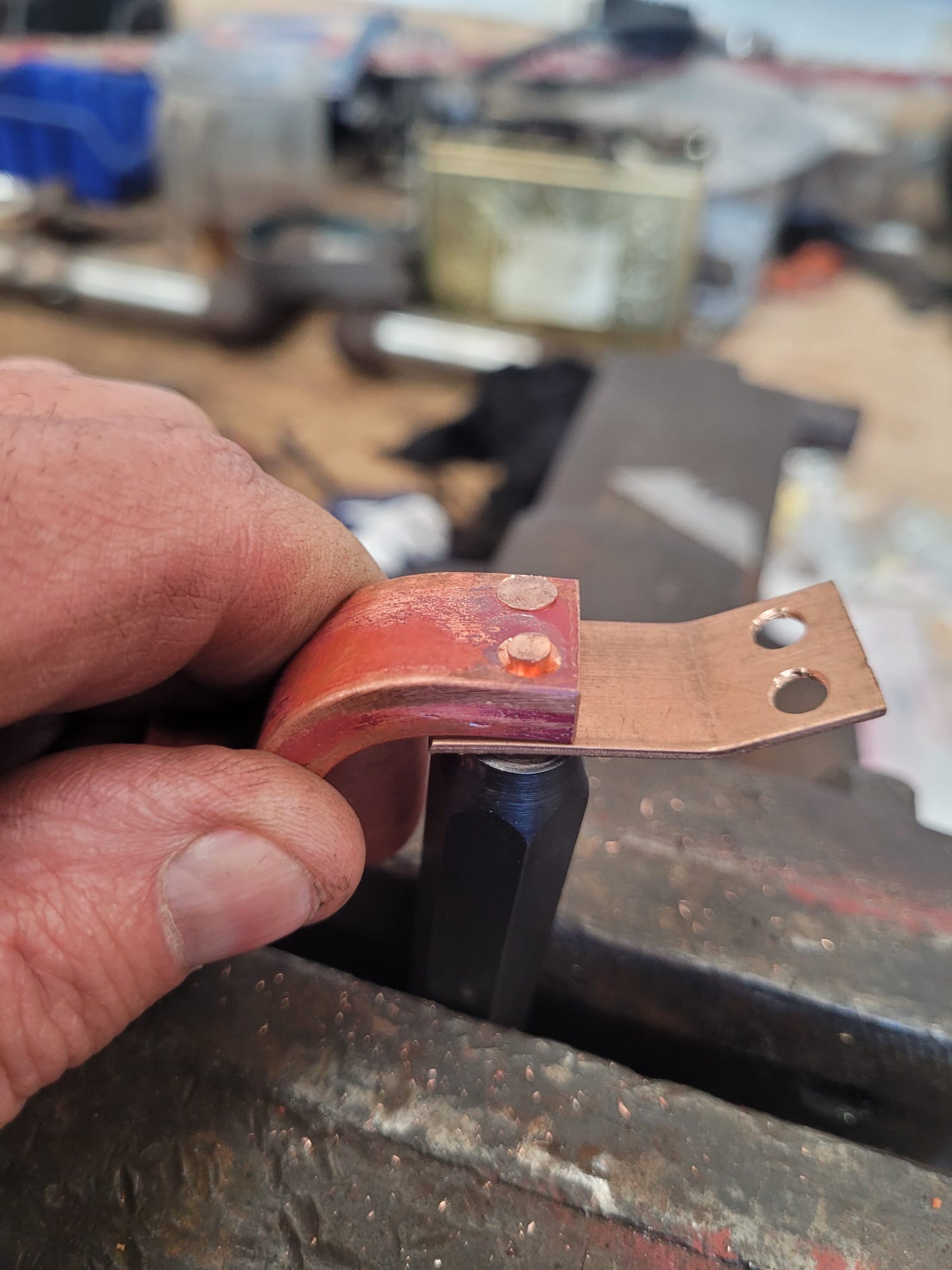
Below: The snap (used to hold the rivets as they are formed) in the vice, with the two pieces of the assembly being riveted together. One rivet has been formed (the far one) whilst the near rivet has been inserted into the wholes, its dome head is sat in the snap and the top end will be hammered over to close the components together.
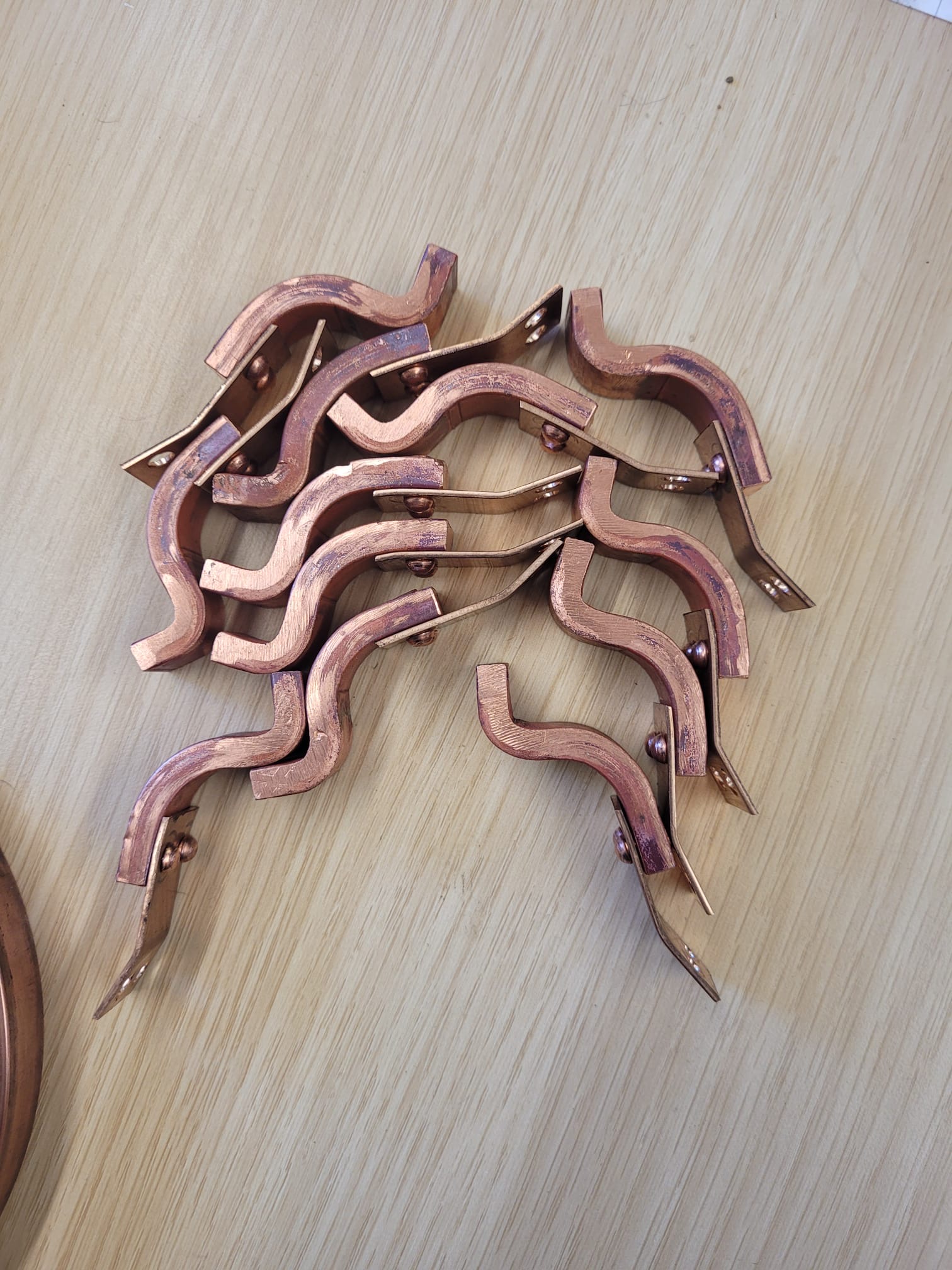
Below: The finished components after riveting together and ready for installation into the controller when it is being reassembled.
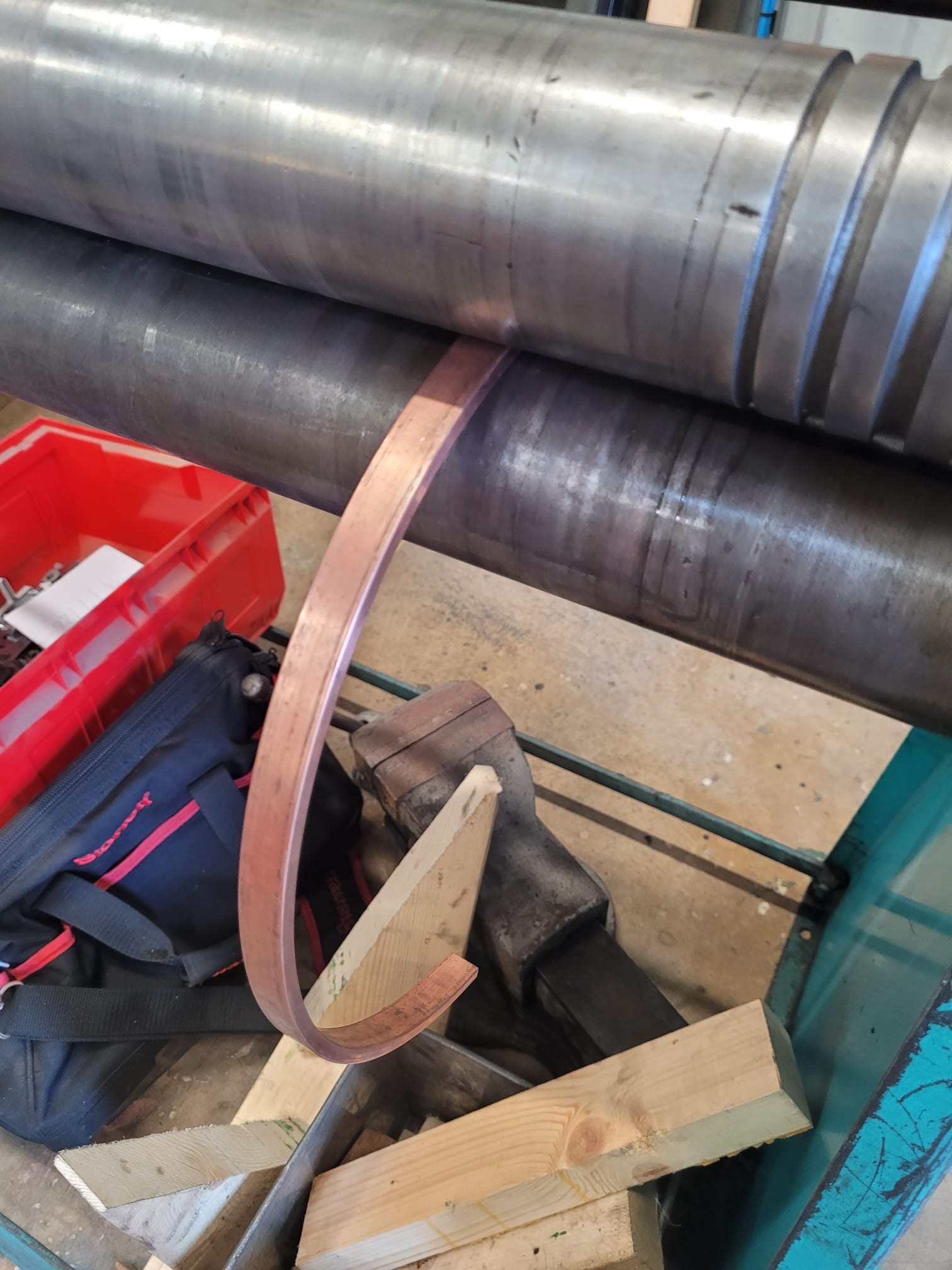
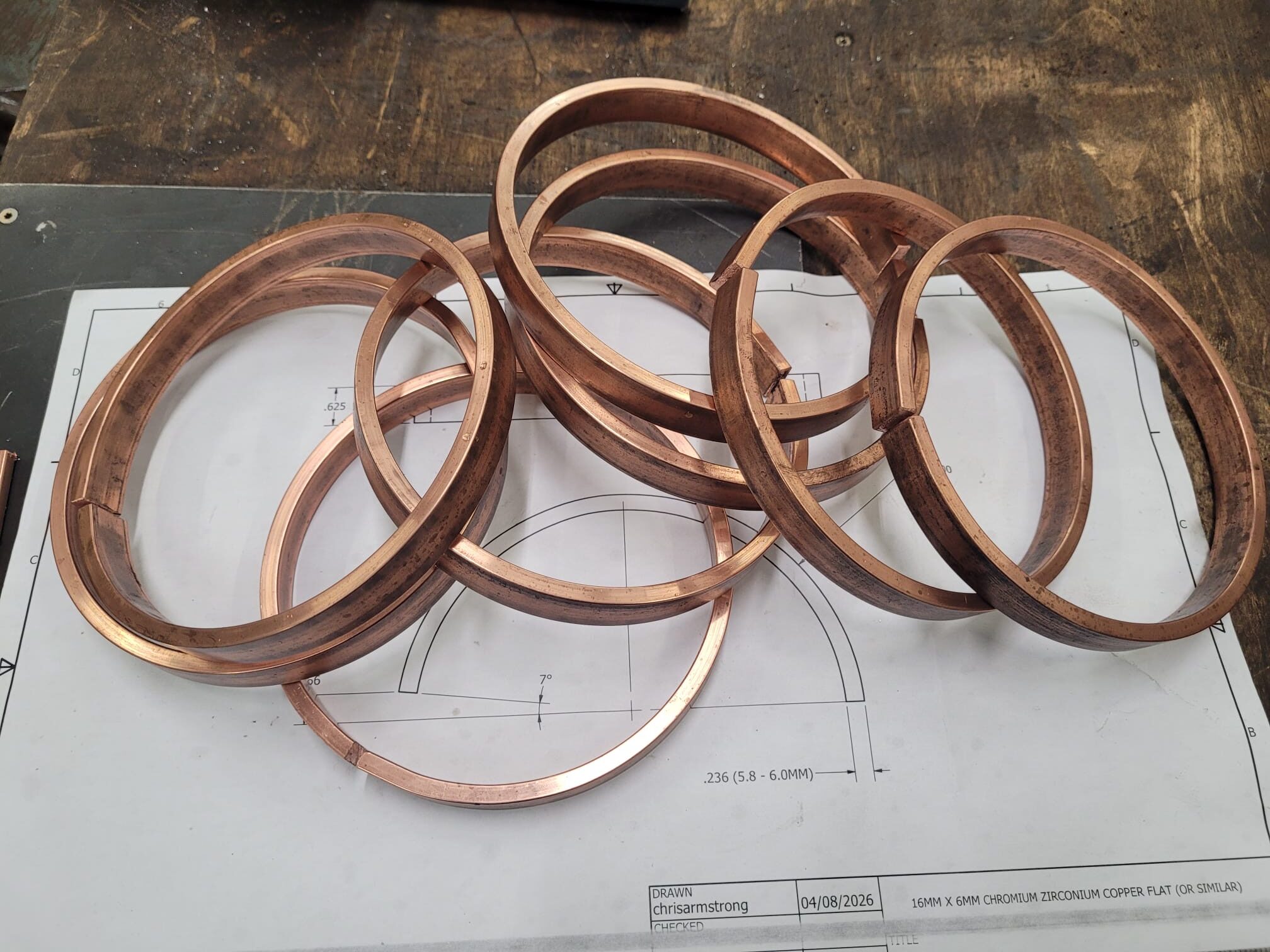
Below: Chromium Zirconium Copper section of 16x6mm section is seen being rolled into a ring.
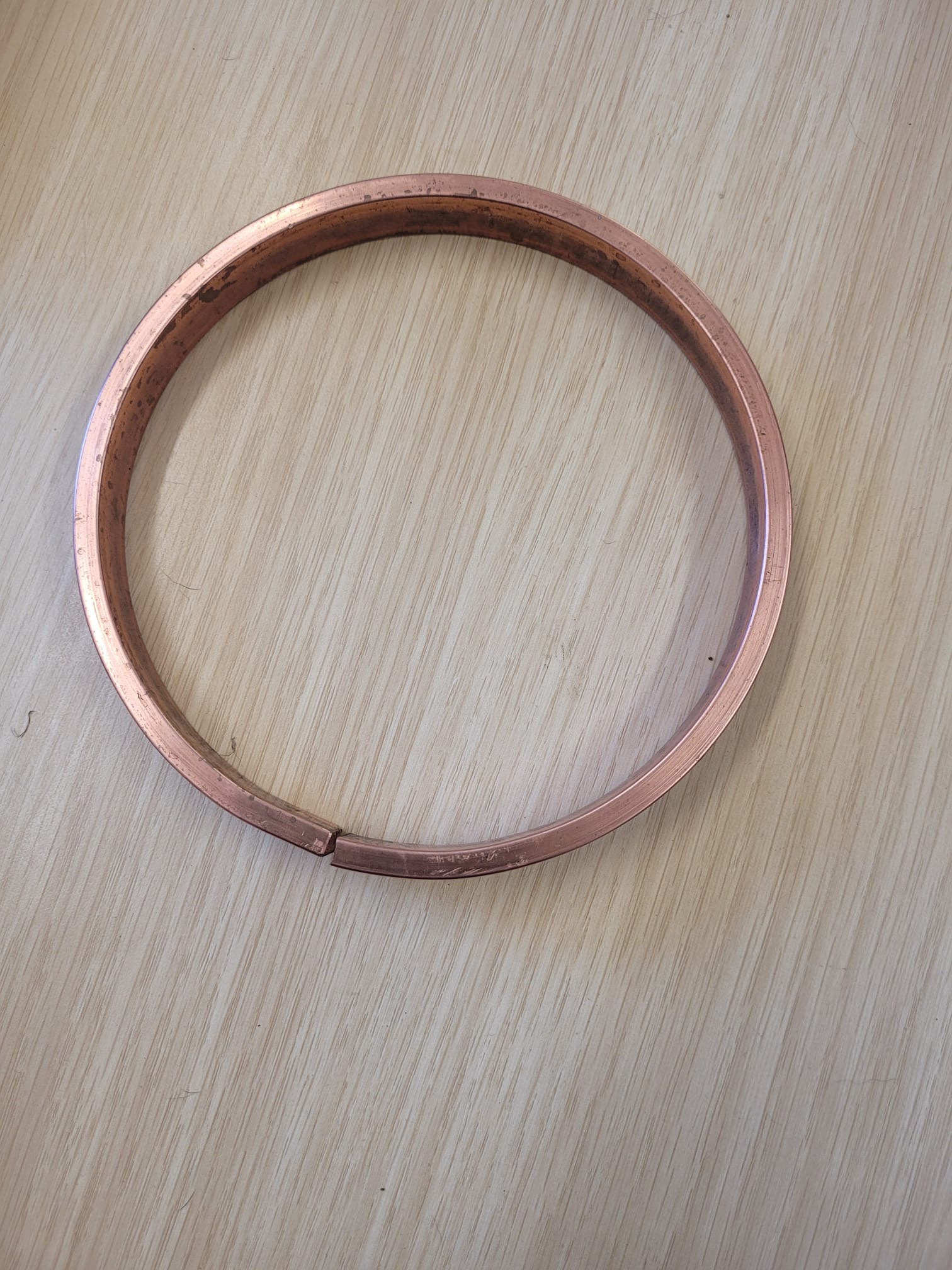
Below: A completed ring – these will be chopped to length for use as the corresponding contact surface within the controller, but are left in this form in order that they can be made precisely to length, thus reducing wastage.
Below: A quantity of rolled rings for stock – along with the corresponding drawing produced for them, which is filed in our drawing archive.
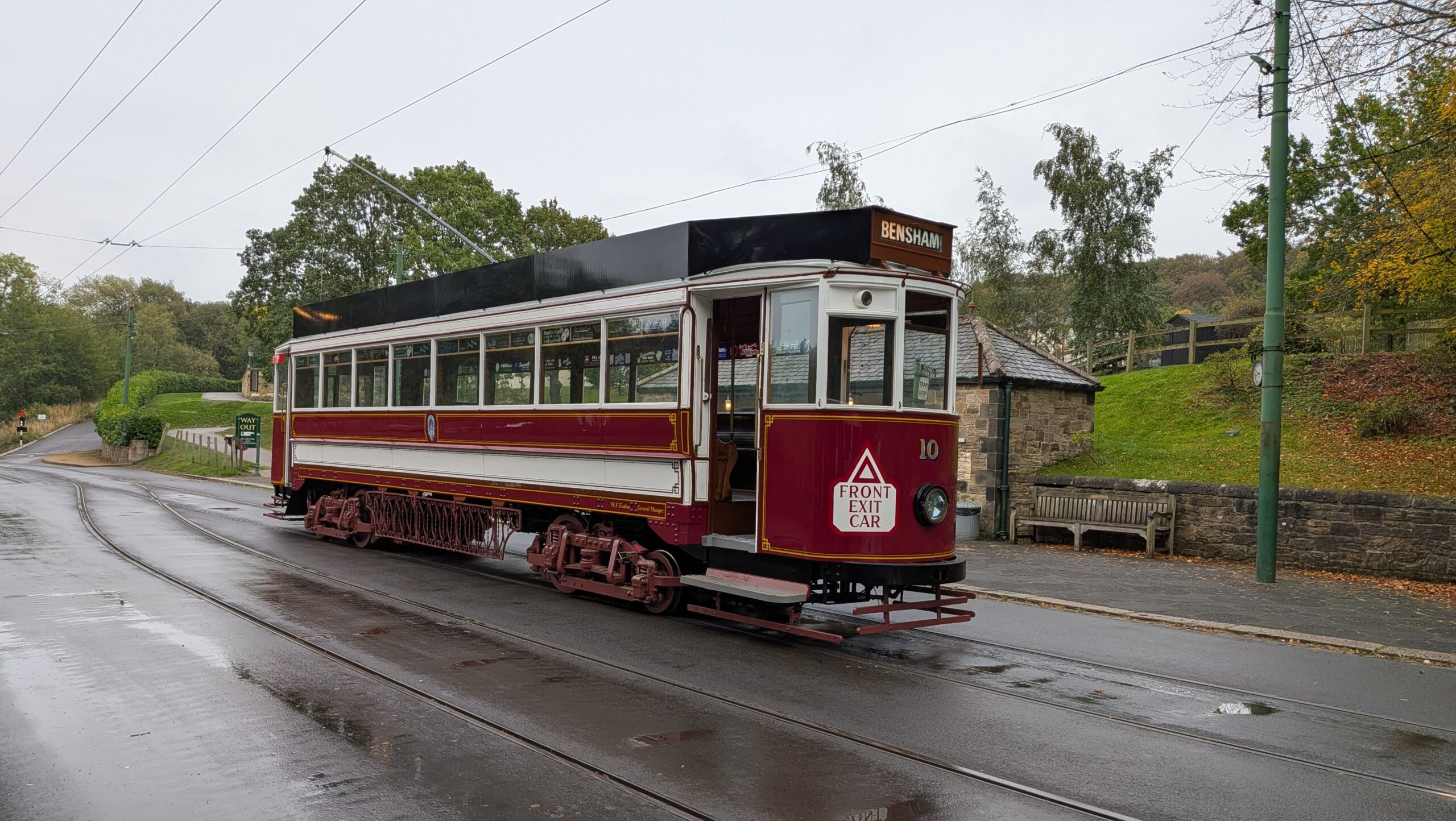
Below: Gateshead 10’s mileage accumulation continues, as captured by Tramway Supervisor Charlie Cooper. Some snagging work on the brake valves is ongoing, in an attempt to get these completely airtight and eliminate some slight leaks that occur when the driver’s air brake handle is placed onto the shaft.
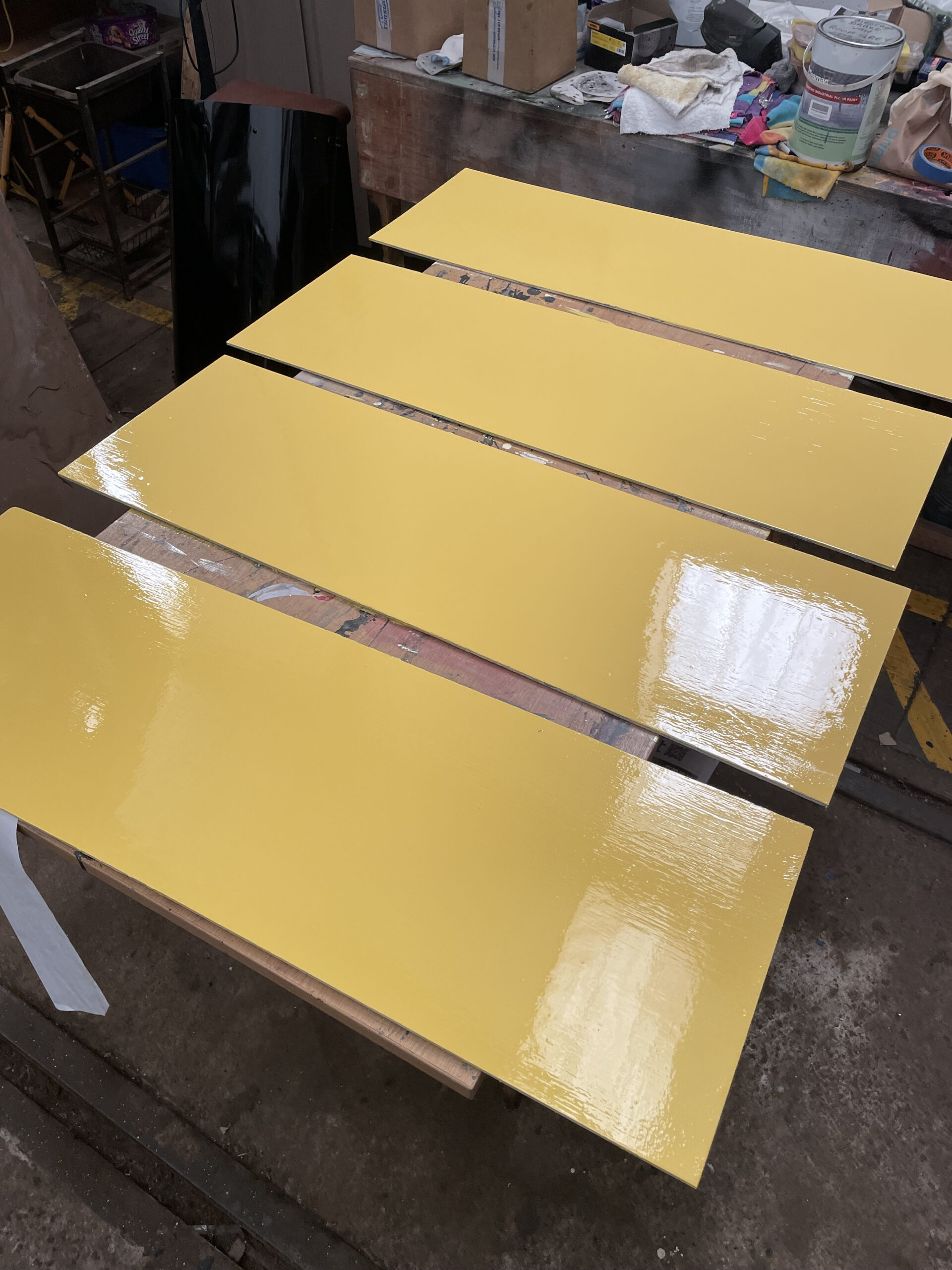
Below: New end panels for Oporto 196 (that are located on the sides, adjacent to the end saloon windows) have been made and are being painted prior to installation on the tram. The sill below the windows will also receive attention – this being something of a sticking plaster to prevent water ingress into the tram’s wooden framework, pending a full overhaul in the next few years.
Castle Eden Stationary Engine
Below: This fill-in project has made some progress this week, with the engine being set up on the wooden frame (made a little while ago by Peter, one of the volunteers).
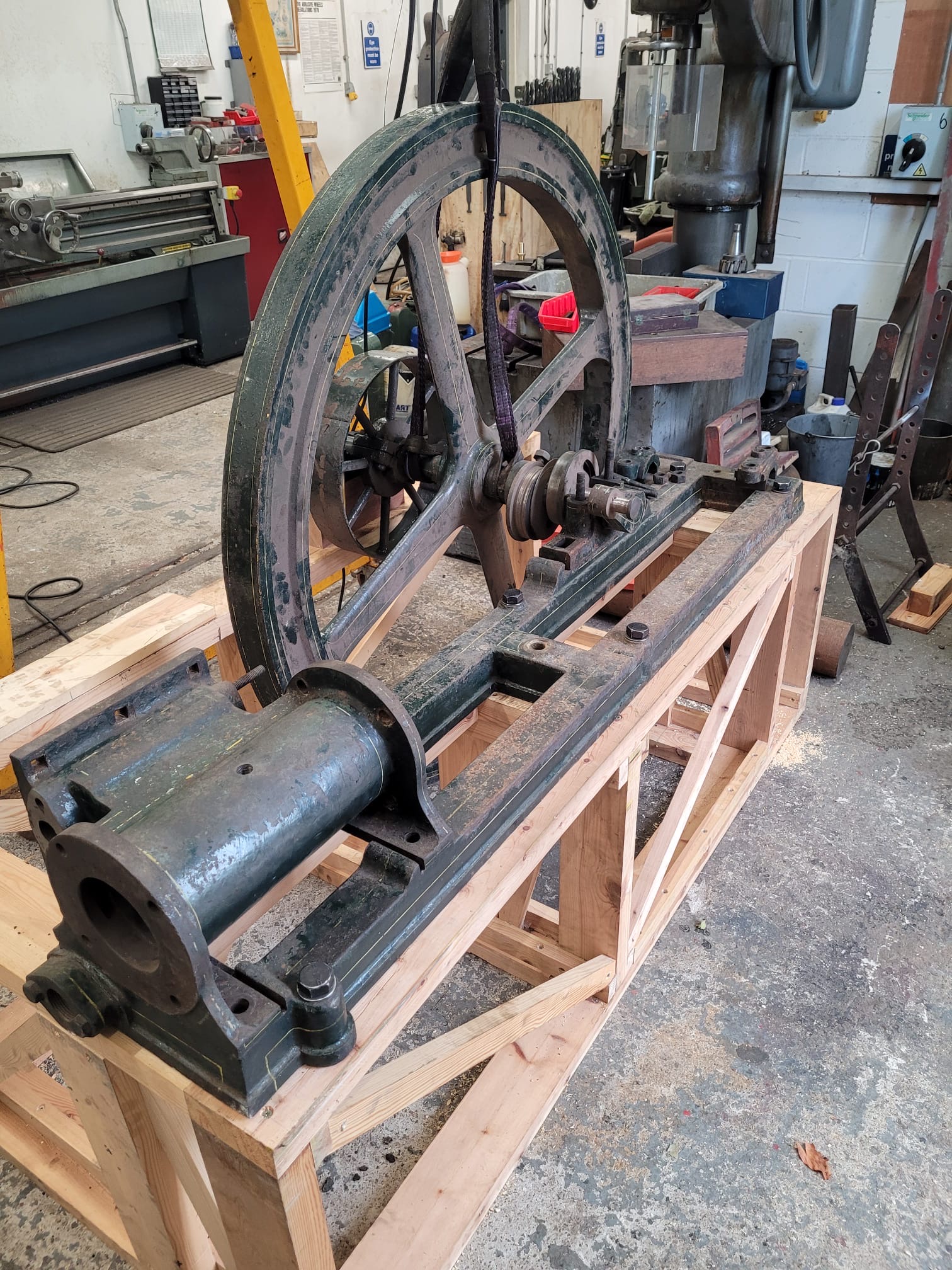
Below: The manufacture of new components has been limited to replacing missing items – there is no current plan to operate/steam this engine, but we don’t want to preclude a change to that status should the need/mood change in the future. The wooden base upon which it is mounted will be clad in due course, to present a fairly complete display piece. There is scarce information on this engine, other than that it originated from the Castle Eden Brewery, has been previously restored and
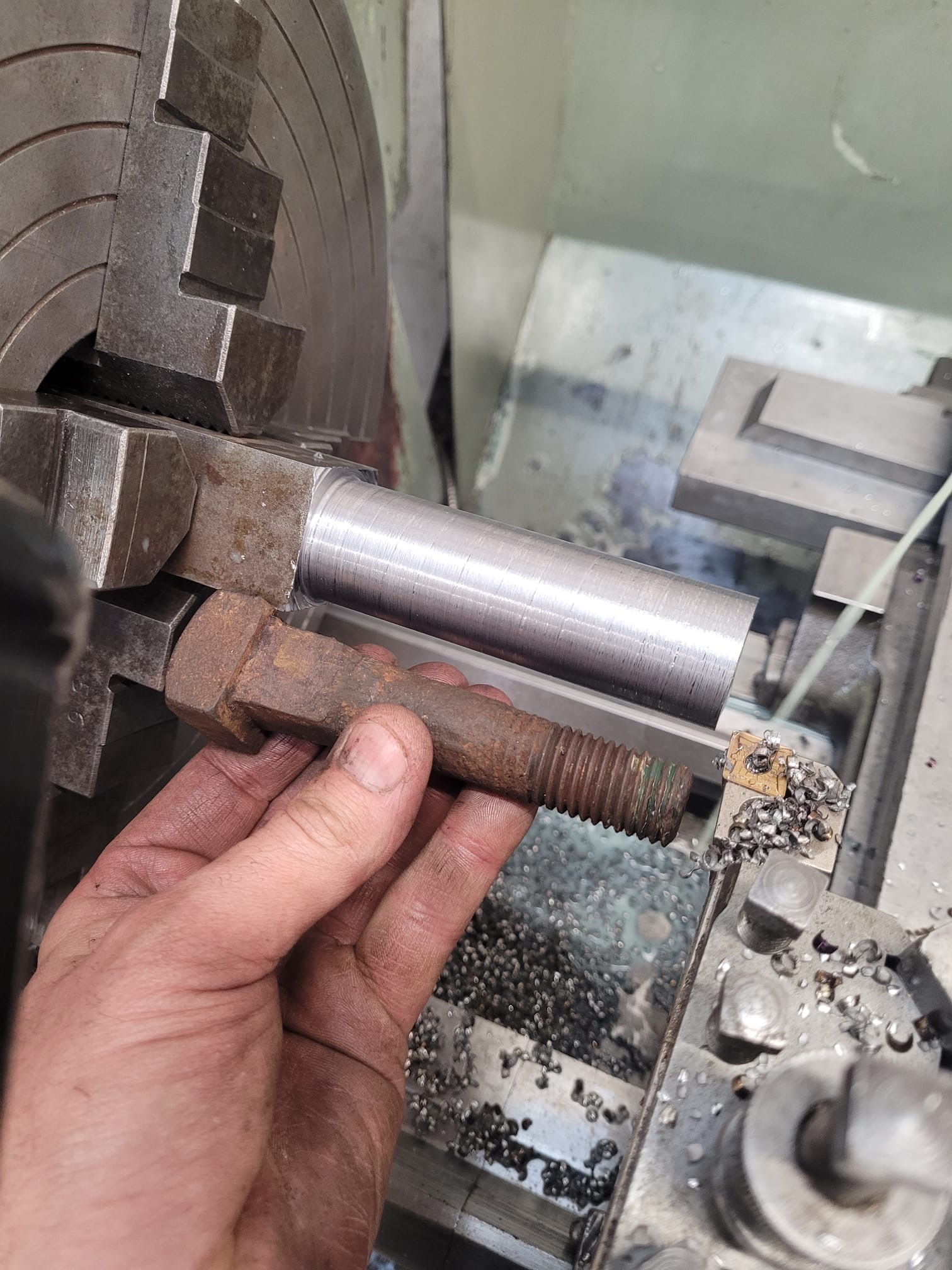
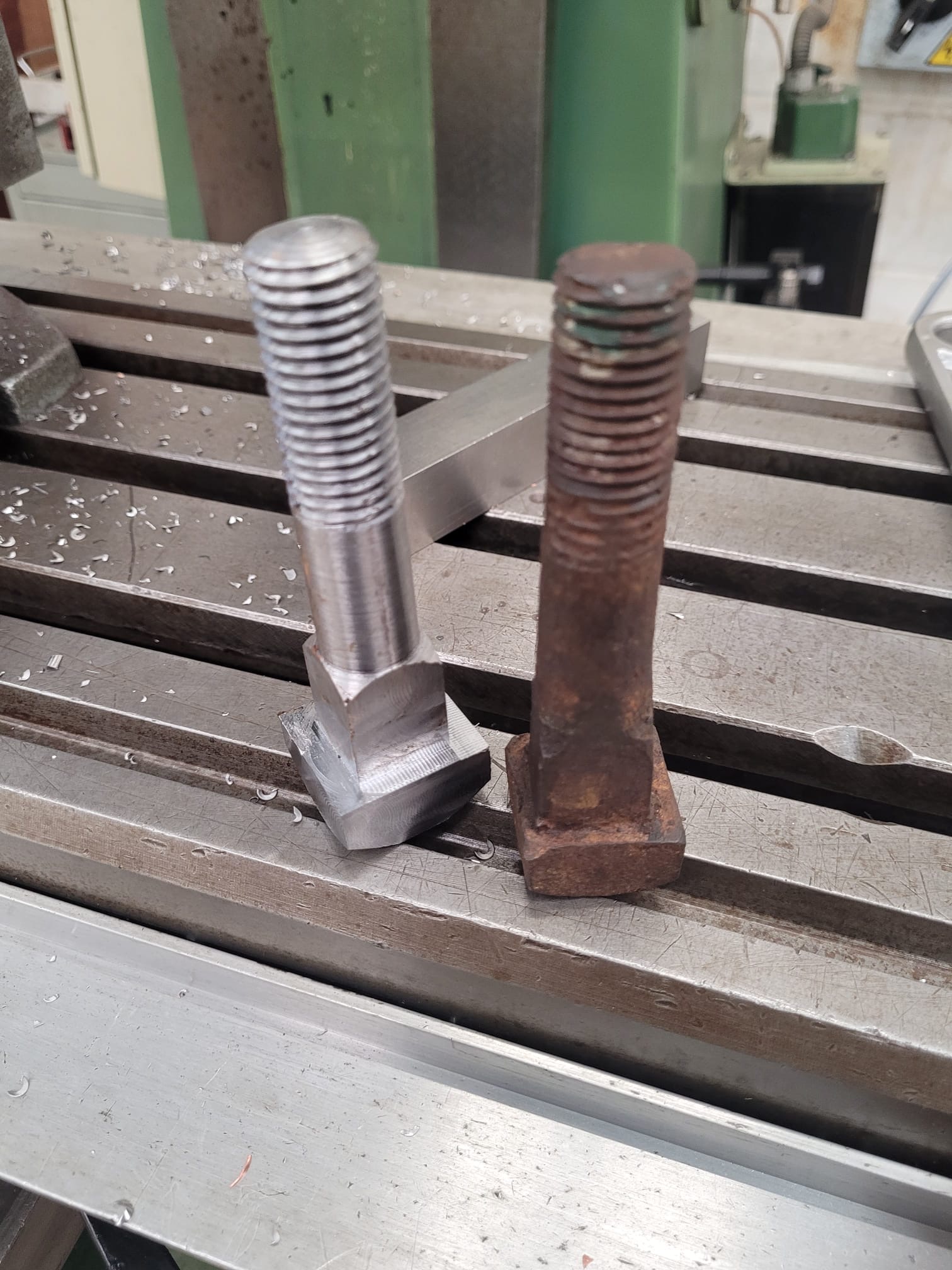
Below: The engine’s file suggests it was built in 1830, being supplied to the Castle Eden Brewery (which opened in 1826). It was donated to Beamish in 1970, following a period of display in the brewery reception area. It has therefore taken 56 years to attract the attention it deserves and we are pleased to have been able to allocate the resources (largely machine shop time and the creation of a wooden base to display it on by volunteer Peter) in order to finally enable the engine to be assembled and in due course, placed on display.
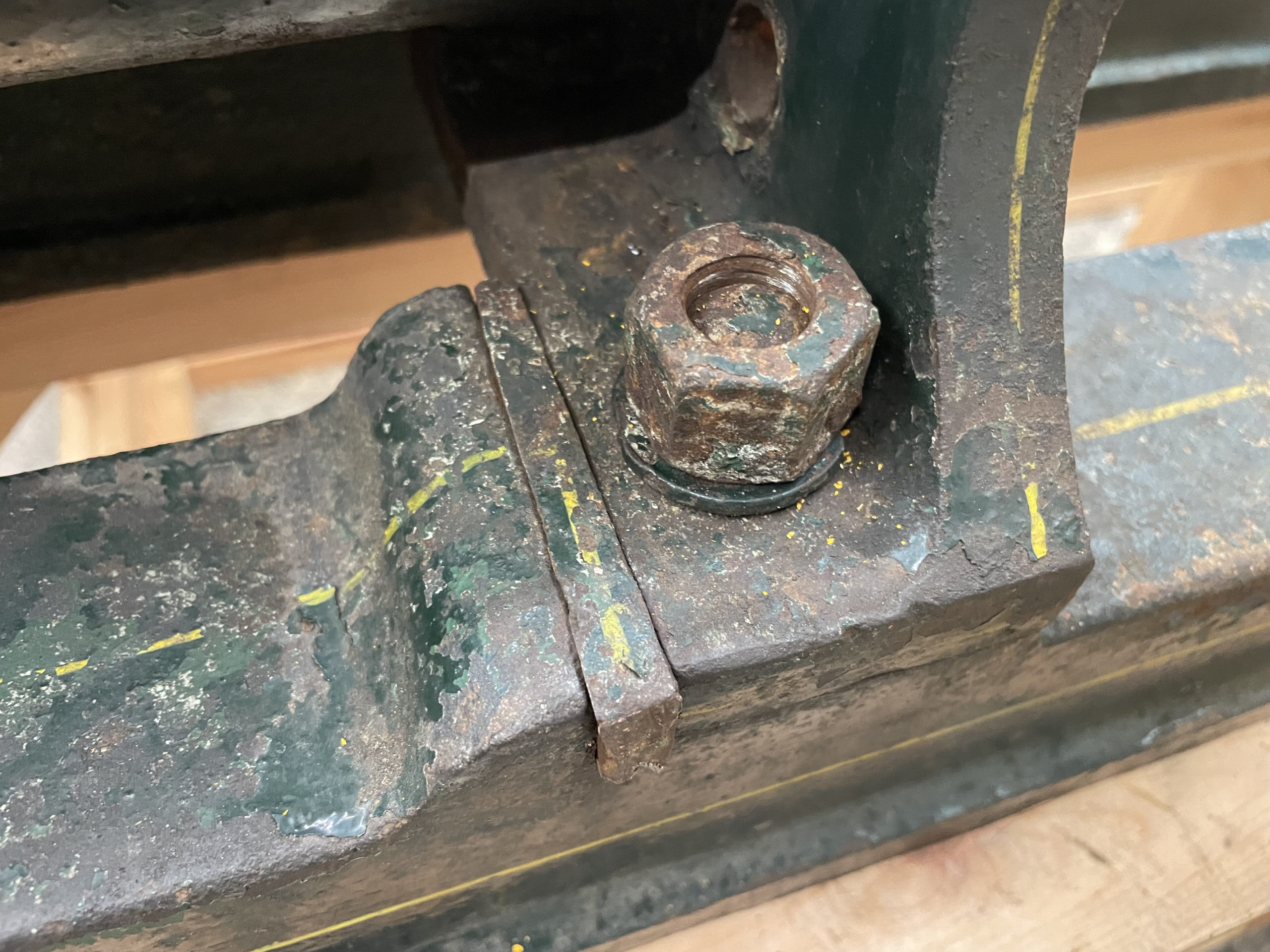
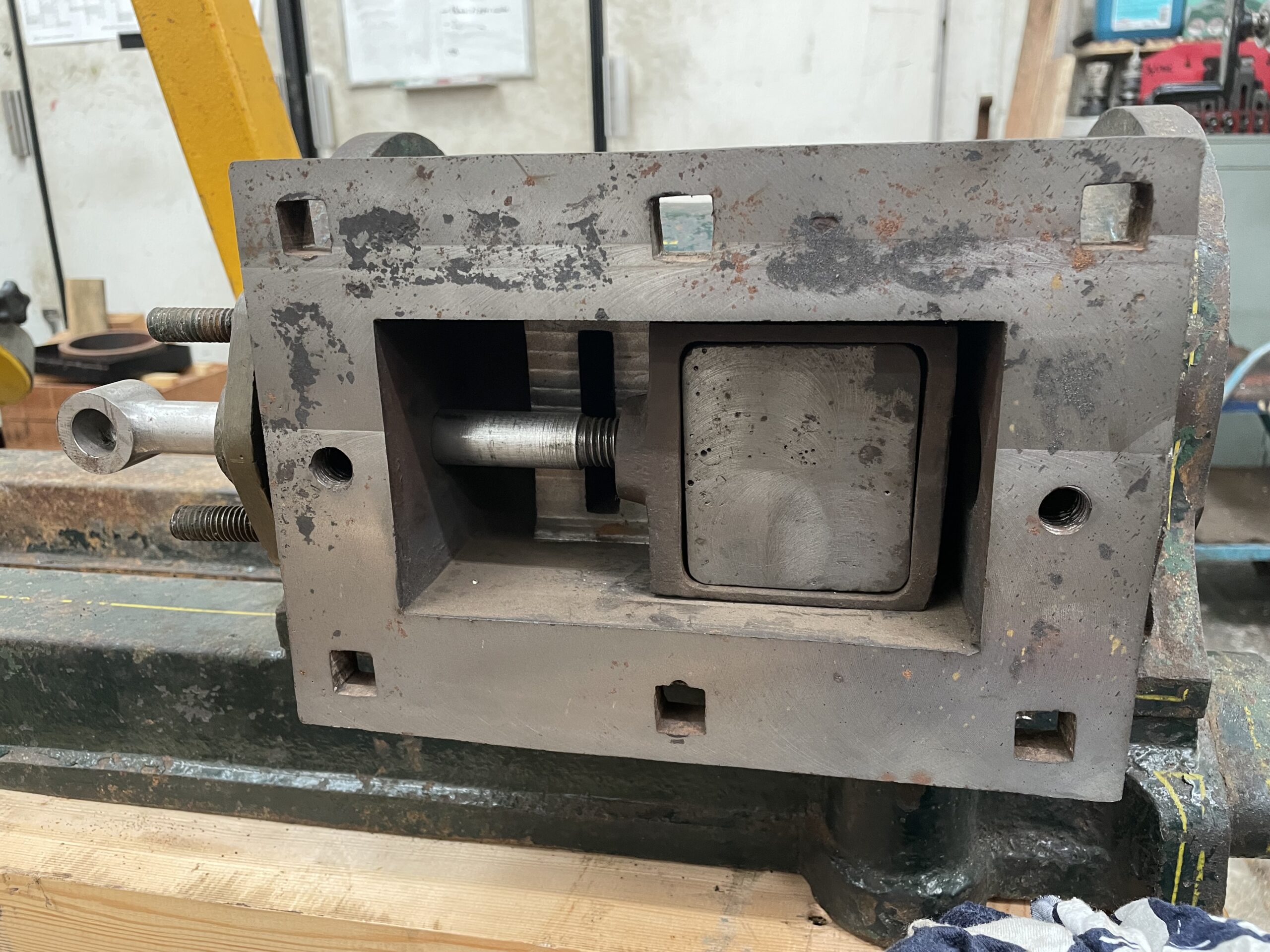
There is nothing to verify the age – there being no worksplate or other manufacturing marks. But the overall appearance of the engine does correspond with it being of early 19th century origin. This interesting feature is the means by which the cylinder/valve chest is positioned and aligned – using wedges acting against lugs cast onto the baseplate. Bolts are used to secure the castings to one another.
Below: The valve chest has had the valve face machined to restore a flat surface, with the valve itself also being machined true – should there ever be any future desire to operate this engine under steam. The green paint applied to the engine probably originates from its period on display at the brewery – I would be very interested to see a photograph of it in sit there.
Crosville 716
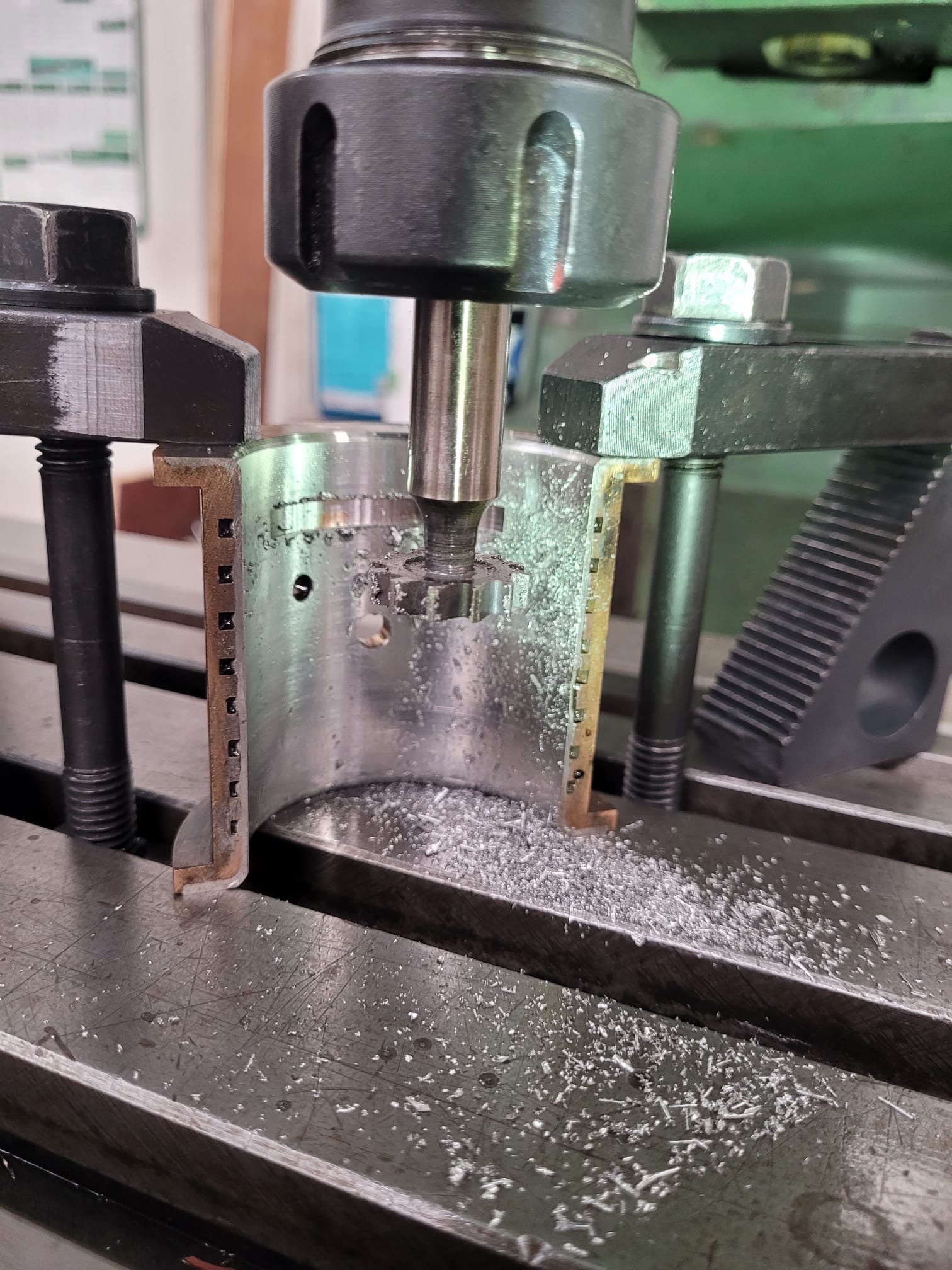
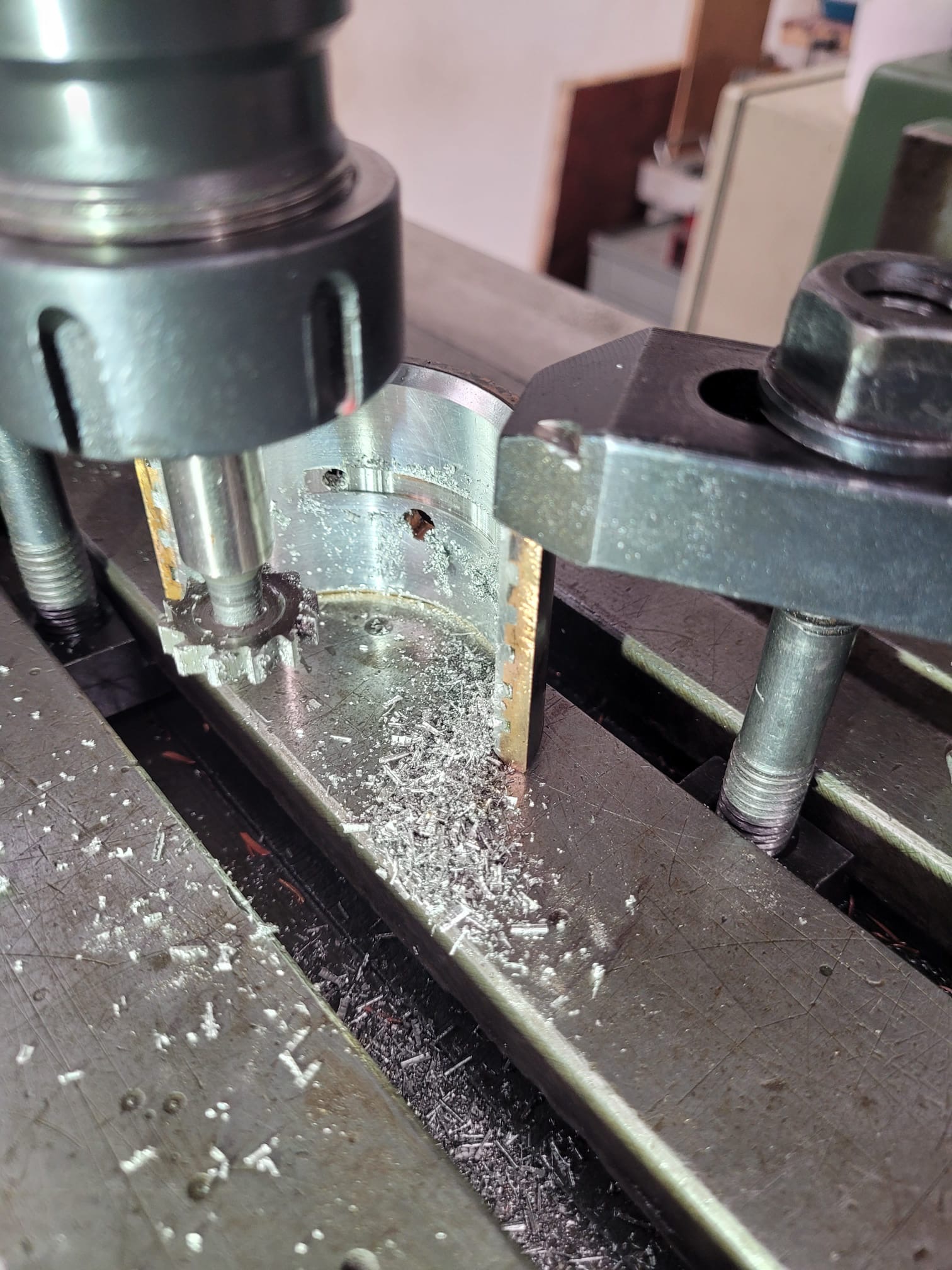
Below: Phil has also been occupied cutting the oil ways into the bearings for 716’s donor engine – these being a vital element of the engine’s lubrication.
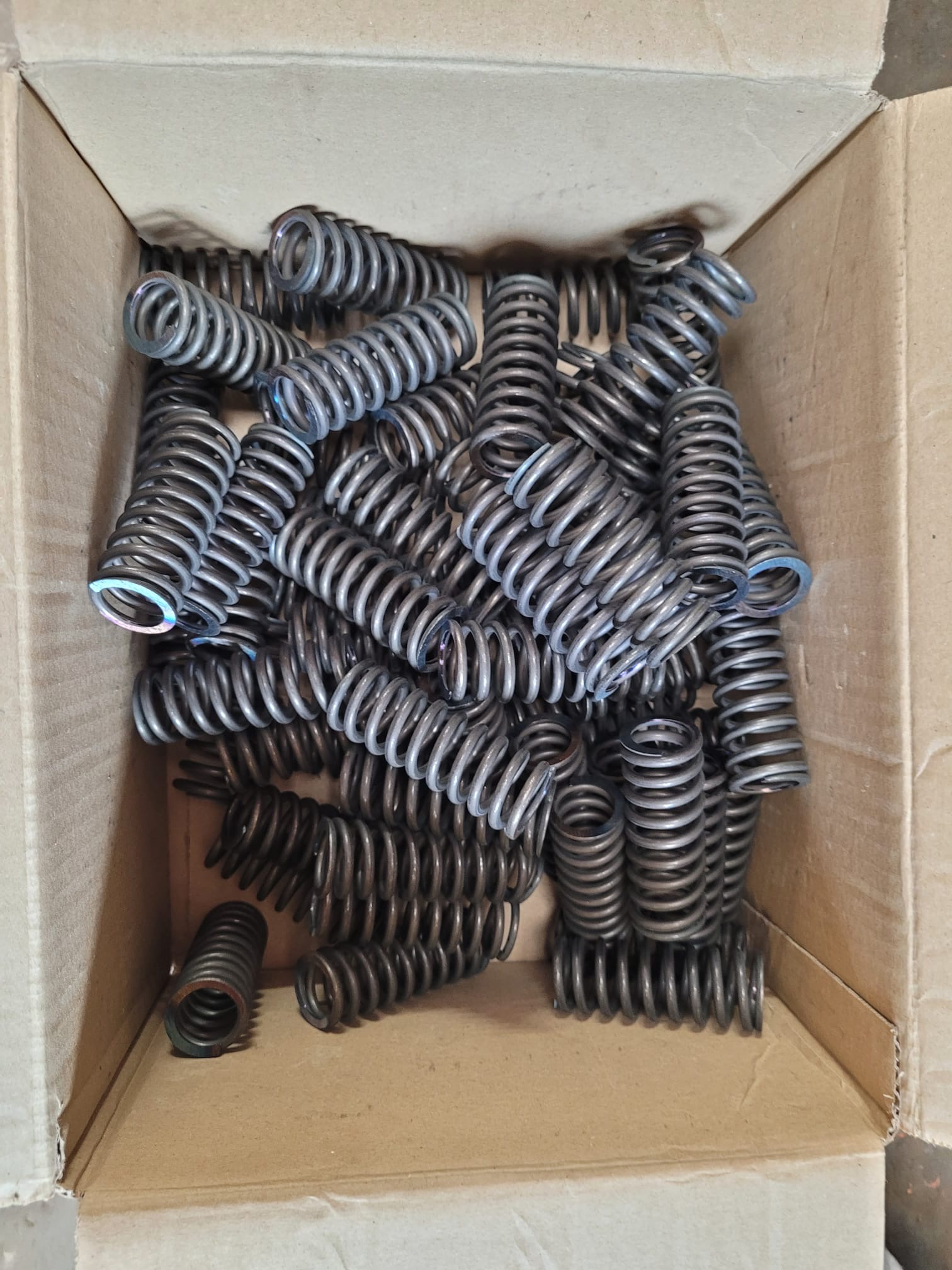
Below: New valve springs for 716 and the next four Cub engine overhauls!
Buses
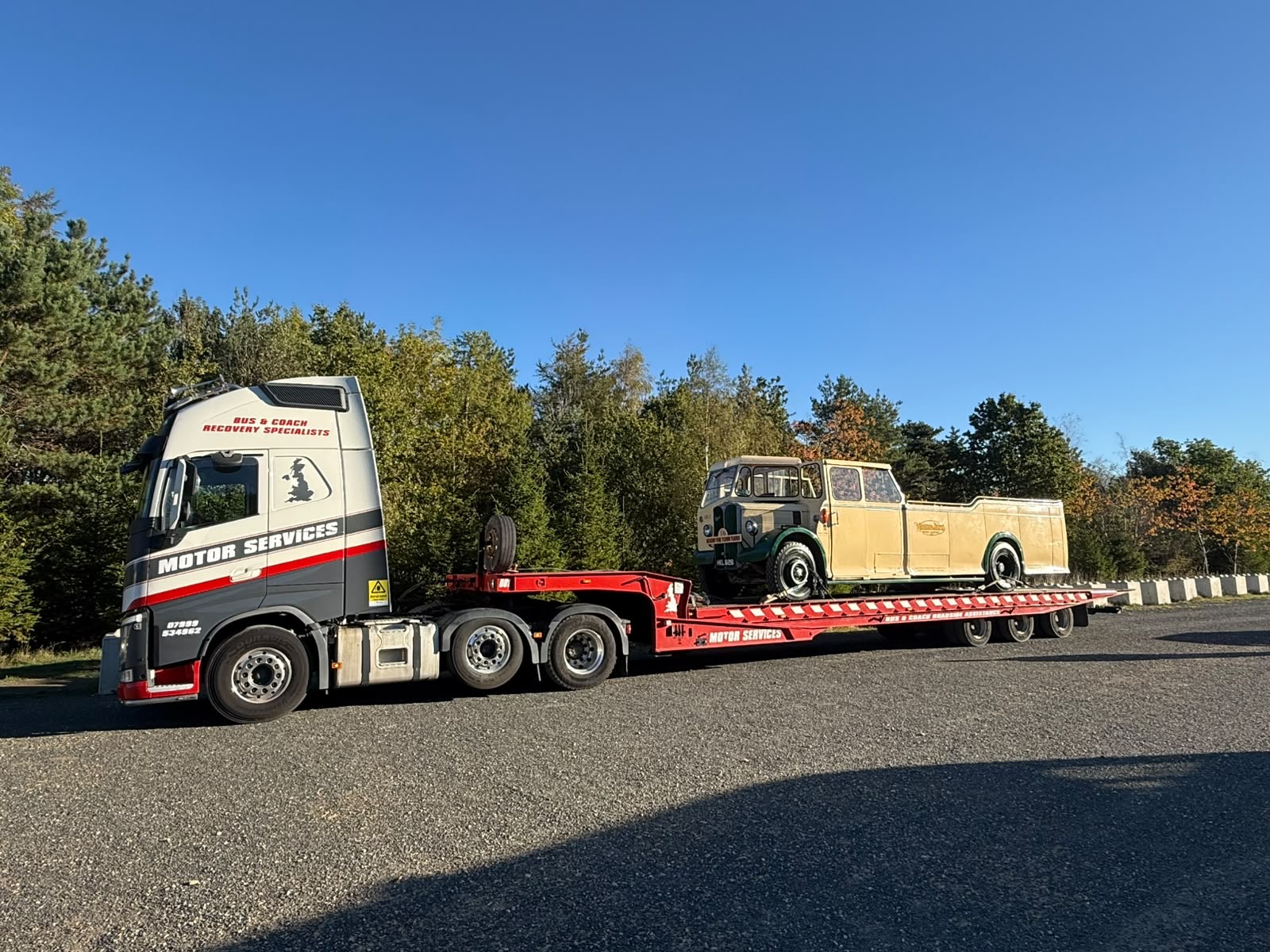
Below: The ex Maidstone & District AEC Regal with open-top Beadle Body OR2 HK 826 has departed following a second popular season of operation with us. It saw use on the Colliery route and the open top nature aligned well with the glorious summer enjoyed by visitors in recent months. I’d like to thank this bus’ owner for his generosity in allowing us to use vehicles from his collection at Beamish, which greatly enhance the visitor experience and transport operation during the year.
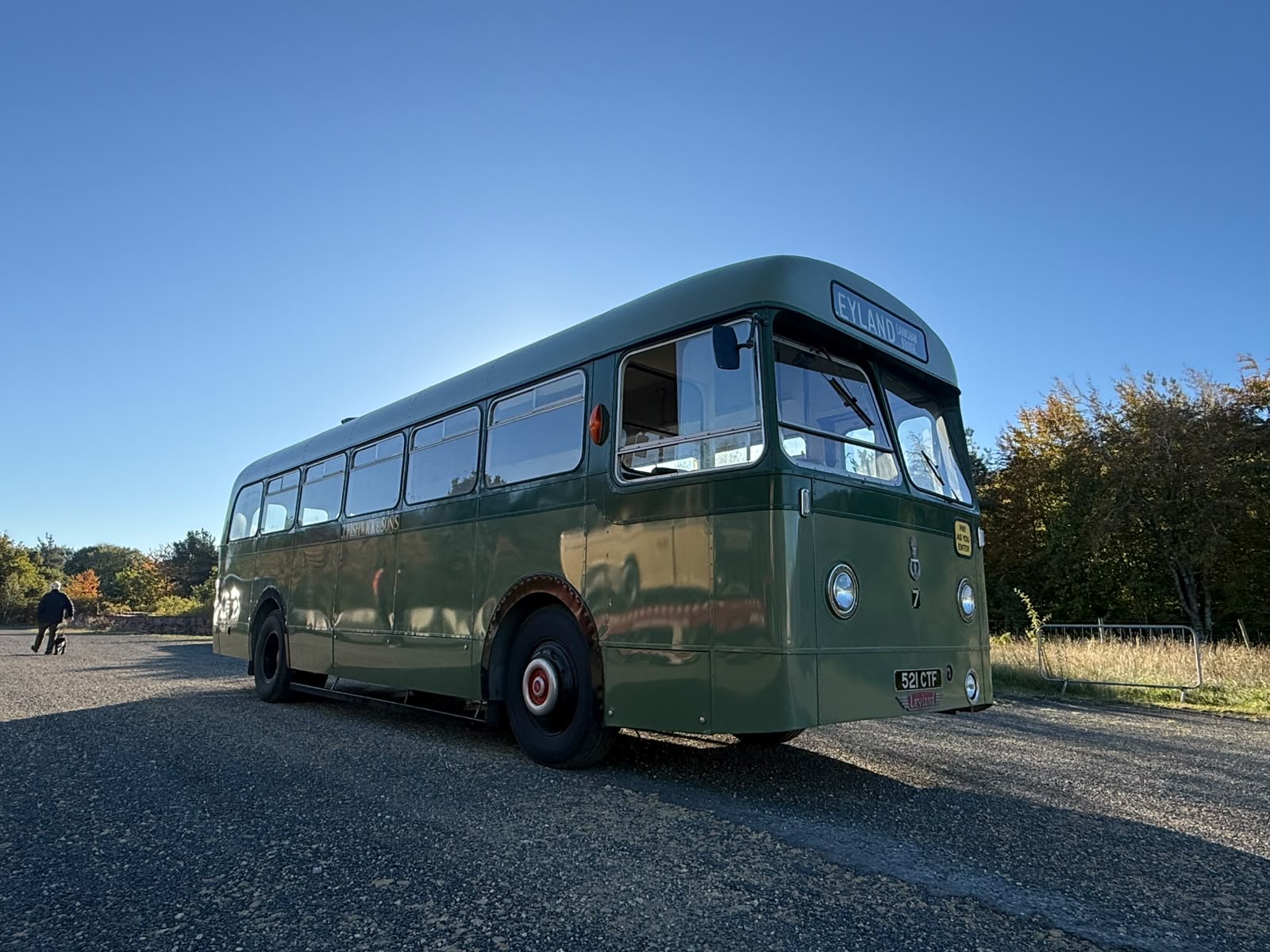
Below: OR2’s place has been taken with another visiting vehicle, that will see operation though the autumn and winter – A 1957 Leyland-MCW Olympian (LW1). This is fitted with a Weymann B44F body and was fleet number 7 in the John Fishwick & Sons fleet, based in Leyland (Lancashire). It is thought to be the sole surviving 1950s Leyland Olympian single-deck bus and it has previously visited Beamish for non-passenger use display. We are grateful to its owner (who also owns No.18, the Scouts-liveried Leyland Titan that has been operating at Beamish in recent years) for making it available for this working visit.
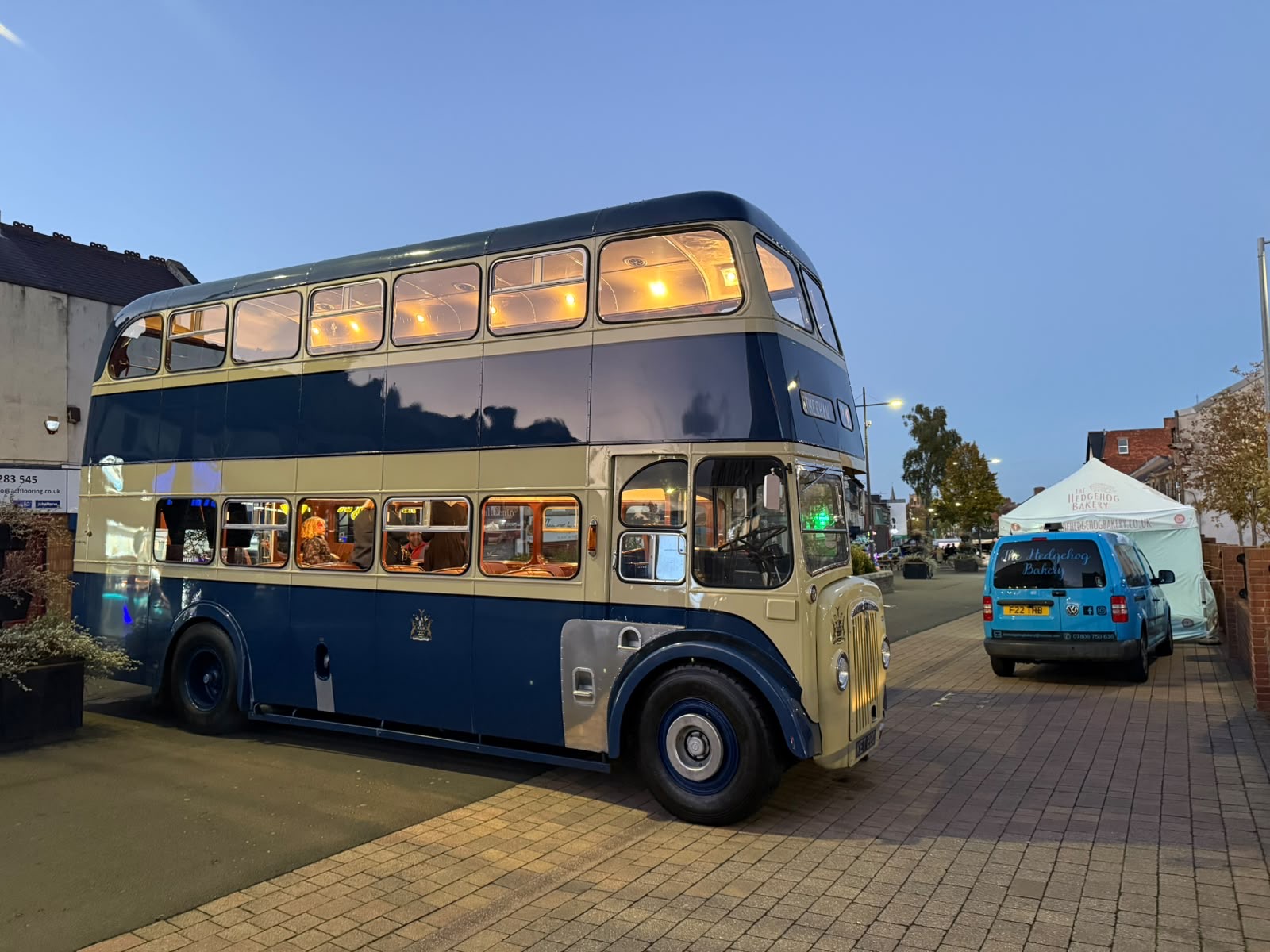
Below: Our own Rotherham 220 undertook the short journey up the road to the Stanley Food Festival as part of the museum’s representation at this local event. It was looking particularly good for a polish and application of the tyre-black (that always makes such a difference!).
Morris Commercial Ice Cream van
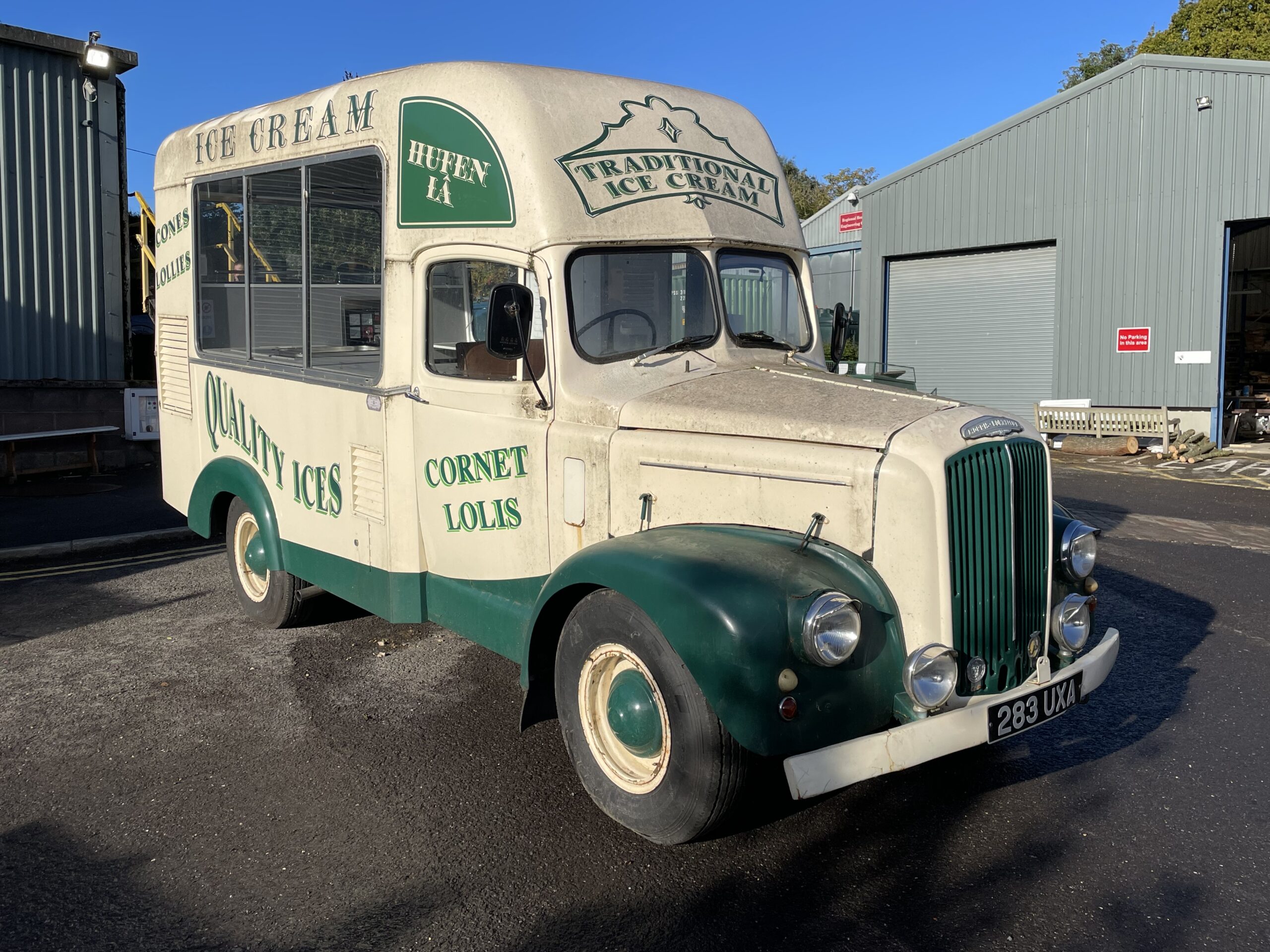
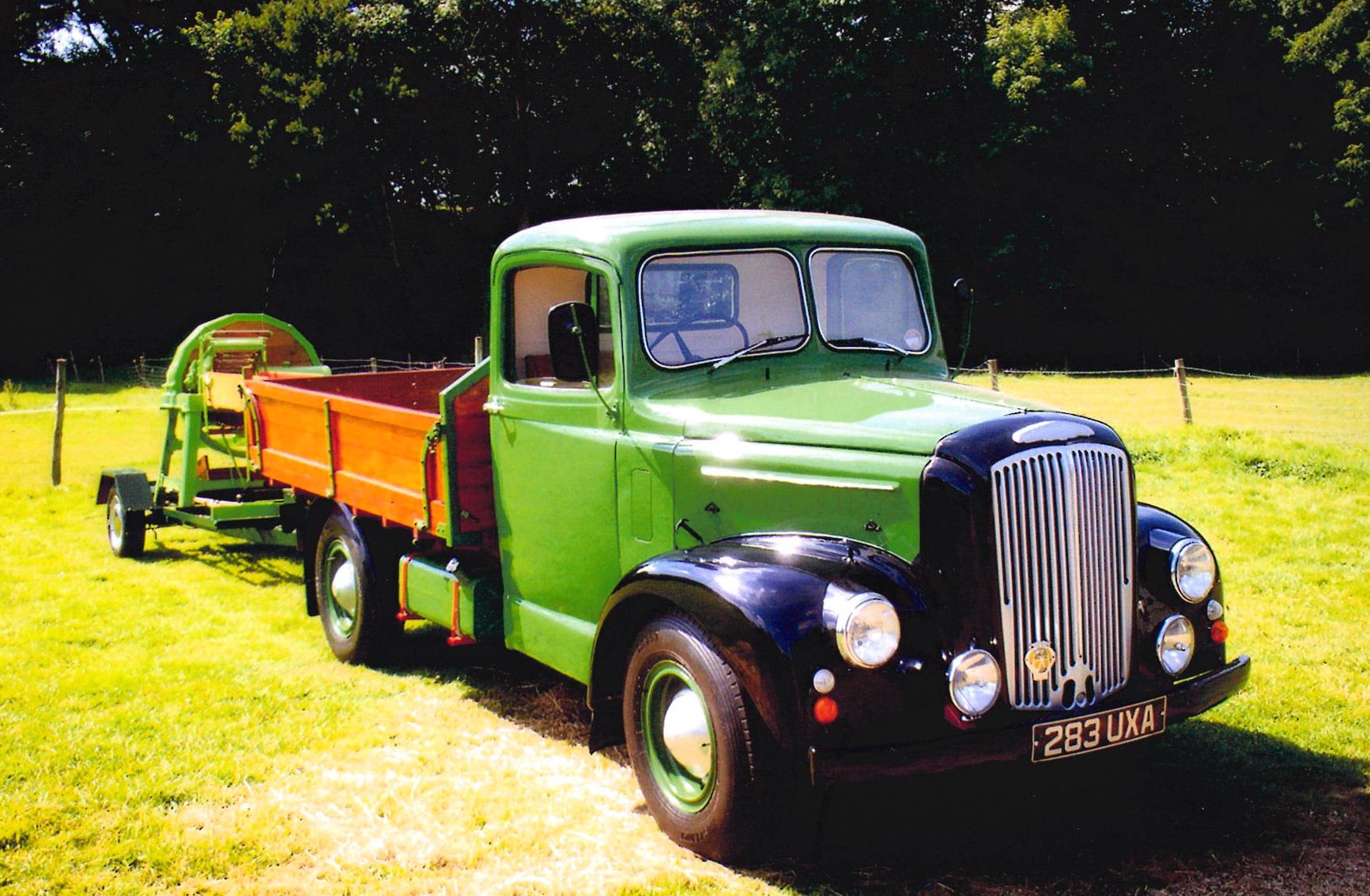
Below: We were recently offered this 1954 Morris Commercial ice cream van. It is fitted with a 2200cc petrol engine and is an LC5 (TBC) model. It had been restored and rallied as a dropside lorry, but later formed the basis of a conversion into an ice cream van by Whitby Morrison of Crewe and was latterly in use at St Fagans National Museum of History near Cardiff. The museum no longer required it, so have transferred it to Beamish. It requires some work to refurbish it, but a plan is being put together to enable it to go into business in 2027. This is very much a commercial project, rather than a historic vehicle being added to the collection, but it clearly has great potential to enhance the 1950s streetscape and offer visitors more choice in their selection of refreshments here at Beamish.
Below: This photograph was included in the documents received with the Morris Commercial, and shows it in its previous guise, restored as a dropside commercial vehicle. If anyone can add to the history of this vehicle, and when it was converted to an ice cream van, I would be very glad to hear from them and add the knowledge to the vehicle’s file here.
Dunrobin
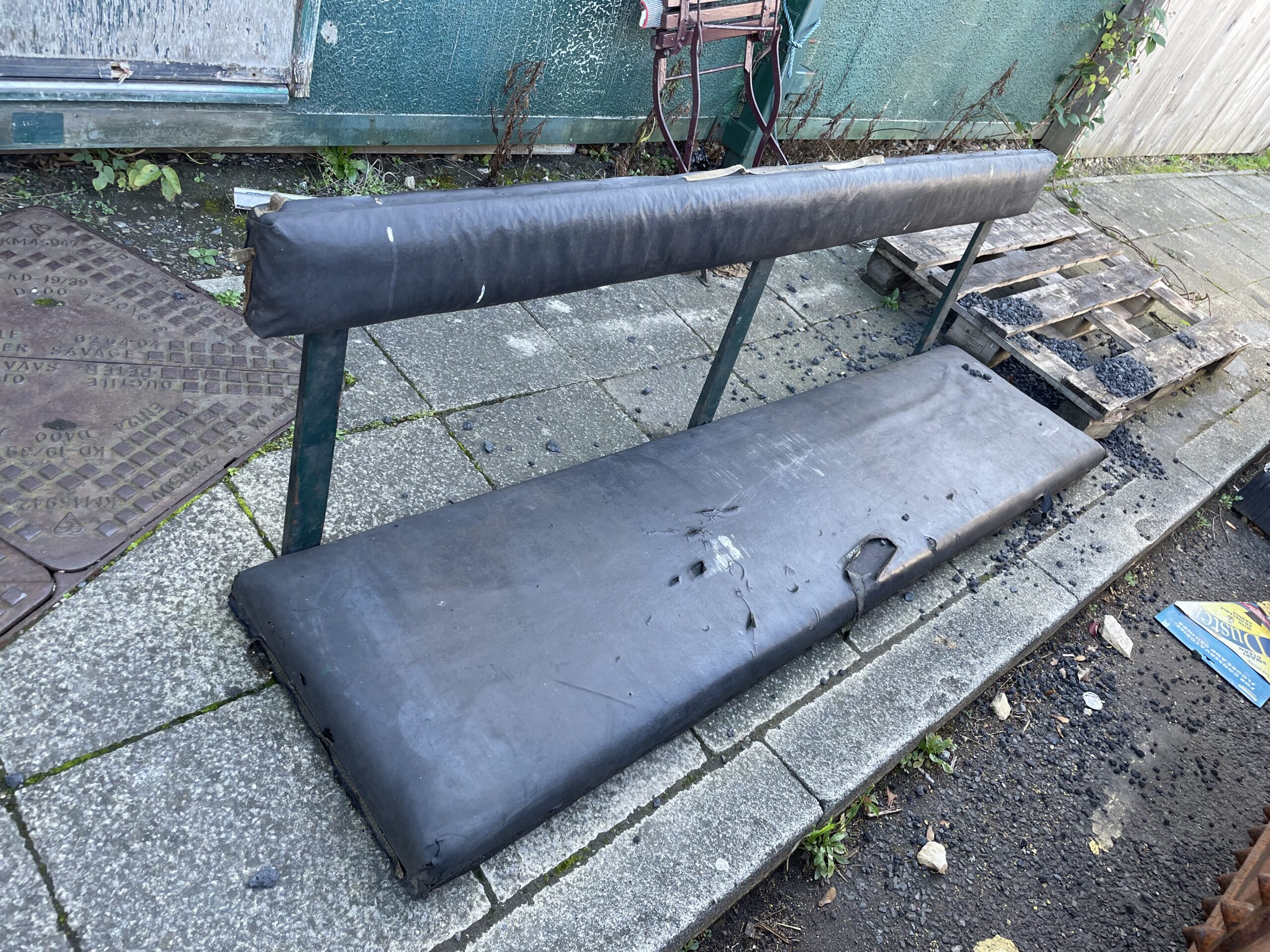
Below: The cab seat/bench is to be restored locally to recreate the luxurious specification that is shown on the general arrangement drawing. The plan is to cloth it in green leather, with buttoned finish – so it will compliment the rest of the locomotive’s high-quality finish and appearance once installed – and offer footplate passengers an unrivalled view of the activities on the footplate when the locomotive is in steam.
I was amused/interested lately by the accusation (on social media, I should add), that museums such as ours are static and no longer have the best interest of their collections at their heart. Without a doubt we have a lot of things we’d like to get around to restoring or improving, but hopefully the presence of this blog online is something of an antidote to that viewpoint, or the view that museum curators are churned out to no longer care for or understand their collections – I think some of us here would rather take exception to that! I am currently preparing the annual review – which this year may be a printed publication, and failing that, a substantial PDF to download – and already at 48 pages I am running out of space to capture everything the relatively small but very talented team here achieves. In turn, the engagement team operate and demonstrate the array of vehicles and machines that form the operational fleet, doing so with great dedication and enthusiasm. So I offer these words to close the post with, as a very gentle counter-view to the critics, noting that none of what we do is easy or cheap, and that by and large it appears to be greatly appreciated by those who come to Beamish to experience what the museum has to offer…
Photographs by Charlie Cooper, Phil Doran, Paul Jarman, Shaun Kay and Ben Wilson
Recent Comments