

Transport & Engineering Diary April 2026
Well, the best laid plans… I’ve still not managed to find time over the busy Easter period to learn how to post on the new website, so for now, posts are still appearing here!
The Easter holiday has been busy operationally, but workshop activity has continued and so here is a summary of what’s been going on for April 2026…
Vintage & Veteran Vehicles
Below: The Crewe Tractor has been in need of new tyres for some time, and with these delivered, they were soon fitted by one of the Thursday volunteers with assistance from the staff. The tyres that were removed had some life left in them, so these have found a new home.. The Crewe Tractor’s awkward starter button has been replaced, and relocated, which should resolve the problem of the awkward operation by foot tending to damage the button itself.

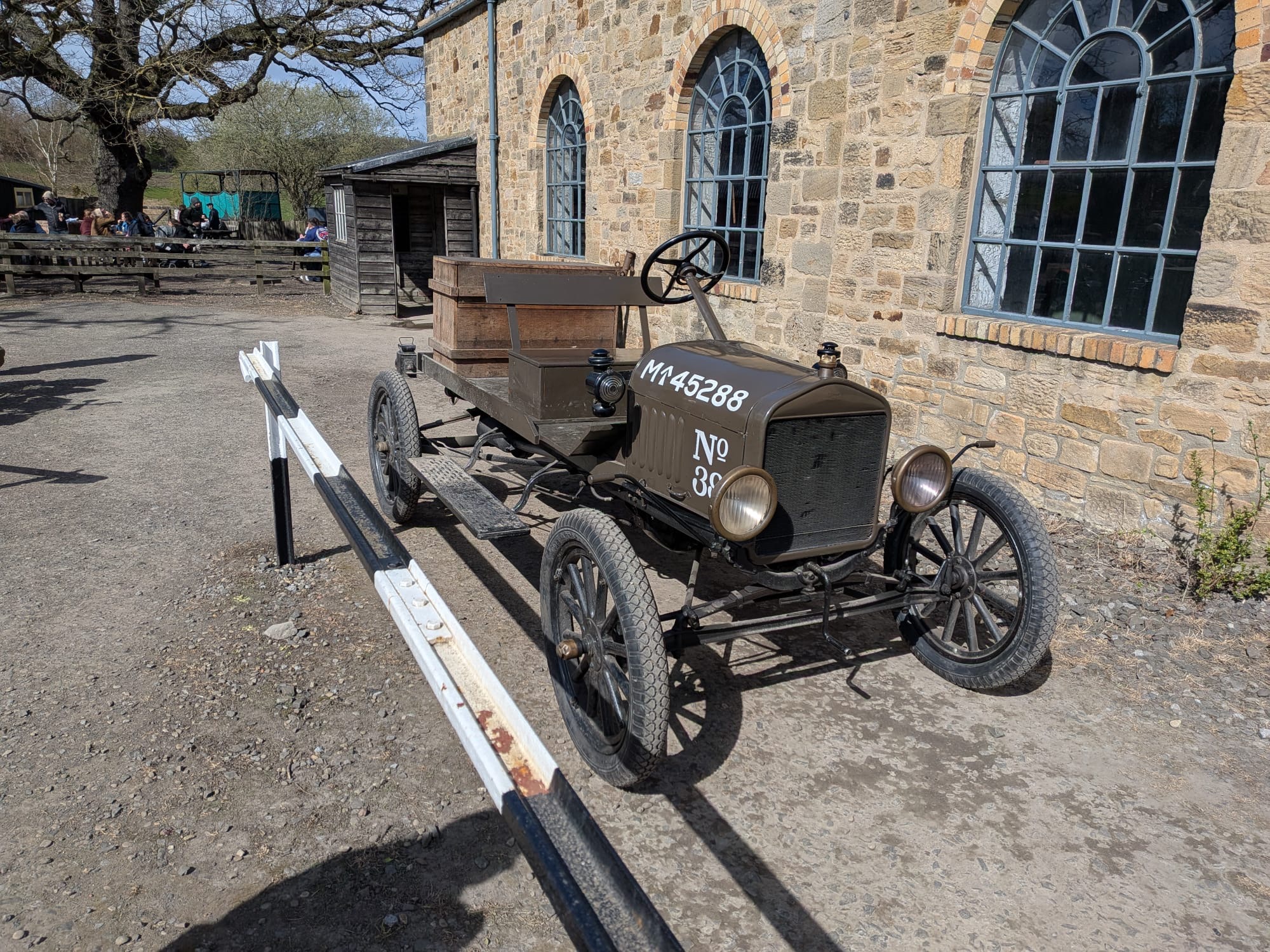
Below: The SHEW had been fitted with Model T rims when it was ‘restored’ in the 1960s. Its own tyres were perished, so those from the Crewe Tractor have been fitted to the SHEW to give it a degree of mobility, pending the eventual replacement of its wheels with original-style solid-tyred artillery wheels.
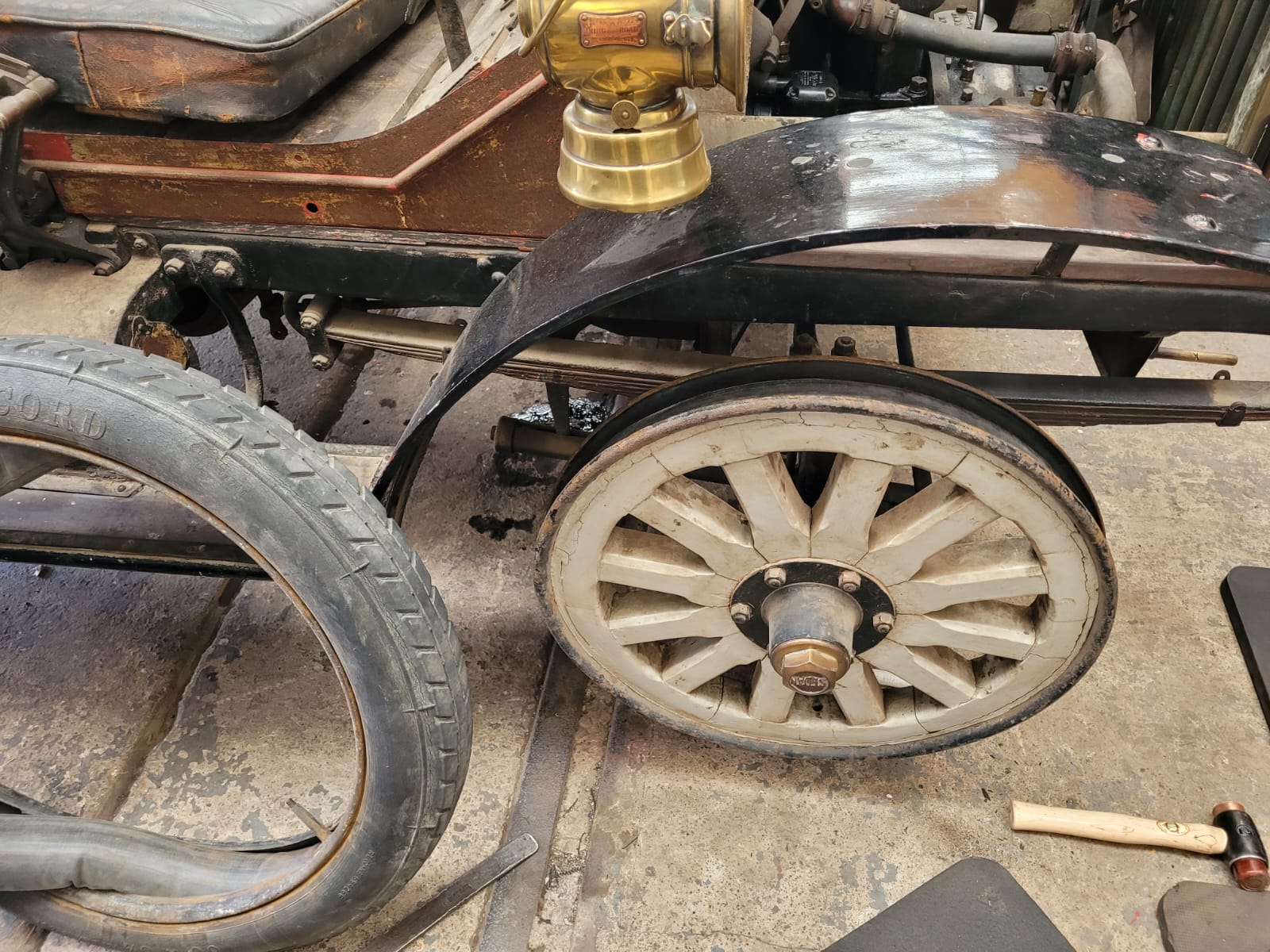
Below: One of the Crewe Tractor’s old tyre, fitted to the SHEW. Some work has also been undertaken on the engine, to allow the SHEW to operate this year until such a time as the engine can be removed for overhaul and the other works to restore it to it’s pre-1960s restoration condition can take place. It will never be ‘restored’ but simply backdated to a point in time where it has more relevance to the North East road vehicle story, and to a standard that allows for safe occasional demonstration of it around the museum.

Below: As mentioned above, the engine had some minimal attention to ensure its operational survival as we hope to use the SHEW on a small number of occasions this year.
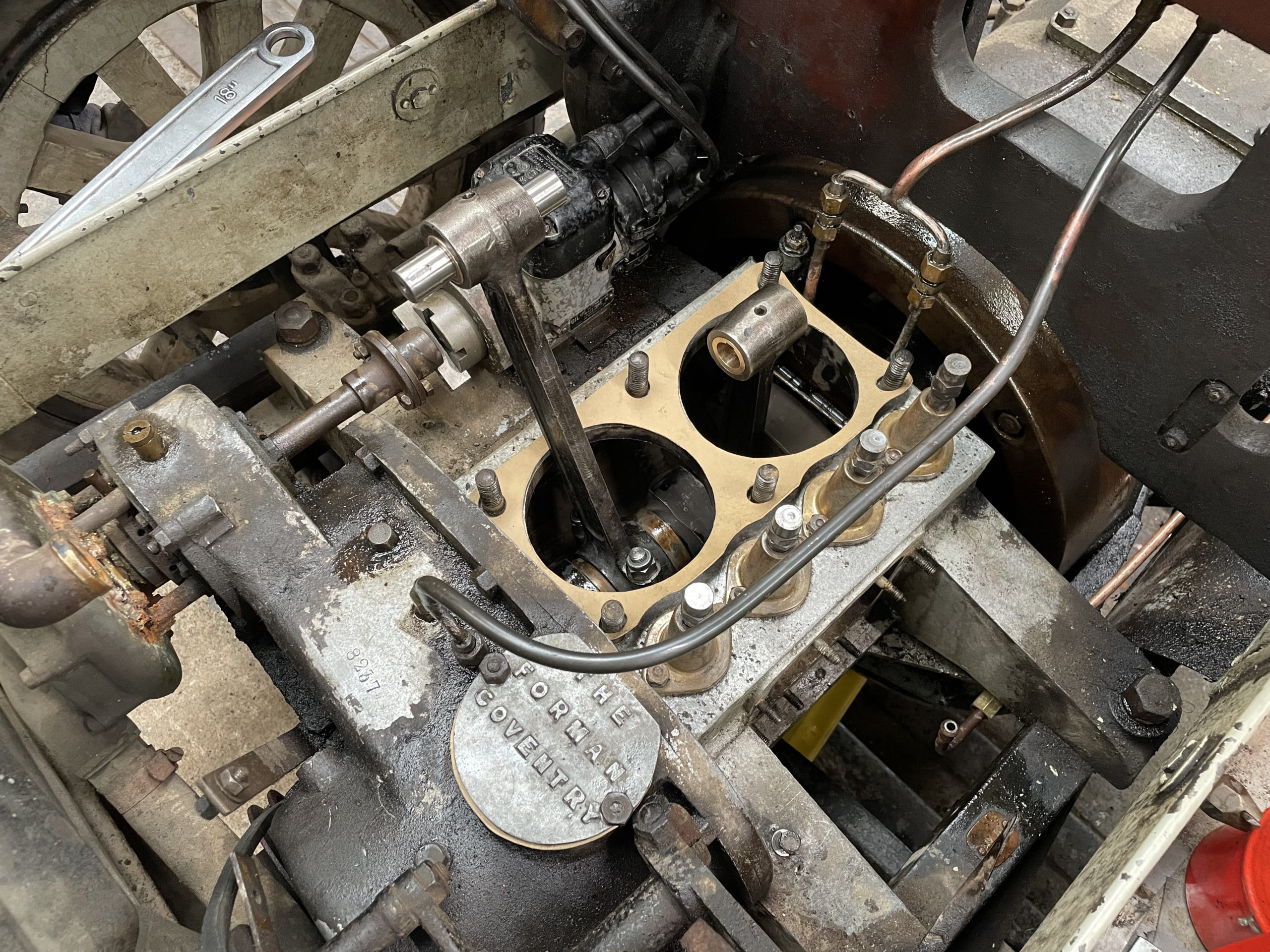
Below: A test run, to check all was well with the engine and try out the ‘new’ tyres.
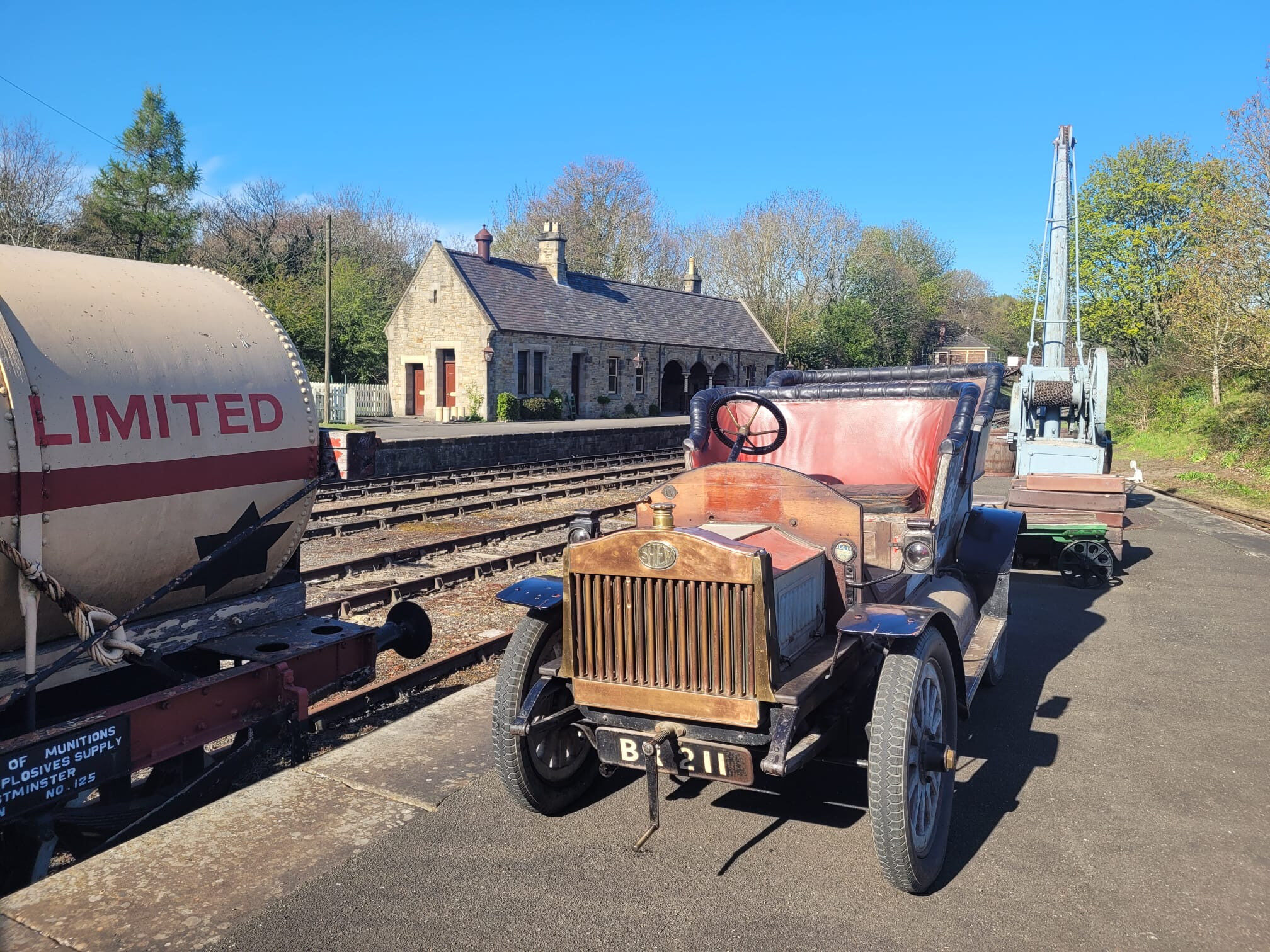
Below: On Saturday 11th April the Thursday volunteers took a few of the vehicles onto site in order to demonstrate them and enable visitors to examine them in an appropriate setting. We very much hope to be able to do this more regularly in the future.

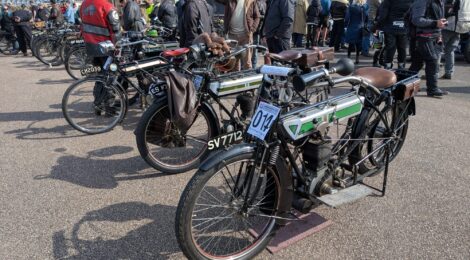
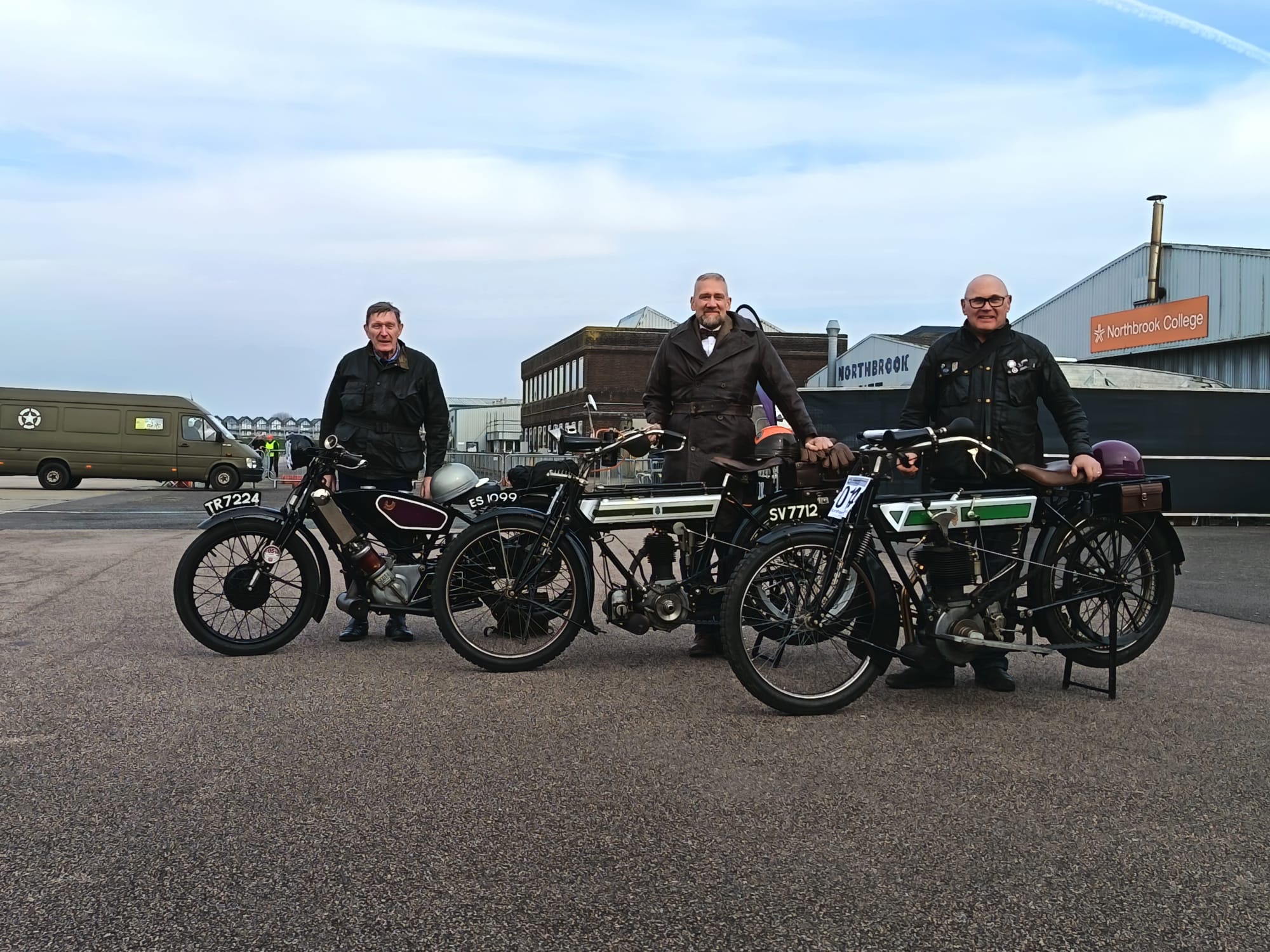
Below: On Sunday 22nd March, the Pioneer Run took place in the region, with the Thursday volunteers riding their own machines as well as the museum’s 1912 Dene motorcycle (seen nearest to the camera below). It is great to see the museum’s collection being able to take part in events like this and prove its viability on such occasions – again, we have hopes of doing a little bit more of this again in the future.
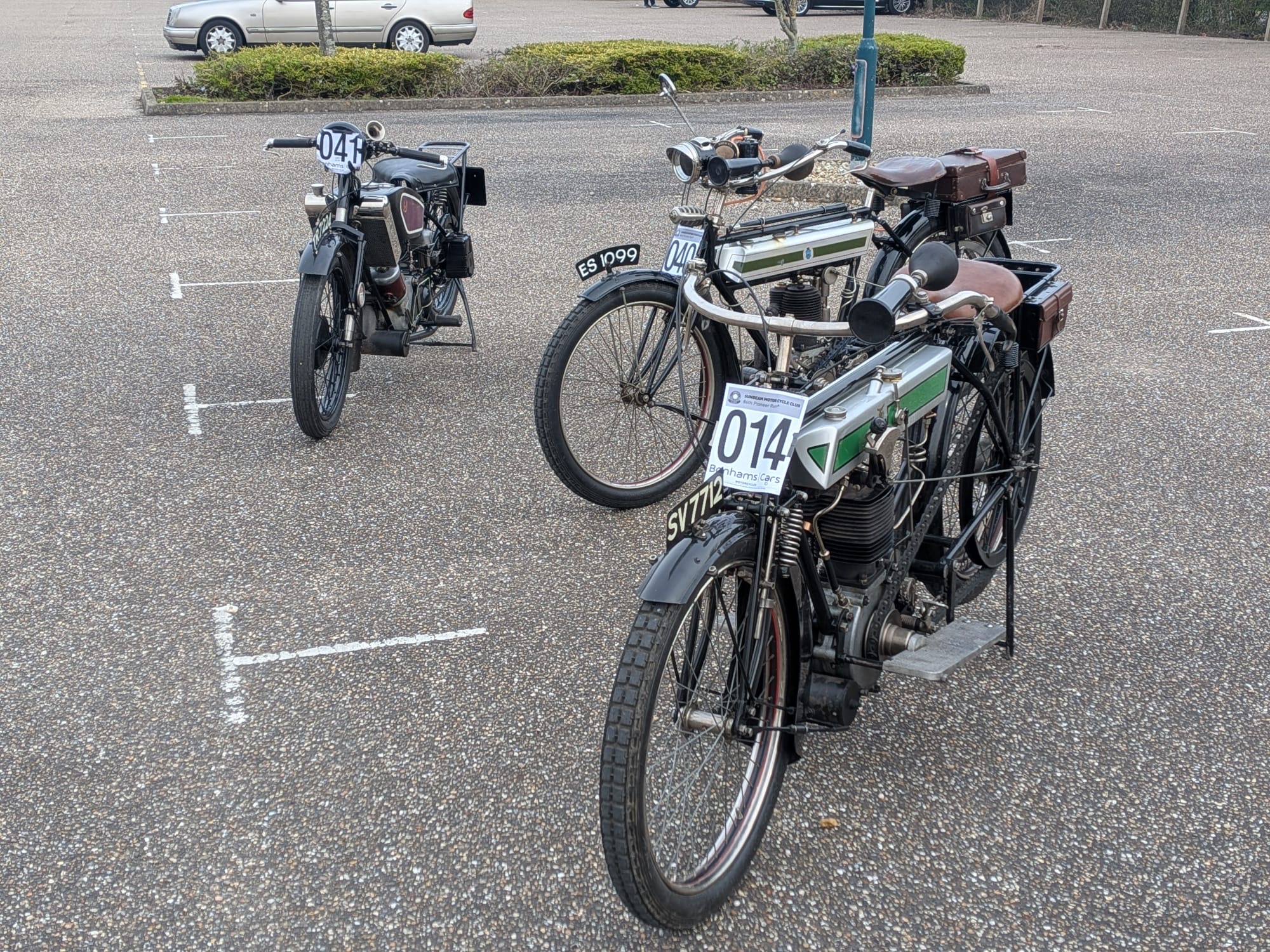
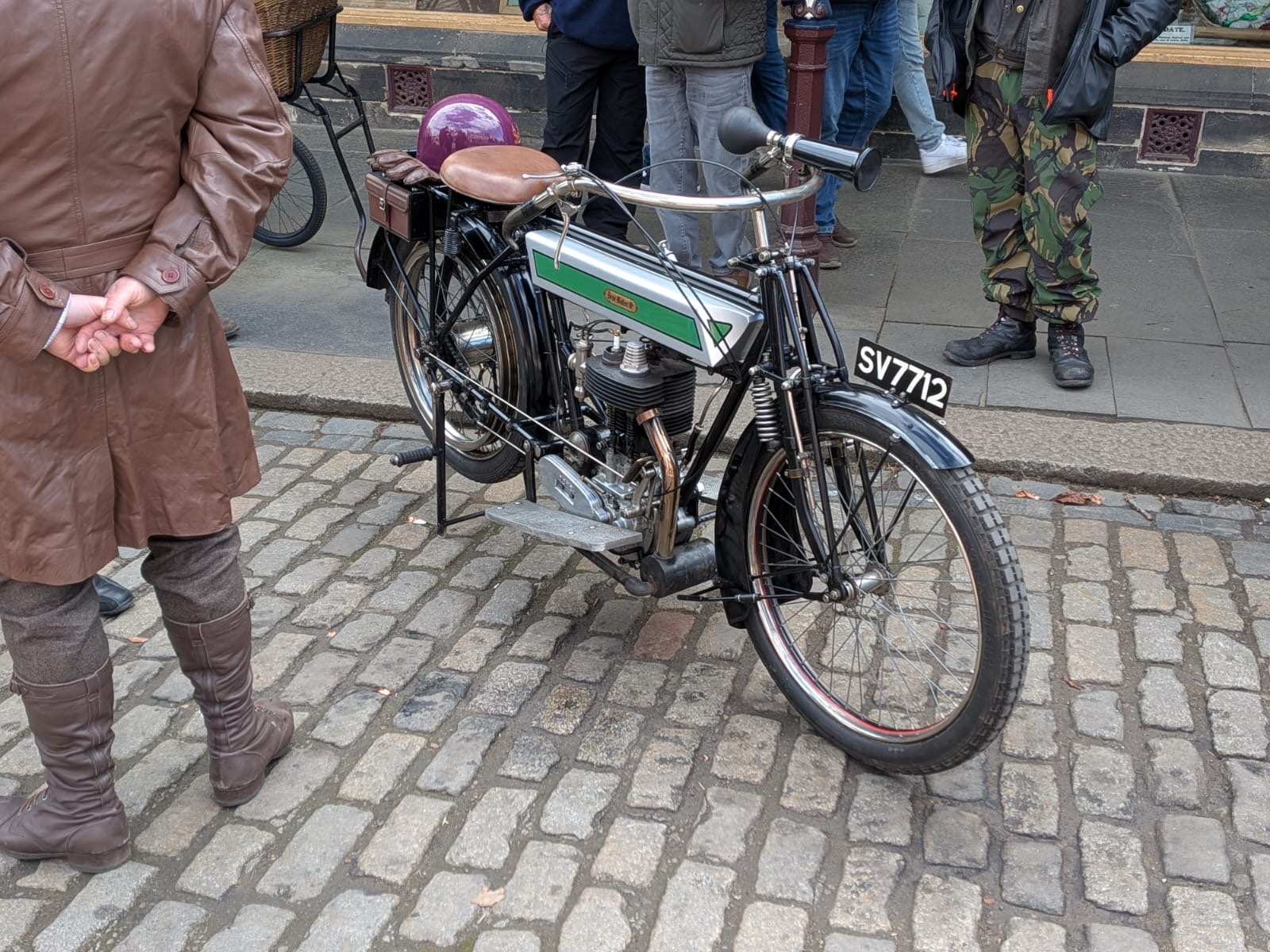
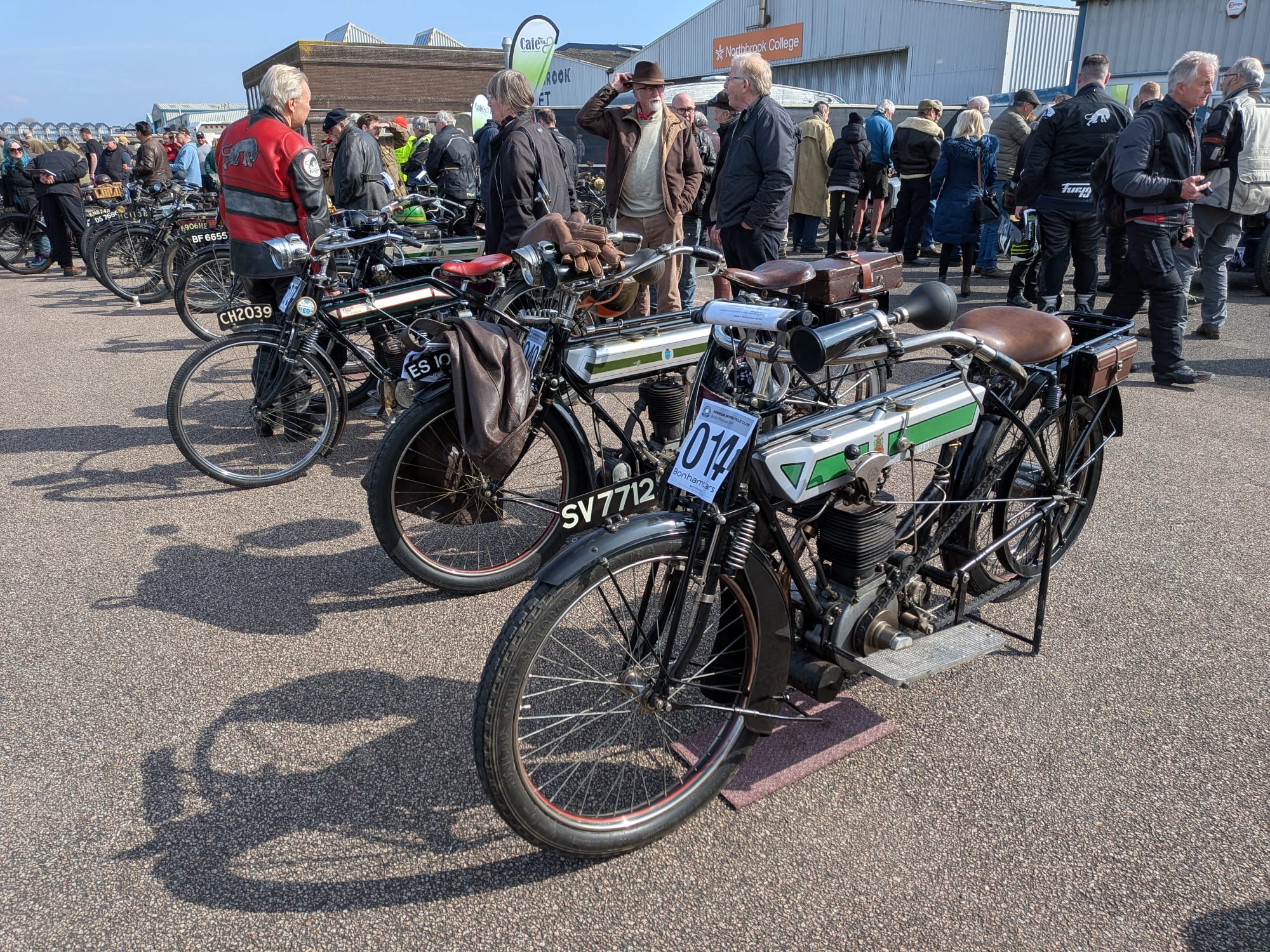
Below: The team’s riders – Ian, David and Colin with a 1929 Scott, 1913 Triumph and the 1912 Dene respectively.
Below: Another view of the SHEW, alongside R025, which is being re-awakened in order to take part in events both at Beamish and potentially off-site too. We missed its centenary last year, so it will be good to shine the spotlight back on this fascinating machine.

You can read more about R025 here: https://beamishtransportonline.co.uk/2020/04/beamish-transport-objects-in-focus-number-3/
Transport Infrastructure
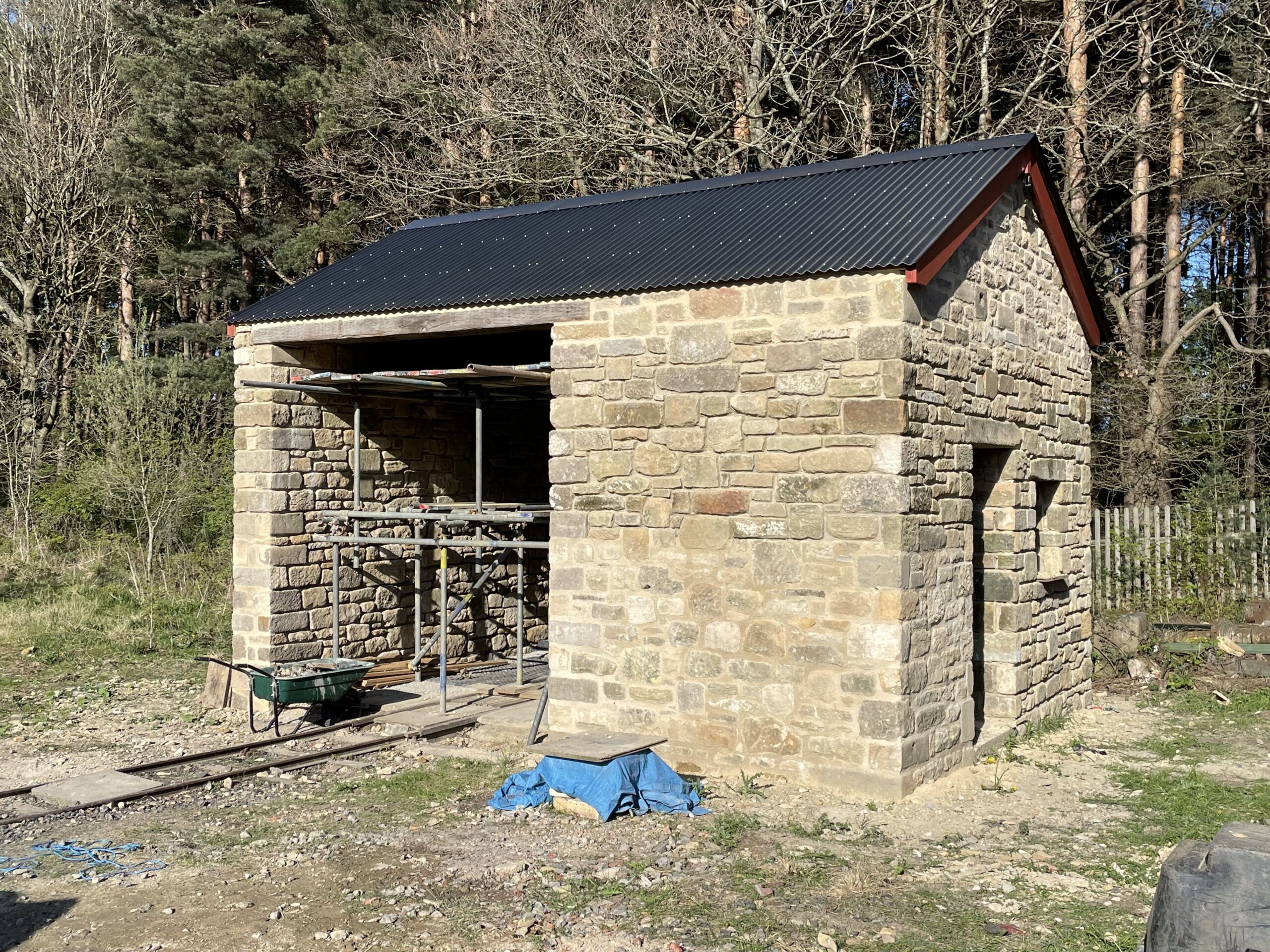
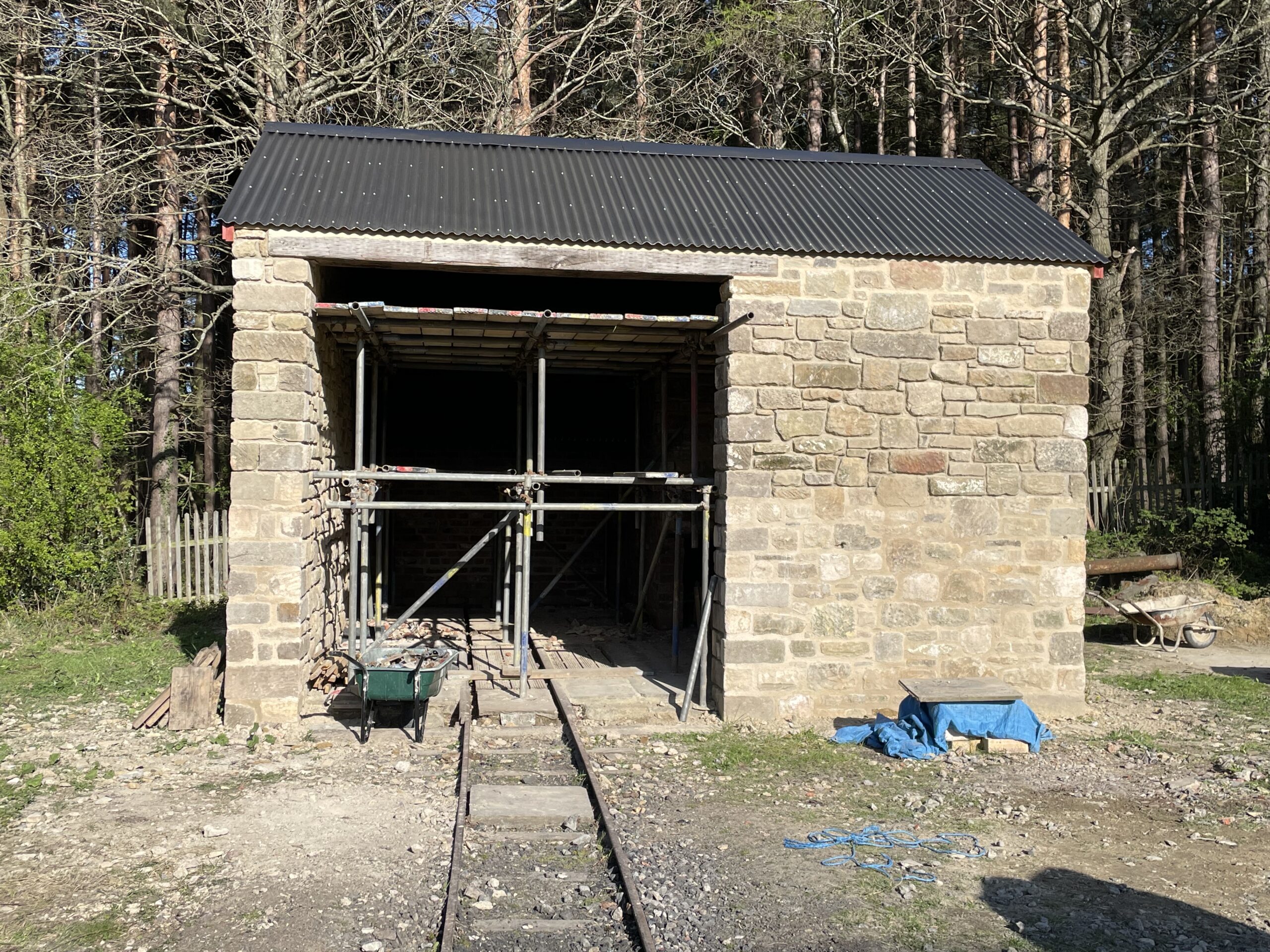
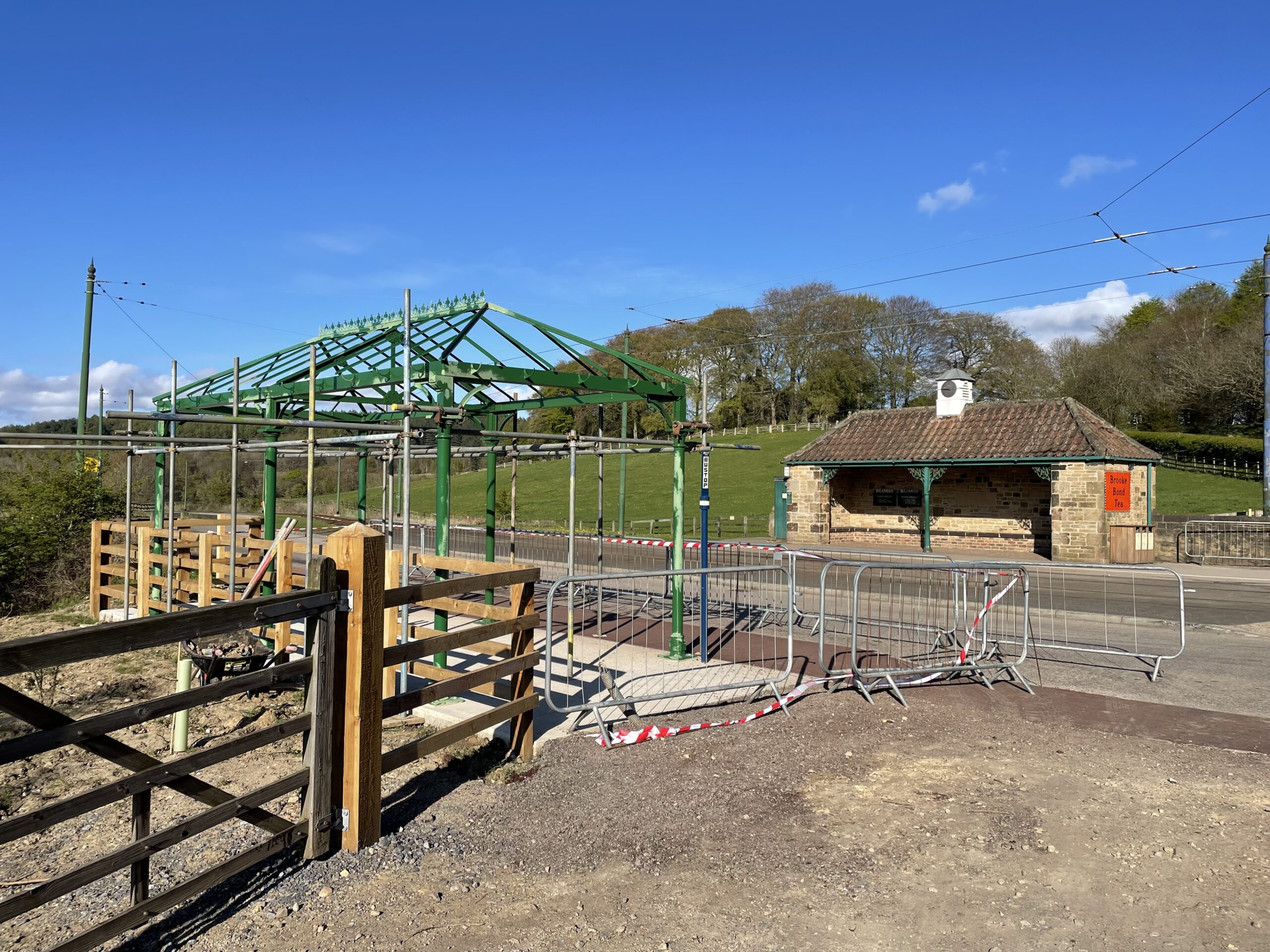
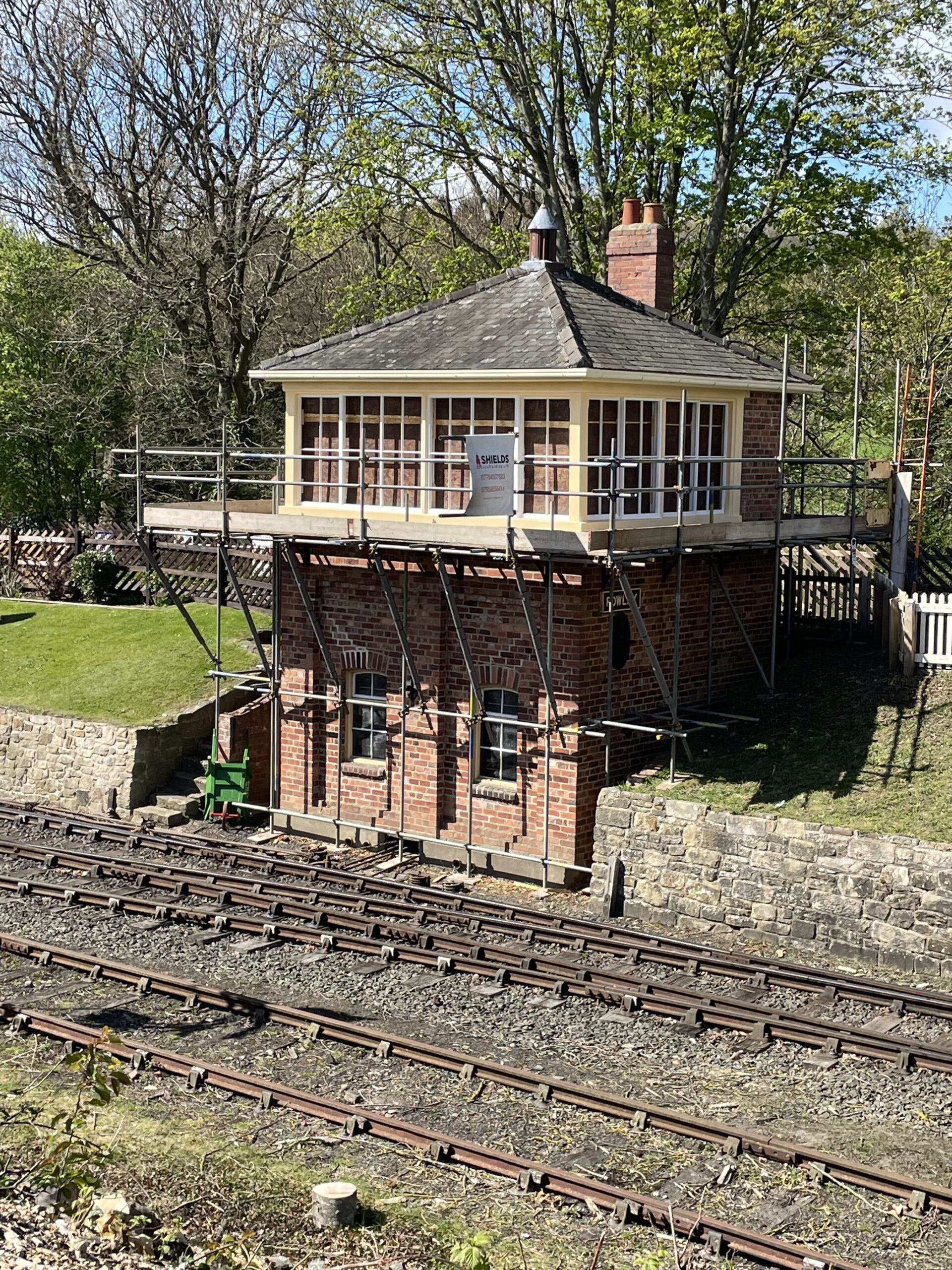
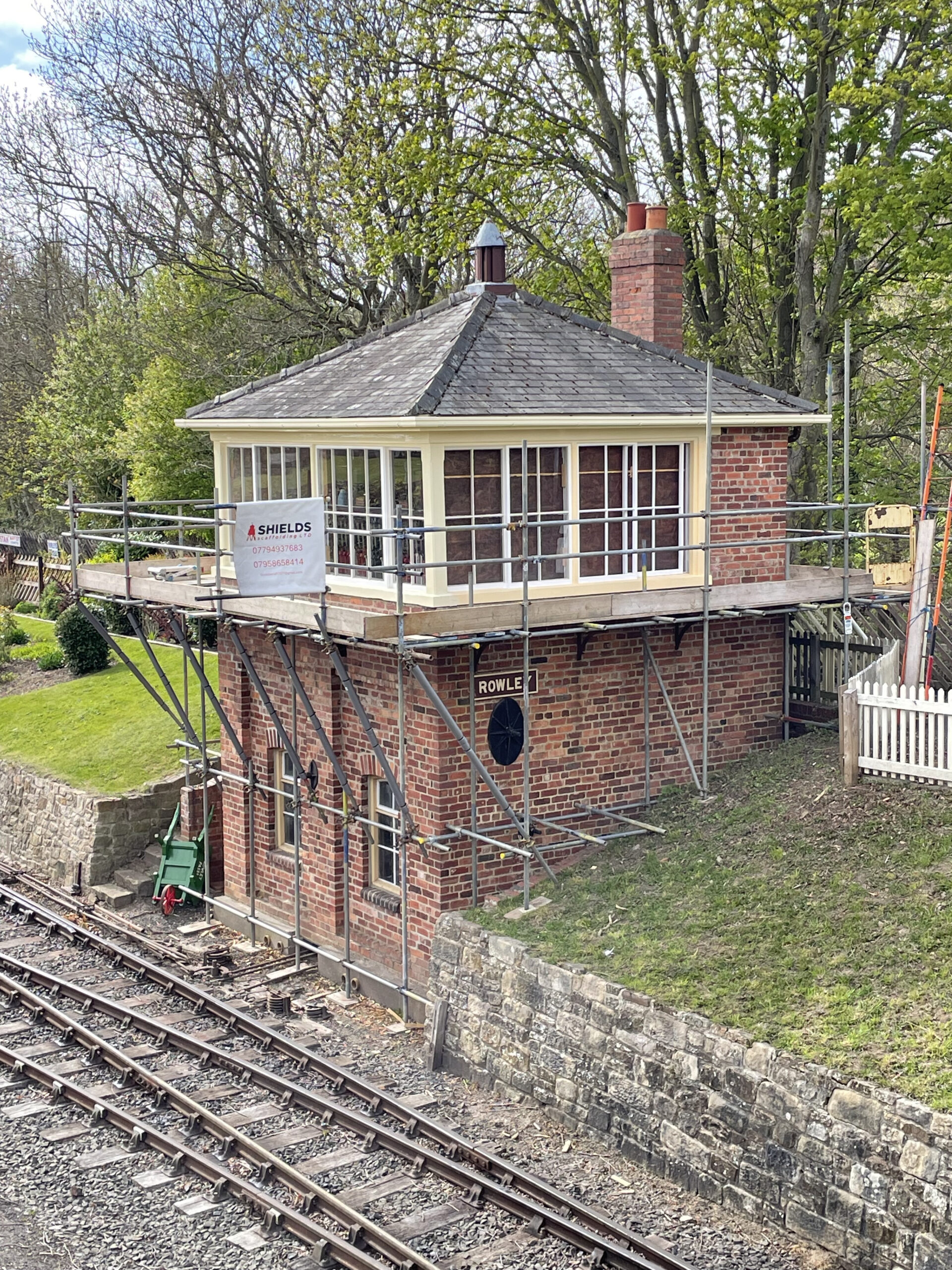
Below: The completion of three projects draws near – with Samson’s engine shed now having a roof fitted (and doors and window in hand), the ex Darlington bus shelter about to receive its finishing touches and the signalbox at Rowley repairs and repaint reaching the final stages.
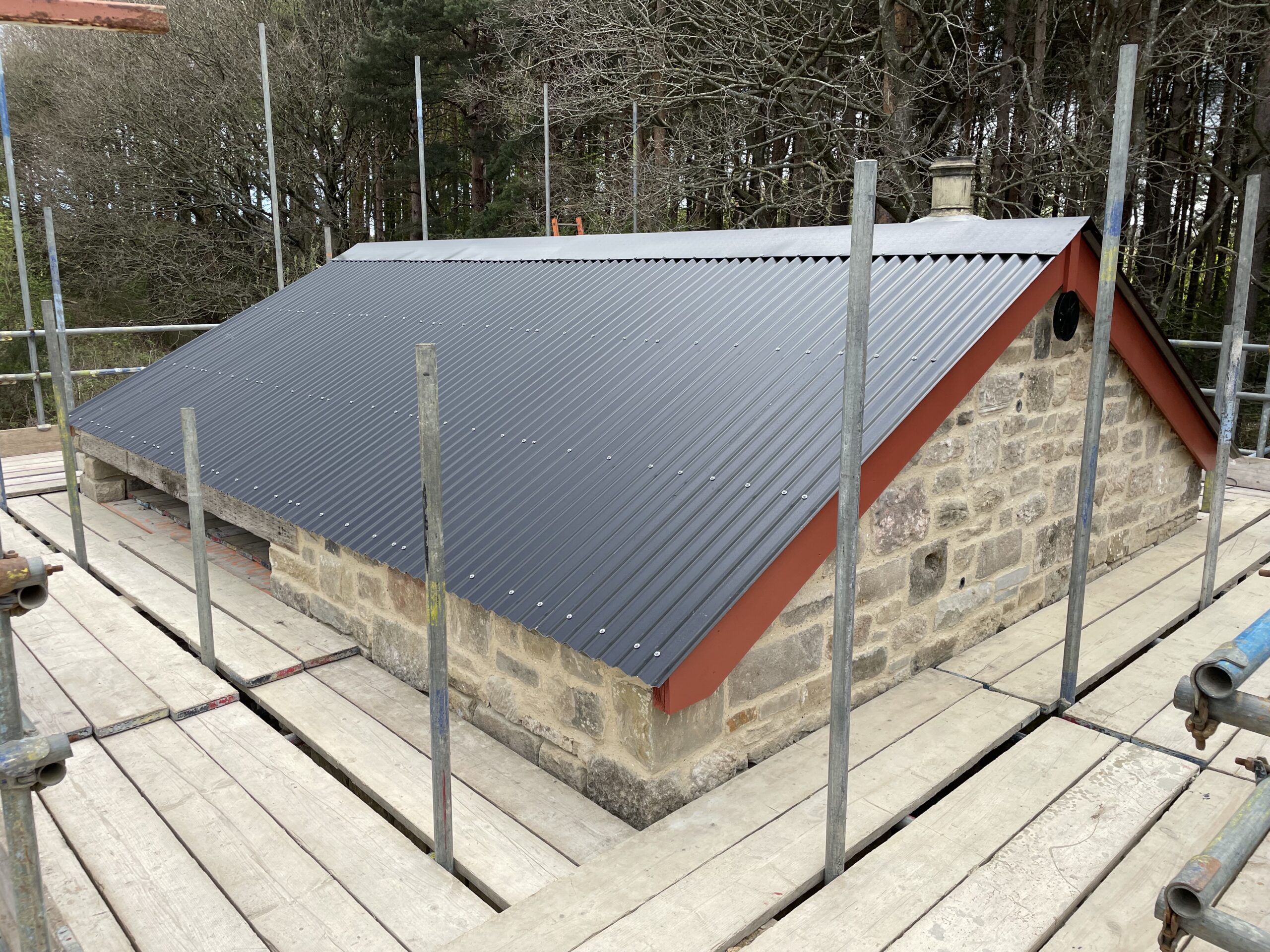
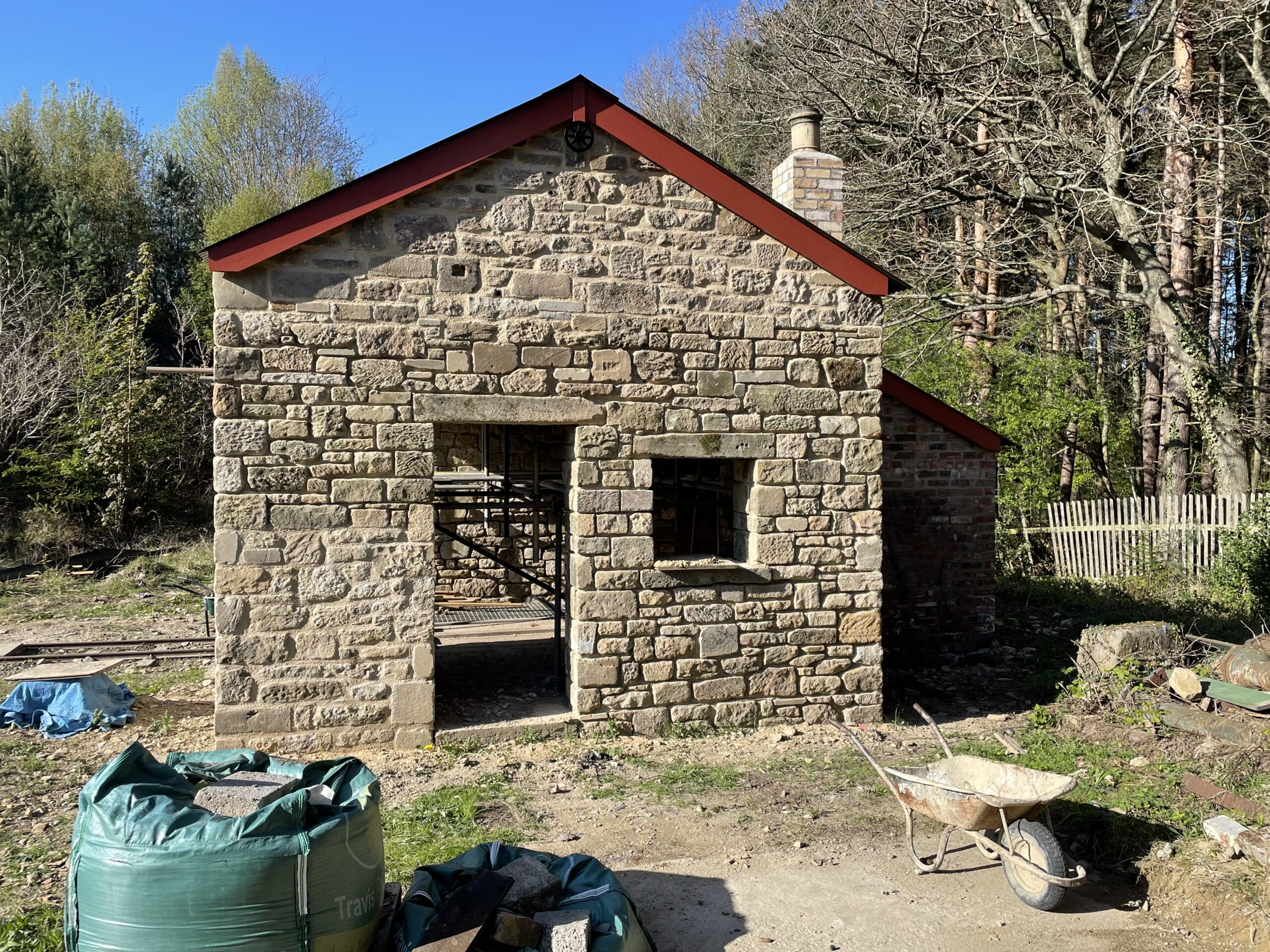
The corrugated roof has been fitted, after the joists were stained and underside of the sheets painted black to disguise their modern origin. The roof will soon weather down under the trees in this location. Attention has now turned to pointing the stonework whilst the main doors and pedestrian door and window are manufactured and painted. The shed will also have a basic electrical installation and we need to reinstate fencing/pathways in order that visitors can access the shed. The pedestrian door will be of the stable type, to enable the top portion to be opened to allow visitors to see inside.
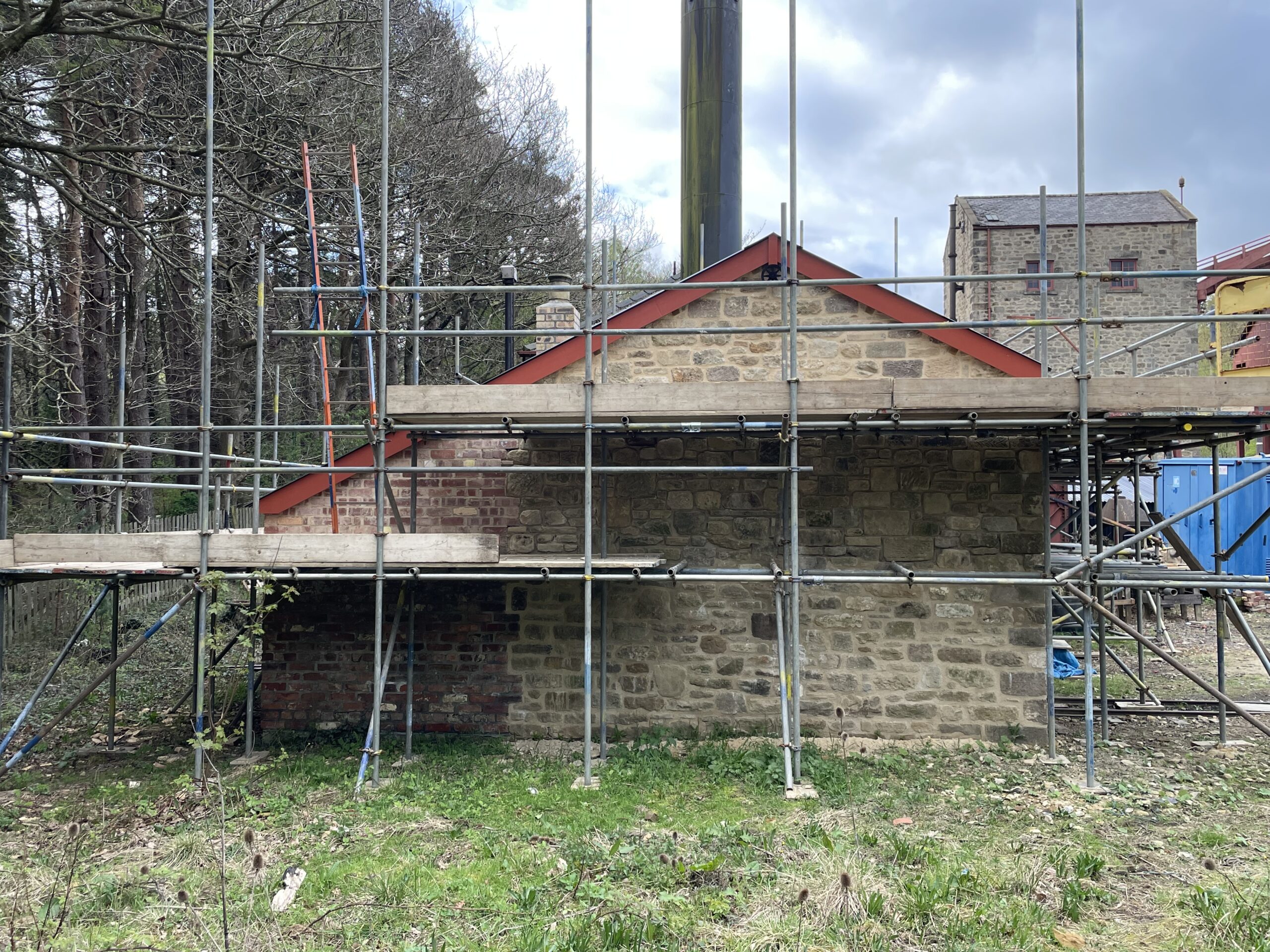
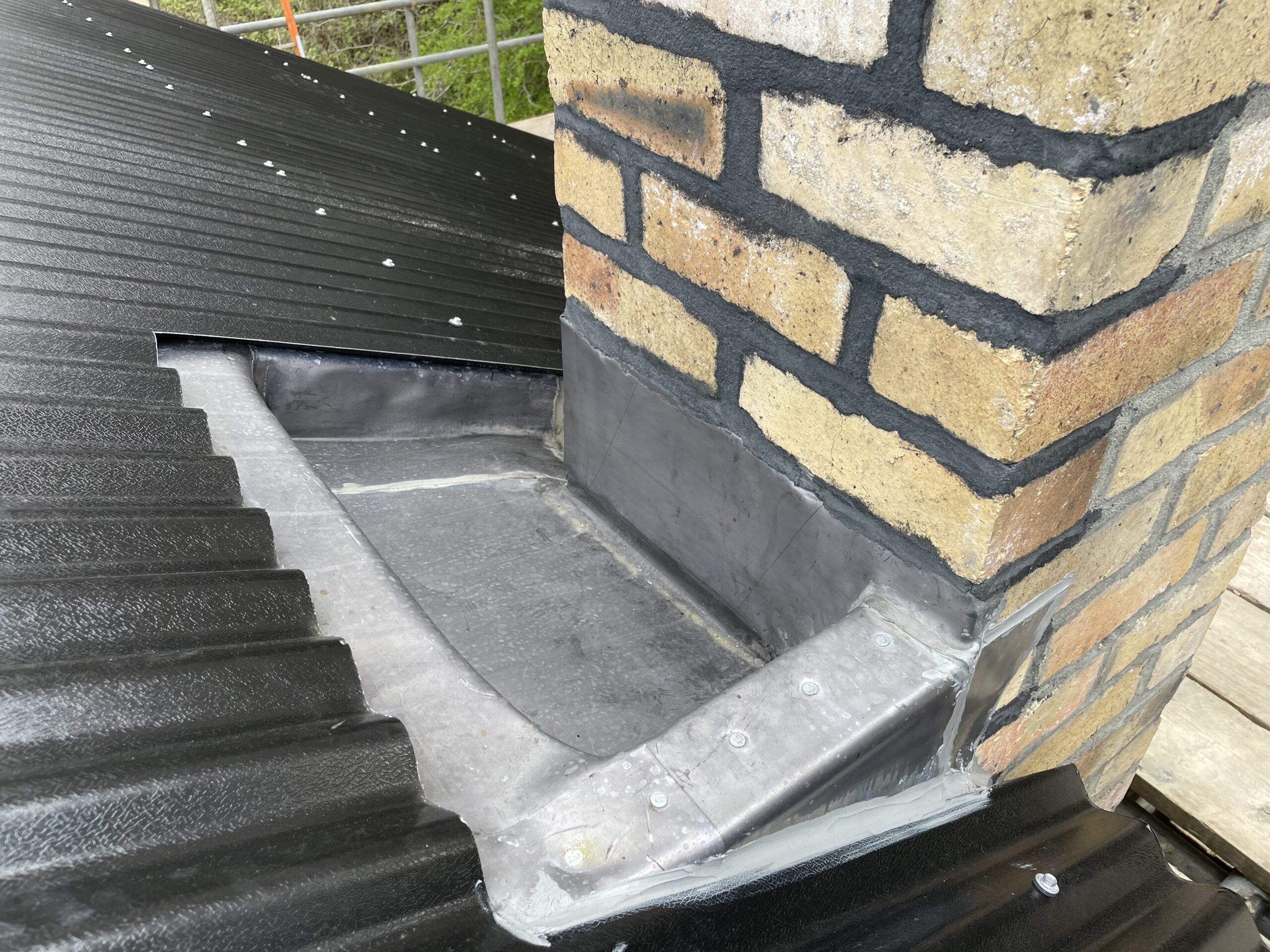
Below: Even with a corrugated roof, there is scope for some interesting leadwork, as shown here around the chimney.
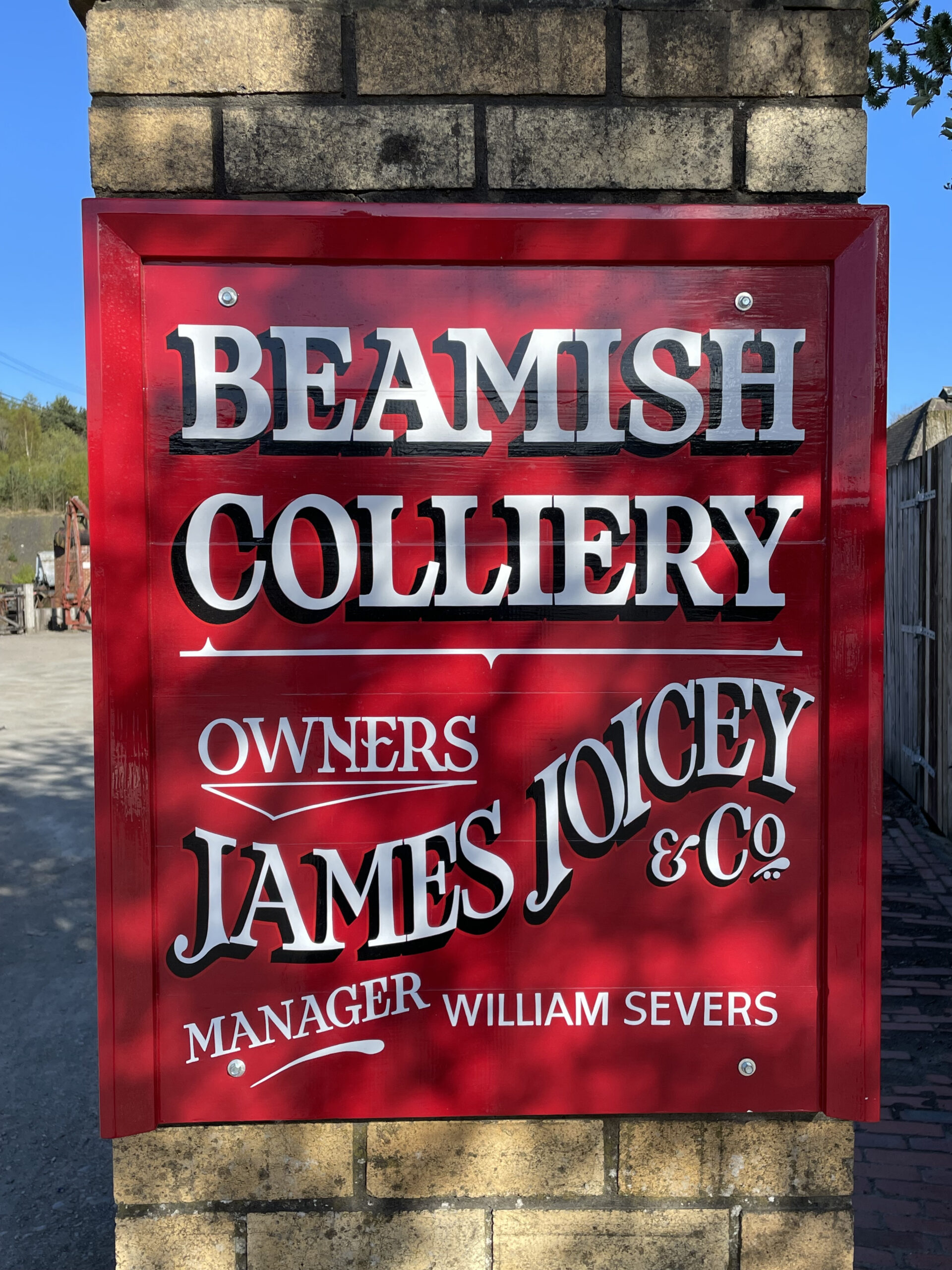
Below: The shed will receive some signage, possibly in the style of this sign that Jonathan’s team has recently fitted (to replace its decaying predecessor) and which was painted by Eddie Rodgers. This would give continuity across the Colliery, with its very genuine identity as a Beamish pit. I am also sure that I’ve seen some cast iron signs that might be suitable adornments for the building too, and internally there is a workbench and other details for the fit out yet to identify.
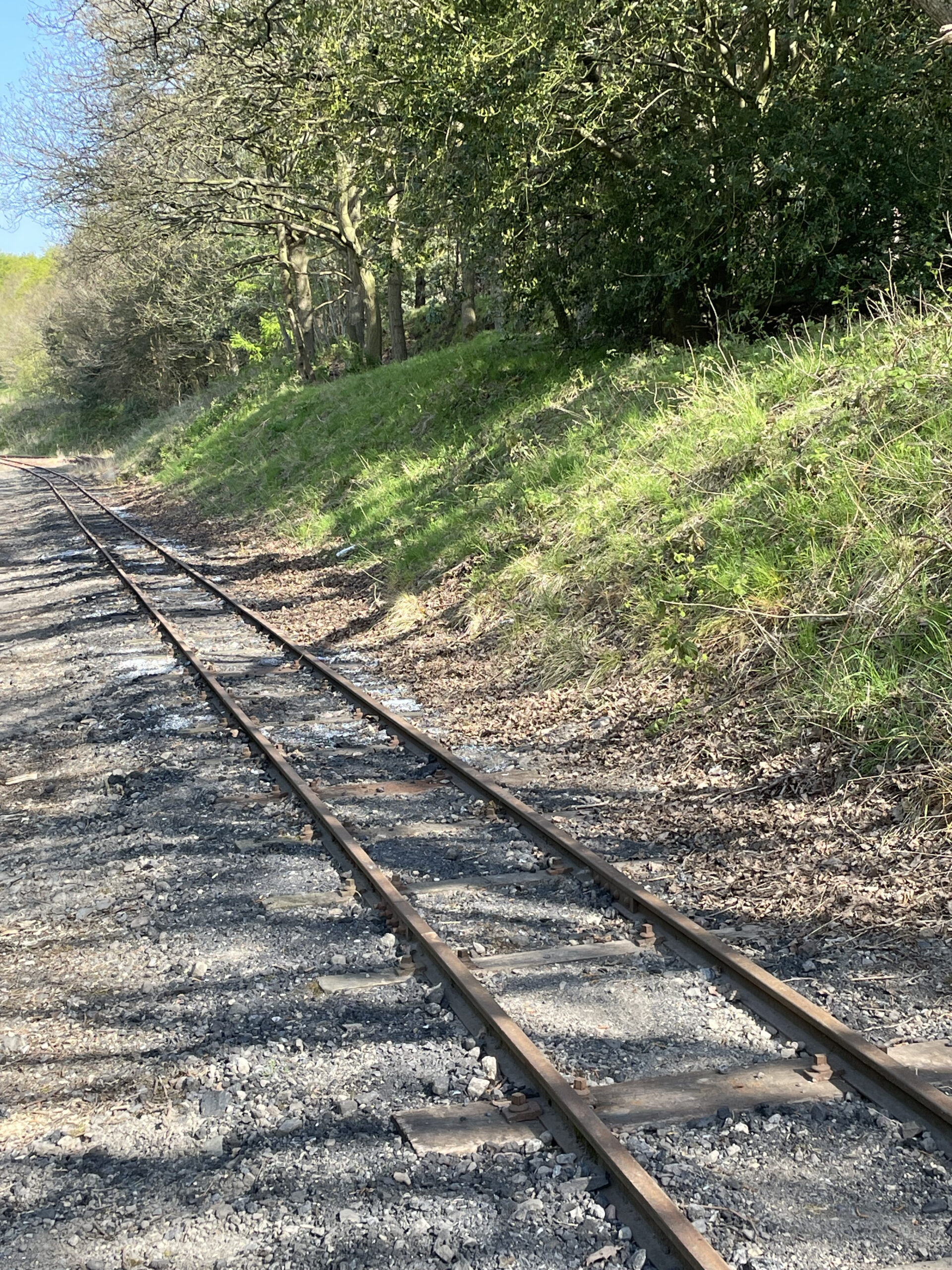
Below: Spot re-sleepering of the narrow gauge ‘main line’ has been taking place, with half-length sleepers substituting the original quater standard gauge sleepers that were used for expediency and cost on this section.
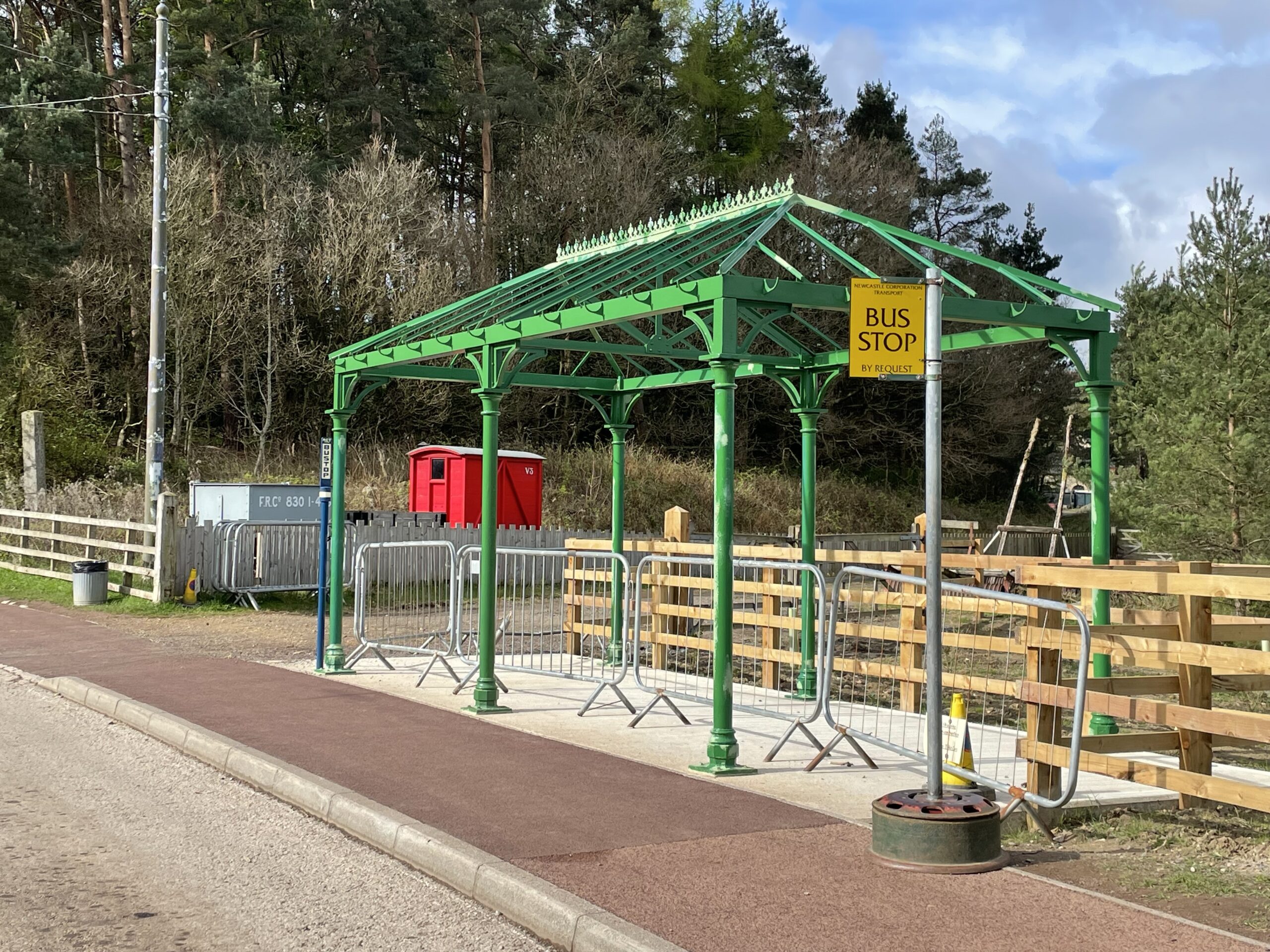
Below: With the Easter holidays at an end, the scaffolding around the Darlington bus shelter could now be erected to enable painting, glazing and installation of the gutters to take place. After which the shelter can be opened for business.
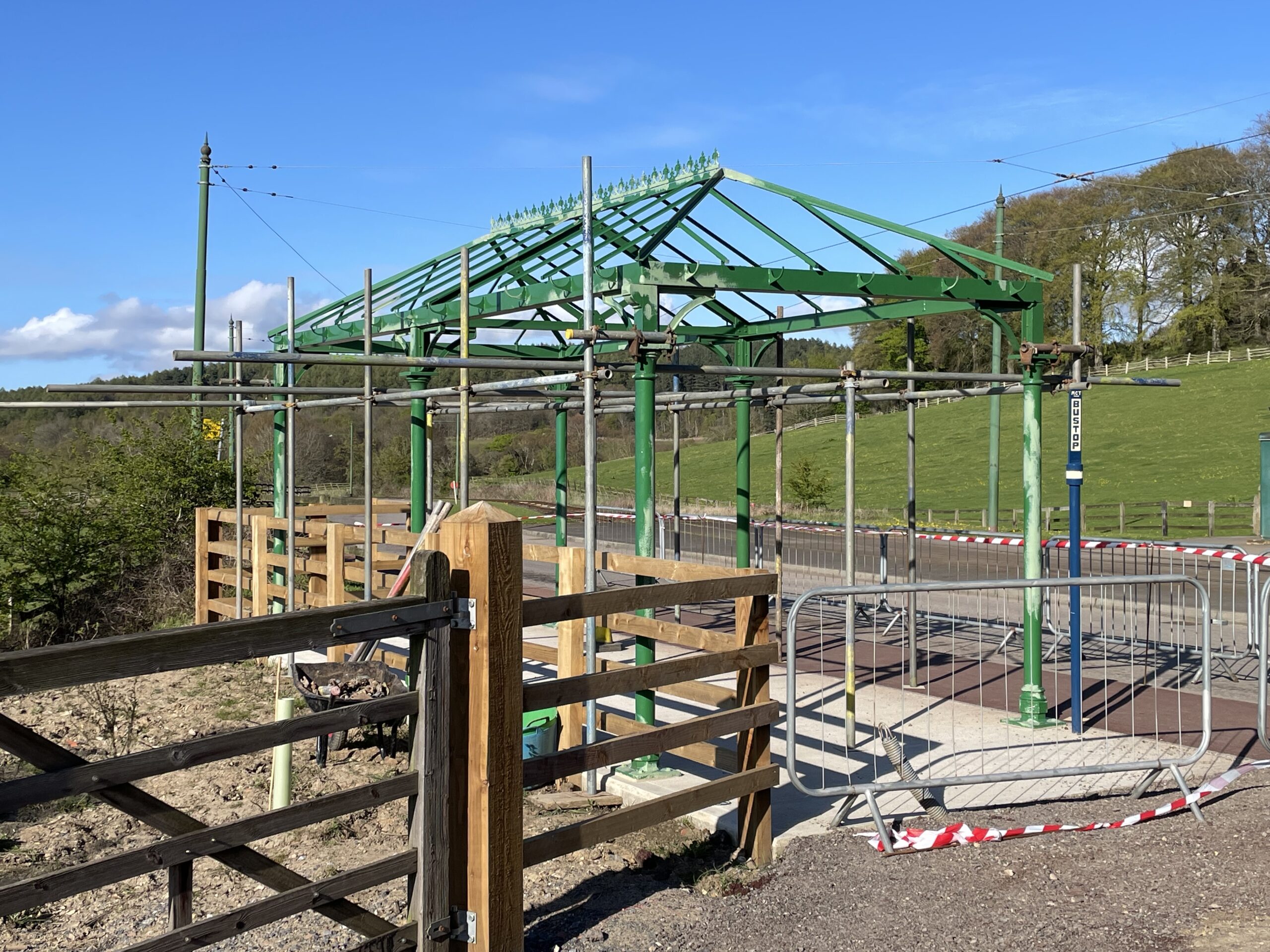
Below: By the close of play on the first Monday after the holidays, the scaffolding was being erected…
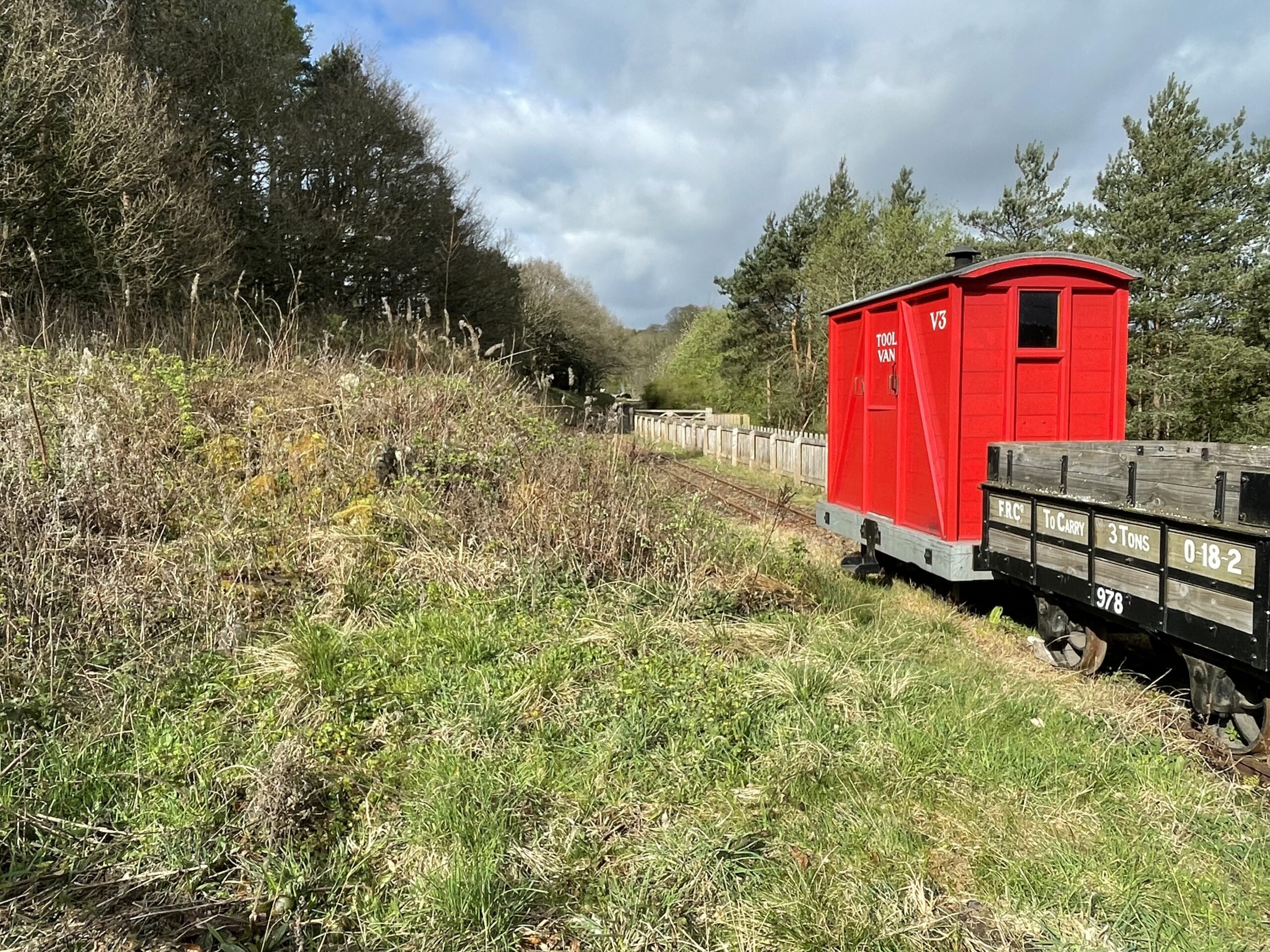
Below: With Pockerley Tram/Bus stop becoming more prominent, another idea is being re-considered, which was to install a siding at the end of the narrow gauge railway and re-erect the shed currently used in the upper yard there, possibly extended and with some provision for public viewing of the locomotive inside when it is not in use. There is quite a lot of stone to remove and the ground to prepare, but there is some prospect of this happening before too long, and this would help give purpose to this end of the narrow gauge railway as well as add a bit more of historic interest to this area of the site, alongside the bus and tramway waiting shelters. We have a cast iron water hydrant cabinet for road steam vehicles that was partially restored some years ago – erected here it might provide a suitable location for a hook-up for power supplies to enable pop-up catering to become something that might be possible here too. Nothing is set in stone, I should add, but this is how many ideas develop – making use of historic artefacts in the location the site provides in abundance. It’s also perhaps a symptom of the sunshine – it always makes things look better!
Below:The new window frames have been installed in the signalbox and the guttering has been replaced.
Below: This was followed by the fitting of new glazing – transforming the appearance of the building very quickly.
The North Eastern Branch – Rowley Station
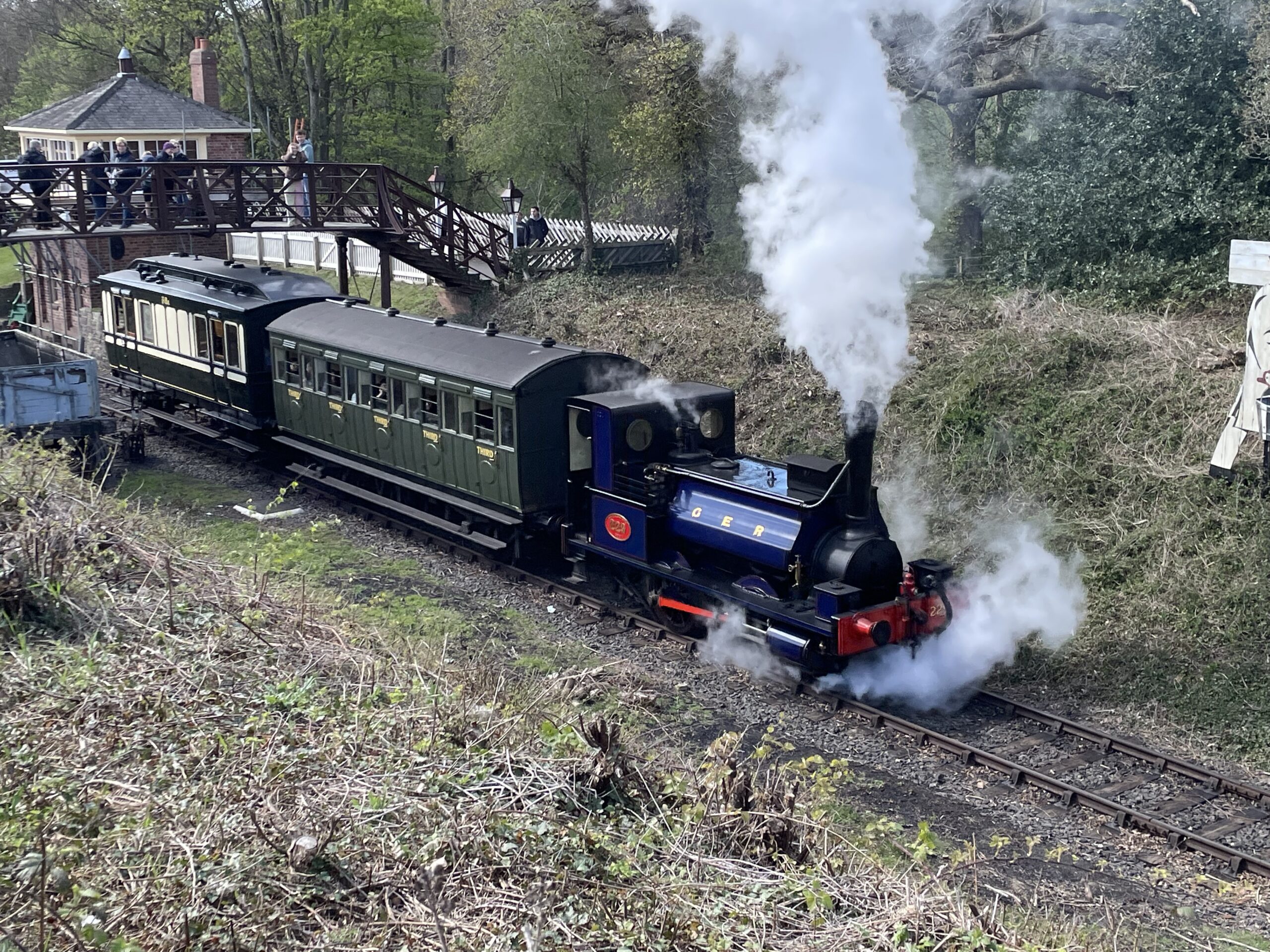
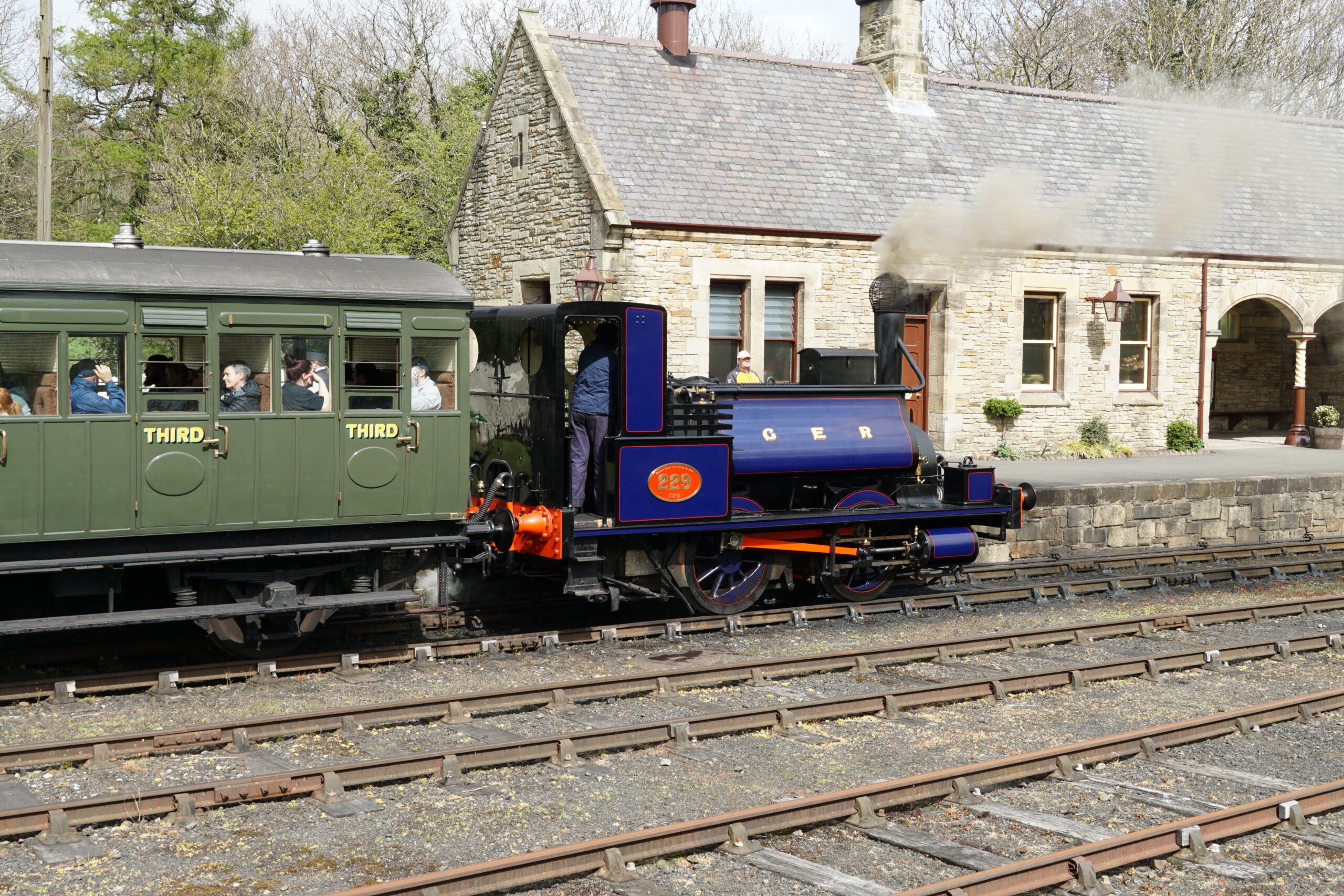
GER 229 will depart shortly, to make an appearance on another railway locally before fulfilling an engagement in Gloucestershire in May. We will then be looking forward to seeing it return in July. Sir Berkeley has not steamed at Beamish on this visit, as two failed tubes and the need to keep the operation going meant that there hasn’t been time to do anything other than plug these pending another steam test. We are in discussion with its owners regarding options for it.
The plan for Rowley had included operation across the nine days of Whit week, but the hoped-for motive power is not available, and the cost of hiring and haulage really makes this option unrealistic. Obviously, once we have Dunrobin, this will alleviate such concerns and make committing to the annual operating plan far easier to achieve. It is disappointing to have ROwley operating on this rather erratic basis, but the recent surge in fuel prices is making haulage something we have to consider carefully – something that is also becoming a significant (if not the most significant) consideration when putting together the event programme, which takes place across the same period of time.
Below: GER 229’s fortnight at Beamish has been a tremendous success and it has proved to be very popular with visitors, who can look forward to a return visit this summer.
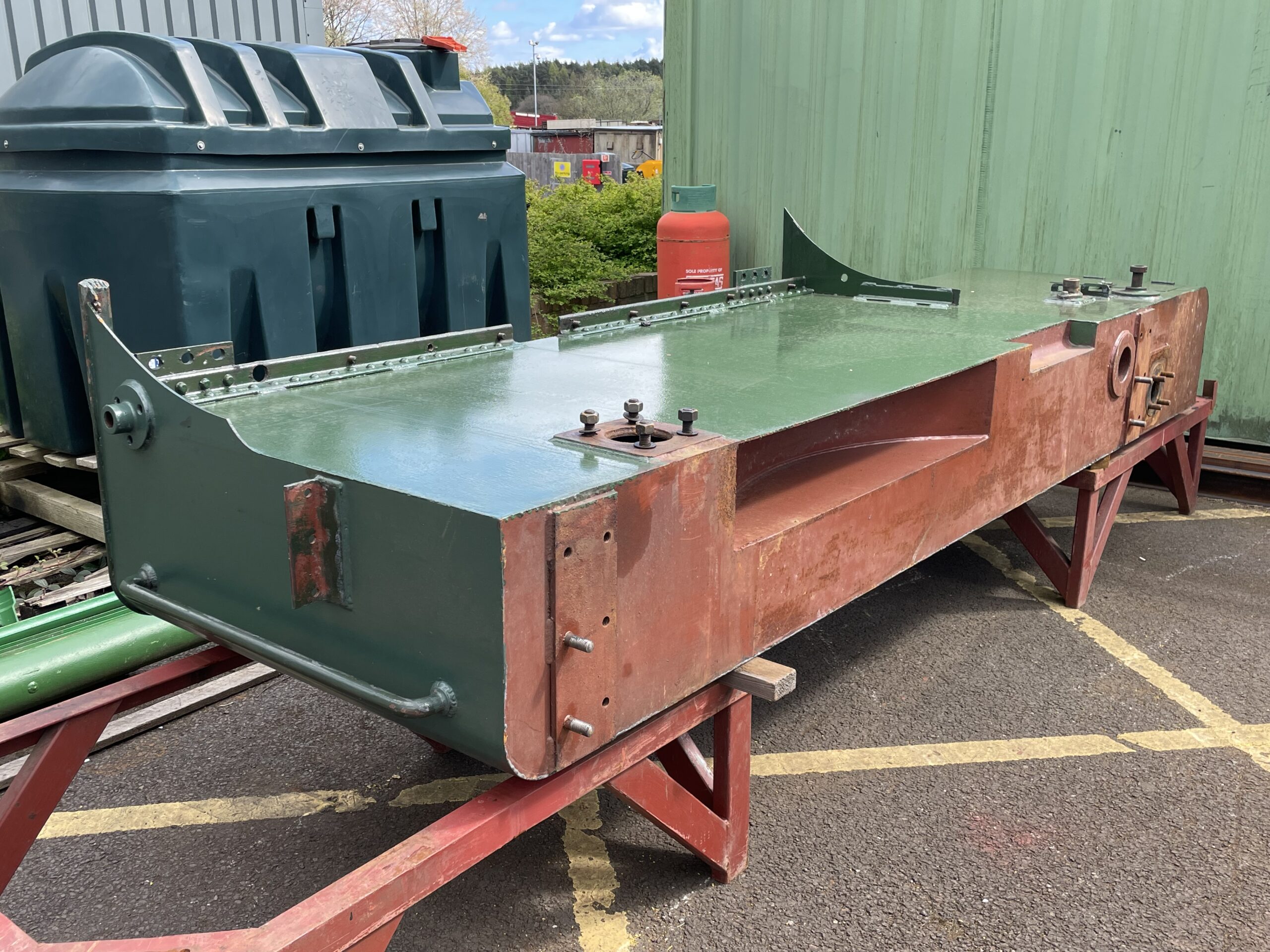
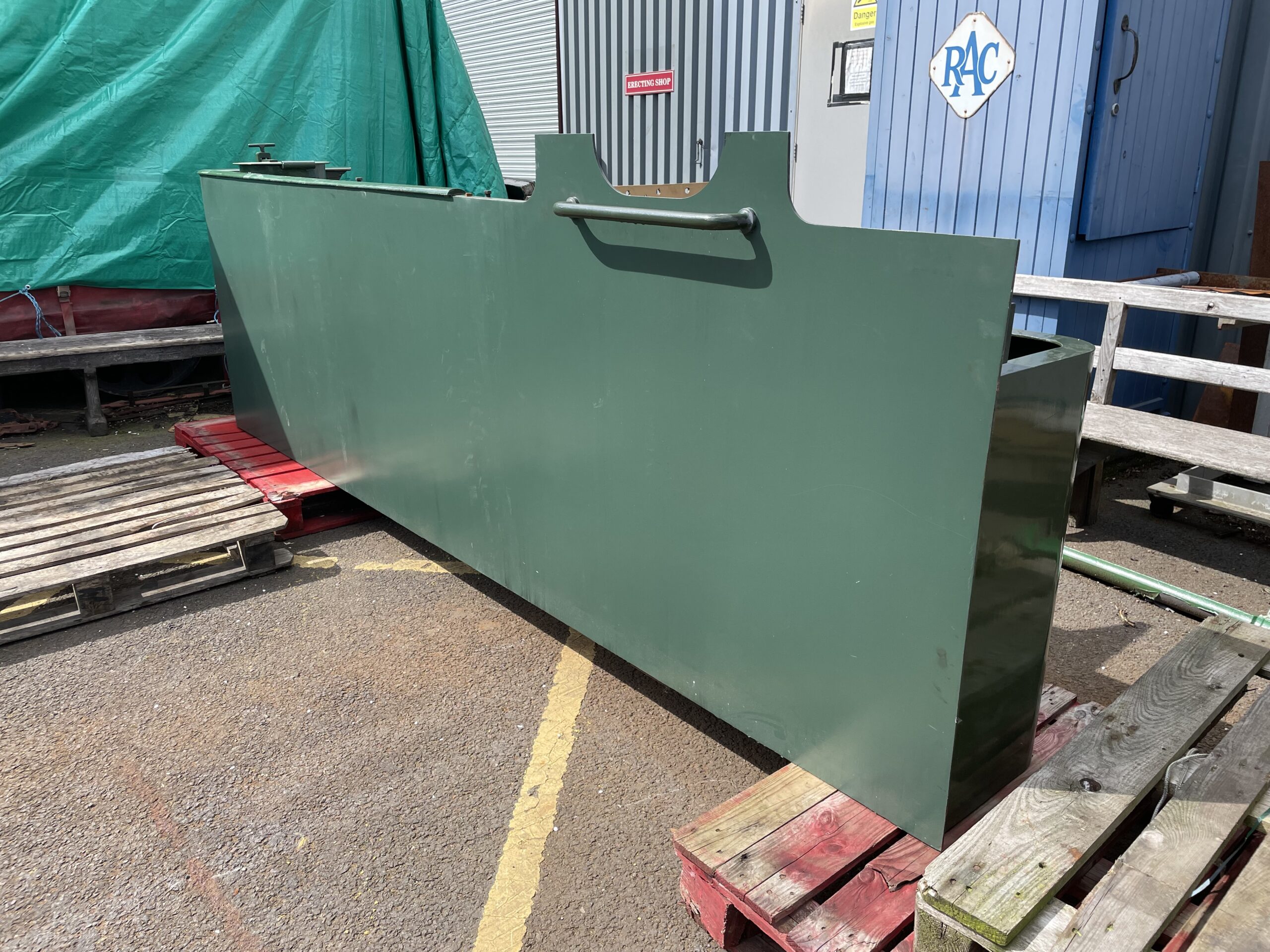
Below: Speaking of Dunrobin, the locomotive’s new side tanks have arrived at the museum for remedial work – the two projecting pads on each tank need to sit flush with the tank base to allow it to sit onto the footplate properly. Chris and Dan will devise a method for doing this, and also remove the steps on the front of the tanks (these were a Canadian addition that was copied onto the new tanks as we’d forgotten to say they weren’t needed!). The tanks will then return to Bridgnorth for trial fitting onto the locomotive.
Armstrong Whitworth Car
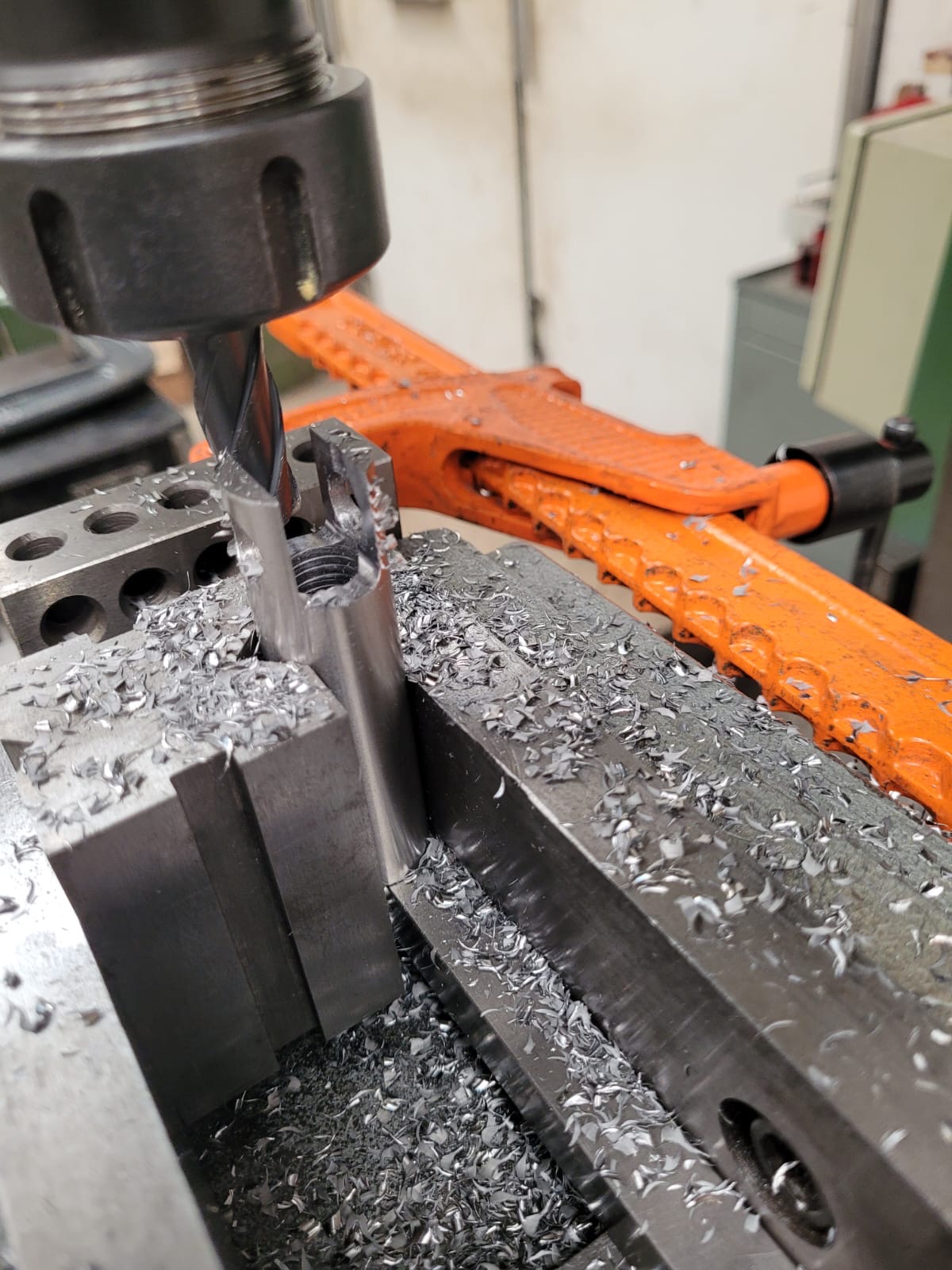
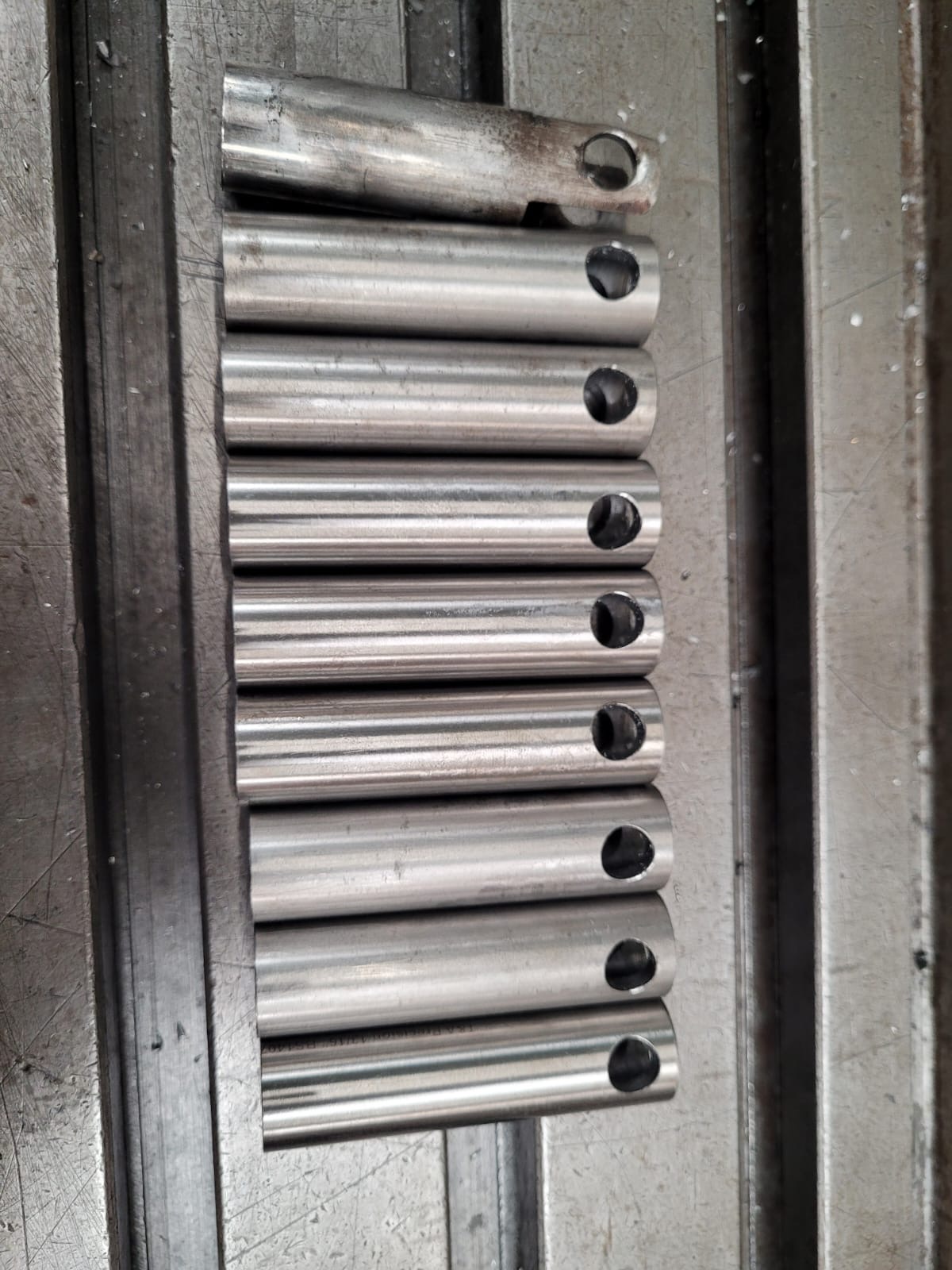
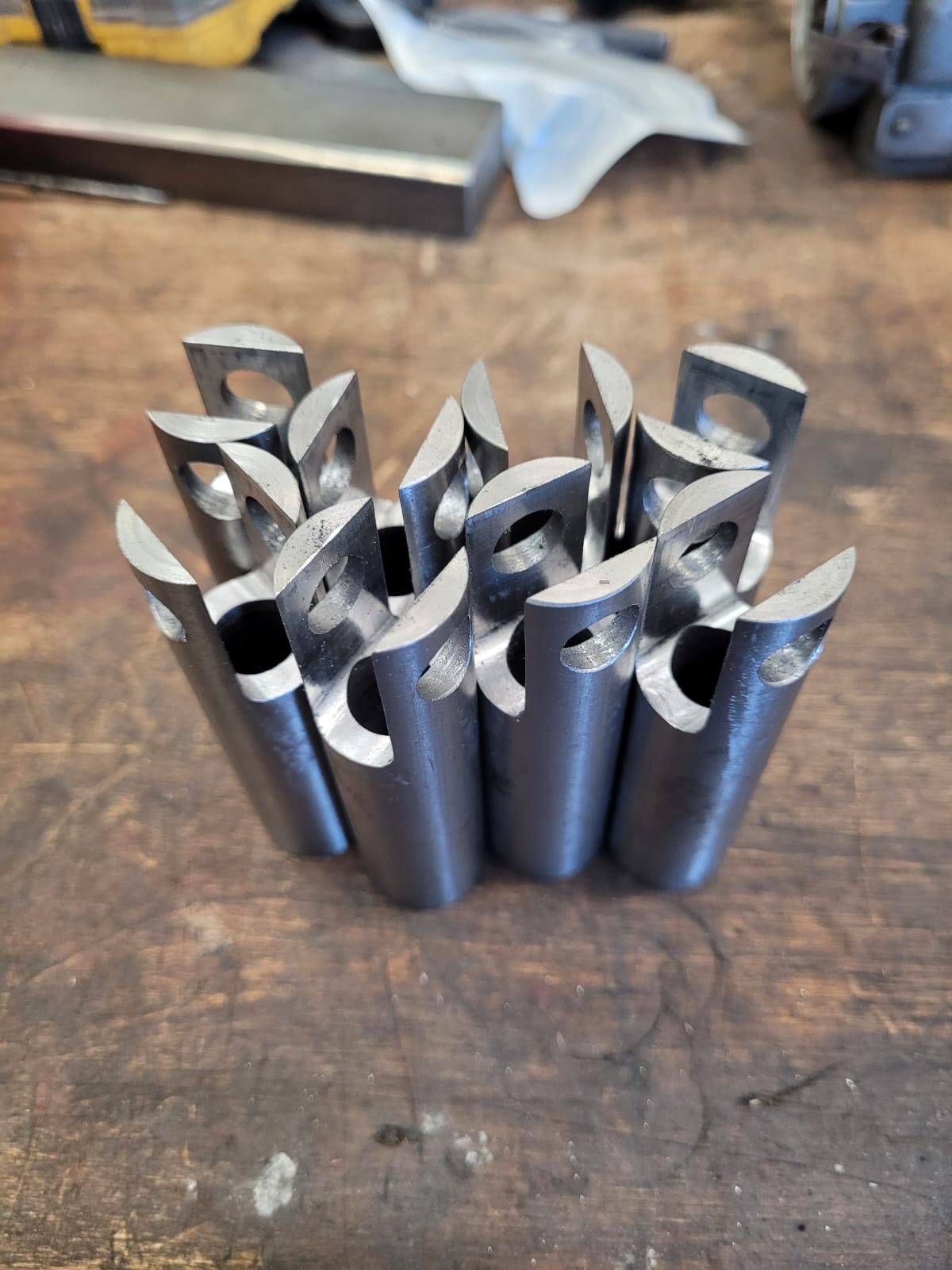
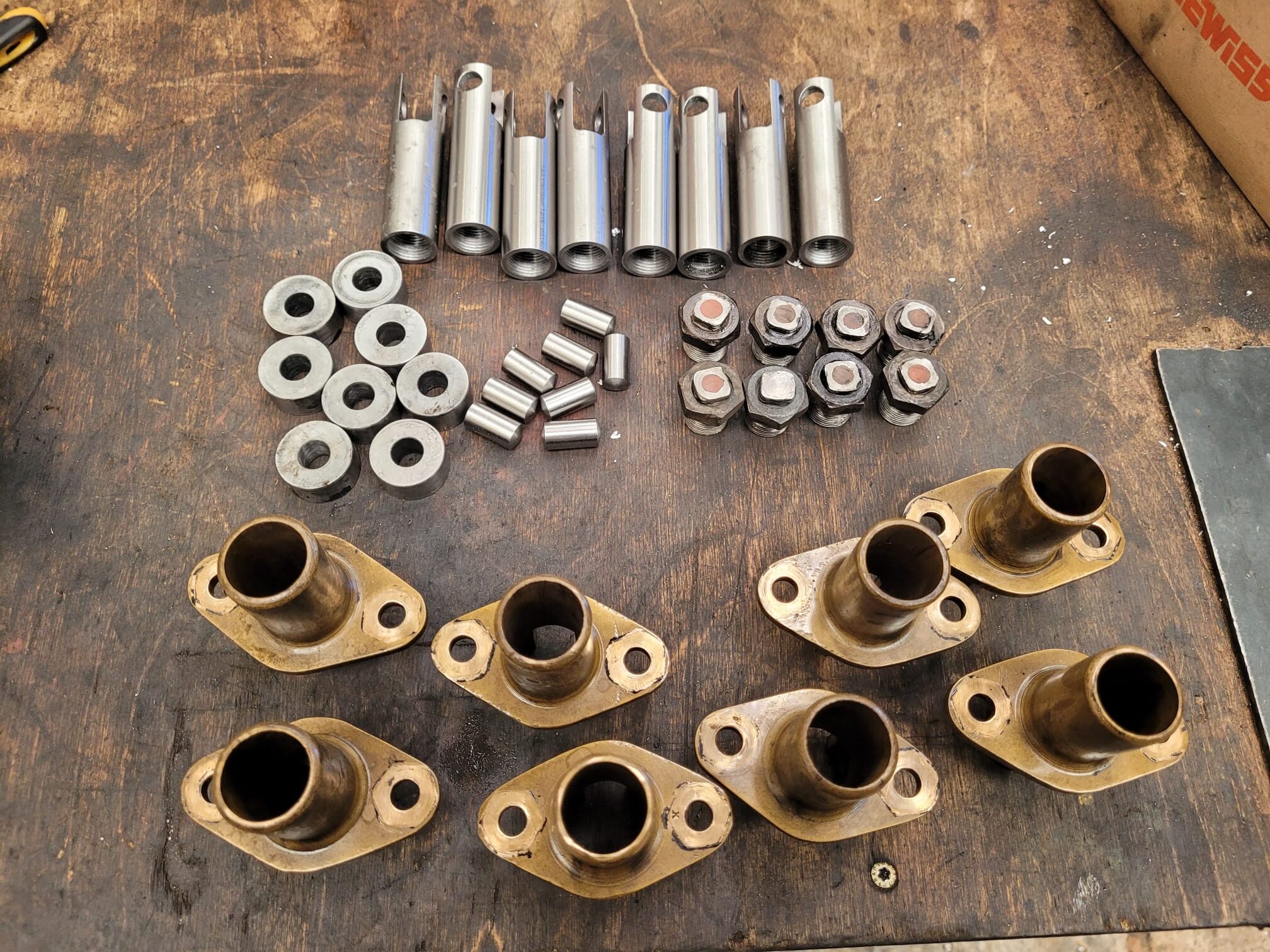
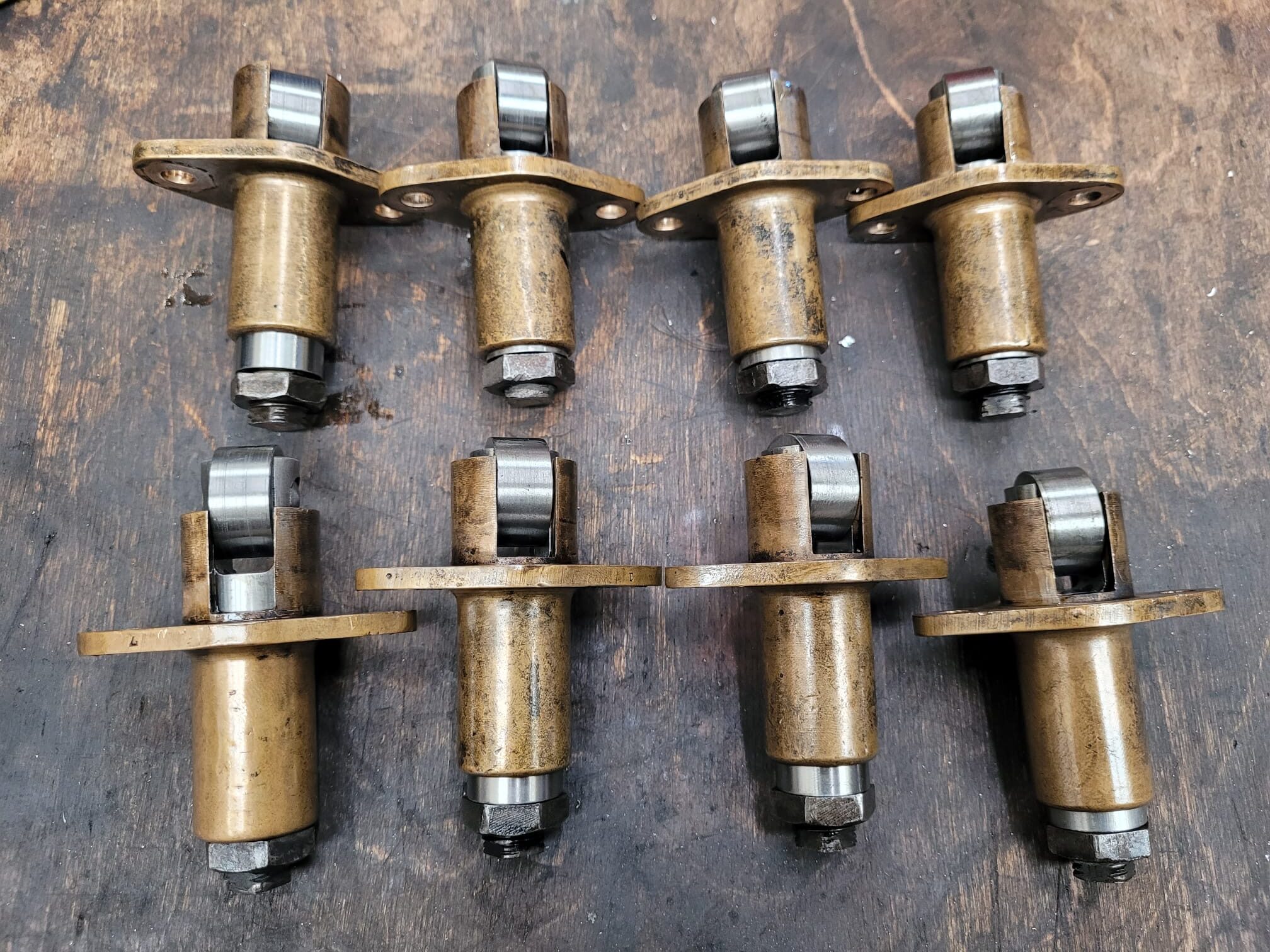
Below: New cam followers have been made for the AW’s engine.
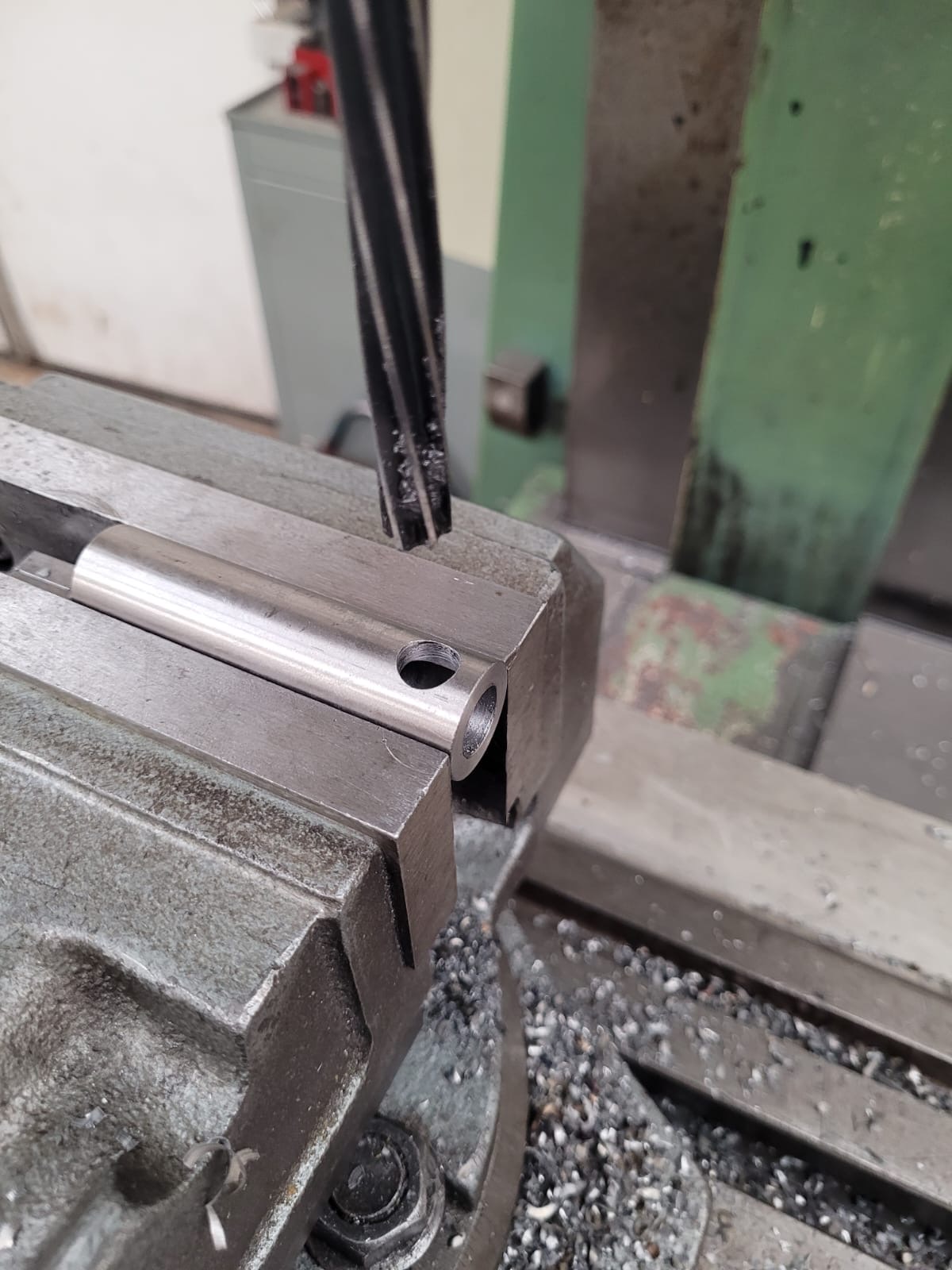
Below: This view shows the clearance being milled within which the cam roller sits.
Below: An original follower is seen at the top, with the new followers below this.
Below: The finished pieces, ready for the rollers and pins to be fitted.
Below: The previously made rollers and pins for the followers…
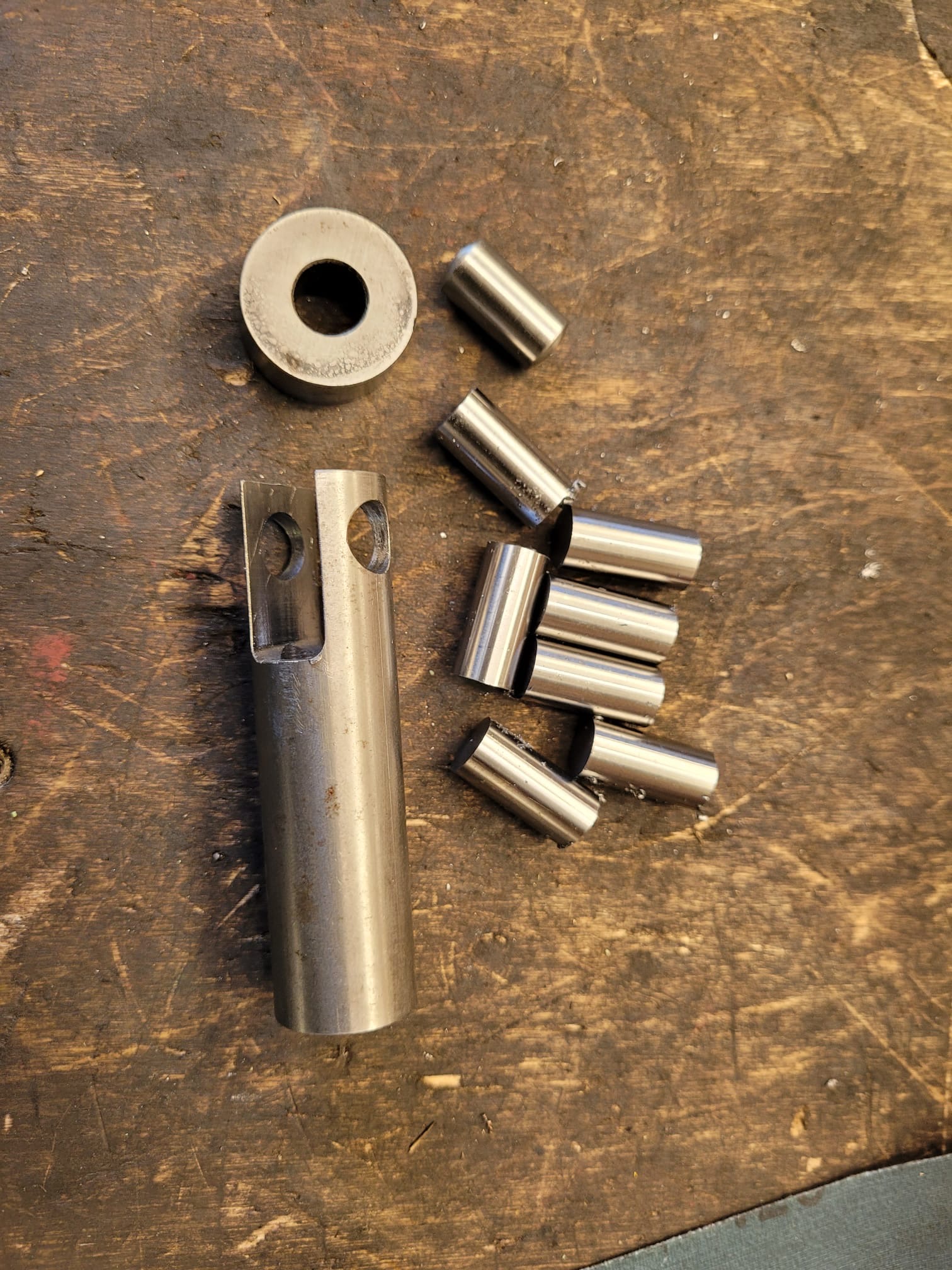
Below: All of the components prior to assembly…
Below: The same components following assembly. The AW has had a great deal of attention in order to restore it to excellent mechanical condition. Work is still to be completed on the bulkhead and hood, as well as to install the distributor drive.
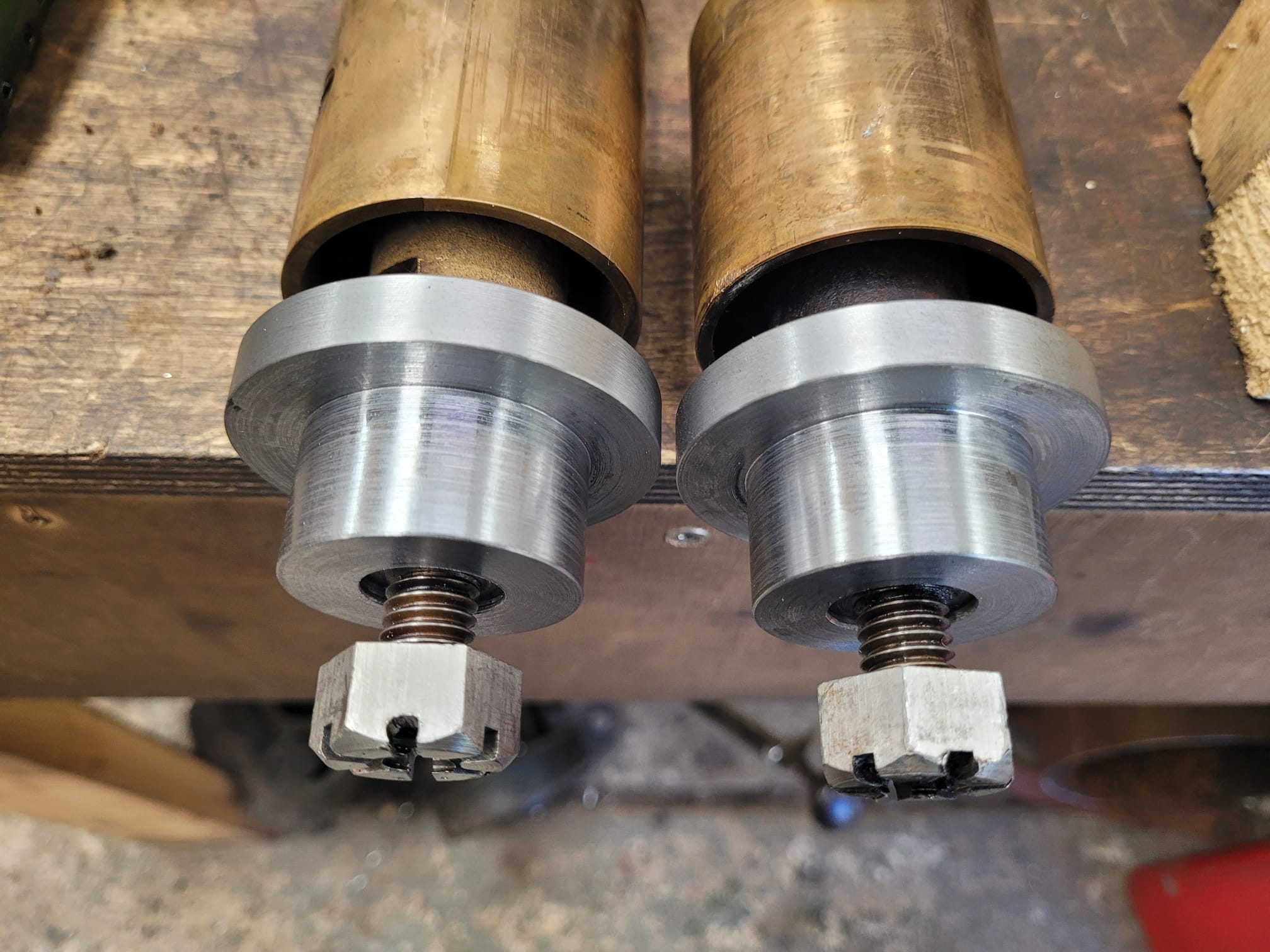
Below: Taper bore top-had bushes made for the timing gear.
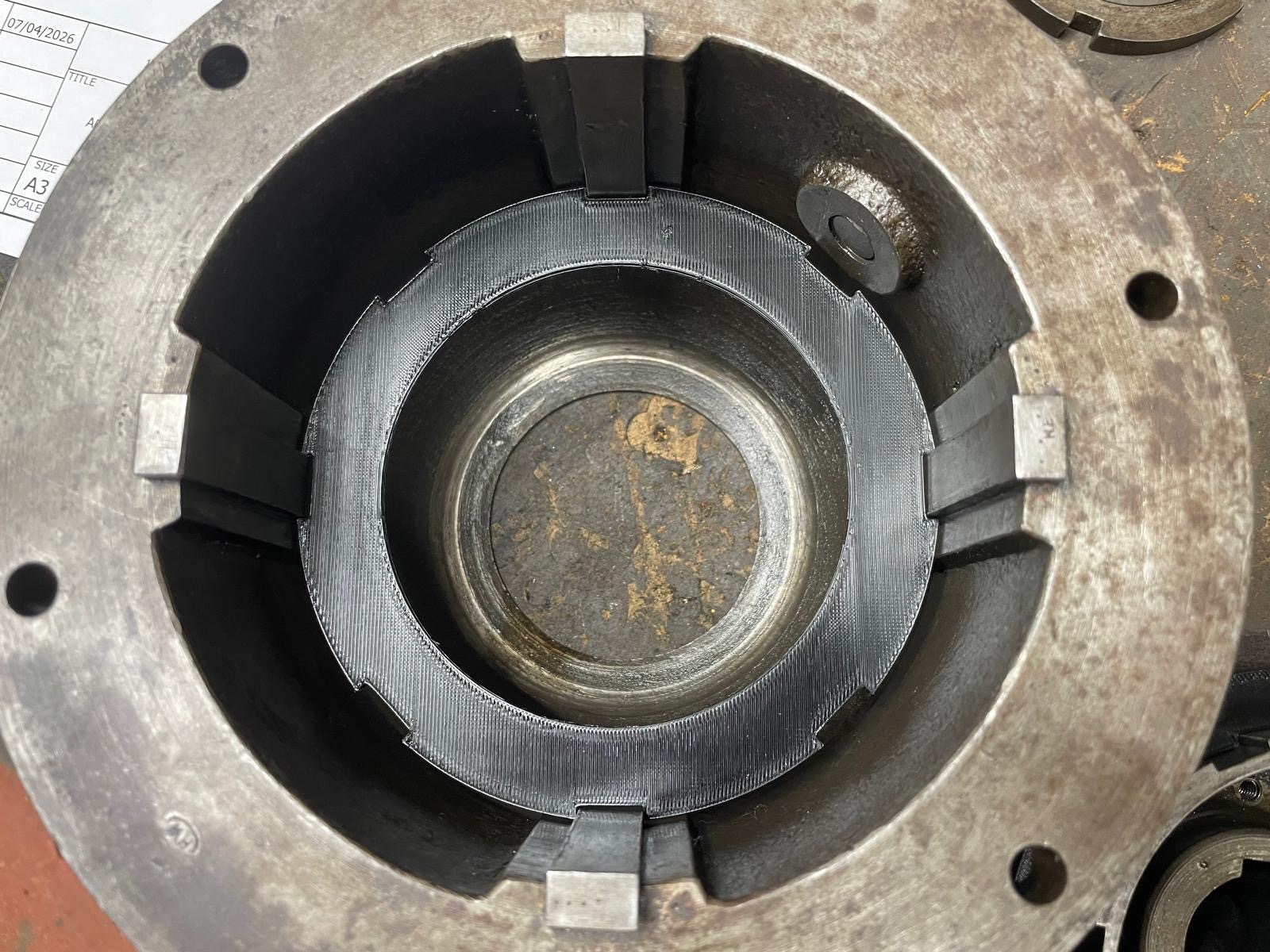
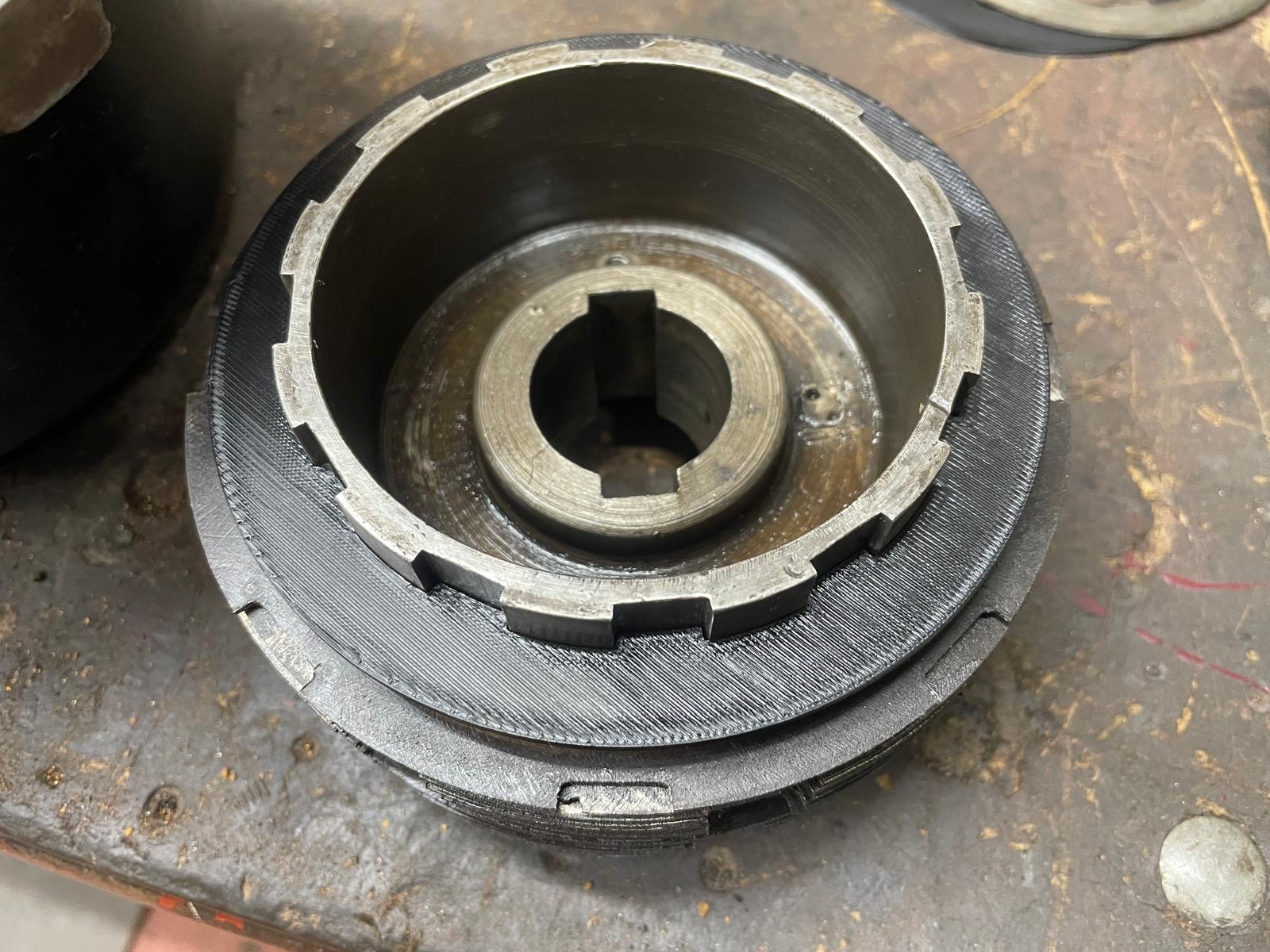
Below: The AW Clutch has also been receiving attention, with new clutch plates (in considerable number – there are sixty of each of these parts (inner and outer) that form the clutch basket assembly and which were designed in-house and laser-cut for a price that was so low as to seem barely believable.

Below: 3D Prints were used to prove the design and test clearance and fit before committing to the order – the first view shows the inner profile, the view below shows the outer. I shall try and get some photos of the finished assembly which should make the operation and design rather clearer.
Below: These brass buttons prevent the gudgeon pin working outside of the profile of the piston and scoring the cylinder bore. These are the new pistons made for the AW.

Trams and Buses
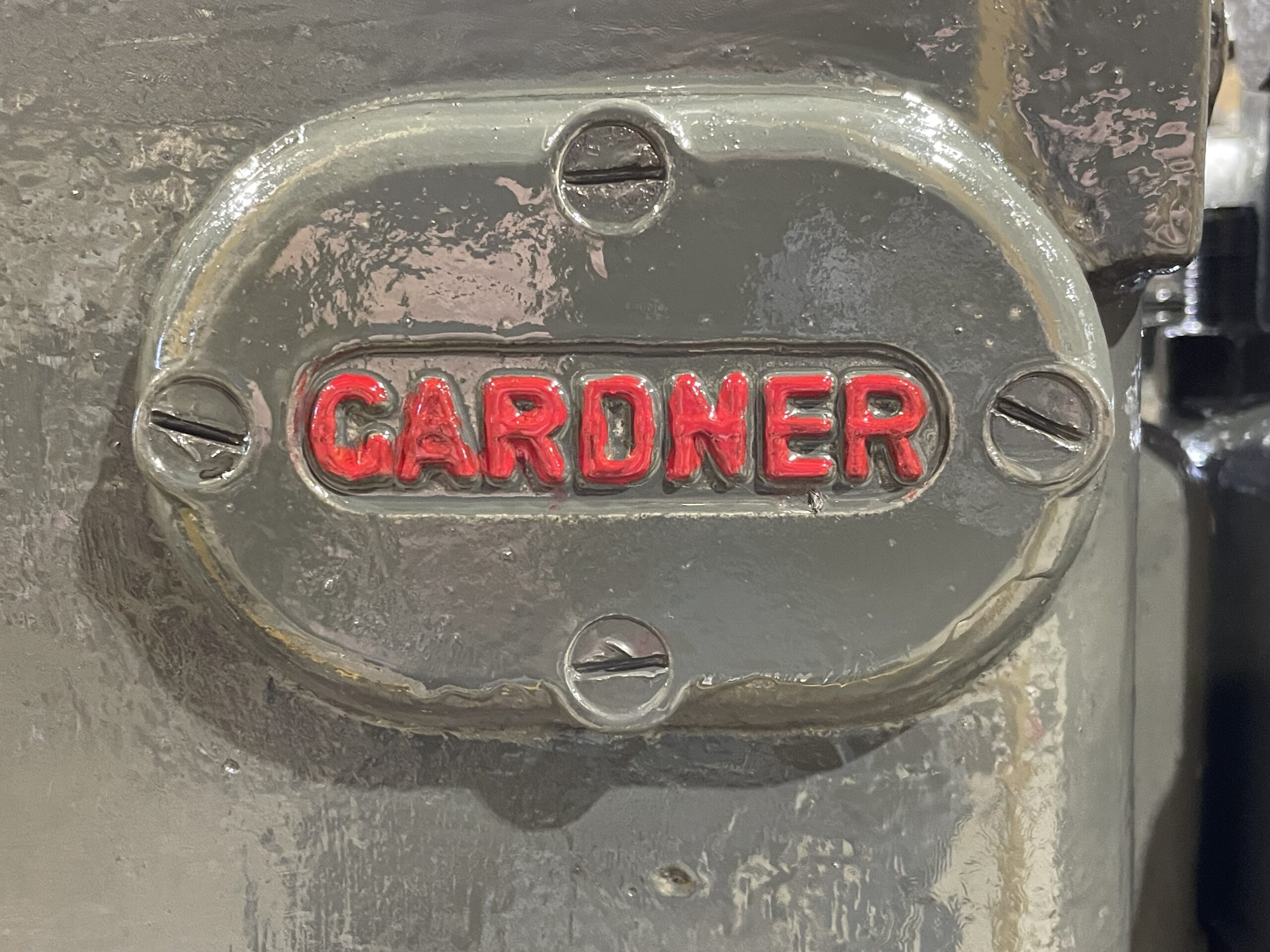
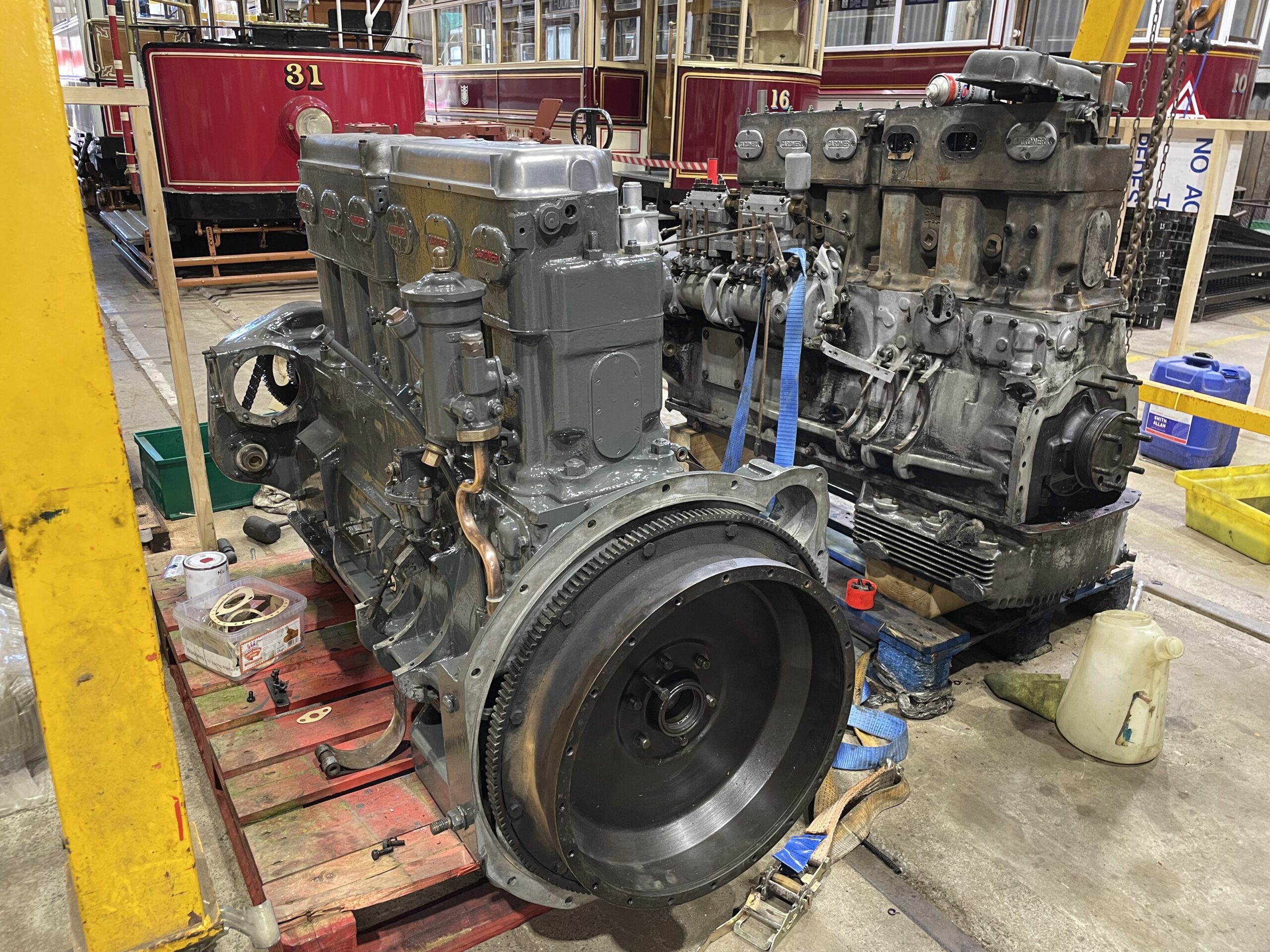
Below: The Gardner engine overhaul for Rotherham 220 is now well-advanced and it is waiting on access to the front of the bus – the route in for the Telehandler currently being blocked by the partially-lifted Blackpool 31 (which is having replacement bogie stretchers fitted, in situ). The engine has been repainted in the correct shade of grey.
Below: The refurbished engine on the left, and old engine on the right. The original is by no means scrap, and can be overhauled in the future as a suitable spare for 220.
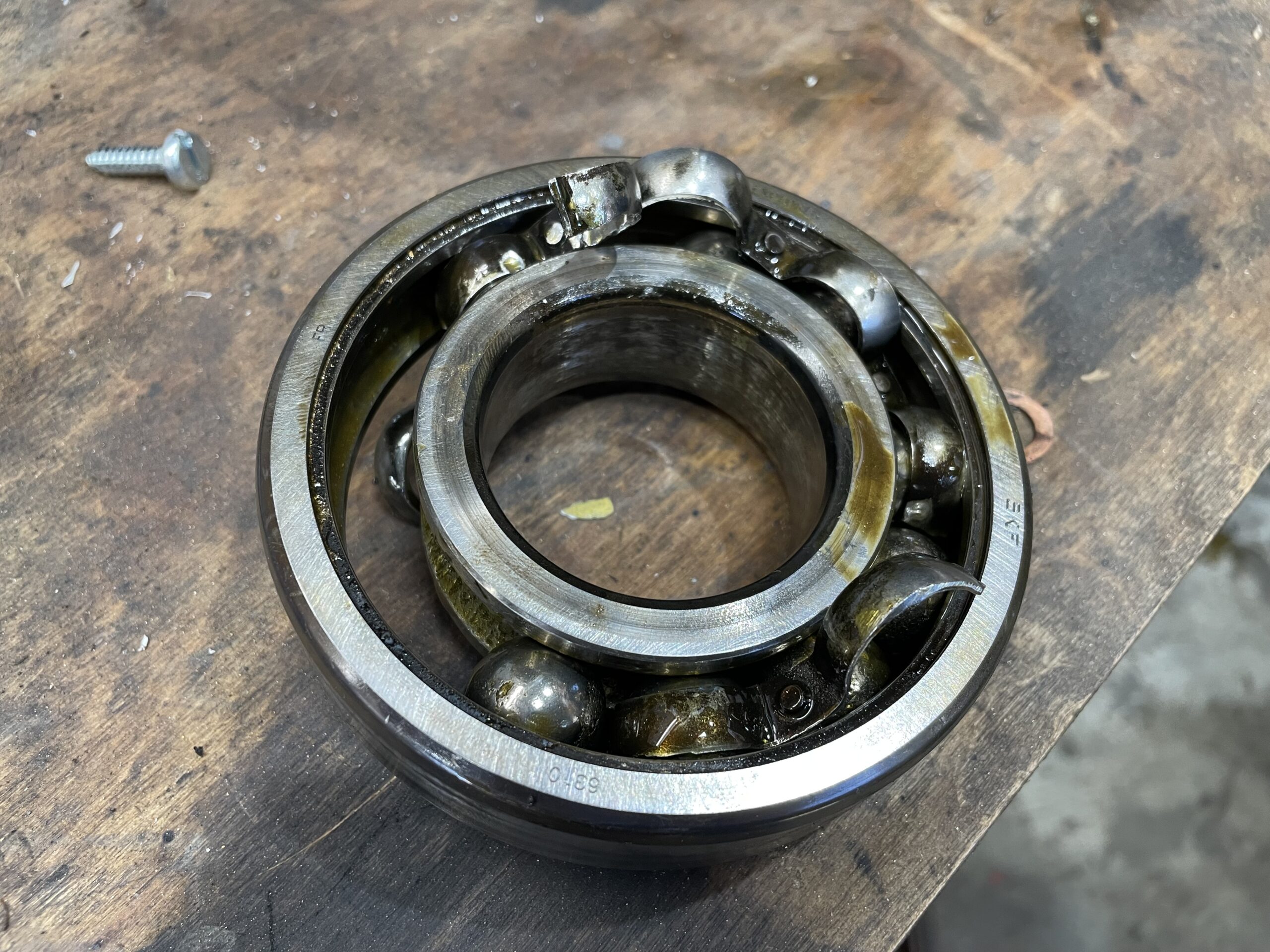
Below: Crosville 716 had a brief disruption to operation when one of the bearings in the rear axle was damaged. Fortunately, once removed, this proved to be a standard size that we could readily order a replacement for, so this repair was rapidly accomplished. Once work on J2007 is complete, 716 will be coming out of service for a short period of time to allow a number of jobs to be attended to and some cosmetic work carried out in readiness for the busy months ahead.
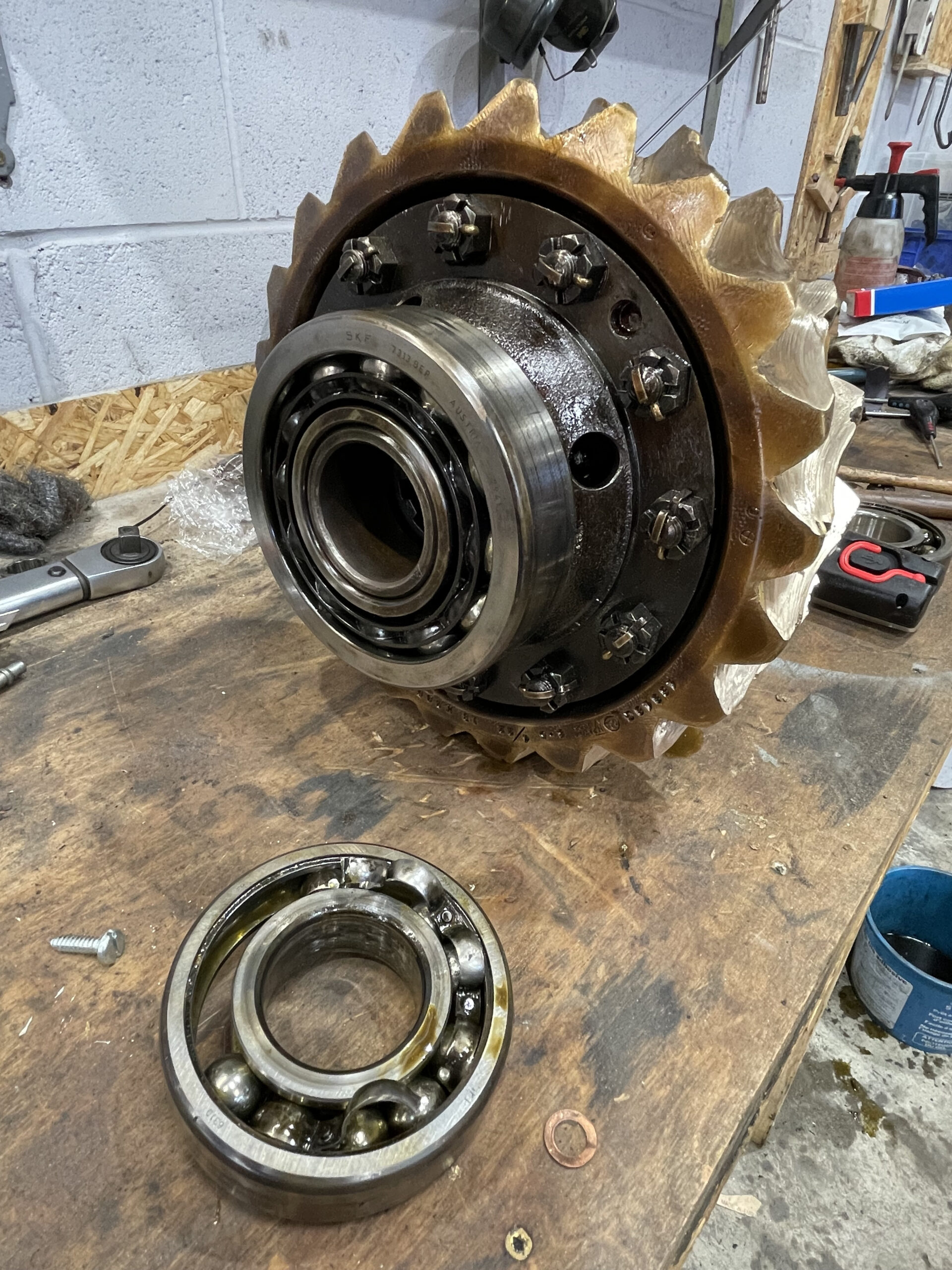
Below: A close-up of the damaged bearing, after removal.
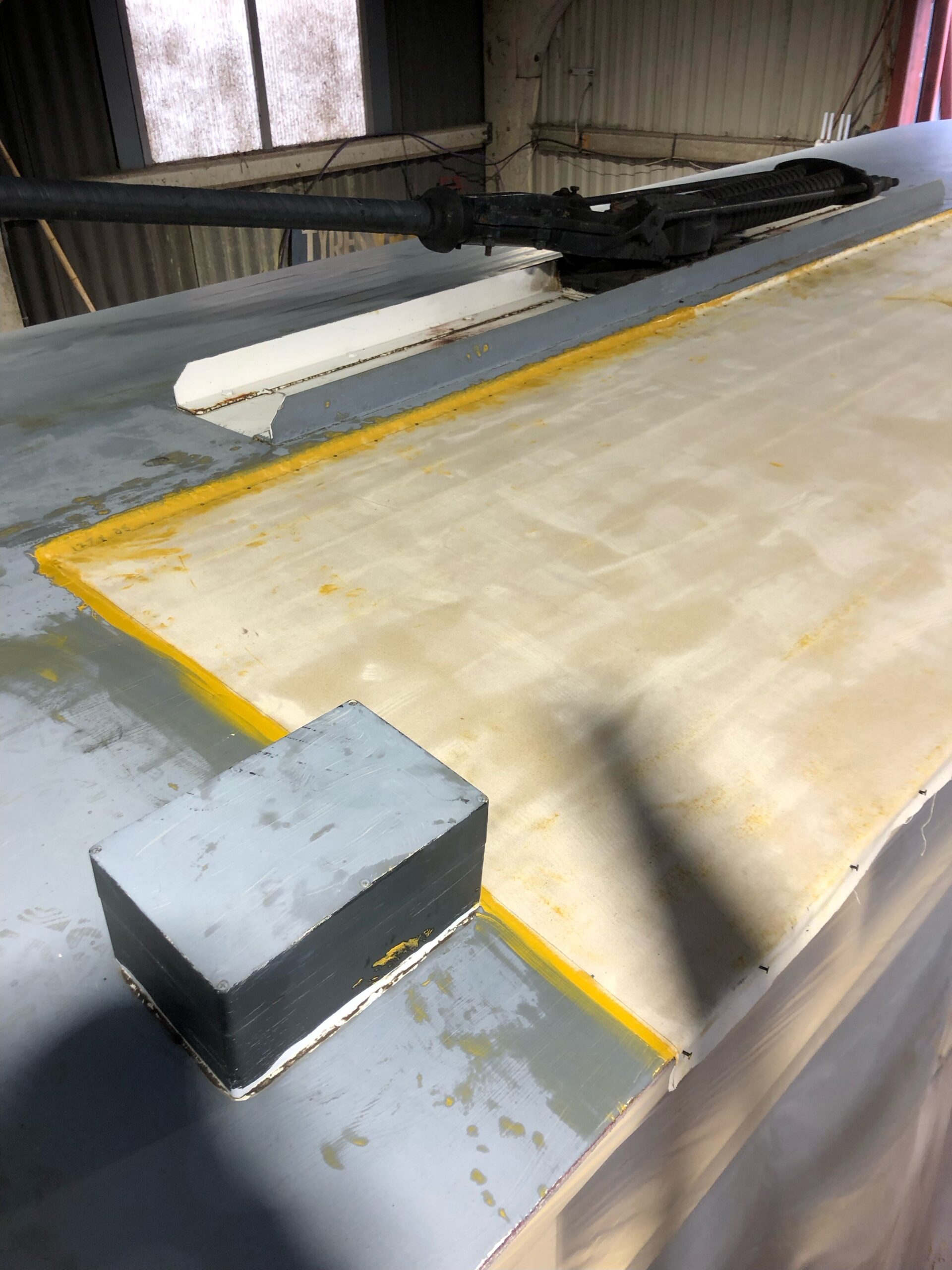
Below: A couple of photos now of the repair to Sunderland 16’s canvas roof covering – the original having torn from degradation rather than contact with anything. After final trimming and painting, the work has been completed. The ceiling panels inside the upstairs saloon will require repair as water ingress has damaged these.
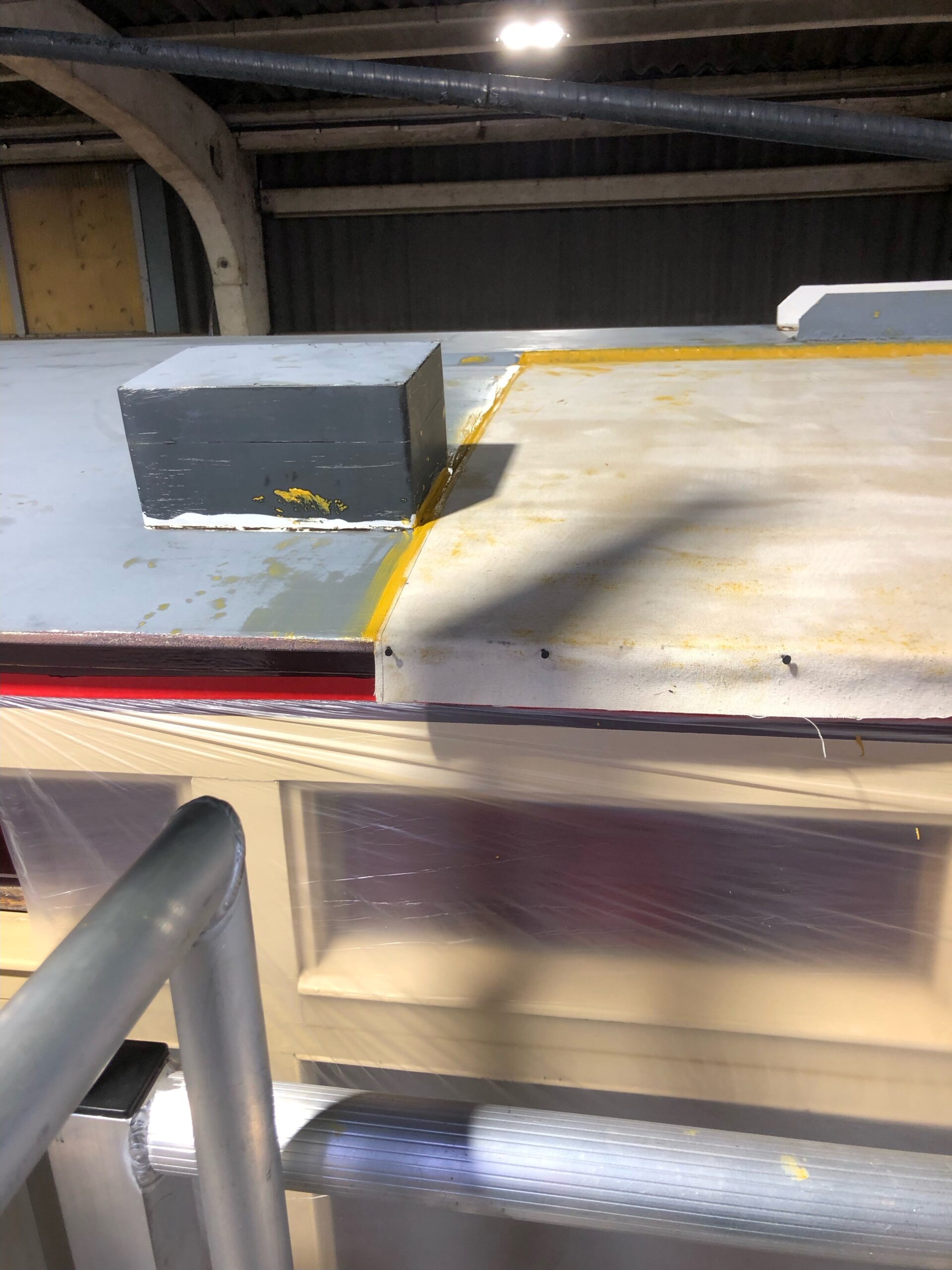
Sunderland 16 was then subject to its annual D examination, which showed up wear on one tyre profile in particular that has resulted in the tram being taken out of service in order for it to be re-tyred. The process of designing and ordering new tyres for 16 (and Sheffield 264) was already well in hand so we are looking for as fast-a turnaround as we can manage with this tram. Meanwhile, repairs to Blackpool 31 are well advanced and once complete, work will refocus back on the closing and commissioning stages of Gateshead 10’s restoration.
Photographs in this post by Chris Armstrong, Phil Doran, Paul Jarman, David Knotts and John Marshall


Hi, thanks for the update, does this mean that nothing will be operating at all at Rowley during Whitweek? We have a really long journey to get up to Beamish, so may try to rearrange for later in the year if so, thanks
Hi Robert
That is correct – the Waggonway will be operating, but not Rowley. Rowley will resume in July (weekends) once 229 returns.
It’s been an erratic performance at Rowley, and with Sir Berkeley failing and its owners now looking at repair options, we can’t really afford to bring in yet another loco (haulage is one of the victims of rising fuel prices).
We shall just pin it all on 2027 and Dunrobin’s arrival to commence a (hopefully) more consistent operating pattern.
Best wishes
Paul
The Armstrong tappets are interesting, I made a similar set for a Rolls- Royce once. Are they case hardened or just high carbon steel?
Hi Dave – they have been hardened. They are being installed as I write these notes… PJ
Hi paul
could I make a suggestion please for the 50th anniversary celebrations of rowley,
you could move coffee pot to the station and it could run a demonstration freight using the tanker, GW mink and the brakevan if its ready in time. or even using GER 229 as the motive power
hope this helps
many thanks
cheers
rob
Hi Rob
That’s a nice idea and we considered what was possible, but resource/time doesn’t really allow for anything more than a press call and cake on the platform. I’m away with Glyder at the same time and Coffee Pot is currently on limited use pending some work to its valve gear.
Best wishes
Paul
Thanks for the reply, Paul, really appreciate you taking the time to reply. Are there any plans for the narrow gauge railway and/or standard gauge coffee pot loco during the transport festival? We may still pay a visit, if there is enough going on to make it worth the long journey, thanks
Hi Robert
Narrow gauge activity will be covered by Glyder and Samson. Coffee Pot No.1 is stopped, pending some work on its valve gear, so the majority of the steam attraction will be on the roads, rather than rails.
Best wishes
Paul