

2025 – End of year review and a look ahead to 2026…
As has become traditional for this blog, I have compiled a review of 2025’s activities (well, some of them!) and outlined these as a month-by-month narrative. I’ve also concluded with a look ahead to 2026 and some of the developments and progress readers (and those who visit) can look forward to seeing coming to fruition. My goal for the transport collection at Beamish is to be able to present the best and most diverse regionally appropriate working collection in the World. A grand ambition perhaps, but one that I feel is achievable (and at least such a claim provokes healthy debate) given the superb collection held and the work that is actively underway to fulfil the working element of this ambition.
There are also a number of other vehicles in the pipeline that are likely to join the collection over coming years and further enrich the story that we can tell, and the experience we can offer visitors to the museum. That this is a working collection is important – it is all too easy to sideline collections (and vehicles in particular) due to the pressure of resource (which we share with all other museums) and challenges of operating in the regulated and litigious world we find ourselves in, but Beamish is very proud to be able to confidently plan against this backdrop – and the success of presenting these collections as working ones is, I am sure, a large part of why visitors come to the museum, and in turn, means the museum can sustain itself as a leading independent in this sector.
There were 47 blog posts this year, which maintains a near-weekly average and which I hope serves our objectives to educate and share knowledge, as much as to update readers and the wider audience on our projects and ‘mission’.
Looking back at 2025
In writing these notes, it is a little sobering that it feels like only weeks since I was writing the 2024 review! It is also interesting to note those projects that span multiple years and for which it can be challenging to find something new to say! However, the format works well and so we begin at the start of 2025…
January
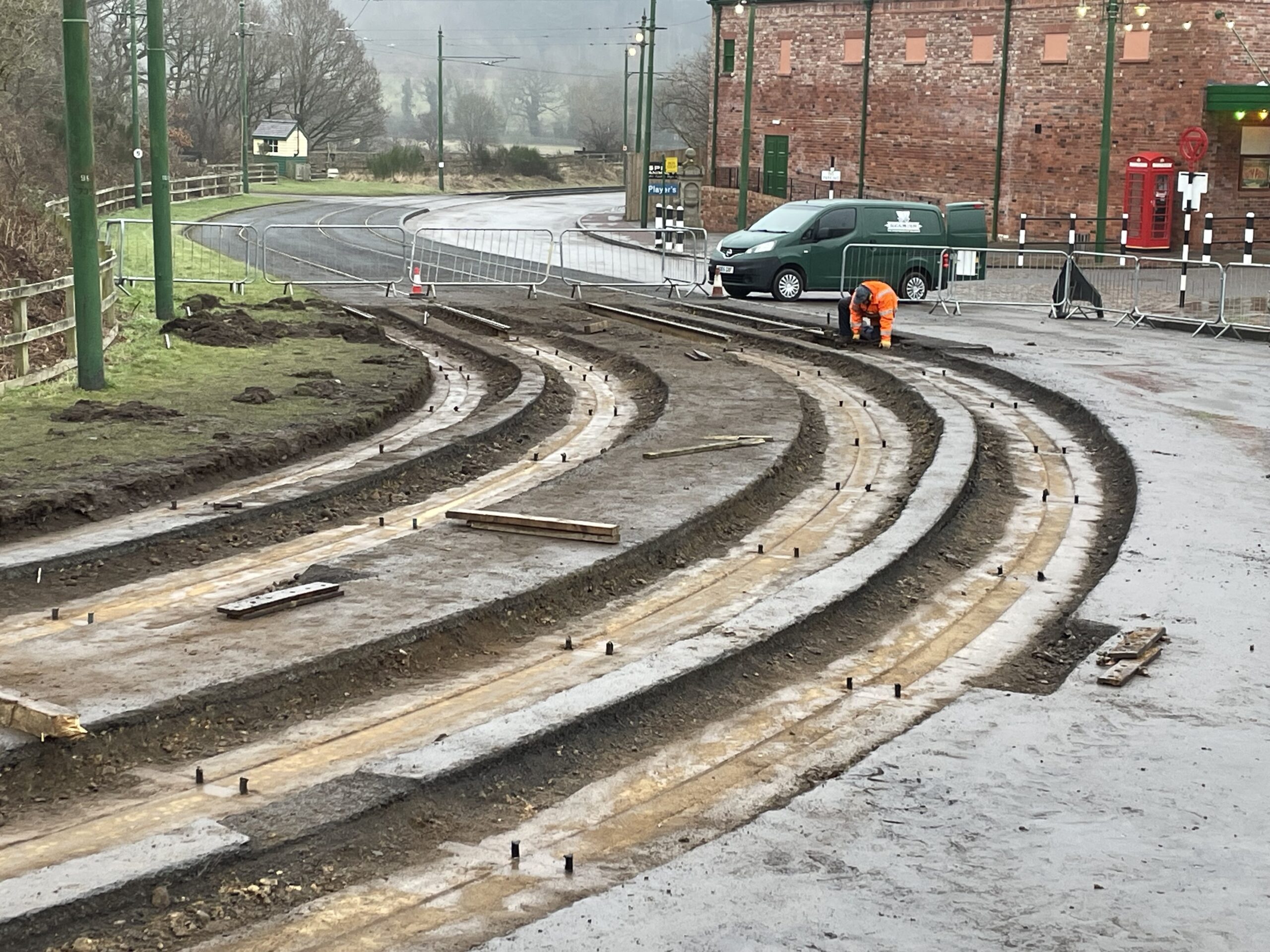
Below: The start of the year saw a substantial infrastructure renewal project on the Tramway underway – with the replacement of the rails and road surface on the curves approaching High Street. The concrete foundations were exposed and old rails removed, then the fastenings overhauled and new rails curved before securing into position. All at about the worst time of the year for weather and temperature.
February
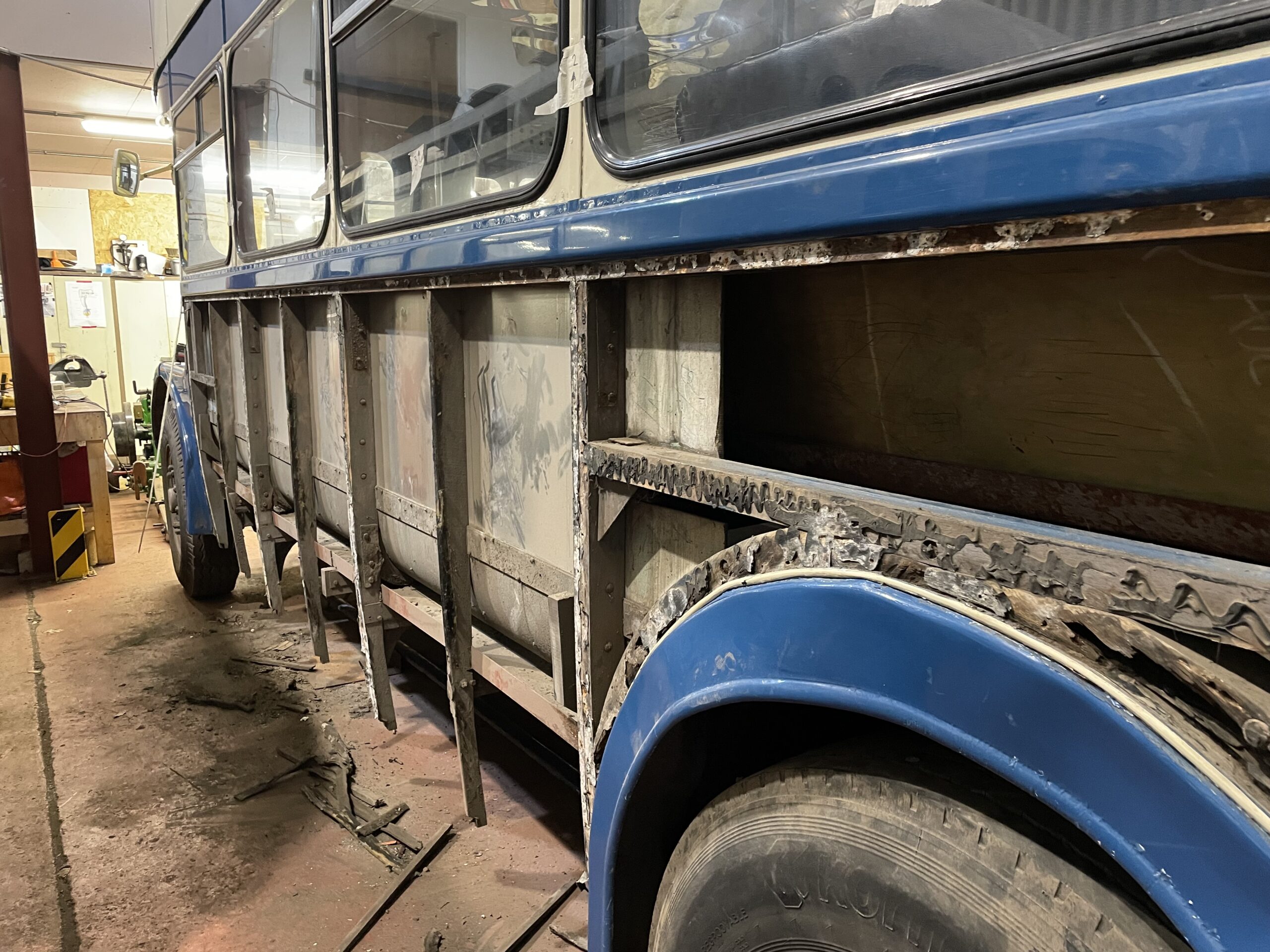
Below: In the workshops, Darlington 4 has some of the side panels exposed in order to allow for some of the body framing to be renewed around the rear wheel arches. The scope soon grew, and inevitably mission creep sets in, as more and more work required was uncovered. Before long all of the side panels were off, the wheels removed and substantial repairs underway to the chassis, body frame, rear platform and driver’s cab area.
Below: In what proved to be quite a high-profile event, we added two Leyland fire engines to the collection, both having been based at Tynemouth Fire Station for many years. No.9, a former Newcastle City Fire Brigade appliance was driven back to the museum and created a great deal of interest upon its arrival at Beamish.

March
Below: Another vehicle to cause a stir was the museum’s Armstrong Whitworth limousine. This has been on static display for many years, in fact, I’d never seen it work. With a little TLC it was soon back in operation and the resulting running enabled a list of work required to further improve it to be drawn up. Again, it has proved to be a head-turner, and so it is now considered part of the operating pool of vehicles for use on special occasions and at events.

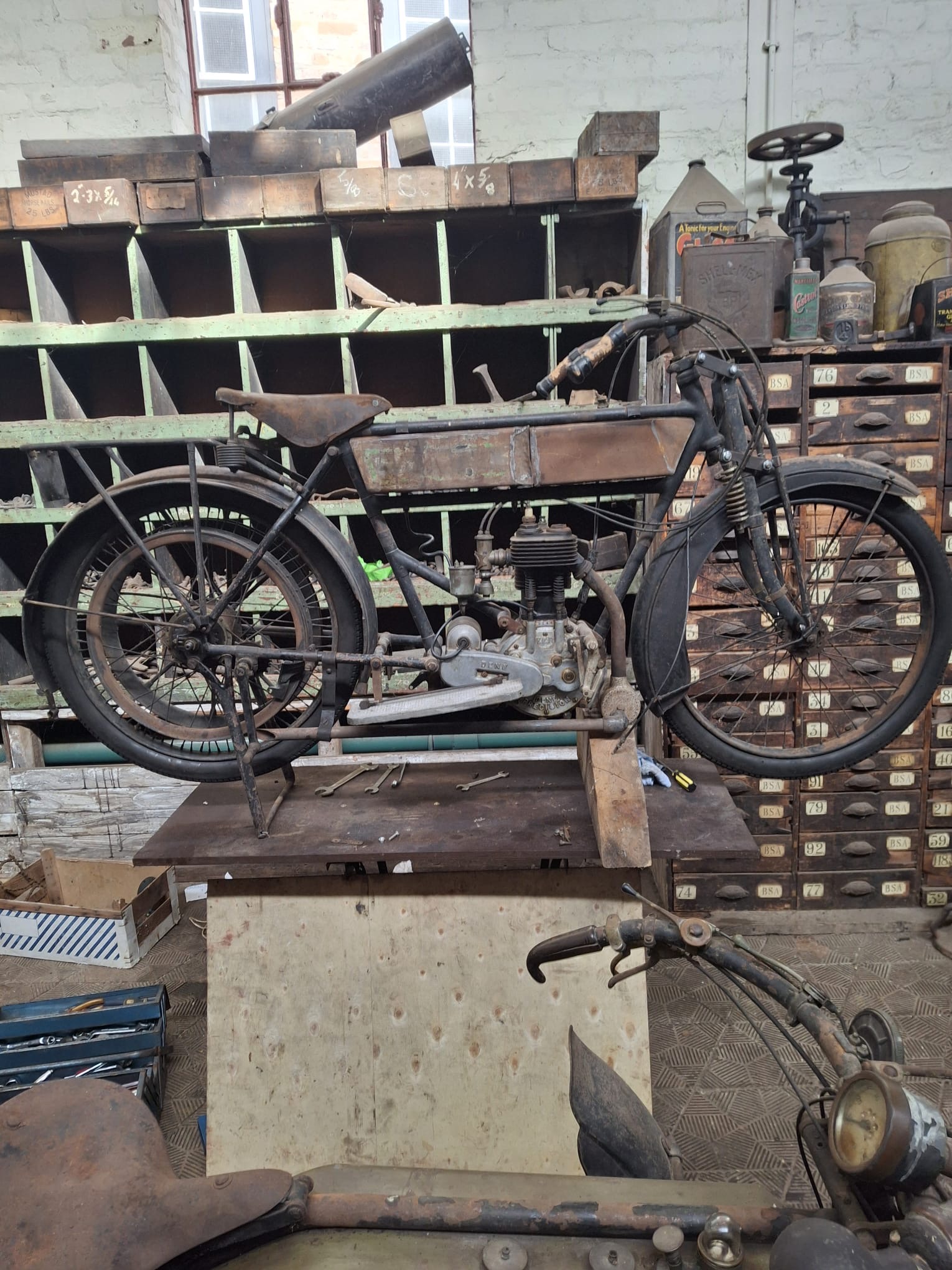
Below: In pursuit of the aim outlined in the opening paragraphs of this blog, two more locally significant motorcycles joined the collection in March. Both of Dene (Newcastle) manufacture, we actually thought we were getting one V-Twin and an assortment of spares that were once part of another machine. It quickly transpired that these spares were in fact a complete motorcycle, and the volunteers spent a particularly productive session reassembling it – to find we had this rather lovely single-cylinder machine. Both are on display in the garage, the aim will be to return the V-Twin to operation in its barn-find condition (as it is so original and so complete), and then consider restoring the single at a point in the future. We were very grateful to the donors who gave us the two motorcycles, and in turn they give us 4/5 of the remaining (known!) global Dene population.

April
Below: Work on the replacement of the tramway rails was completed and finished off with a new road surface. Shortly afterwards new signs were installed around the Tramway, of period design and instructing people not to walk along the track. Further improvements to the Tramway and road signage is anticipated in 2026.

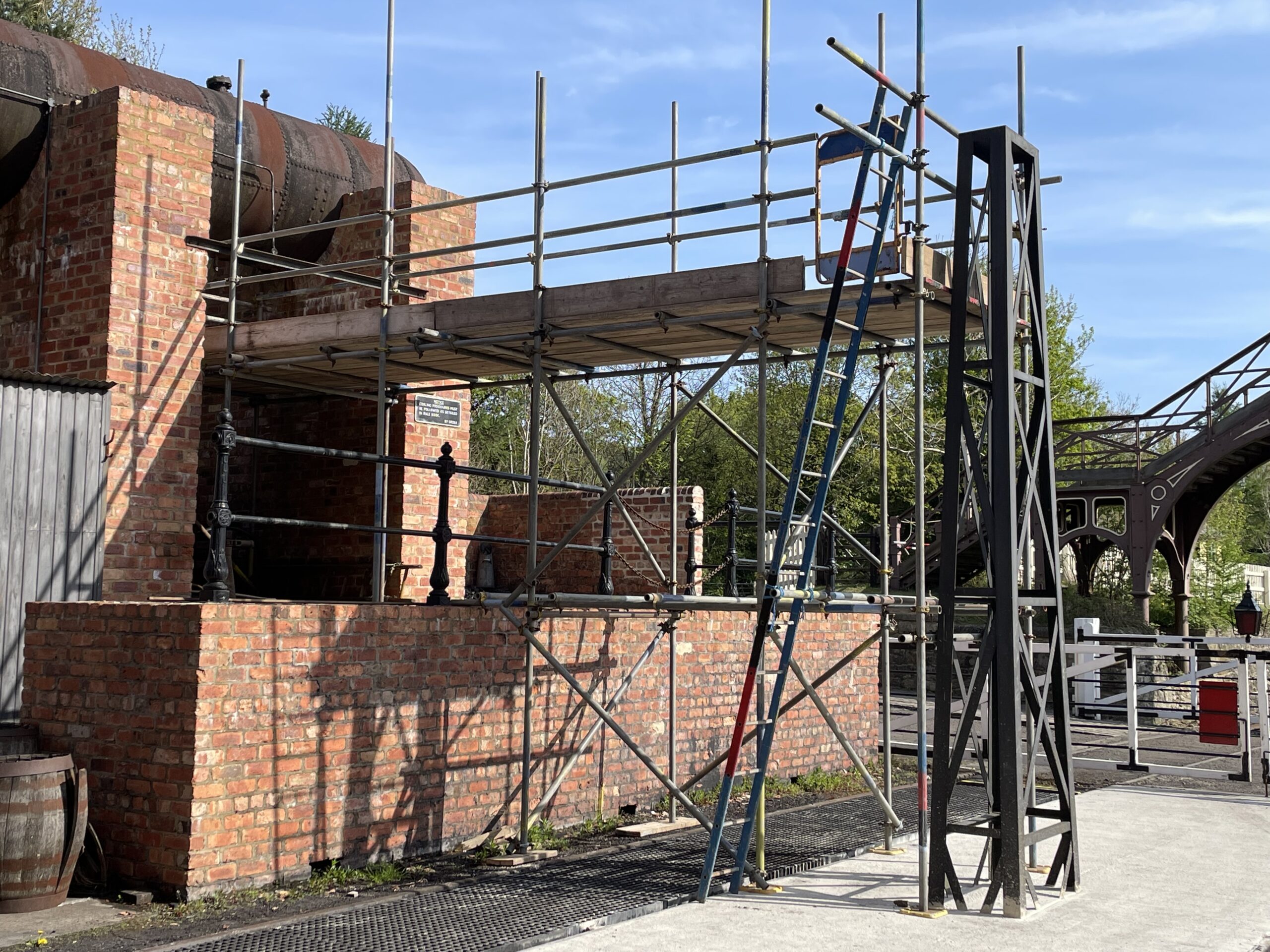
Below: As we looked forward to the reopening of Rowley as a working station (with trains) once again, a number of preparatory works were needed – these included reinstating the water delivery pipework and creating a concrete platform on which access platforms could safely be used.
Below: Work also started on KPT 909’s recommissioning. With the seats away for reupholstering, a partial repaint was carried out in order to restore its Weardale Motor Services livery as originally carried (and sans adverts).

Below: Other work on KPT 909 included rebuilding the emergency window/door upstairs – seen here with quite substantial amounts of new timber being carefully grafted into the frame.

May
Below: The repaint of the two coaches used at Rowley had been underway for many months, and the results were unveiled just before operation at the station commenced. Here is the North London Railway coach, part of the Furness Railway Trust collection, sporting Highland Railway green livery.

Below: The Duke of Sutherland’s saloon, 58A, was outshopped on the same day and is seen displaying its superb condition in the sunshine.

Below: Motive power was hired in the form of Manning Wardle Sir Berkeley, making its second visit to the museum. It operated trains alongside Keighley Gas Works No.2 throughout the nine days of the summer half-term. The return of a passenger operation to Rowley and the branch was very popular – we can only look forward to having our own locomotives based here that will ensure the operation can continue, but also take place more often in the future.

Below: Keighley Gas Works No.2 was hired from the Tanfield Railway and was initially booked to appear in the Colliery. However, it was deemed prudent to have two locos at Rowley such was the hype and excitement around the return of the passenger trains, that No.2 was delivered to Rowley and worked both alongside and alternatively too Sir Berkeley.
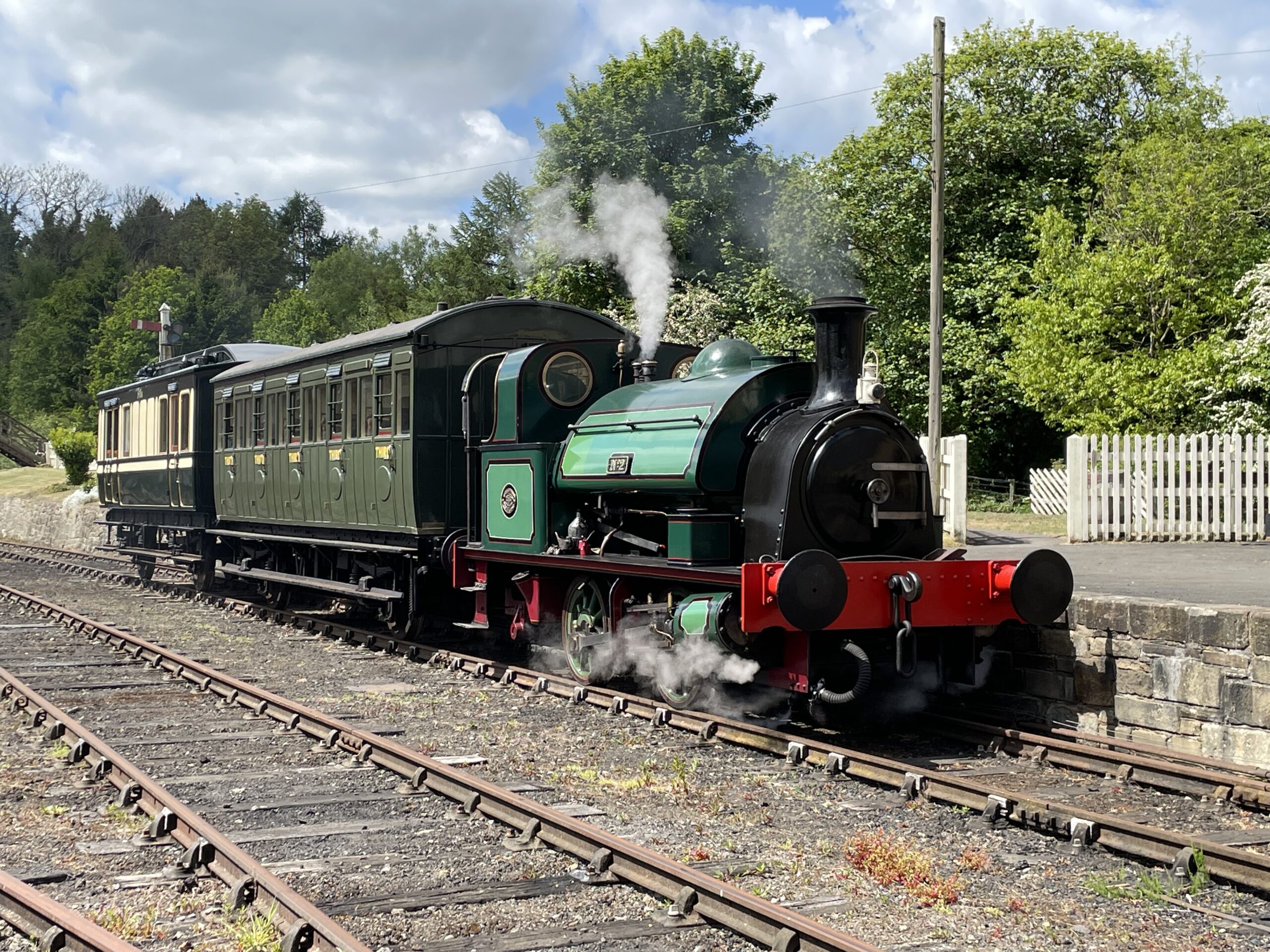
Below: The second May Bank Holiday weekend was the Fares Please! event, with visiting buses operating alongside the museum’s own vehicles – and a now customary lineup on the street of participaing buses.
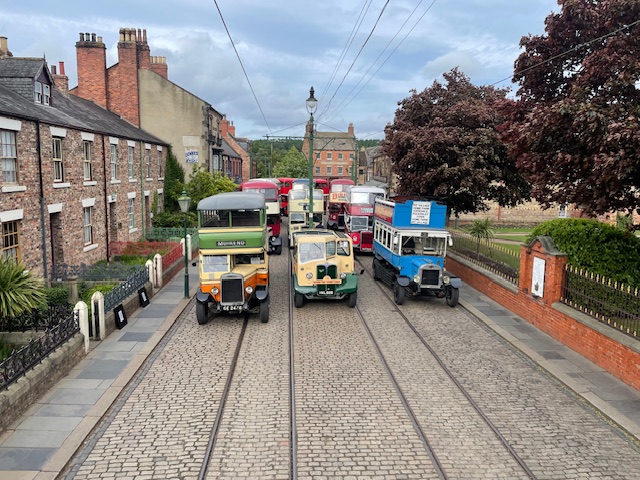
Below: The last weekend of the Festival (and last weekend of May) saw activity on the narrow gauge, with ex Dinorwic shedmates Sybil and Velinheli reunited in steam for the first time in their preservation lives. The two made a very attractive pairing and were accompanied by Samson, Glyder and Coffee Pot No.1 on the adjacent standard gauge.

Below: Steam Elephant was reassembled in order to take part in an exhibition at Hopetown, Darlington. My son Thomas (seen pointing at it!) has yet to see this engine in steam in his lifetime – it moved to the workshops in 2019 for overhaul, and then along came a global event that saw progress halted and the maintenance programme in disarray. Only now are we catching up with those lost years, lost revenue and lost workshop space that followed.

June
Below: With its period on display at Hopetown completed, Steam Elephant was returned to the Waggonway and work re-commenced on the mechanical overhaul of the locomotive. It is seen here being shunted by Puffing Billy, a loco that will surely be glad of a shedmate to share operational duties with in 2026.
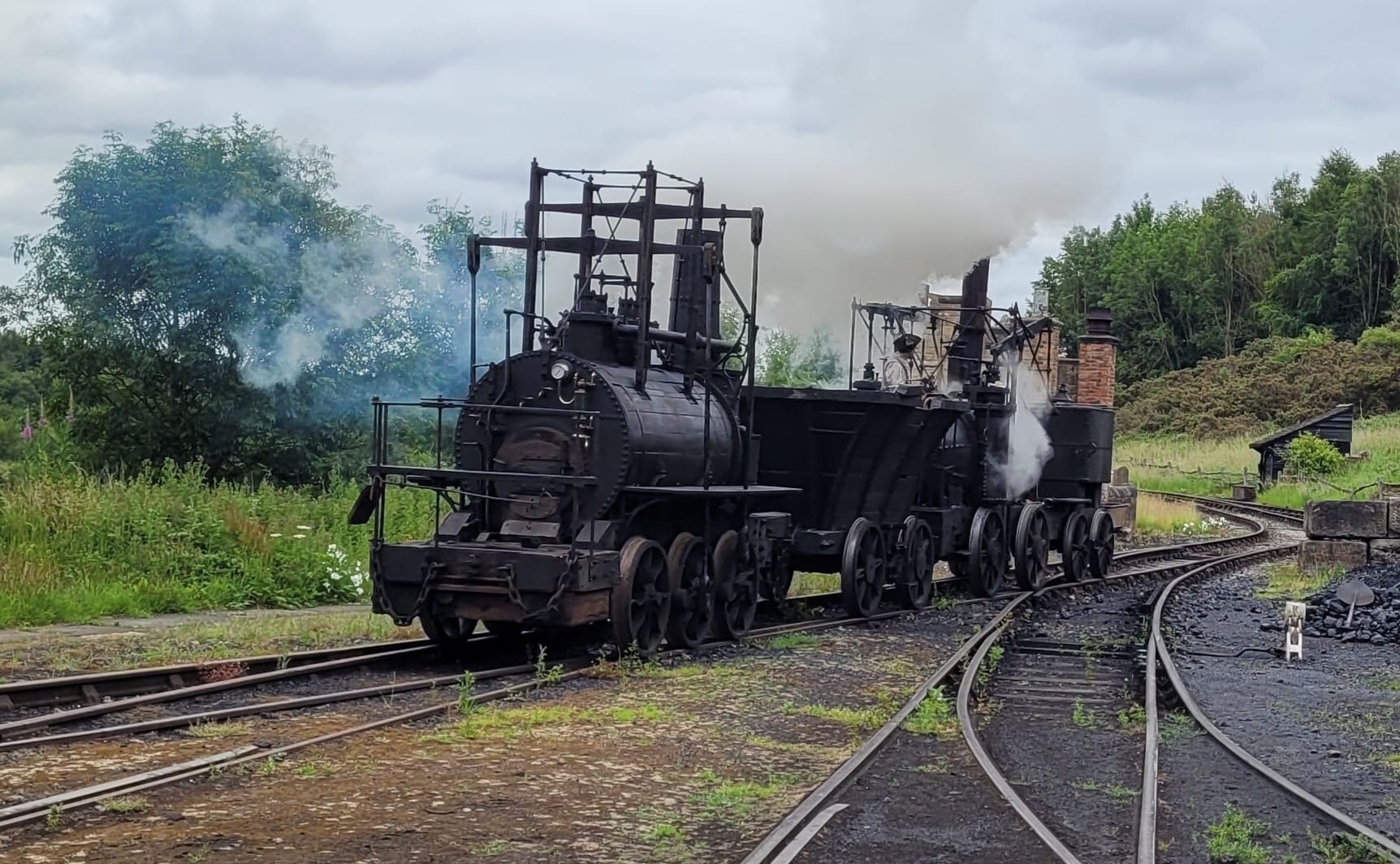
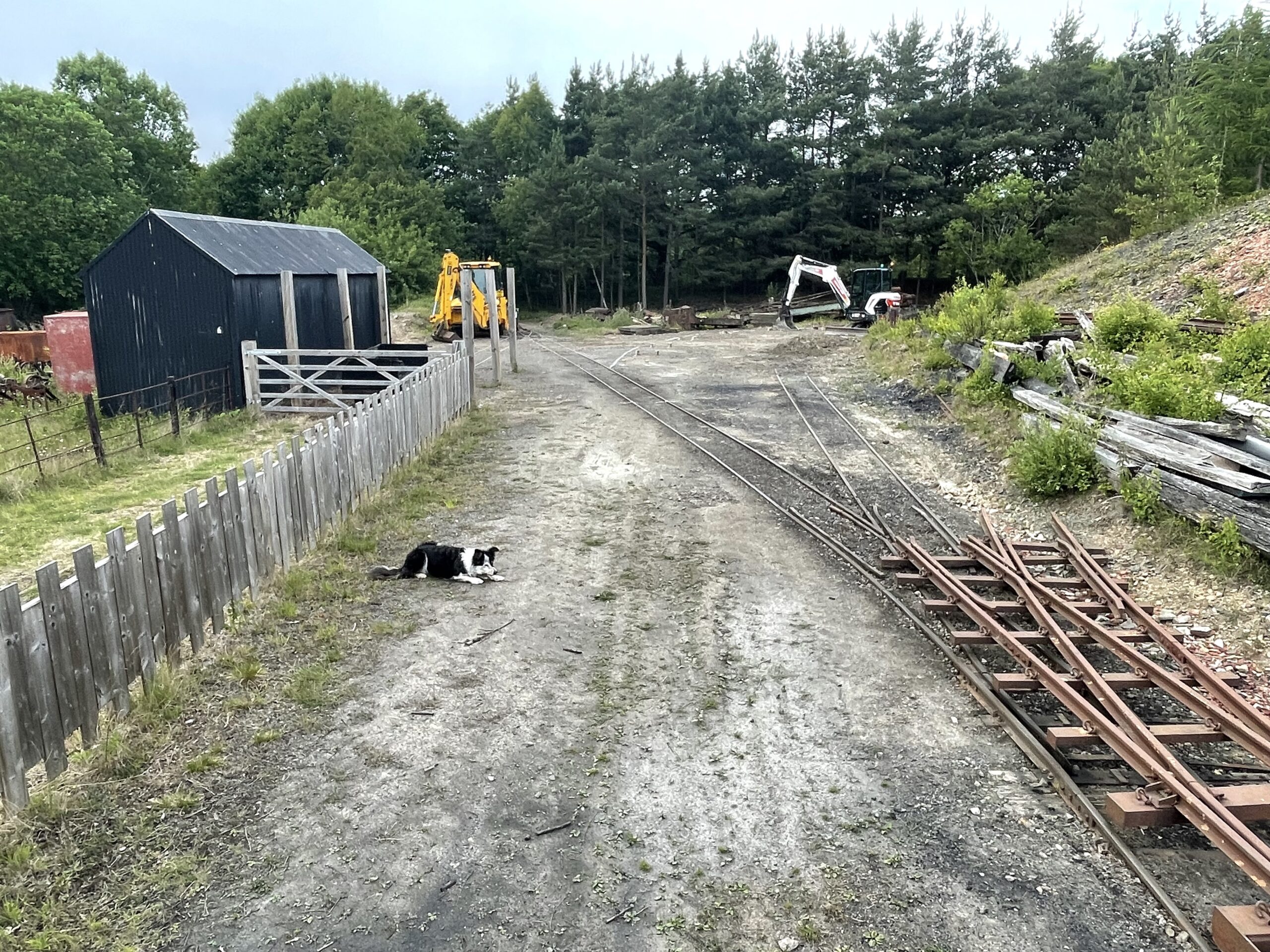
Below: The narrow gauge railway has evolved, often using old (or very old!) equipment. An opportunity was taken after the Festival of Transport to relay some of the line and modify the layout of the track in the stockyard area, to improve future operation and address some areas of the trackwork that didn’t work as well as they could. Here work is seen commencing, with the realignment of the curved route up from Pockerley and installation of a new turnout to access it. This summer evening view shows work on site progressing and site preparation underway.
July
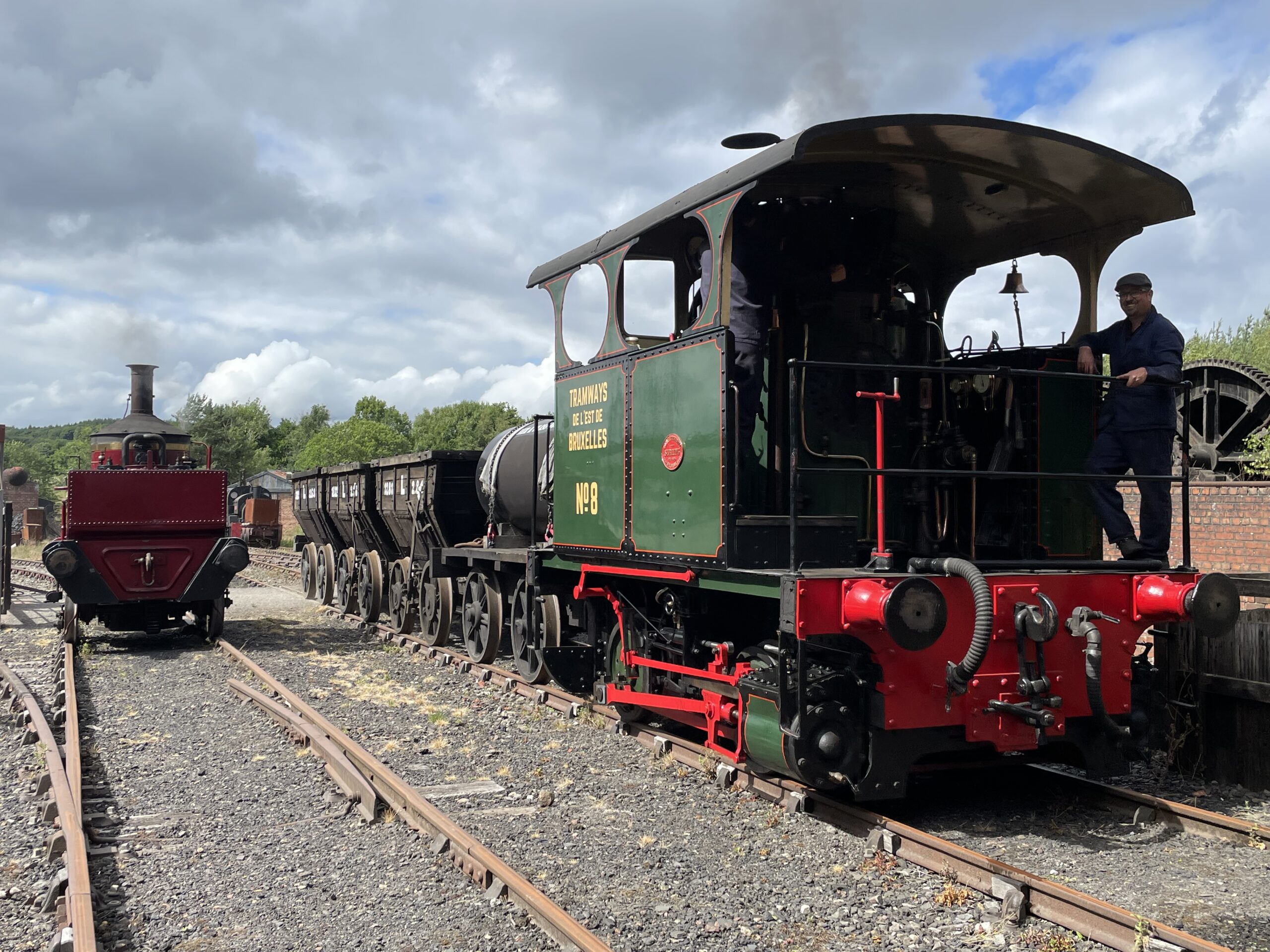
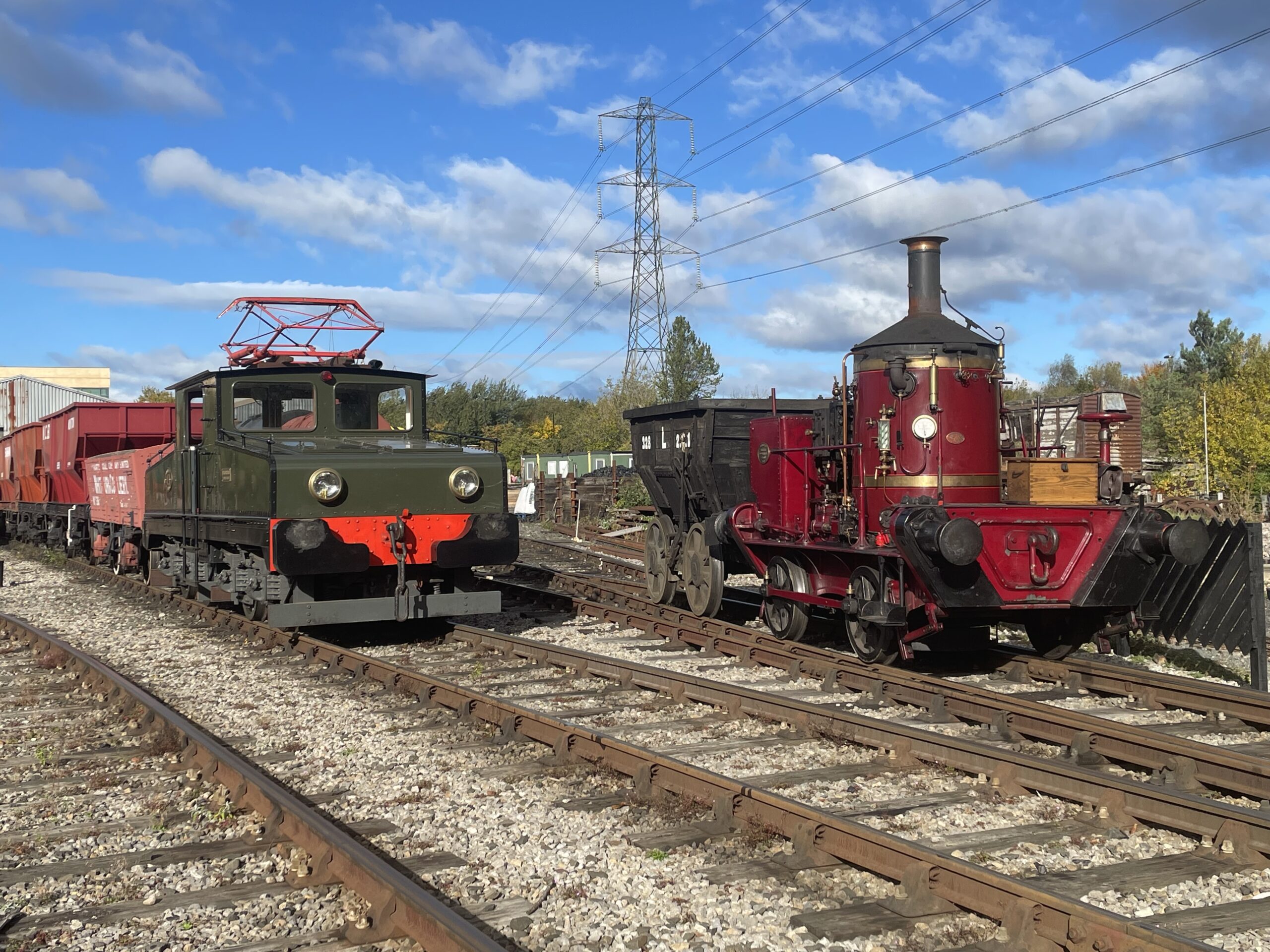
Below: A new event, focussed on Colliery life, was held in July. For this event the opportunity was taken to hire Paul Middleton’s Cockerill steam tram engine (which worked on a Colliery in Belgium after its career as a steam tram concluded). The vertical boiler locomotive, small on any other standard gauge railway, towers over Coffee Pot No.1.
Below: KPT 909 entered service in time for the summer holidays, and was launched in the company of two Weardale Travel buses for the occasion. It is seen here with Leyland YUP 6 in Front Street – the partial repaint has retained the patina and lustre of the older paintwork, but its appearance is very smart indeed and it is already popular with staff and visitors and amassing many days in operation around the museum. Again, the transfer of this bus from the Science Museum Group aligns with the objective I mentioned at the top of this post – a local vehicle in regular operation for the benefit of our visitors and aligned with our mission as a museum.

August
Below: With the giddy success of seeing the Armstrong Whitworth back on the road, attention was turned to the SHEW car – a vehicle that has probably not operated since the early 1960s. The posts at the time cover the story of this vehicle, and the somewhat unusual route to its current appearance. It was again planned for some limited operation in order to understand it and establish the work needed to make it more suitable for use in the future. It’s rather ungainly appearance caught the eye for many visitors, and a programme of work is now planned that will conserve and improve its condition into 2027 – its 120th anniversary. One big improvement would be to reinstate its original artillery solid-tyred wheels – if anyone was interested in sponsoring this work…

September
Below: With Newcastle 114 out of service whilst the controllers are overhauled, the opportunity was taken to partially repaint the tram, as some areas of the paintwork were deteriorating and there was evidence of water ingress behind some of the beading. With repairs completed, the repaint was started, and as time allowed, Aaron the signwriter applied the white gold leaf and black outlines.

Below: West Hartlepool 36 arrived after changing ownership, and the offer of using our pit was made. As a result of seeing it, an agreement was struck that will see it based at Beamish for two years, part of which would see some paintwork repairs and re-upholstery of the seating.

Below: We also made some (positive!) headlines in the railway press as we transferred ownership of Twizell and Malleable to the Tanfield Railway Trust. Twizell has been at Tanfield for 30 years and is embarking on its latest stint in operation, so it was able to attend the official handover of title from Beamish to the TRT. As explained in the post at the time, it is too long for our track at Rowley, and as Tanfield had already invested heavily in it over the last three decades, it was never really a candidate for returning to the museum.

October
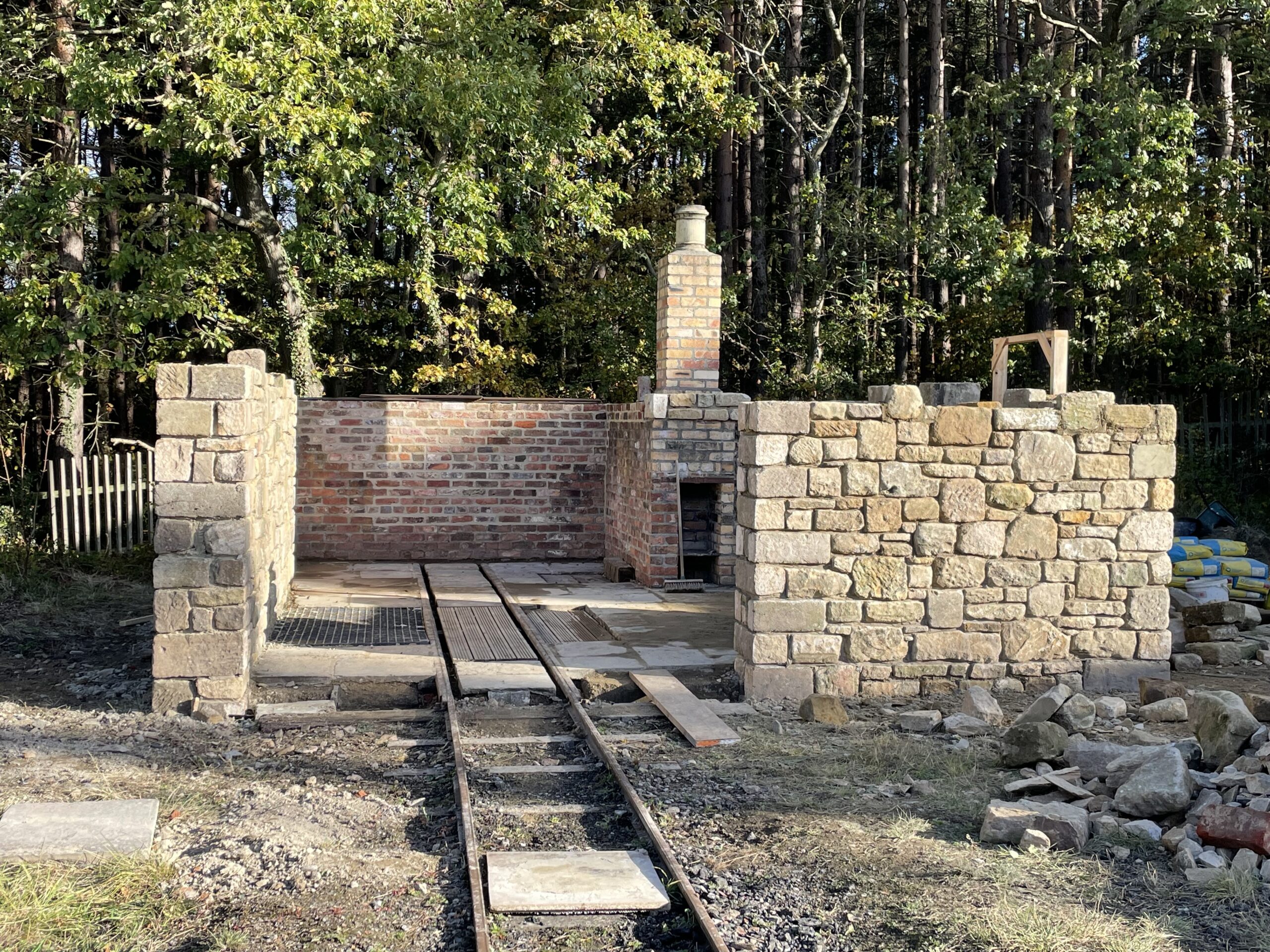
Below: Many years ago, the foundations and pit for a narrow gauge locomotive shed based on Stephenson’s shed at Chadwick Nick in Derbyshire were started, in order to provide a new shed display in which the replica of Samson could be displayed. For many and boring reasons, this work did not progress, but an opportunity for the building team to re-start it arose, and was quickly seized, with the work starting in the autumn. This photo shows the rapid progress and very appealing stonework of the shed, which will be tall enough to accommodate Glyder (which has need of an inspection pit from time to time).
Below: Speaking of Samson… The loco hitched a ride to the Ffestiniog Railway with Velinheli at the beginning of June and carried out a number of runs and took part in two events in the care of Matt Ellis. In return, Matt is leading the winter programme to retube Samson (is it really ten years!), after which it will operate at the F&WHR until the middle of 2026. It will then return to Beamish and hopefully find its new engine shed complete and waiting to accommodate it.
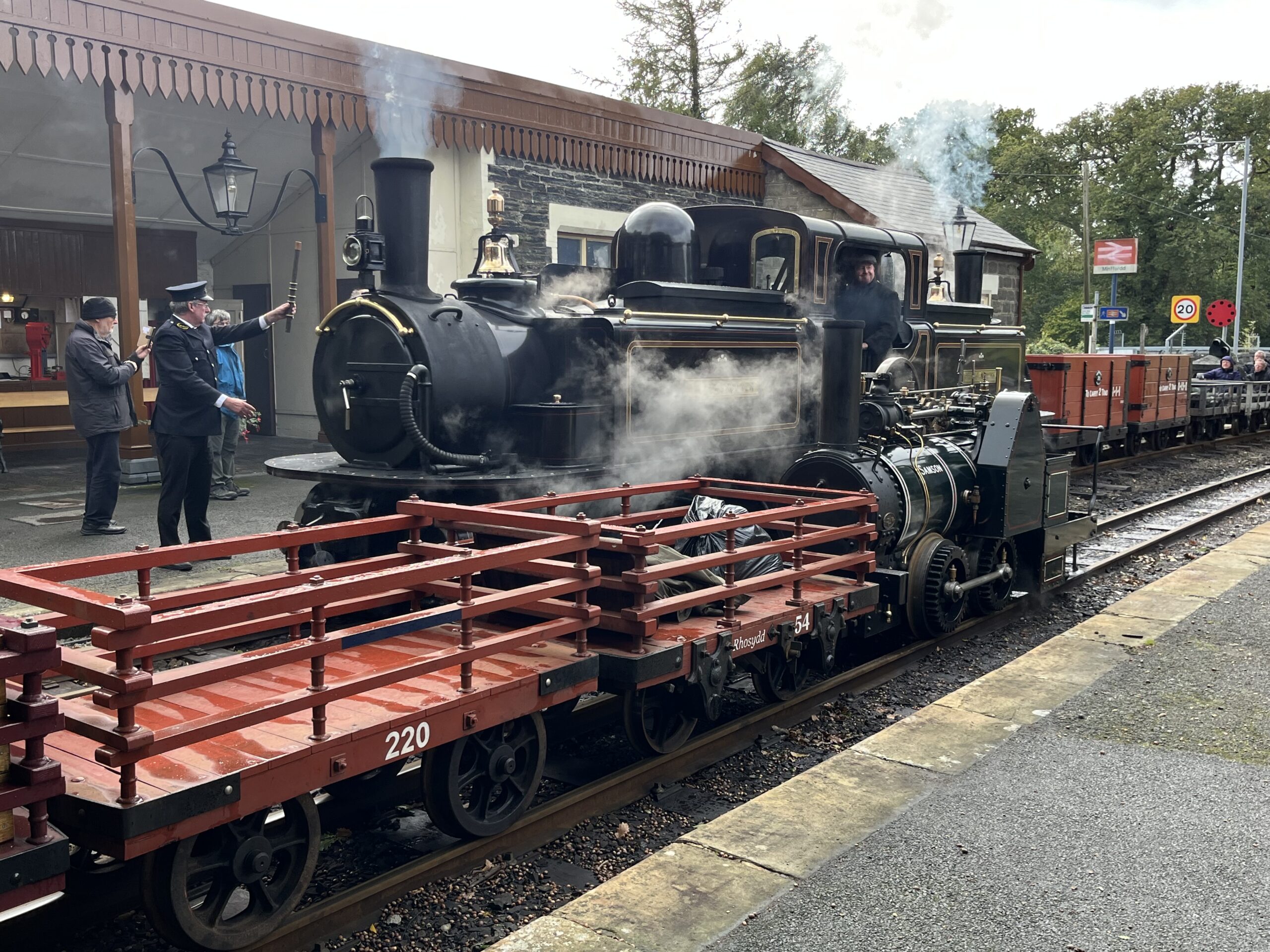
Below: Coffee Pot No.1 was a last-minute booking to the Stephenson Railway’s Railway 200 event in October. This was greatly enjoyed and included a full line run – which for Coffee Pot amounts to an expedition!
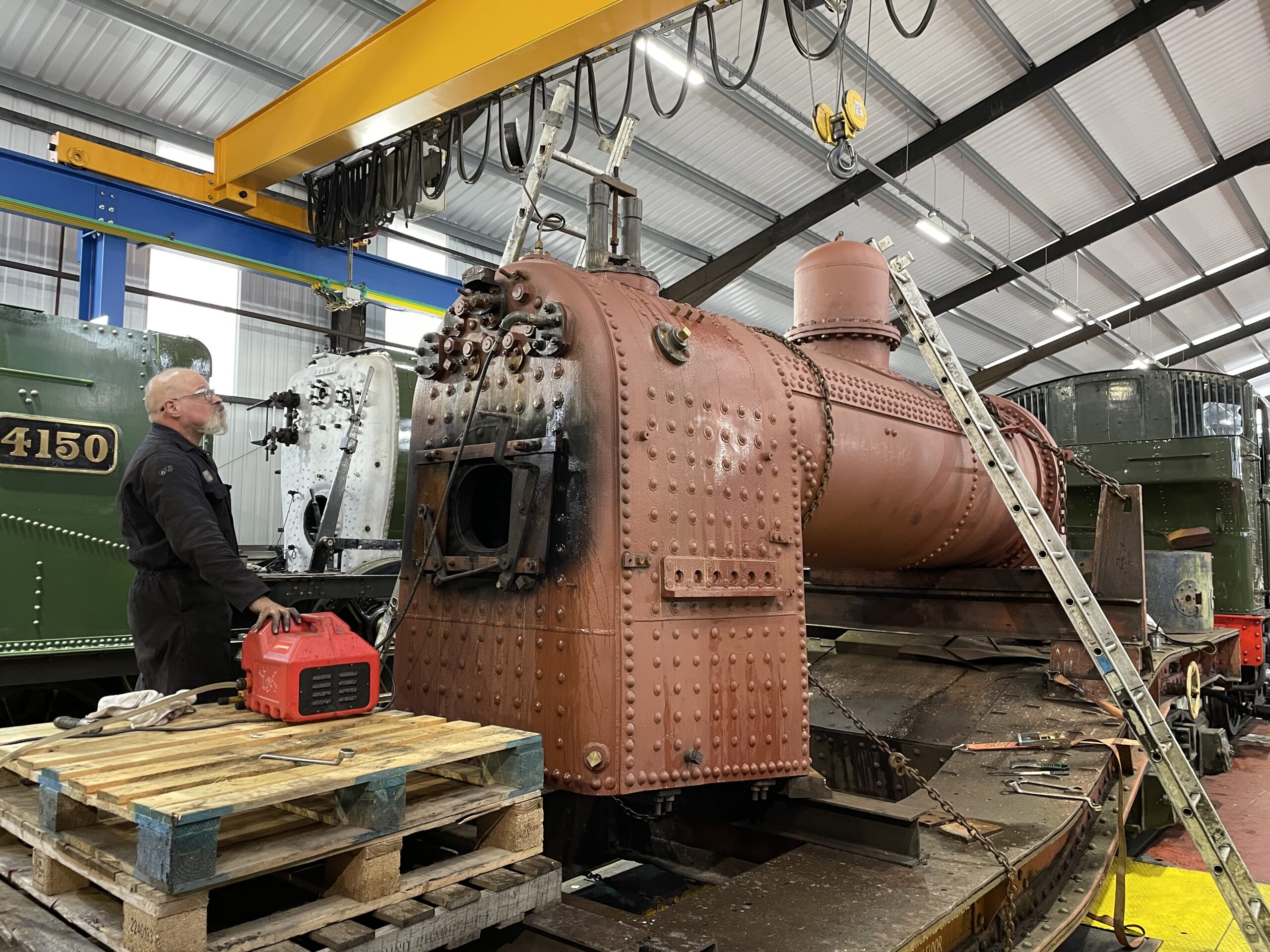
Below: A milestone for Dunrobin was the hydraulic testing of the completed boiler – the test is seen here underway. With this complete, work then moved to boiler fitting overhaul and a start on assembly of the locomotive above the running plate.
November
Below: Another milestone moment – Gateshead 10’s body lowered onto its overhauled bogies. This then allowed work on the under-body linkages and components to re-start. The advertising boards are complete, painted and await refitting – much easier now that the tram is sat back at ground level. Ten years to this stage is quite a period of time – but in that time we’ve had a global pandemic, turnover of staff (only one of those completing the work was involved in starting it), a lot of distractions and diversions to maintain/repair other vehicles. The aim as always to do the work to the most enduring standard as well – the return should be (I hope!) many years of service from the tram, and one that will see me out! 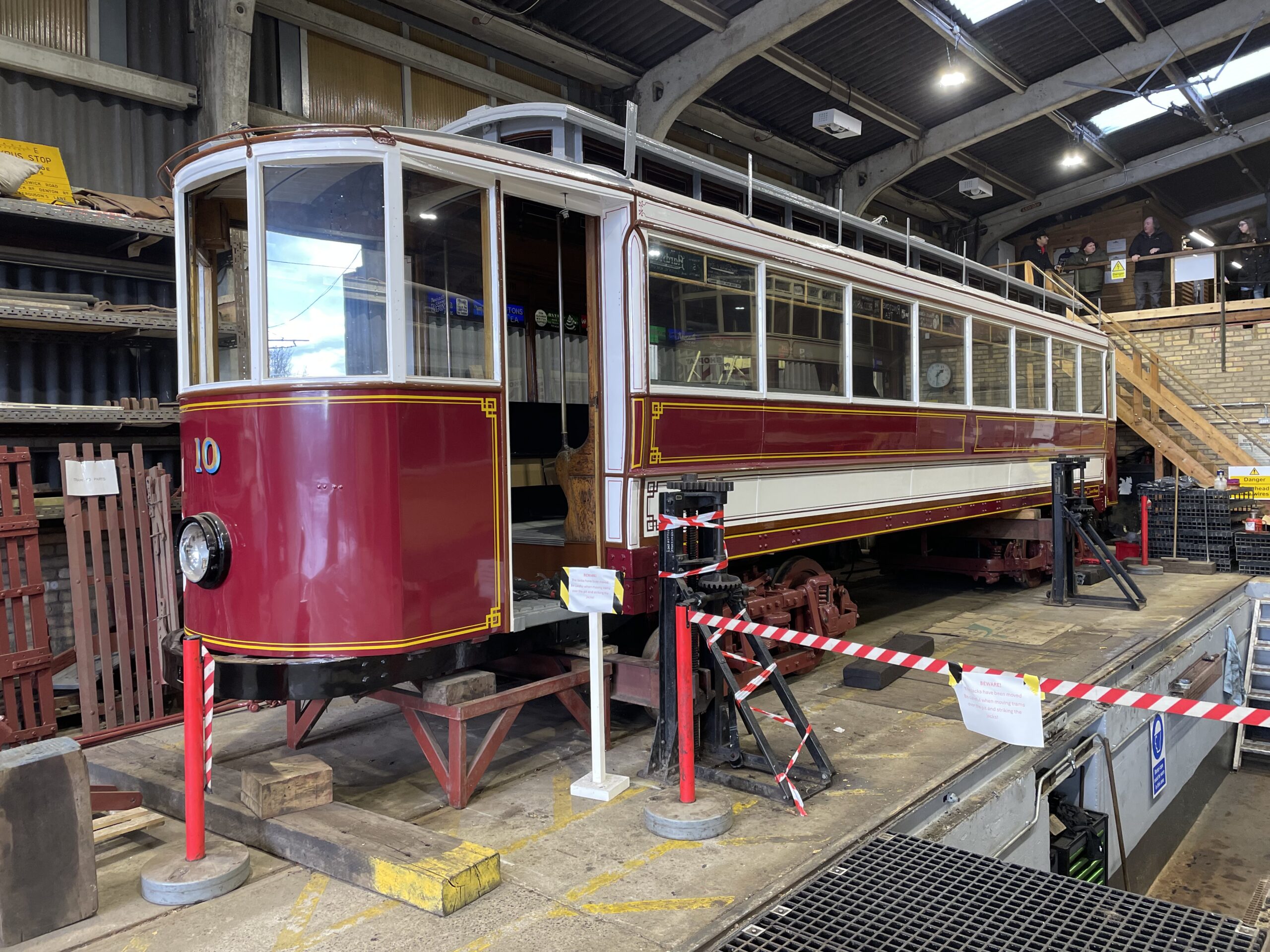
Below: Sunderland 16 has been gradually repainted in several bursts, over the last 12 months or so,

December
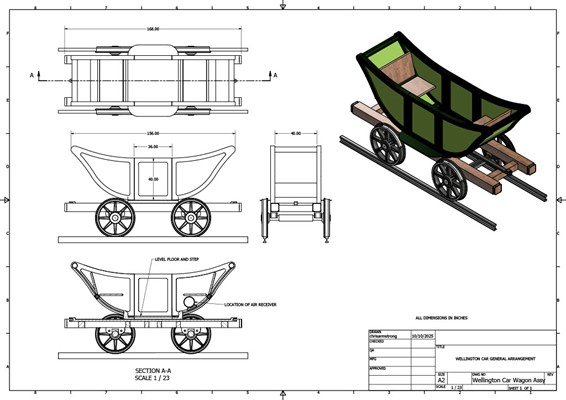
Below: The plans for a new/rebuilt Waggonway coach were unveiled, this project being due to run through 2026 in time for completion by the start of the 2027 season.
Below: During the month Samson was stripped for its ten-year boiler inspection and the replacement of the smoke tubes. The boiler passed its inspection mid-month and the tubes (seen in the foreground) were being fitted as this post was published. Also actively under overhaul as the year closed were Rotherham 220, the Armstrong Whitworth Car, West Hartlepool 36 and Gateshead 10.

Looking ahead – 2026
There is always some trepidation in looking ahead – the temptation to make predictions is inevitable and often risky! However, we have a programme of work and lots of objectives to work towards, and and steady progress should continue. We are a relatively small team, and I am often amazed at the volume of work, and sheer variety of techniques employed, that emerges from the workshops.
Events
This year we will follow largely the same format as in 2025, with the Festival of Transport across the summer half-term (Whit week), which is the last week of May. We will start with the three-day Fares Please! event, and then a programme of road and rail activities – probably combining the road exhibits on the final weekend – more info will be available in the spring. I’ve a hankering to theme it around solid-tyred vehicles as much as possible, and a start has been made on looking for suitable, and new to us, exhibits for this.
We also hope to do at least one of the running days again, where we use our own collections to showcase the museum’s transport exhibits and demonstrate them across the site.
Tramway
The year should see the culmination of a number of threads, with individual projects bearing fruit. These include:
- Completion of Gateshead 10’s ten-year long overhaul
- Completion of repairs to the controllers on Newcastle 114 and finishing the partial repaint of the tram
- Entry into service of Lisbon 730 – again with electrical overhaul and changes, mechanical work completed and a partial repaint all planned
- Re-sleepering in a number of areas and rail-welding in High Street (on the curves)
- Further progress on the current programme of OLE (overhead line equipment) maintenance and component renewal
Railways
There are no significant changes to the railway operation in 2026, though the Waggonway may operate on more days per week, and the narrow gauge fewer – this is to ensure we have a passenger ride offer as often as possible.
- The one I almost daren’t speak of – Dunrobin will continue to make signifiant progress at Bridgnorth. We can look forward to the steam test fairly soon, and then onwards towards completion of this long-running restoration (reconstruction) project
- Operation at Rowley at Easter (fortnight) and Whit Week – both are booked for appearances with visiting motive power. Plans beyond this are yet to be confirmed but until Dunrobin is completed, we have to be mindful of hire costs in bringing in locomotives from elsewhere
- Steam Elephant’s return to operation at the Waggonway
- A start on the construction of a new Waggonway coach (targetted for completion in time for the 2027 season but which require substantial progress during 2026)
- Completion of Samson’s locomotive shed – in time for its return in the summer and then display/operation from this new facility/exhibit
Buses
The buses have been on an ongoing cycle of improvement, and this will continue. We’ve been at something of a low-point in availably late in 2025, but this situation should improve in 2026.
- Darlington 4’s overhaul should resume, and be completed during 2026. This will probably now include a repaint and attention to the clear roof panels
- Sunderland 2 should see some progress too – I’d like to see the saloon work completed, roof repainted and interior re-wired. The cab is next for structural attention and the cream requires repainting and the maroon/crimson quite extensive conservation work to restore it (but not replace it)
- Rotherham 220 should have an engine transplant early in 2026, and it will also shortly receive its re-upholstered seats. It should then be in good shape to bear the brunt of work alongside KPT 909 for the season, to be joined by Darlington 4 later on. Meanwhile, guest buses will continue to supplement the museum’s own fleet
- West Hartlepool 36 should enter service as a Category B/C vehicle for use, but not daily. It will give visitors the chance to ride on a local vehicle that is in remarkably original condition, as well as enjoy the Roe centre door and split staircase
- The little Dodge/Robson bus, which is currently inaccessible due to restricted space needs a revival of the restoration plan – focussed on completing the mechanical restoration to enable the body to be reinstalled and then rebuilt, for which it will move into the workshops first, and joinery second. It is an important vehicle in the collection and one of local significance so I am keen to see it make progress when resources allow
- On the infrastructure side, we should complete the erection and installation of the ex Darlington Corporation Cockerton Green shelter at Pockerley and some work at Foulbridge is also in the planning to alleviate the bottleneck where the buses turn through 180 degrees, and create more space for this to allow the potential to use larger buses on the Colliery route
Vintage & Veteran
With a team of volunteers and a renewed enthusiasm for this area of the museum’s collection, some significant progress should be witnessed in 2026 including:
- Completion of the Armstrong Whitworth engine overhaul and cosmetic works
- Start the engine overhaul of the SHEW car
- Continue the restoration of the Excelsior motorcycle
- Possibly start the recommissioning work of the recently arrived Dene V-Twin motorcycle
- Withdraw from use the Model T Tourer, to allow an engine and gearbox overhaul
- Assessment of the Humber Quadricycle to return it to operation
- Morris Commercial – new wings are being manufactured and it is being considered as a sleigh-tug for 2026. For this we may well restore the original dropside body layout and overhaul the cab and treat it to a repaint – though some elements of this might run into 2027
Workshops
Without external funding, we will continue to make smaller improvements to the workshops, which are, after all, so fundamental to the productivity and ability to maintain the department programme. Two areas of change are anticipated – one is the opening up of the bus workshop to allow two double-deckers to be worked on simultaneously. This entails relocating the stores into the old Erecting Shop and ensuring that that space is better suited to accommodating stored and garaged vehicles (its new function).
I’d also like to look at enclosing the rear of Road 4/5 to create a segregated area, initially for engineering. We are also going to look at Road 1 to see if there is any way to add some heat to this space to allow it to be used for painting, year-round. There are several vehicles in the programme that require repaints during the year and it would be a great advantage not to be limited by climate and outside weather conditions when programming this work.
Miscellaneous
- The transport blog will continue, as I think it is of value and that readers enjoy the posts. I hope to see the audience grow in 2026 and it is planned that it will be re-hosted as part of the main museum website as a result of a great deal of work that is currently underway by the Communications Team and which includes a new website as part of this.
- I am working on Vehicle Attitude Statements (effectively a detailed history of each vehicle plus the conservation and operational considerations). This is useful as it has gathered a lot of information into one place and as a result of this I am now actively writing a detailed stockbook for the road vehicle/tram/bus collections (railway to follow later). As I am also learning the process of design for this book, it won’t yield results in 2026 but will be actively underway all the same.
- The project to animate the garage by motorising the line shafting will continue on an as-and-when basis. The motor and gearbox arrangement is in the garage, so final installation of that is needed, as will be the electrical supply and a control system that prevents access to the area when the machinery is in motion. But it remains very much on the list of things we are aiming to achieve in that space. It is also planned to use the garage to carry out some of the maintenance on the collection, giving visitors an insight into what often takes place behind the scenes.
So, to sum up…
2025 has been a busy year – it is more a mark of age perhaps that the years seem to pass at an ever increasing rate, but this year really has flown by! A lot of enabling work has been undertaken, and progress towards completion of new works and restorations – hopefully 2026 will see these coming to fruition – the pleasure of seeing a newly launched vehicle enter service is something we are all craving!
Thank you to everyone for following the blog and interacting with it either here or on Facebook. With best wishes for 2026, Paul and the Transport & Engineering team.
Recent Comments